 ProMapRanker
What Is the Best AI Tool for Sales Automation in 2026

Key takeaways
- There is no single best tool: HubSpot suits CRM-led teams, Apollo suits prospecting on a budget, and Outreach or Salesloft suit large outbound teams.
- AI features matter most where they save a clear hour: lead research, personalised first lines, follow-up scheduling and CRM updates.
- Credit and seat maths decide the real cost, so count contacts, enrichments and sending seats before comparing headline prices.
- Keep a human review step on outbound messages, since AI drafts still need checking for accuracy, tone and compliance with spam and privacy rules.
Quick comparison
| Pick | Great for | Pricing starts at | Free tier | |
|---|---|---|---|---|
 HubSpot Sales Hub | CRM-native sales automation | Free | Yes | Visit |
 Apollo.io | Prospecting data plus sequencing | $49 per month | Yes | Visit |
 Outreach | Enterprise sales engagement | See website | No | Visit |
 Salesloft | Cadences and deal workflows | See website | No | Visit |
 Clay | AI enrichment and personalisation | See website | Yes | Visit |
 Instantly | High-volume cold email | $47 per month | No | Visit |
 Lemlist | Personalised multichannel outreach | See website | No | Visit |
 Reply.io | Affordable AI-assisted outbound | $49 per month | No | Visit |
 Pipedrive | Simple pipeline automation | See website | No | Visit |
The best AI tools for sales automation
We compared official pricing pages, feature pages and public documentation, and we focused on what each tool actually automates: finding prospects, researching accounts, writing outreach, running sequences and updating the CRM.
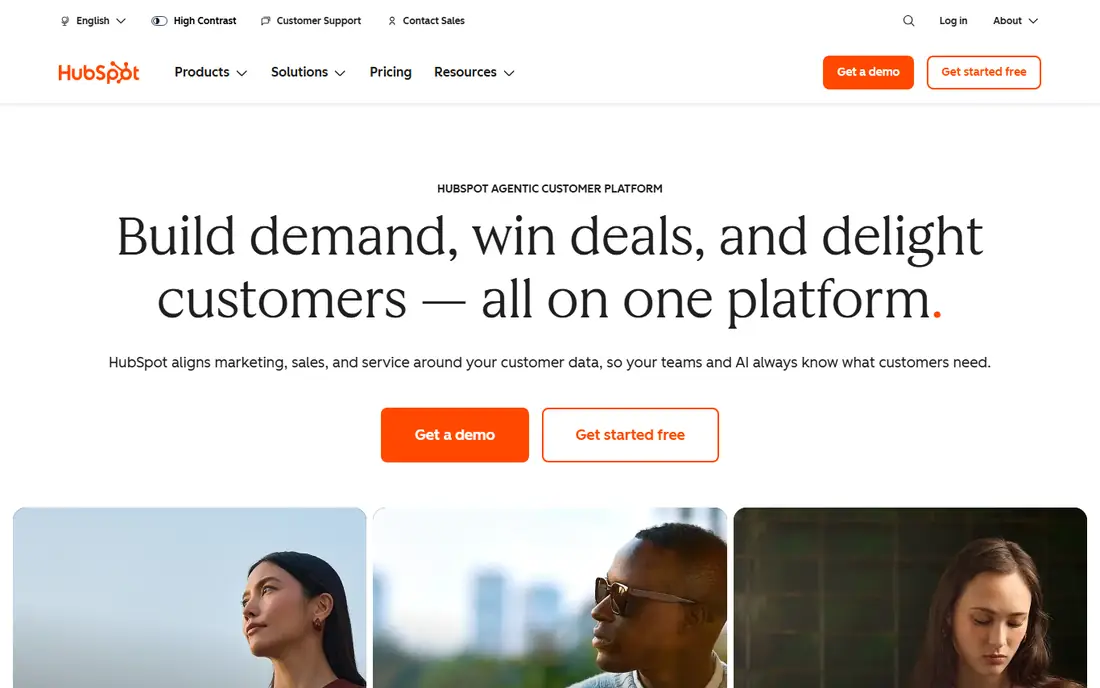
HubSpot Sales Hub suits teams that want sales automation without stitching several tools together. Because the CRM, email sequences, meeting scheduling and pipeline live in one system, an automated follow-up can update the deal record at the same time, with no manual data entry. Its AI prospecting agent can also suggest accounts and draft outreach inside that same workflow.
The catch is tiering. The free plan covers basic sales work, Starter adds paid seats, and the automation and AI depth most teams want sits on higher plans. If your team already runs on HubSpot, Sales Hub is the natural pick. If you only need outbound, a dedicated sequencing tool may be cheaper.
- Free CRM with basic sales tools to start
- Sequences, scheduling and pipeline automation in one place
- AI prospecting inside the CRM
- Advanced automation and AI features need paid tiers
- Onboarding costs can apply on higher plans
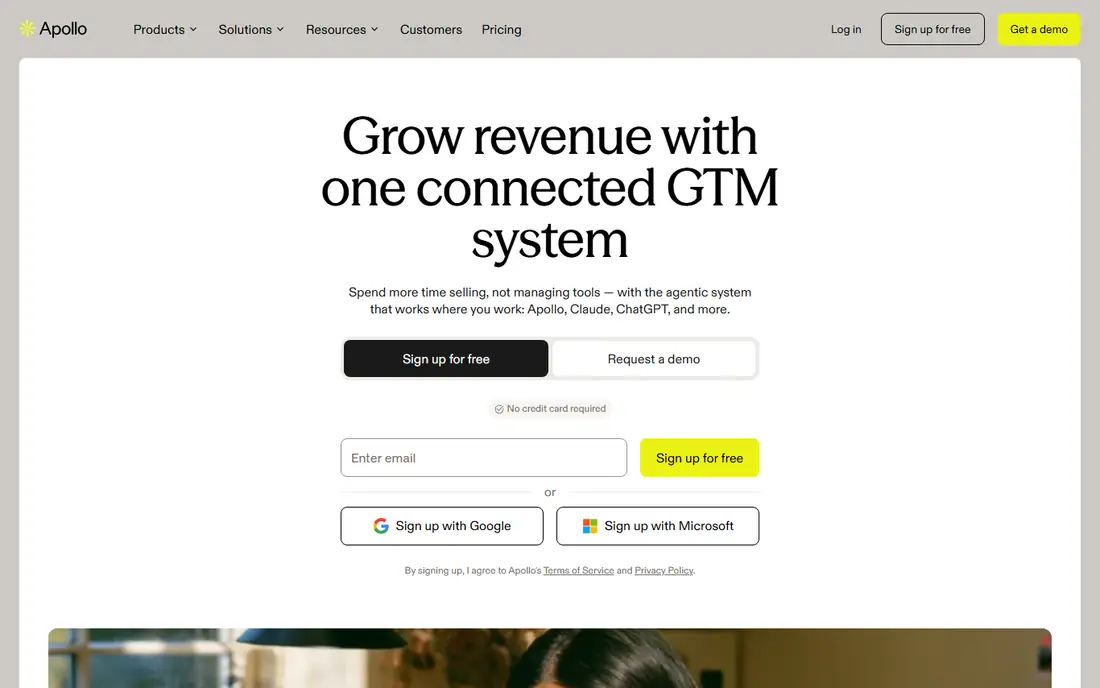
Apollo is the best all-in-one value for many small sales teams. It combines a prospect database, contact enrichment, email sequences and a dialer, so a two-person team can find leads, research them and run follow-ups without buying three separate tools. The free plan, with limited credits and sequences, is enough to test data quality in your niche.
Credits are the real budget. Phone numbers and enrichments cost more than emails, and credits usually do not roll over, so a team that burns through data without a sending plan will overspend. Test Apollo on your actual target list before committing, and check bounce and accuracy rates, not just database size.
- Large prospect database with enrichment and sequencing in one tool
- Free plan for testing
- Self-serve pricing for small teams
- Credit limits shape real usage
- Data quality varies by region and niche
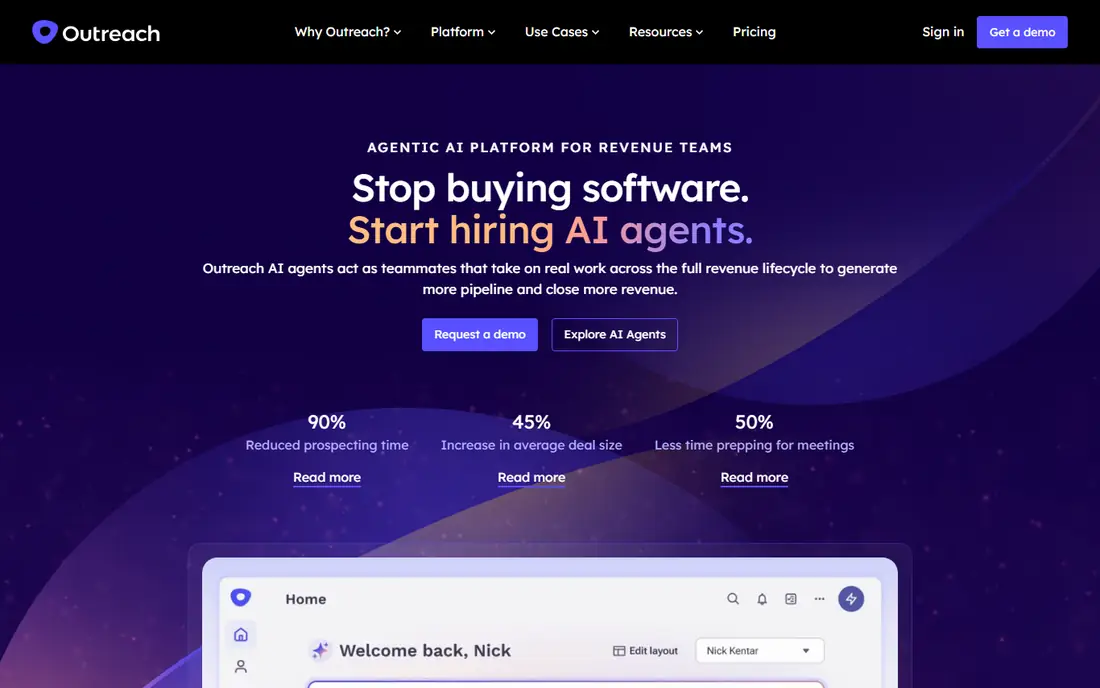
Outreach is the enterprise standard for sales engagement, and it shows in its depth. Large teams can run multichannel sequences, use AI agents for research and drafting, track reply and meeting rates, and enforce consistent playbooks across many reps. Reporting suits managers who need to see which sequences actually book meetings, not just which ones send the most email.
It is not a small-team tool. Pricing is quote-based, setup takes time, and the platform assumes a sales operations owner. For a team of fifty reps or more, that structure is a benefit. For a startup, Apollo or Reply.io will get you moving faster and cheaper.
- Mature sequencing, AI agents and analytics for large teams
- Strong governance and reporting
- Deep CRM integration
- Quote-based enterprise pricing
- Heavier setup than self-serve tools
Salesloft, now closely linked with Clari after their merger, suits revenue teams that need cadences, coaching and deal management in one workflow. Reps can run structured outreach, managers can review calls and coach from the same data, and deal signals help prioritise the accounts most likely to close. That breadth makes it a strong alternative to Outreach for mid-market teams.
Like Outreach, Salesloft is quote-based and enterprise-leaning, so a small team should expect a sales-led process rather than self-serve signup. Evaluate it when you have a real sales management layer and need coaching and forecasting beside sequencing, not just email sending.
- Strong cadence management, coaching and deal workflows
- AI help for outreach and call review
- Now part of a wider revenue platform story
- Quote-based pricing
- Best value needs a mid-market or enterprise team
Clay is not a sender, it is the research layer that makes sending work better. It tries many data providers in turn to fill in contact details, then uses AI to research each lead and draft personalised opening lines at scale. Teams that pair Clay with Apollo, Instantly or a CRM often see higher reply rates than teams that send generic sequences.
That pairing is also the cost. Clay adds a second subscription and a credit model on top of your sending tool, and it needs someone who can build and maintain its tables. For a team where personalisation is the bottleneck, Clay is worth it. For a team that just needs a list and a sequence, Apollo alone is simpler.
- Waterfall enrichment across many data providers
- AI research per lead for personalised outreach
- Flexible tables for list building
- Needs a separate sending tool for most teams
- Pricing and credits need careful planning
Instantly suits teams and agencies that send a high volume of cold email and need predictable pricing. Its flat monthly price, rather than per-seat pricing, helps an agency manage several sending accounts without seat costs spiralling. Deliverability features, including warm-up and inbox placement checks, address the practical risk of high-volume sending.
Volume is also the risk. A burned sending domain takes months to recover, so Instantly needs proper domain setup, list hygiene and human review of messages. It is a sending engine, not a prospecting database, so pair it with a data source such as Apollo or Clay for best results.
- Flat pricing suits high-volume sending and agencies
- Deliverability tools and warm-up support
- Simple sequence workflow
- Email-only focus, no built-in prospect database depth
- Needs care with domain reputation and compliance
Lemlist suits small teams that win on personalisation rather than volume. Its tools for custom images, landing pages and multichannel steps help a message stand out in a crowded inbox, and its deliverability features help protect sender reputation. For creative outbound, where each lead gets a tailored touch, Lemlist is a strong pick.
It is not the cheapest volume sender, and its pricing should be confirmed on the vendor site before budgeting. Teams that send thousands of generic emails a week will get better economics from Instantly, while teams that send fewer, better messages will get more from Lemlist.
- Personalisation at scale with images and video options
- Multichannel sequences across email and LinkedIn
- Deliverability tools
- Pricing needs checking on the vendor site
- Free trial only, no permanent free plan
Reply.io sits in a useful middle ground: more multichannel and AI help than a bare email sender, at a lower price than enterprise platforms. It covers email, LinkedIn and calls in sequences, and its AI assistant can help draft messages and research prospects. For a small to mid-sized team that needs a real outbound platform without an enterprise contract, Reply.io is a balanced choice.
The limit is scale and governance. A very large team with complex approval, coaching and forecasting needs will still lean toward Outreach or Salesloft. For a team of a few reps to a few dozen, Reply.io covers the core workflow well.
- Multichannel outbound at a mid-market price
- AI assistant for drafting and research
- Free trial on plans
- No permanent free plan
- Enterprise depth is thinner than Outreach or Salesloft
Pipedrive is the pick for a team whose main problem is pipeline discipline, not outbound volume. Its visual pipeline makes it obvious which deals need a follow-up, and workflow automation can create activities, move deals and send reminders without manual work. Salespeople who dislike complex CRMs often adopt Pipedrive faster than a heavier system.
It will not replace a dedicated prospecting or sequencing tool for a high-volume outbound team. Use Pipedrive as the CRM and automation hub, and add Apollo, Instantly or Lemlist for prospecting and sending when outbound becomes the main motion.
- Clear visual pipeline that non-technical teams grasp quickly
- Workflow automation for deals and activities
- Wide integration range
- Prospecting and sequencing depth is thinner than Apollo or Outreach
- AI features vary by plan
How we picked these
We compared official pricing and feature pages for tools that automate a real sales job, from prospecting to sequencing to CRM updates, and we checked that each product is current in October 2026. We included CRM-native, data, sequencing and enrichment tools because sales automation is a stack, not a single feature, and we marked quote-based pricing as See website rather than repeating third-party estimates.
What to check before you buy
Start with your bottleneck. If you do not know who to contact, buy for prospecting first. If you have a list but cannot reach people, buy for sending and deliverability. If replies come in but deals stall, buy for pipeline and CRM automation. Buying for the wrong bottleneck wastes the subscription, however good the tool is.
Next, count the real cost: seats, credits, enrichments and sending domains. Finally, set the human rules before you automate: who reviews AI drafts, what lists are off-limits, how often a prospect can be contacted, and how you honour opt-outs and privacy rules in your markets.
Frequently asked questions
What is the best AI tool for sales automation?
It depends on your team. HubSpot Sales Hub is best for CRM-led teams, Apollo is best for prospecting on a budget, Clay is best for enrichment and personalisation, and Outreach or Salesloft are best for large outbound teams. Match the tool to your bottleneck, not to the longest feature list.
Can AI sales automation replace human sales reps?
No, not for complex sales. AI can research leads, draft outreach, schedule follow-ups and update records, but humans still win trust, handle objections and close deals. For simple, high-volume outreach, AI can replace parts of the role, with human oversight on messages and replies.
How much does AI sales automation cost?
Entry costs range from free plans to around $49 per seat or per month for self-serve tools, while enterprise platforms are quote-based. Add credit costs for data and enrichment, and check whether pricing is per seat, flat, or credit-based before comparing plans.
Is cold email automation legal?
Cold email rules vary by country and by whether the recipient is a business or a consumer. Use verified business contacts where allowed, include a clear opt-out, honour replies promptly, and check the rules for your market before sending at scale. A tool does not make an unlawful campaign lawful.
Should I use one tool or a stack?
Most teams use a small stack: a CRM for pipeline, a data tool for prospecting, and a sending tool for sequences. One tool can work for a small team, but a stack lets you pick the best tool for each job and replace one part without rebuilding everything.
Sources
See where you really rank - block by block
ProMapRanker scans Google Maps across a grid of your service area. Simple monthly plans from $19, white-label on every plan.
Start freeKeep reading
 zscaler alternatives
Best Zscaler Alternatives in 2026
Looking for zscaler alternatives? We compare 9 SASE and zero trust platforms on architecture, data protection, pricing, and fit for your network and team.
Read → zapier alternatives free
Best Zapier Alternatives Free in 2026
Nine automation tools for zapier alternatives free in 2026, all with genuinely free tiers, plus free plan limits, starting prices and upgrade paths explained.
Read → which platform is best for online reputation
Which Platform Is Best for Online Reputation in 2026
Wondering which platform is best for online reputation? We compare 8 review, listing, and response tools for small and multi-location businesses and agencies.
Read →