 ProMapRanker
Best Phone Service Provider Options in 2026

Key takeaways
- The three major US networks are Verizon, T-Mobile and AT&T, and most low cost providers run on one of those networks.
- Visible, Mint Mobile and US Mobile are the clearest low cost routes to unlimited or large data plans in 2026.
- Coverage at your home, workplace and commute matters more than a national speed claim, so check each provider coverage map for your address.
- Prepaid plans usually cost less and carry no annual contract, while postpaid plans add perks, device financing and priority data in busy areas.
- Home phone service is a separate choice from mobile service, and many households now use a mobile plan plus a broadband based home number instead.
Quick comparison
| Pick | Great for | Pricing starts at | Free tier | |
|---|---|---|---|---|
 Verizon | Widest overall coverage | See website | No | Visit |
 T-Mobile | Fast 5G in cities and suburbs | See website | No | Visit |
 AT&T | Balanced coverage and family plans | See website | No | Visit |
 Visible | Simple unlimited on Verizon network | $25 per month | No | Visit |
 Mint Mobile | Low cost prepaid with bulk payment | $15 per month | No | Visit |
 US Mobile | Flexible plans on three networks | $25 per month | No | Visit |
 Cricket Wireless | Simple plans on AT&T network | See website | No | Visit |
 Metro by T-Mobile | Low cost unlimited with stores nearby | $25 per month | No | Visit |
 Google Fi Wireless | Flexible data for light users | See website | No | Visit |
 Consumer Cellular | Simple plans for light and older users | See website | No | Visit |
The best phone service provider options
This guide treats the question plainly: it covers US phone service providers available to most readers, with mobile plans first and home options discussed in the buying guide. We compared official plan pages, pricing pages and coverage claims, plus public reviews, and we did not claim hands-on testing. Prices change often, so confirm the current plan page before you switch.
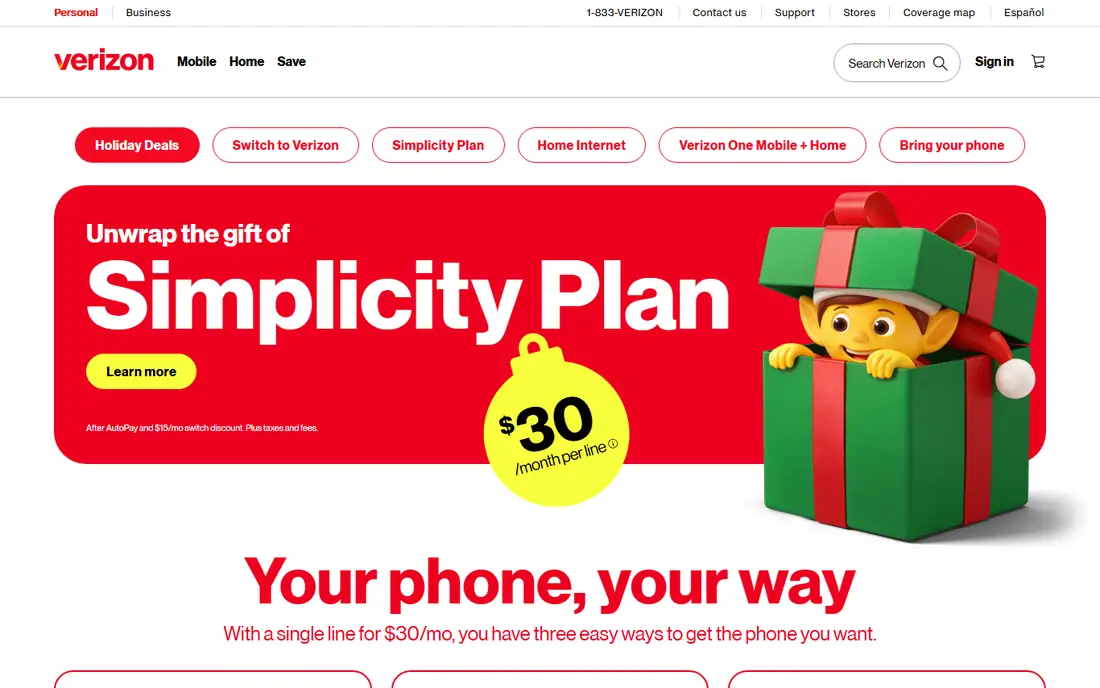
Verizon remains the default choice for readers who travel widely or live outside a major city. Its network is frequently cited for consistency, and that consistency is the point: a phone that works in a small town, on a highway and in a suburb is worth more than a faster peak speed in one place..
The catch is cost and complexity. A single line on a premium postpaid plan will usually cost far more than a prepaid unlimited plan on the same network, and device financing can hide in the monthly total. If you want Verizon coverage without the postpaid price, Visible, which is owned by Verizon, is the more direct comparison in this list..
- Broad national coverage
- Strong rural performance in many areas
- Wide device and store support
- Postpaid plans are priced above most prepaid rivals
- Perks and add-ons can raise the monthly bill
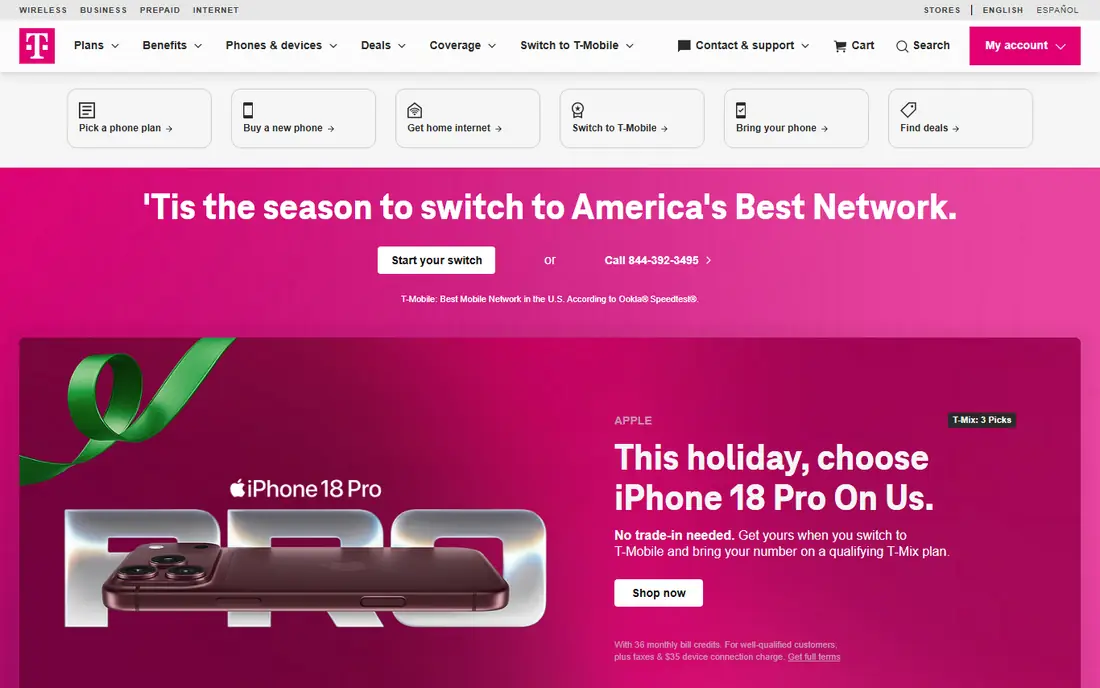
T-Mobile suits readers who spend most of their time in cities and suburbs and who want fast 5G without paying for a separate set of perks. Its plans include taxes and fees in the advertised price on many options, which makes the monthly bill easier to compare with prepaid rivals that also include taxes..
The honest limit is geography. Readers in rural areas should test coverage before committing, because a fast network in a city does not help at a rural home address. T-Mobile also reserves its largest hotspot allowances and fastest priority for higher tiers, so heavy hotspot users should read the plan details rather than the headline unlimited label..
- Strong 5G speed and availability in many metro areas
- Taxes and fees included on many plans
- Broad family plan discounts
- Coverage can thin out in some rural areas
- Premium plans are needed for the fastest data and largest hotspot allowances
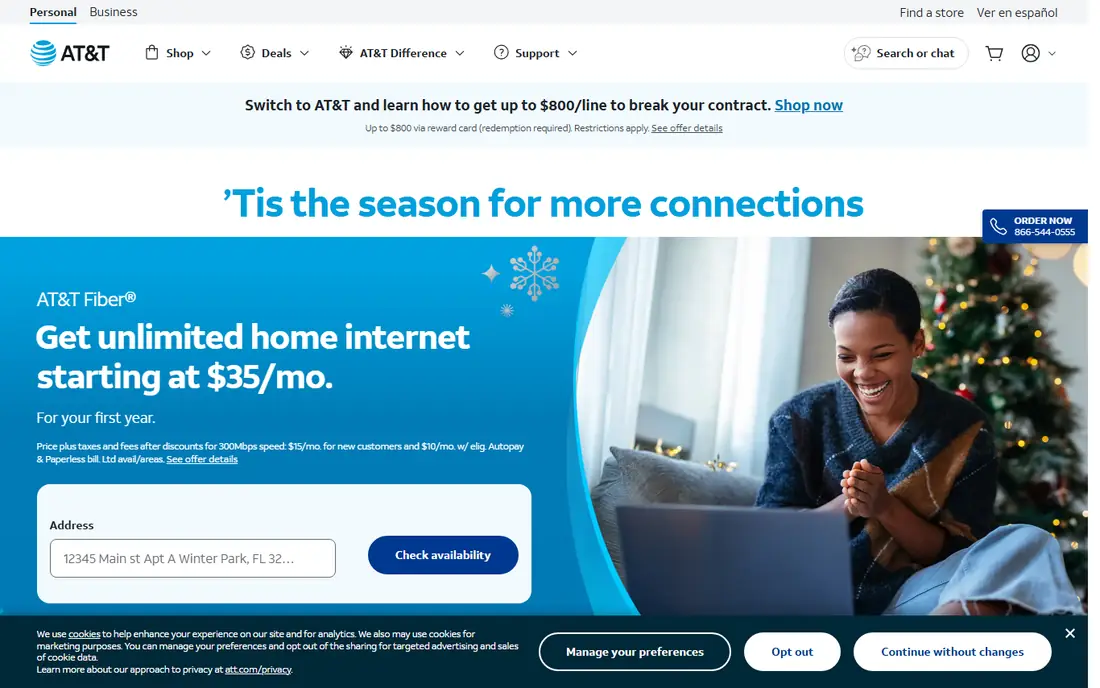
AT&T sits between the other two major carriers for many readers: broad coverage, a familiar store network and family plans that reward adding lines. Its unlimited tiers differ mainly in hotspot allowances, video quality and priority during congestion, so the cheapest unlimited plan is not the same product as the premium tier even though both say unlimited..
The downside is the same as with other postpaid carriers, namely price creep from add-ons. A plan that looks reasonable at signup can grow once device financing, insurance and streaming perks are added. If you want AT&T coverage at a lower price, Cricket Wireless in this list runs on the AT&T network and is worth a direct comparison..
- Large national network
- Strong family and multi-line value
- Wide device range and store network
- Entry plans have lower priority data in busy areas
- Add-ons and device payments can raise the bill
Visible is the simplest unlimited option in this guide. One plan, one flat monthly price, taxes included, and no contract to sign. That simplicity is the appeal: there is no family plan math, no perk menu and no annual prepayment to get the advertised price..
The trade is priority and support. Visible data can slow when the network is busy, because premium Verizon postpaid customers get priority, and help is online rather than in a store. Most readers will not notice the slowdown in everyday use, but heavy users in crowded areas should weigh that point..
- Single unlimited plan at a flat price with taxes included
- Runs on Verizon network
- No annual contract
- No physical stores for in-person help
- Data may slow during congestion compared with premium Verizon plans
Mint Mobile rewards readers who are happy to pay ahead. Its lowest advertised monthly price applies when you prepay for a longer period, and the trade is clear: you lock in a low rate, and you give up month-to-month flexibility..
The catch is the renewal price. After an introductory period, the monthly cost can rise unless you renew for a longer term, so read the renewal terms before you buy. Light and moderate data users get the best value here, while heavy hotspot users may find the allowances tight..
- Low entry price when paid for several months at once
- Runs on T-Mobile network
- No contract
- Best price requires multi-month prepayment
- Hotspot allowance is limited on cheaper tiers
US Mobile stands out because it lets customers choose among the three major US networks, rather than tying every plan to a single network. That choice matters for readers whose coverage varies by carrier at home or at work..
The downside is choice overload. With several networks, shared plans and add-ons, it takes a few minutes to work out which combination fits your use, and some features are network dependent. Take the time to pick the network with the best coverage at your address, then pick the data amount you actually used in the last three months..
- Choice of networks on one account
- Flexible shared and unlimited plans
- Low cost unlimited starter plan
- Plan options can confuse first-time buyers
- Some features differ by the network you choose
Cricket Wireless is the straightforward AT&T network option for readers who want a store nearby and a bill without surprise fees. Taxes are included in many of its plan prices, which makes comparison easier, and its unlimited plans are priced below AT&T postpaid..
The limit is speed and priority. Some Cricket plans cap download speeds, and data may slow during congestion, so readers who stream in high quality or hotspot heavily should check the plan cap before signing up. For everyday use, calls, messaging, maps and standard video, those caps rarely matter..
- Runs on AT&T network
- Taxes included in many plan prices
- Physical stores for in-person help
- Data speeds are capped on some plans
- Premium features are limited compared with AT&T postpaid
Metro by T-Mobile combines a low cost unlimited plan with a physical store network, which is a rare mix among budget providers. Its entry unlimited plan is priced at the same level as Visible and US Mobile, with taxes and fees included, and it runs on the T-Mobile network..
The trade is the same as with other budget brands: priority during congestion and fewer perks than T-Mobile postpaid. The cheapest plan also lacks some of the extras that premium plans bundle, such as larger hotspot allowances..
- Low cost unlimited plan with taxes included
- Runs on T-Mobile network
- Stores in many areas
- Data may slow during congestion
- Premium perks are limited on the cheapest plan
Google Fi Wireless suits readers whose data use varies month to month. Its flexible plan lets light users pay less in quiet months, while its unlimited plans suit heavier users who want a predictable bill..
The catch is that the flexible plan stops saving money once data use climbs, and at that point an unlimited plan from a rival may cost less. Some phones also get the full network switching experience while others do not, so check compatibility for your exact model..
- Flexible plan that charges for data used
- International roaming in many destinations
- Easy plan changes
- Best value depends on low data use
- Phone compatibility matters for full network switching
Consumer Cellular is built for readers who want a phone plan without jargon. Its shared data plans let a household share a data pool, and changing plans is simple when use changes..
The limit is data scale. This is not the plan for a household that streams video all day on mobile data, and heavy users will find unlimited rivals cheaper per gigabyte. For light users, older readers and households that mostly use Wi-Fi at home, Consumer Cellular offers a calm, low cost alternative to the major carriers. Check the network coverage for your area, since its service runs on major US networks through partner arrangements.
- Simple shared data plans
- US based support reputation
- No contract and easy plan changes
- Data allowances are modest compared with unlimited rivals
- Heavy users will outgrow the cheapest plans quickly
How we picked these
We started with the three major US networks, because every other provider in this guide runs on one of them or resells their coverage, then added the low cost providers that readers actually buy in 2026. We compared official plan pages and pricing pages, coverage descriptions and public reviews, and we favored providers with clear prices, taxes included where stated, and a plan that a single line or small household can buy without a business account. We did not claim hands-on testing, and we left out providers whose current plans we could not verify from a vendor page or a recent reliable comparison.
What to check before you switch
Start with coverage, then data, then price. Enter your home and work addresses into each provider coverage map, and ask neighbors or coworkers on that network how service holds up indoors, since maps show outdoor estimates. Then look at your last three phone bills for actual data use, including hotspot use, and ignore the word unlimited until you have read the hotspot allowance and the congestion policy. A plan that slows video or hotspot use after a set amount may still suit you, but only if that amount is above your real use.
Next, work out the full monthly cost. Prepaid prices that include taxes are easier to compare, while postpaid prices can grow with device financing, insurance and perks. Check whether the advertised price needs autopay, a multi-line account or a multi-month prepayment, and check the renewal price after any introductory period. If you need a home phone, ask whether you still need one at all: many households now keep a mobile plan for each person and use a broadband based number, a VoIP adapter or a provider home phone add-on only for a landline dependent device such as an alarm or fax machine.
Finally, check the switch itself. Most US numbers can port to a new provider, and most providers will check phone compatibility and SIM or eSIM support before you pay. Keep your old service active until the port completes, and confirm that voicemail, two-factor codes and any linked accounts still work on the new number. A short checklist, coverage at your addresses, real data use, full monthly cost and a clean port, prevents most switching regrets.
Frequently asked questions
What is the cheapest phone service provider in the US?
For light users, small shared or by-the-gig plans from providers such as US Mobile and Consumer Cellular are usually cheapest, while Mint Mobile offers a low monthly price when prepaid for several months. For unlimited data, Visible, US Mobile and Metro by T-Mobile all offer entry unlimited plans around $25 per month in 2026, with taxes included on some plans. The cheapest plan for you depends on your data use and on which network covers your address best.
Do low cost providers use the same networks as major carriers?
Yes, most low cost providers run on Verizon, T-Mobile or AT&T networks, so coverage is often the same in a given location. The main differences are data priority during congestion, speed caps on some plans, hotspot allowances and support channels. If you need the fastest data at crowded events or during peak hours, a premium postpaid plan may still be worth the extra cost.
Can I keep my phone number when I switch providers?
In most cases, yes, through number porting, and you should keep your old service active until the port is complete. Your new provider will ask for your account number and porting PIN from your old provider, and the transfer usually completes within a day for mobile numbers. Check that your phone is not tied to a carrier and is compatible with the new network before you start.
Is a home phone service still worth paying for?
It depends on what depends on it. A broadband based home number or a VoIP service can suit households that want a shared family number, while a traditional landline may still matter for some alarm systems, medical devices or areas with weak mobile coverage. Many households now skip a separate home phone entirely and rely on mobile plans, so weigh the monthly cost against how often the home number is actually used.
What is the difference between prepaid and postpaid phone service?
Prepaid service is paid in advance, usually has no annual contract and often costs less, while postpaid service is billed after use and often includes device financing, perks and higher data priority. Prepaid is a good fit for readers who want a predictable bill and no credit check, while postpaid suits readers who want a new phone on installments and premium features. Read the hotspot and congestion terms on both types before choosing.
Sources
See where you really rank - block by block
ProMapRanker scans Google Maps across a grid of your service area. Simple monthly plans from $19, white-label on every plan.
Start freeKeep reading
 zoro.to alternatives
Best Zoro.to Alternatives in 2026
We compare the best zoro.to alternatives in 2026, listing only legal licensed anime streaming services, from Crunchyroll to free options for fans today.
Read → zip alternatives
Best Zip Alternatives in 2026
We compare the best zip alternatives for buy now, pay later in 2026, covering pay-in-4 plans, fees, spending limits, and credit reporting options today.
Read → yesware alternatives
Best Yesware Alternatives in 2026
Compare the best yesware alternatives for sales email tracking, templates, and sequences, with current pricing and honest tradeoffs for small sales teams.
Read →