 ProMapRanker
What Phone Company Has the Best Deals Right Now

Key takeaways
- The lowest headline prices usually come from prepaid and online-only carriers, while the big three carriers charge more for store support and priority data.
- Visible and Mint Mobile lead on simple unlimited pricing, but Mint Mobile needs a multi-month prepayment for its lowest rate.
- T-Mobile, Verizon, and AT&T still make sense for families, heavy travelers, and people who want in-store help.
- Prices and deals vary by plan, location, and promotion, so check the carrier site for your address before you switch.
Quick comparison
| Pick | Great for | Pricing starts at | Free tier | |
|---|---|---|---|---|
 Mint Mobile | Budget buyers who can prepay | $15 per month | No | Visit |
 Visible | Simple unlimited service with taxes included | $25 per month | No | Visit |
 T-Mobile | Families and travelers | See website | No | Visit |
 Verizon | Coverage-first buyers who want stores | See website | No | Visit |
 AT&T | AT&T coverage with full postpaid service | See website | No | Visit |
 Cricket Wireless | Prepaid AT&T coverage with stores | $35 per month | No | Visit |
 Metro by T-Mobile | Prepaid T-Mobile coverage with stores | See website | No | Visit |
 Google Fi Wireless | International travelers and light data users | See website | No | Visit |
The best phone company deals right now
Prices and deals vary by plan, location, and promotion. The eight carriers below cover the main ways Americans buy phone service in 2026, from budget prepaid to full-service postpaid.
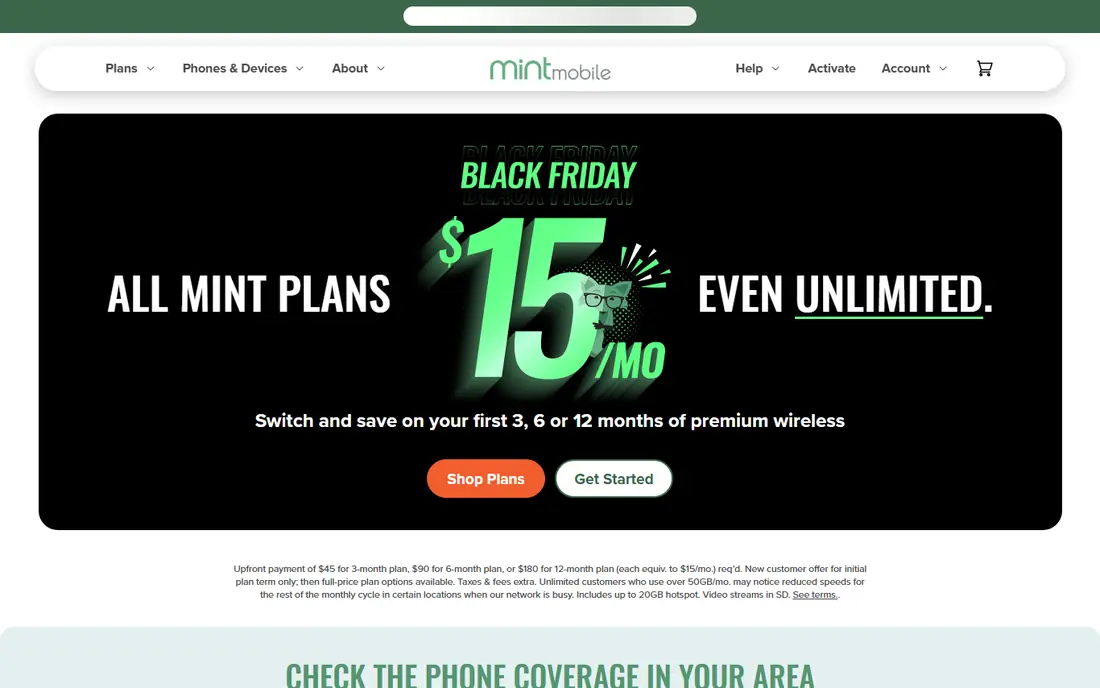
Mint Mobile is the first carrier we point budget shoppers toward, because its pricing is easy to understand and its entry point is low. The $15 per month rate applies to a small data plan on a 12-month prepayment, while unlimited service costs more and still requires that longer commitment for the best price. That trade works well for people who know their usage and do not mind paying ahead.
The catch is the lack of a store to walk into. Support is online and by phone, and you need a compatible phone you already own or a new phone bought through Mint Mobile. Coverage follows the T-Mobile network, so check signal at home, at work, and on your commute before committing to a year. For a single line with modest data needs, Mint Mobile is hard to beat on price alone.
- Low entry price on a 12-month plan
- Runs on the T-Mobile network
- Simple plan tiers
- Lowest prices require prepayment
- Taxes are added on top
- No physical stores
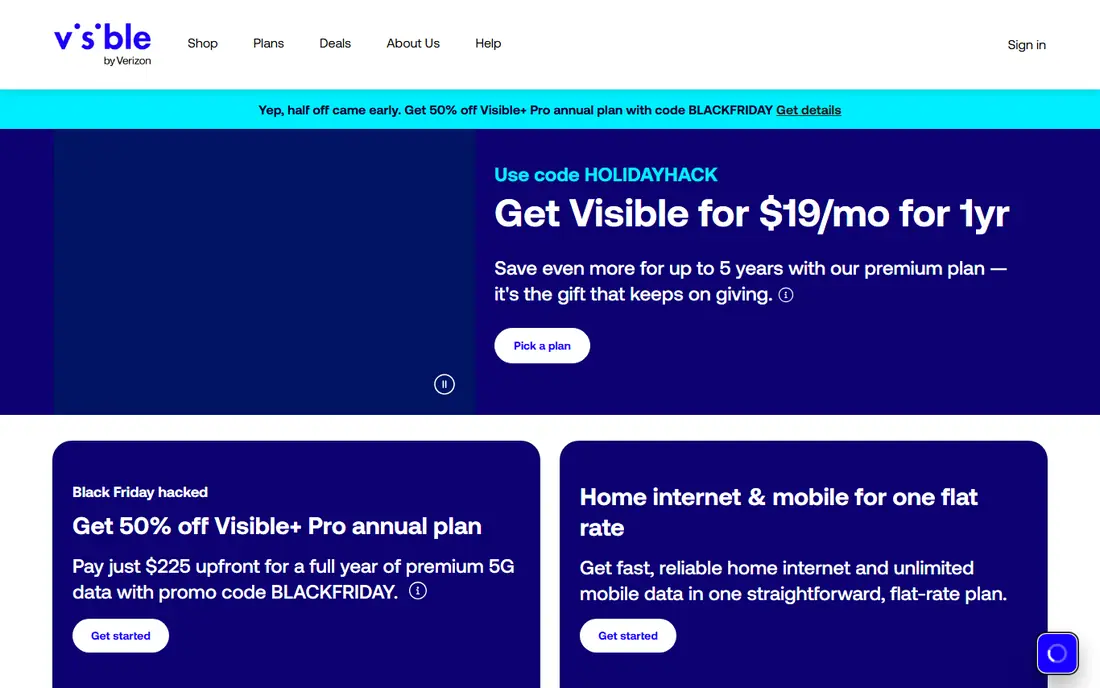
Visible keeps the decision simple. One base unlimited plan at $25 per month, with taxes and fees included in the advertised price, removes much of the bill shock that comes with other carriers. It runs on the Verizon network, which is a strong fit for people who already know Verizon coverage works well where they live and travel.
The trade-off is priority. On the base plan, your data can be slowed when the network is busy, and hotspot speeds are limited. A higher tier adds faster hotspot and more priority data, so heavy hotspot users should price that tier rather than the base plan. Visible suits single-line users who want unlimited data, a predictable bill, and no store visits.
- Flat $25 unlimited price with taxes included
- Runs on the Verizon network
- No annual contract
- Base plan data can slow during congestion
- Hotspot speed is capped
- Support is online only
T-Mobile is the big carrier most likely to win a family comparison. Multi-line pricing brings the per-line cost down, and higher tiers add travel benefits that prepaid plans rarely match. Its 5G coverage is broad, and its stores give new customers a place to sort out a phone transfer in person.
The downside is the bill. Single-line postpaid prices sit well above Mint Mobile or Visible, and promotional phone deals usually require a trade-in, a qualifying plan, and a long bill-credit period. Read the fine print on any free phone offer, since the discount often arrives as monthly credits rather than an upfront price cut. T-Mobile fits households that value support, travel perks, and bundled lines over the lowest possible monthly rate.
- Large 5G network
- Family plans can lower the per-line cost
- Strong travel perks on higher tiers
- Entry prices are higher than prepaid rivals
- Taxes and fees are often added
- Perks vary by tier
Verizon remains the default choice for people who put coverage first and want a store nearby. Its network performs well in many rural and suburban areas where smaller carriers struggle, and its retail footprint makes switching, trading in a phone, and fixing account problems easier in person. Families can cut the per-line cost by adding lines to one account.
The price is the honest catch. Verizon postpaid plans cost more than prepaid options on the same network, and the most attractive extras, such as streaming bundles and larger hotspot allowances, sit on higher tiers. Visible, which Verizon owns, is the cheaper route to the same network for people who do not need stores or top-tier priority. Choose Verizon itself when coverage, support, and account perks matter more than the lowest bill.
- Wide coverage and many stores
- Strong network performance in many areas
- Family plan options
- Higher single-line prices
- Taxes and fees are added
- Best perks sit on the priciest tiers
AT&T suits buyers who know AT&T coverage is the strongest option where they live and who want a traditional postpaid account. Its stores handle activations and trade-ins, and its plans can pair with home internet and other AT&T services in some areas. Families and people who bundle services can get more value than the single-line price suggests.
As with the other big carriers, the headline phone deal rarely tells the whole story. Promotions often depend on a trade-in, a premium unlimited plan, and credits spread over two or three years. Leaving early can mean losing the remaining credits. AT&T is a good pick for loyal AT&T customers and bundle buyers, but prepaid Cricket Wireless is the cheaper way onto the same network.
- Large national network
- Store support
- Family and bundle options
- Higher prices than prepaid rivals
- Phone deals usually need trade-ins and bill credits
- Taxes added
Cricket Wireless is AT&T prepaid with a storefront. That combination matters for shoppers who want in-person help but do not want a postpaid bill or a credit check. Plans start at $35 per month for a limited data plan, with unlimited options above it, and multi-line discounts bring the per-line price down for families.
The compromise is network priority and extras. Cricket data can slow when the network is busy, and hotspot allowances are smaller than on postpaid AT&T plans. Phone promotions exist but are usually smaller than the big carrier trade-in deals. Cricket fits people who want AT&T coverage, a predictable prepaid bill, and someone to talk to in a store.
- Runs on the AT&T network
- Taxes included in many plan prices
- Thousands of stores
- Data may slow during congestion
- Hotspot is limited or absent on some plans
- Phone deals are modest
Metro by T-Mobile gives prepaid shoppers the T-Mobile network plus a retail store. That is a useful middle ground between online-only Mint Mobile and full-price T-Mobile postpaid. Taxes are included in many advertised plan prices, which makes the bill easier to predict, and family pricing can make multi-line accounts competitive.
Metro plans can slow during congestion, and the best phone deals often require a new line, a port-in, or a qualifying plan. Promotions also change by market, so a deal advertised in one city may not match what your local store offers. Metro is a strong choice for T-Mobile coverage fans who want prepaid pricing and face-to-face help.
- Runs on the T-Mobile network
- Taxes included on many plans
- Stores across the country
- Data may slow during congestion
- Phone deals vary by store and promotion
- Fewer premium perks
Google Fi Wireless is built for a specific buyer. Its flexible plan charges a base rate plus a per-gigabyte data charge, which suits people who use little mobile data and spend much of their time on Wi-Fi. Unlimited tiers add generous international data, which is where Fi earns its keep for frequent travelers.
For heavy domestic data users who rarely leave the country, Fi is usually not the cheapest option. Unlimited tiers cost more than Visible or Mint Mobile, and support is mainly online. Fi also depends heavily on the T-Mobile network in the United States, so coverage checks matter as much as price. Pick Fi when international travel is a regular part of your life and flexible billing matches your usage.
- Flexible data plan for light users
- Strong international roaming on higher tiers
- Runs mainly on the T-Mobile network
- Prices rise with data use on the flexible plan
- Fewer stores
- Best value depends on travel habits
How we picked these
We compared official carrier plan pages, published plan pricing, and public coverage and support details for the main US carriers and their prepaid brands. We favored carriers that are widely available in the United States, that publish clear plan structures, and that represent distinct buying styles: online-only prepaid, store-based prepaid, and full postpaid. Prices and deals vary by plan, location, and promotion, so we treated every headline price as a starting point to confirm on the carrier site, not as a guaranteed bill.
What to check before you switch
Start with coverage, not price. Ask friends or neighbors on each network how service holds up at your home and workplace, and use the carrier coverage map as a rough guide rather than proof. Then match the plan to your real data use. A light user on Wi-Fi most of the day wastes money on an unlimited premium tier, while a heavy hotspot user will feel the limits of a budget plan fast.
Read the full cost of a phone deal. A free phone usually means monthly bill credits over two or three years, a qualifying trade-in, and a premium plan. If you plan to switch again soon, a cheaper plan with a phone you already own often costs less overall. Finally, confirm taxes and fees, hotspot allowances, data priority, and international roaming before you port your number, and keep your old service active until the transfer is complete.
Frequently asked questions
What phone company has the best deals right now?
For most single-line buyers, Mint Mobile and Visible offer the lowest simple prices, while T-Mobile, Verizon, and AT&T offer better phone deals and family pricing. The best deal depends on your network, your data use, and whether you need a new phone.
What is the best deal on cell phone service for one line?
Visible at $25 per month with taxes included is the simplest unlimited deal for one line on the Verizon network. Mint Mobile is cheaper on a 12-month prepayment if T-Mobile coverage works for you.
Are prepaid carriers as good as the big carriers?
Prepaid carriers use the same major networks, but their data can slow first during congestion, and they offer less in-store support and fewer perks. For many people the savings are worth that trade, but coverage-first buyers may prefer postpaid.
Do phone deals really give you a free phone?
Usually the discount arrives as monthly bill credits over a long term, and it often requires a trade-in and a qualifying plan. If you cancel early, you may owe the remaining phone balance and lose future credits.
Which carrier is best for international travel?
Google Fi Wireless and higher-tier T-Mobile plans are strong for international roaming, since they include generous roaming data in many destinations. Check the exact countries and data limits for your trips before choosing.
Should I switch carriers to save money?
Switch if your current bill is high, your contract or credits have ended, and another network covers your area well. Keep your old line active until your number ports over, and confirm the new plan price including taxes first.
Sources
See where you really rank - block by block
ProMapRanker scans Google Maps across a grid of your service area. Simple monthly plans from $19, white-label on every plan.
Start freeKeep reading
 zoho inventory alternatives
6 Alternatives to Zoho Inventory, Compared on Price and Fit
Zoho Inventory alternatives: 6 tools compared on price, free plans and fit. Katana leads the list for manufacturers. Fit and flaws are laid out for each entry.
Read → zoho crm alternatives
Best Zoho CRM Alternatives (2026)
Need Zoho CRM alternatives? We compare 7 tools on cost, free access and who each suits. Every pick gets a straight assessment. Built for quick decisions.
Read → zelle alternatives
Best Zelle Alternatives in 2026
Compare the best Zelle alternatives for sending money to friends, paying sellers and moving funds abroad, with honest notes on fees, speed and safety in 2026.
Read →