 ProMapRanker
What CRM Is the Best for E-Commerce Platforms in 2026

Key takeaways
- The best e-commerce CRM links orders, browsing, and support in one customer record, so a store can segment by what people actually bought.
- Pricing in this category follows contacts or profiles as well as seats, so a growing list can raise the bill even when the team stays small.
- Store-first tools excel at email and SMS flows, while general CRMs excel at pipelines, service, and reporting across the whole business.
- A free CRM can carry a small store a long way, but automation limits, contact caps, and onboarding fees are the usual upgrade triggers.
- The right pick depends on store platform, list size, and team size, so test the store sync with real orders before paying.
Quick comparison
| Pick | Great for | Pricing starts at | Free tier | |
|---|---|---|---|---|
 Klaviyo | Shopify and direct-to-consumer email and SMS | Free | Yes | Visit |
 HubSpot | Sales, marketing, and service in one system | Free | Yes | Visit |
 Zoho CRM | Budget-friendly traditional CRM | Free | Yes | Visit |
 ActiveCampaign | Deep automation plus a real CRM | $15 per month | No | Visit |
 Omnisend | Multichannel automation for smaller stores | Free | Yes | Visit |
 Drip | Behavioral automation at one flat price | $39 per month | No | Visit |
 Pipedrive | Visual sales pipelines for stores with deals | $14 per seat per month | No | Visit |
 Freshsales | Fast setup with calling and email built in | $9 per user per month | No | Visit |
 Salesforce | Large and complex store operations | $25 per user per month | No | Visit |
The best crm for e-commerce platforms
An e-commerce CRM has to handle more than names and emails. It must sync orders, track browsing and cart behavior, support repeat buying, and help a small team answer support questions with full order history in view. The tools below cover store-first marketing CRMs and general CRMs that adapt well to selling online.
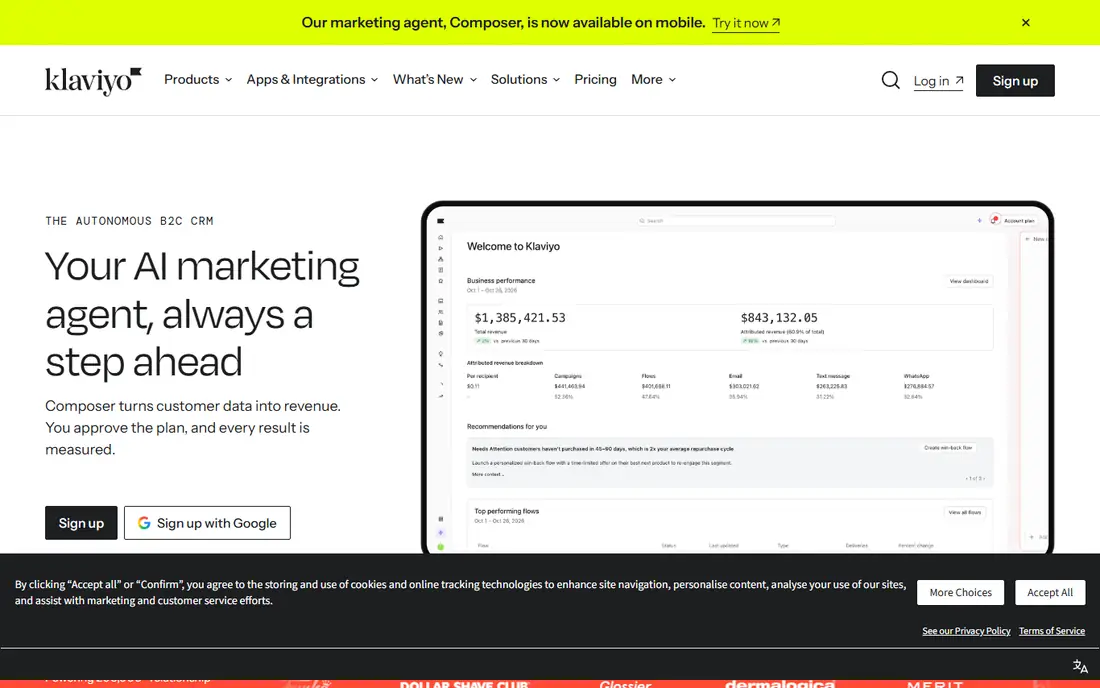
Klaviyo is the default pick for many Shopify and direct-to-consumer brands, and the reason is data depth. It pulls viewed products, cart adds, orders, and lifetime value into profiles, so segments and flows can react to real shopping behavior. Abandoned cart, browse abandonment, post-purchase, and win-back flows are available as starting templates, which saves setup time.
The cost model needs care. The free plan covers 250 profiles in recent comparisons, with paid email plans from $20 per month for 500 profiles, and the bill grows as the list grows. SMS is usage-based on top of that. Stores that earn a large share of revenue from email and SMS will usually find the cost justified, while stores with huge lists and low margins should model the bill at their real profile count.
- Deep store event data for flows and segments
- Strong Shopify, WooCommerce, and BigCommerce links
- Many prebuilt flows
- Price rises with profile count
- SMS costs add on top of email plans
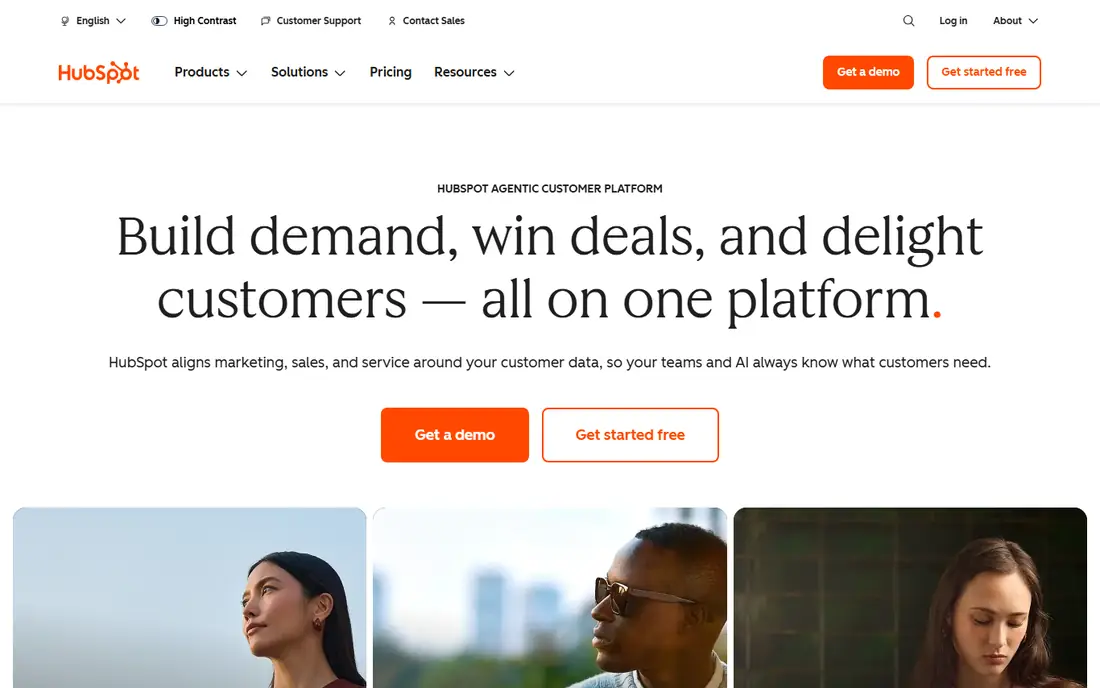
HubSpot suits stores that need more than email flows. The free CRM gives contacts, deals, tickets, live chat, and email tracking, and paid hubs add marketing automation, sales sequences, and service tools in one system. That breadth helps stores that also sell wholesale, run a support team, or manage partnerships beside the online store.
Pricing is the main caution. The Starter list price is $20 per seat per month billed annually in recent comparisons, with promotions sometimes lower for new customers, while Professional tiers start near $90 per seat per month and carry a one-time onboarding fee. Stores should map which features they truly need before upgrading, since much of the value for a small store sits in the free and Starter tiers.
- Free CRM with pipelines and service tools
- Wide app marketplace
- Strong reporting as teams grow
- Paid tiers jump sharply in price
- Higher tiers carry onboarding fees in recent comparisons
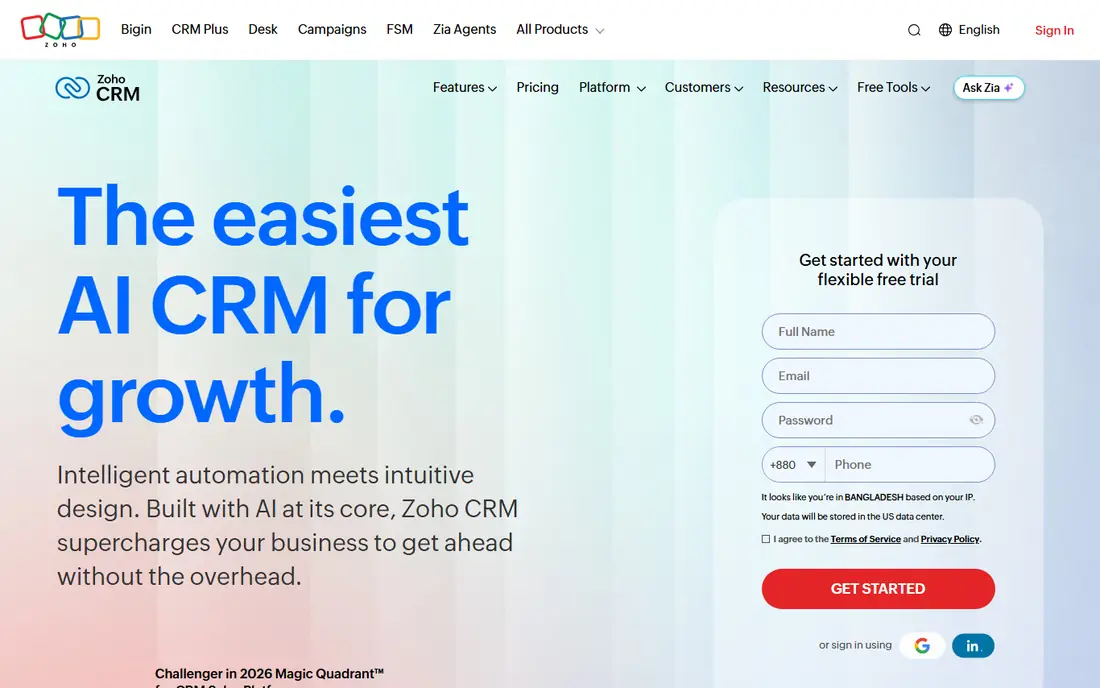
Zoho CRM is a strong value pick for stores that want a traditional CRM at a modest per-user price. The free plan covers up to three users, and the Standard plan is listed at $14 per user per month billed annually in recent comparisons. Pipelines, automation, email, and reporting cover the core needs of a growing store without a large monthly bill.
Its store behavior depth is shallower than Klaviyo, so stores that live on browse and cart flows may need a separate email tool beside Zoho. The interface also rewards teams willing to learn its layout. For budget-conscious stores that want one CRM for sales, support, and customer records, Zoho CRM is hard to beat on price.
- Low per-user price for a full CRM
- Automation and workflows included
- Links to Zoho Commerce and other Zoho apps
- Store sync is less deep than Klaviyo for behavior flows
- Interface takes time to learn
ActiveCampaign pairs a real CRM with some of the most flexible automation in this group. Stores can build multi-step flows with conditions, split tests, lead scoring, and deal stages, then sync orders from Shopify, WooCommerce, and other platforms. That depth suits stores that want lifecycle marketing, not just a welcome series and a cart reminder.
The Starter plan is listed at $15 per month billed annually for 1,000 contacts in recent comparisons, with a 14-day trial and no permanent free tier. As contacts grow, the price rises, so stores should check the cost at their list size, not just the entry price. For teams that enjoy building detailed automations, ActiveCampaign offers a lot for the money.
- Very flexible automation logic
- Full CRM with deals and pipelines
- Good e-commerce integrations
- No permanent free plan
- Pricing rises with contacts
- Learning curve for complex automations
Omnisend is built for smaller e-commerce stores that want email, SMS, and push messages without a complex setup. Prebuilt workflows cover welcome, cart abandonment, order follow-up, and win-back, and the Shopify link is quick to connect. A free plan covers small lists, with the Standard plan listed at $16 per month in recent comparisons.
Its CRM side is lighter than a general CRM, so stores that need deal pipelines, service tickets, and deep reporting may need another tool beside it. For a store whose main need is multichannel automation at a fair price, Omnisend is a strong Klaviyo alternative, especially for teams that want a simpler bill and faster launch.
- Email, SMS, and push in one tool
- Fast setup for Shopify stores
- Prebuilt automation workflows
- Reporting and CRM depth are lighter than HubSpot or Salesforce
- Price rises with contacts
Drip appeals to direct-to-consumer brands that dislike feature-gated pricing. Its plan, listed at $39 per month for up to 2,500 contacts in recent comparisons, includes its full feature set, so teams do not need to upgrade to access deeper automation. Behavioral data from the store drives segments, workflows, and personalized messages.
The entry price is higher than Klaviyo or Omnisend for a tiny list, and there is no permanent free plan, only a 14-day trial. Stores with a small list may pay more at the start, but stores that use many features can save compared with tiered rivals. Drip suits brands that want one price and full automation from day one.
- All features included at one price tier
- Deep behavioral segments
- Strong for direct-to-consumer brands
- No free plan, only a trial
- Entry price is higher than rivals for very small lists
Pipedrive is the pick for stores that sell through deals, wholesale accounts, or high-value orders that need follow-up. Its visual pipeline makes it easy to see where each deal sits, what activity is next, and which deals are stalling. That clarity helps small sales teams stay on top of quotes, samples, and repeat orders.
It is not a store marketing platform in the Klaviyo sense, so email flows and behavior segments are lighter. The Lite plan is listed at $14 per seat per month billed annually in recent comparisons, with a 14-day trial. Stores that pair Pipedrive with a separate email tool, or that sell mainly through deals, will get the most from it.
- Clearest visual pipeline in this group
- Easy for sales-led teams
- Good activity tracking
- Marketing automation is lighter than store-first tools
- No free plan, only a trial
Freshsales, from Freshworks, suits stores that want a CRM running quickly, with calling and email built in rather than added through separate tools. The Growth plan is listed at $9 per user per month billed annually in recent comparisons, which is among the lowest entry prices here. Pipelines, contact timelines, and automation cover the daily needs of a small sales and support team.
Its e-commerce depth is lighter than store-first rivals, so behavior-based email flows may need another tool or a higher tier. Teams that mainly need a clean CRM for leads, deals, and customer conversations will find Freshsales easy to adopt. For stores with a support and sales team that calls customers, the built-in phone is a practical bonus.
- Built-in phone and email
- Fast setup
- Low entry price for a full CRM
- E-commerce behavior flows are lighter than Klaviyo
- Some features need higher tiers
Salesforce suits larger stores, multi-brand operations, and teams with complex sales, service, and reporting needs. Its customization, automation, and app ecosystem are unmatched in this group, and it can model wholesale, retail, subscriptions, and support in one system. Shopify and other store links are available through apps and integrations.
The cost is not just the seat price. The Starter Suite is listed at $25 per user per month billed annually in recent comparisons, but implementation, admin time, and add-ons can raise the total well above that. Small single stores will usually do better with a simpler tool. For stores planning major scale or complex operations, Salesforce is the platform that can grow with them.
- Deep customization and reporting
- Huge app ecosystem
- Strong for multi-brand and enterprise stores
- Setup time and total cost are high
- Overkill for a small single store
How we picked these
We compared official feature pages, pricing pages, app store listings, privacy policies, and public reviews for CRMs used by online stores. We kept only tools that are live, that sync or link to major store platforms, and that support customer records, segments, or pipelines for selling online. We favored tools with a real store sync, clear pricing, and automation that fits e-commerce, and we noted where pricing follows contacts rather than seats. We did not claim hands-on testing inside a live store.
Choosing a CRM for your e-commerce platform
Start with your store platform and your list size, since those two facts shape price and fit more than any feature list. A tool that syncs well with Shopify may sync less well with WooCommerce, and a tool priced by contacts will cost more as your list grows.
Test the store sync with real orders
Connect a test store or a small live store, then place test orders, abandon a cart, and check what appears in the customer record. Confirm that order value, product names, and order status sync correctly, and that segments update without manual work. If the sync needs constant fixes, the CRM will create work instead of saving it.
Model price at your real list and team size
Multiply seat price by team size, then add contact-based pricing at your current list size and at double that size. A cheap seat price can hide a steep contact bill, and a cheap contact price can hide a high seat bill. Ask for a written quote that covers both, plus SMS costs if you plan to use text messages.
Keep support beside sales data
Check that support tickets, order history, and customer notes sit in one record, so a support agent can see what a customer bought before replying. A CRM that only holds marketing data will force agents to switch tools for every question. Pilot with one team for a month, then judge by reply speed and repeat purchase data, not by demo polish.
Frequently asked questions
What CRM is the best for e-commerce platforms?
Klaviyo is the best starting point for Shopify and direct-to-consumer stores that earn revenue from email and SMS flows. HubSpot suits stores that also need sales pipelines and service tools, while Zoho CRM suits budget-conscious stores that want a traditional CRM.
Is there a free CRM for e-commerce?
Yes. Klaviyo, HubSpot, Zoho CRM, and Omnisend all offer free plans with limits on contacts, profiles, or features. Free plans suit small stores, but growing lists and automation needs usually push stores to a paid plan.
How much does an e-commerce CRM cost?
Entry prices in this group range from free to about $39 per month, but the real bill depends on contacts, seats, and SMS use. Model the cost at your current list size and at double that size before committing, since contact-based pricing rises with list growth.
Do I need a CRM if I already use Shopify?
Shopify holds orders well, but a CRM adds customer timelines, segments, automation, pipelines, and support history in one place. Stores that rely on repeat buying, wholesale deals, or support-heavy products gain the most from adding a CRM.
Which CRM works best with Shopify?
Klaviyo and Omnisend have the deepest Shopify-focused email and SMS workflows in this group, while HubSpot, ActiveCampaign, and Salesforce also link to Shopify through apps. Test the sync with real orders before choosing, since sync depth varies by tool.
Sources
- https://www.klaviyo.com
- https://www.hubspot.com
- https://www.zoho.com/crm
- https://www.activecampaign.com
- https://www.omnisend.com
- https://www.drip.com
- https://www.pipedrive.com
- https://www.freshsales.com
- https://www.salesforce.com
- https://rankite.com/blog/best-crm-software-for-ecommerce
- https://rankite.com/blog/best-marketing-crm-software
See where you really rank - block by block
ProMapRanker scans Google Maps across a grid of your service area. Simple monthly plans from $19, white-label on every plan.
Start freeKeep reading
 worlds best local seo company
8 Worlds Best Local SEO Companies for Map Pack Growth in 2026
Compare the worlds best local seo company options for Google Business Profile work, citations, reviews, and multi-location rankings and reporting in 2026.
Read → world's best web hosting company
World's Best Web Hosting Company in 2026
Searching for the world's best web hosting company? We compared 10 hosts on price, renewal rates, speed, and support to help you choose well today in 2026.
Read → who's got the best nanny tax services
Who's Got the Best Nanny Tax Services in 2026
We answer who's got the best nanny tax services, comparing full filing, back taxes, software, and pricing so families can handle nanny taxes correctly.
Read →