 ProMapRanker
What Cellular Company Has the Best Coverage in 2026

Key takeaways
- Coverage varies by location, and no carrier wins everywhere, so your home, work and travel addresses matter more than any national claim.
- Public reports often point to Verizon for rural reliability, T-Mobile for broad 5G reach in cities, and AT&T as a balanced option, but local results can differ.
- Low-cost carriers use the same major networks, so Mint Mobile uses the T-Mobile network, Visible uses Verizon, and Cricket uses AT&T in broad terms.
- Check each carrier coverage map by street address, ask neighbours about dead spots, and use a trial or prepaid month before a long contract.
- Our guide pick is to start with the network that works at your most-used addresses, then choose the cheapest plan on that network that fits your data needs.
Quick comparison
| Pick | Great for | Pricing starts at | Free tier | |
|---|---|---|---|---|
 Verizon | Rural reliability in many reports | See website | No | Visit |
 AT&T | Balanced national coverage | See website | No | Visit |
 T-Mobile | Broad 5G reach in cities | See website | No | Visit |
 UScellular | Regional coverage in its service areas | See website | No | Visit |
 Visible | Low-cost service on the Verizon network | See website | No | Visit |
 Mint Mobile | Low-cost service on the T-Mobile network | See website | Free trial | Visit |
 Google Fi Wireless | Flexible plans and travel features | See website | No | Visit |
 Cricket Wireless | Low-cost service on the AT&T network | See website | No | Visit |
 US Mobile | Choice of major networks by plan | See website | No | Visit |
The best cellular company coverage guide
This is a guide based on publicly reported coverage factors, not a verified ranking, and it does not claim that one carrier wins in every place. Coverage depends on towers near your address, building materials, terrain, network congestion and your phone model. A carrier that works well in one town can struggle a few miles away, and indoor coverage can differ from outdoor coverage on the same street.
Use the carriers below as a way to narrow your choice, then verify by address. Check official coverage maps, read local reports for your routes, and test with a trial, prepaid plan or a friend's phone when possible. Price, data priority and customer service still matter, but they mean little if the signal fails where you live and work.
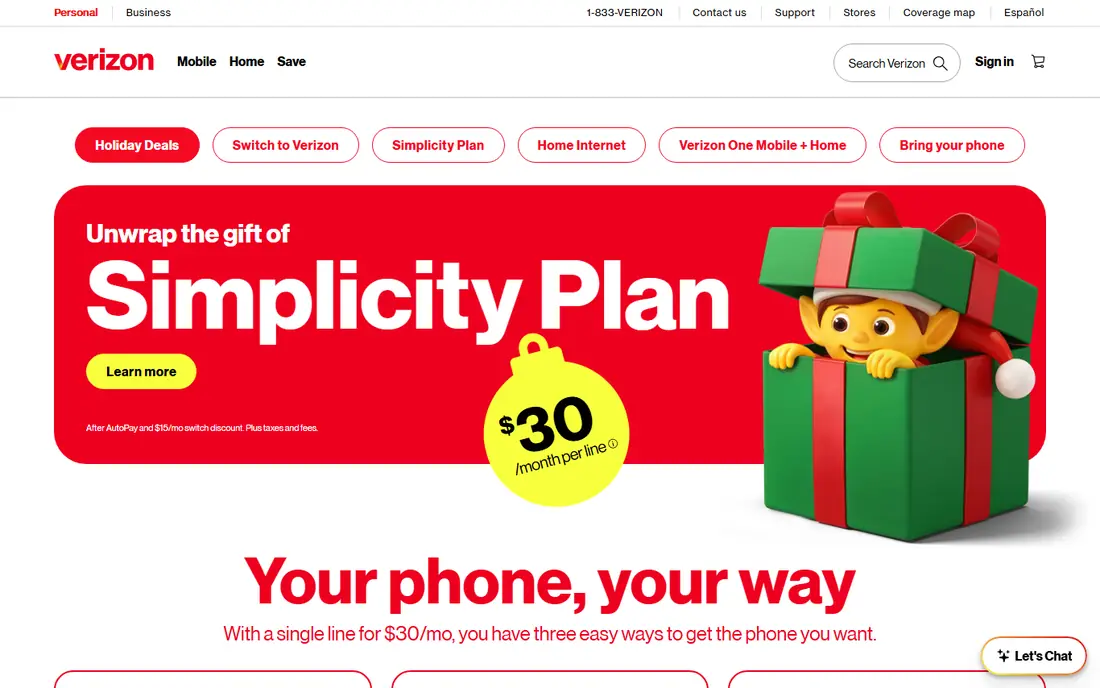
Verizon is often cited in public coverage reports for strong 4G LTE reach and rural reliability. That reputation comes from years of low-band coverage build-out, which helps in smaller towns and along highways in many regions. For drivers, rural workers and travellers who pass through areas with few towers, Verizon is a sensible first check.
The catch is local variation and price. Verizon's own premium plans cost more than many low-cost options, and its cheapest plans can sit lower in data priority during congestion. Its 5G footprint also varies, with faster mid-band and high-band service concentrated in denser areas. Check your exact addresses before assuming the national reputation applies to your street.
- Widely reported strong 4G LTE reach
- Many rural reports favour Verizon
- Large retail and support network
- Premium plans can be pricey
- Lower-cost plans may have lower data priority
- 5G reach varies by area
AT&T is often described as a balanced option, with broad coverage across cities, suburbs and many rural areas. It suits households that split time between town and country and want one carrier for both, without leaning only on city 5G speed or only on rural LTE reach. AT&T also offers FirstNet for eligible first responders, which is a separate consideration for those users.
No carrier covers every rural road, and AT&T has reported weaker spots in some remote western regions. Plan prices at the premium end are also high, and international day passes add up on longer trips. As with every carrier here, the address check matters more than the national summary.
- Broad national footprint in public reports
- Strong in many cities and suburbs
- FirstNet option for eligible users
- Rural gaps remain in some western areas
- Premium plan prices are high
- International add-ons can add cost
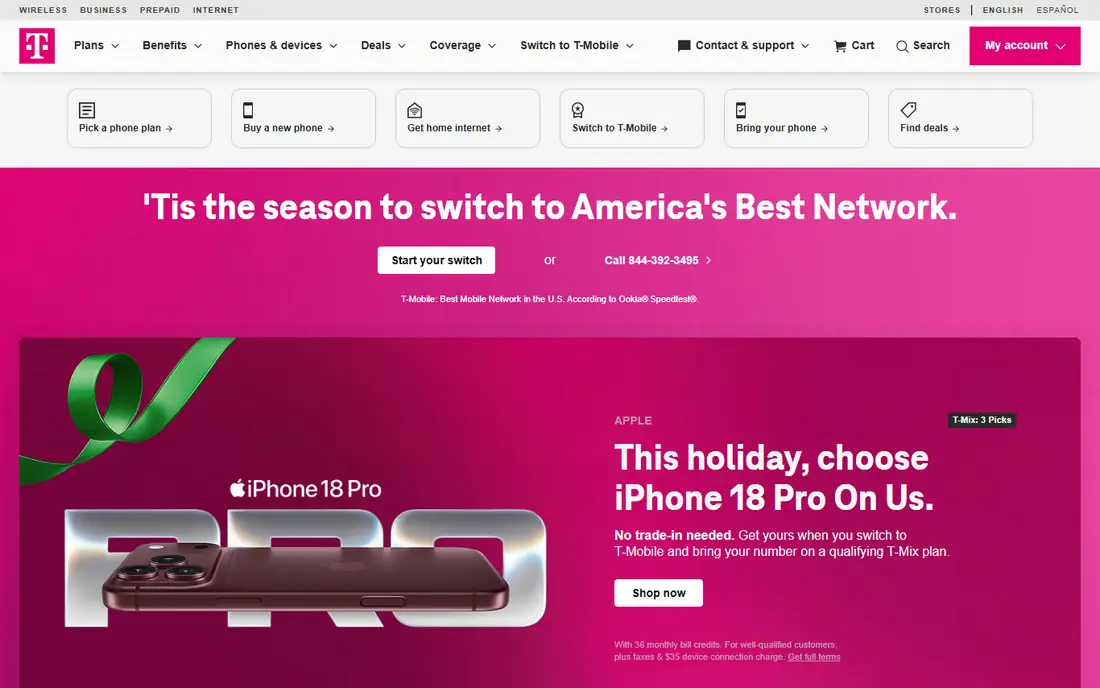
T-Mobile is often cited for the broadest 5G reach by population, with strong performance in cities and suburbs. After its Sprint merger and mid-band build-out, its city 5G experience improved for many users, and its family pricing is often competitive. For urban and suburban users who value 5G speed and availability, T-Mobile is a strong first check.
The limit appears in very remote areas, where public reports still place Verizon or AT&T ahead in some places. Indoor coverage can also vary by building and band. If your daily routes include remote farm roads, mountains or long rural stretches, test T-Mobile at those exact spots rather than relying on city results.
- Widely reported largest 5G footprint by population
- Often fast 5G in cities
- Competitive family plan pricing
- Very remote rural coverage can lag rivals in some reports
- Building penetration varies
- Plan names change often
UScellular is a regional carrier with a strong presence in parts of the Midwest, Northwest and other service areas. Inside those regions, many customers report reliable local coverage and helpful local stores. Roaming agreements can help when you travel outside its footprint, but the experience depends on the roaming partner and plan terms.
Outside its home regions, UScellular is not the obvious first choice. Buyers who travel widely across the country should check roaming rules and coverage maps for their full travel area. For households that live and work mainly inside a UScellular region, it can be a practical local alternative to the big three.
- Strong regional presence in parts of the Midwest and Northwest
- Local retail support
- Roaming agreements help outside its footprint
- Not a national carrier in the same way as the big three
- Coverage is weaker outside its home regions
- Plan choice is narrower
Visible offers simple unlimited plans on the Verizon network, which makes it attractive when Verizon coverage works at your addresses but Verizon's own premium prices do not fit your budget. The online-only model keeps plans simple, with taxes and fees often included in the headline price, depending on the plan terms at purchase.
The trade-off is priority and support. Visible traffic can be deprioritised behind Verizon's own premium customers during congestion, so speeds may slow at busy times and places. Support is mainly online, which suits confident users but not everyone. Test speeds at your busy-hour locations before switching a whole family.
- Simple unlimited plans
- Uses the Verizon network
- No physical store overhead in pricing
- Data may be deprioritised during congestion
- Fewer in-store support options
- Hotspot and perks vary by plan
Mint Mobile offers low-cost plans on the T-Mobile network, with the lowest prices tied to paying for several months upfront. That model suits users who already know T-Mobile works at their home and work addresses and who want to cut the monthly bill without changing networks. Signup and activation are online, and a trial option can help with testing.
The catch is upfront payment and priority. If T-Mobile coverage is weak at your address, a cheap Mint plan will not fix it. Data can also be deprioritised during congestion compared with T-Mobile's own premium plans. Check coverage first, then decide whether the multi-month saving is worth the upfront commitment.
- Low prices on multi-month plans
- Uses the T-Mobile network
- Simple online signup
- Best prices need bulk months paid upfront
- Data priority can be lower
- Customer support is mainly online
Google Fi Wireless suits flexible users and frequent travellers who want simple plan switching and international features. In the United States, its service runs on a partner network, so local coverage follows that network's footprint at your address. That makes the address check just as important as with any other carrier in this guide.
Device compatibility also matters, since some features work best on phones designed for Fi. International data and calling terms vary by plan, so read the current terms for your destinations. For users who value flexibility over a single-network store experience, Fi is a useful option to test.
- Flexible and unlimited plan options
- International features on many plans
- Easy plan switching
- US network experience depends on the underlying partner network
- Device compatibility varies
- Support is online
Cricket Wireless offers prepaid plans on the AT&T network, with stores for in-person help. It suits buyers who want AT&T coverage at a lower price and who prefer prepaid billing without a long contract. Family and multi-line discounts can bring the per-line cost down further.
Cricket plans can cap speeds on some tiers, and data priority can be lower than AT&T's own premium plans during congestion. Hotspot and international features also vary by plan. If AT&T works well at your addresses, Cricket is a sensible low-cost way to use that network, provided you check speed caps and hotspot limits first.
- Simple prepaid plans
- Uses the AT&T network
- Retail stores for in-person help
- Data speeds can be capped on some plans
- Premium features are limited
- Priority can be lower at busy times
US Mobile stands out because many of its plans let you choose which major network to use, and some plans allow switching networks. That is useful when you are unsure which network wins at your address, or when different family members live in different coverage areas. You can pick the network that tests best for each line, within plan rules.
Choice also adds complexity. Features, priority and perks can vary by network and plan, so two US Mobile lines on different networks are not identical products. Read the plan details for your chosen network, and use the trial or short-term plan to test before moving every line. For careful shoppers, that flexibility is a real advantage.
- Lets you choose among major networks on many plans
- Flexible plan sizes
- Network switching options
- Network choice adds complexity
- Perks vary by network and plan
- Support is mainly online
How we picked these
We compared public coverage reports, carrier coverage maps, FCC-related coverage summaries and plan information from official carrier pages. We did not run drive tests or claim a verified national ranking, since coverage varies by location and changes as networks are built. We kept carriers that operate nationally or regionally in the United States in October 2026 and that represent both major networks and low-cost options on those networks. Prices were left as See website because plan prices vary by lines, promotions and terms.
How to check coverage at your address
Start with the three addresses you use most: home, work and school or caregiving locations, plus your regular travel routes. Enter each street address into each carrier coverage map, not just your ZIP code, since coverage can change within a ZIP. Note indoor versus outdoor claims, and ask neighbours, coworkers and local groups about dead spots, dropped calls and slow data at busy times.
Then test before you commit. Use a prepaid month, a trial, or a second line on the network you are considering, and test calls, maps and video at your key locations during busy hours. Check your phone model too, since older phones may lack newer 5G bands. Finally, compare data priority, hotspot limits and total plan cost on the network that passed your address test, rather than choosing on price alone.
Frequently asked questions
What cellular company has the best coverage?
No single company wins everywhere, since coverage varies by location, terrain and building type. Public reports often favour Verizon for rural reliability, T-Mobile for broad 5G reach and AT&T as a balanced option, but your address results matter more. Check maps by street address and test before switching.
What wireless company has the best coverage in rural areas?
Public reports often point to Verizon first for rural reliability, with AT&T close behind in many regions, while T-Mobile has improved but can lag in very remote spots. Rural results still vary by county, road and tower placement. Test the network on your actual rural routes before you rely on a national claim.
Who has best cell service in cities?
In cities, differences are smaller, and T-Mobile often stands out in public reports for 5G availability and speed, with Verizon and AT&T also strong. City users should weigh price, data priority and indoor coverage alongside speed. A low-cost carrier on the best city network for your address often gives the best value.
Which cell phone company has the best reception at my house?
The only reliable answer comes from testing at your house, since maps are estimates and building materials affect signal. Enter your street address into carrier maps, ask neighbours, and test with a trial or prepaid line. If one network works indoors and another does not, choose the working network even if its national reputation is lower.
Do low-cost carriers have the same coverage as major carriers?
In broad terms, low-cost carriers use the same major networks, so the tower footprint is similar, but data priority, speed caps and roaming terms can differ. Visible uses the Verizon network, Mint Mobile uses T-Mobile, and Cricket uses AT&T in broad terms. Check priority and cap terms, since those affect busy-hour performance.
Should I switch carriers just for 5G coverage?
Not unless 5G works well at your main addresses and your phone supports the relevant bands. Strong 4G LTE coverage often matters more for calls and basic data in rural areas. Test both 4G and 5G at home, work and travel spots, then choose on overall reliability rather than a 5G label alone.
Sources
See where you really rank - block by block
ProMapRanker scans Google Maps across a grid of your service area. Simple monthly plans from $19, white-label on every plan.
Start freeKeep reading
 zscaler alternatives
Best Zscaler Alternatives in 2026
Looking for zscaler alternatives? We compare 9 SASE and zero trust platforms on architecture, data protection, pricing, and fit for your network and team.
Read → zapier alternatives free
Best Zapier Alternatives Free in 2026
Nine automation tools for zapier alternatives free in 2026, all with genuinely free tiers, plus free plan limits, starting prices and upgrade paths explained.
Read → which platform is best for online reputation
Which Platform Is Best for Online Reputation in 2026
Wondering which platform is best for online reputation? We compare 8 review, listing, and response tools for small and multi-location businesses and agencies.
Read →