 ProMapRanker
What Cell Phone Company Has the Best Deals in 2026

Key takeaways
- Visible at $25 per month and Mint Mobile at $15 per month on a 12-month plan are among the cheapest unlimited options for a single line.
- T-Mobile, Verizon, and AT&T cost more per line, but they offer perks, premium data, and family pricing that prepaid carriers usually do not match.
- Prices and deals change often, so readers should confirm current terms with the carrier before switching, including taxes, autopay rules, and device offers.
- The best deal depends on coverage at your home and workplace, not only the headline monthly price.
Quick comparison
| Pick | Great for | Pricing starts at | Free tier | |
|---|---|---|---|---|
 T-Mobile | Premium perks and family plans | $55 per month | No | Visit |
 Verizon | Wide coverage and premium plans | $65 per month | No | Visit |
 AT&T | Strong coverage with value plans | $50 per month | No | Visit |
 Mint Mobile | Cheap prepaid unlimited | $15 per month | No | Visit |
 Visible | Cheap unlimited on Verizon | $25 per month | No | Visit |
 US Mobile | Flexible plans on major networks | $10 per month | No | Visit |
 Google Fi | Flexible data and travel | $20 per month | No | Visit |
 Cricket Wireless | Simple prepaid on AT&T | $30 per month | No | Visit |
The best cell phone companies for deals
There is no single winner for every buyer, because carriers price single lines, families, and device deals differently. A carrier that looks expensive for one line can be the cheapest for four lines, and a prepaid deal can be the cheapest until you need a new phone on installments. We compared starting prices, plan structure, and the main trade-offs for each carrier below. Prices and deals change often, so confirm current terms with the carrier before you switch.
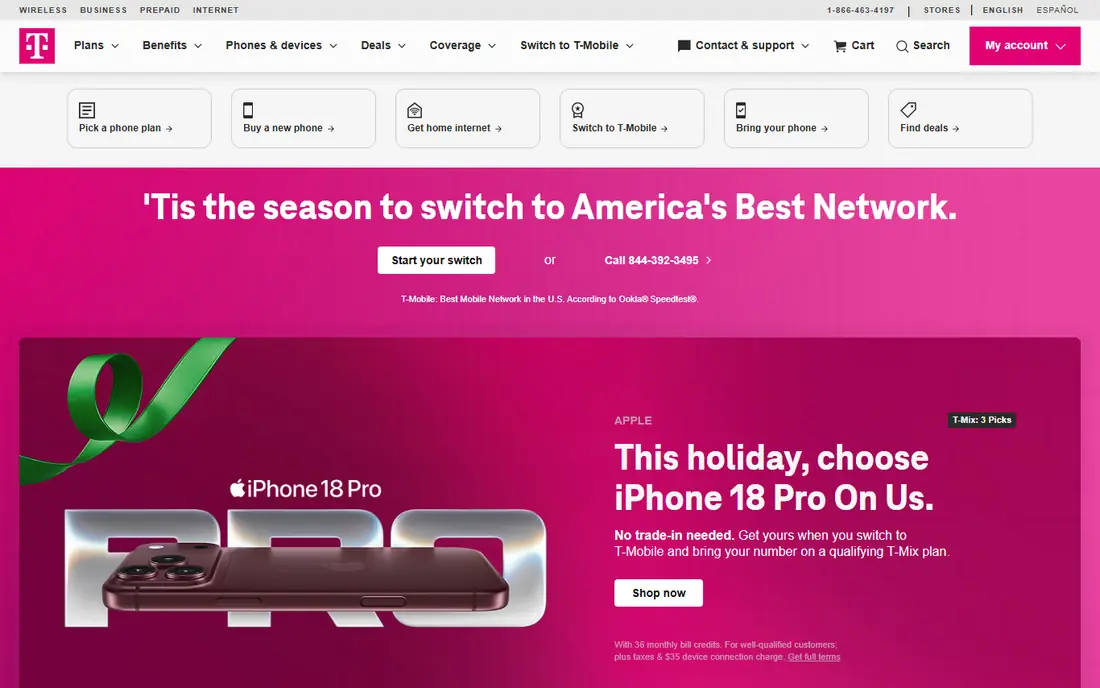
T-Mobile suits buyers who want a premium postpaid plan with streaming and travel perks. Its Essentials Saver plan for one or two lines starts at $55 per month, or $50 with autopay in published October 2026 comparisons, while its Experience Beyond plan reaches $105 per month, or $100 with autopay. Higher plans add premium data, hotspot data, and perks that prepaid plans rarely include.
The downside is the single-line cost and the extra taxes and fees on many plans. T-Mobile is best for families and heavy users who will actually use the perks. If you only need talk, text, and data, a prepaid carrier on the same network may save you a large amount each month.
- Fast 5G in many areas
- Strong family pricing
- Perks on higher plans
- Taxes and fees often extra
- Single-line price is high
- Perks vary by plan
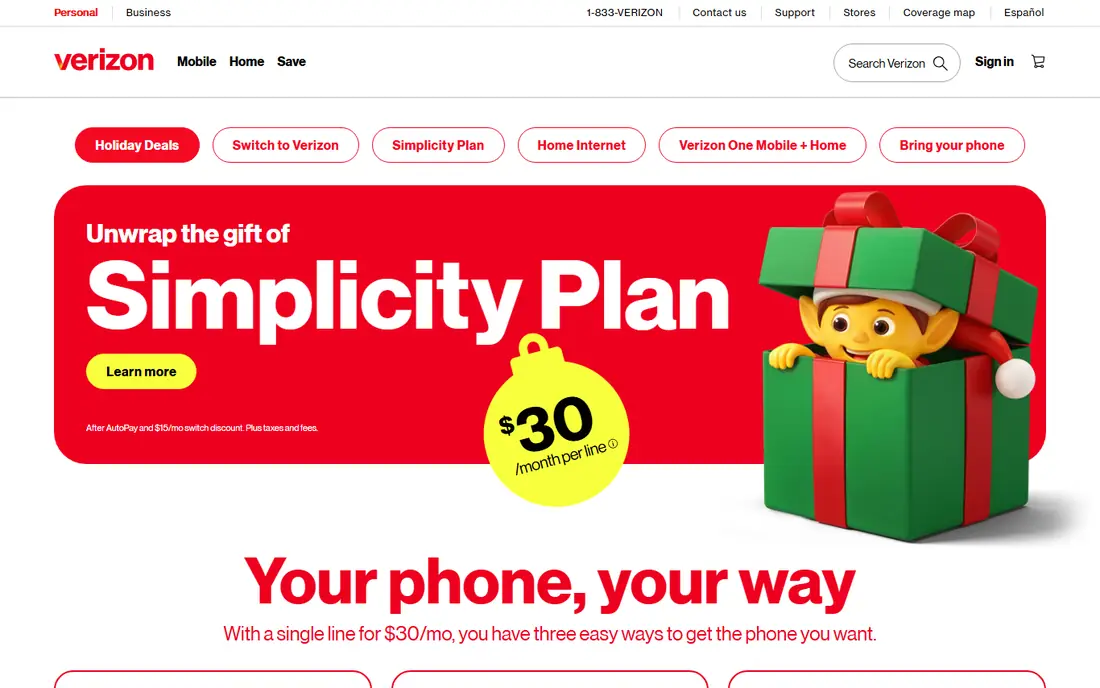
Verizon suits buyers who put coverage first, especially outside cities. Its Unlimited Welcome plan is listed at $75 per month, or $65 with autopay, while Unlimited Ultimate reaches $105 per month, or $95 with autopay, in published October 2026 comparisons. Premium plans add more premium data, hotspot data, and international features.
Verizon is rarely the cheapest for a single line, and device deals often require a premium plan and a trade-in. For families, the per-line price falls as lines are added, which can make Verizon competitive. Check coverage at your home, workplace, and regular travel routes before you pay a premium.
- Wide nationwide coverage
- Strong premium plans
- Good rural performance in many areas
- High single-line price
- Taxes and fees often extra
- Best deals often need multiple lines
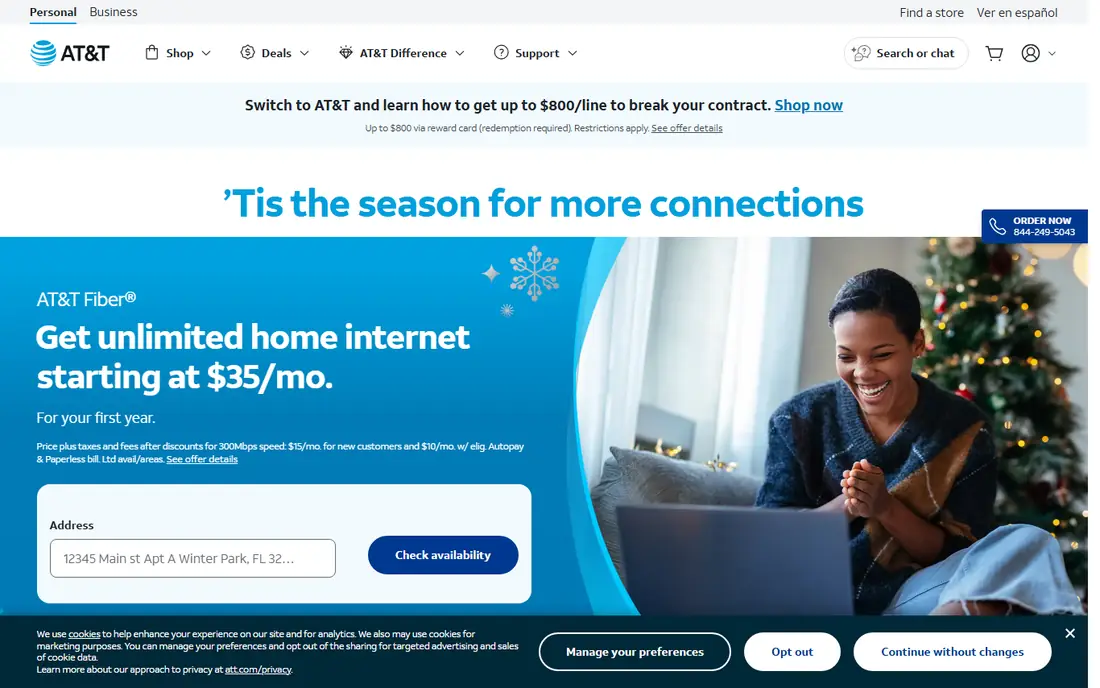
AT&T sits between Verizon and T-Mobile on price for many buyers. Its Value plan starts at $60 per month, or $50 with autopay, while its Elite plan reaches $120 per month, or $110 with autopay, in published October 2026 comparisons. That value tier gives buyers a major-carrier network without paying for the top plan.
The catch is that the cheapest plan has fewer perks and less premium data than higher tiers. AT&T suits buyers who want a major carrier, solid coverage, and a lower starting price than Verizon or T-Mobile. Families should compare multi-line totals, since the ranking can change with three or four lines.
- Large nationwide network
- Value plan undercuts some rivals
- Family discounts
- Taxes and fees often extra
- Top plan is expensive
- Hotspot and perks vary by plan
Mint Mobile is one of the cheapest ways to get service on the T-Mobile network. Its 6GB plan costs $15 per month on a 12-month plan, paid as $180 up front, while its unlimited plan costs $30 per month on a 12-month plan, paid as $360 up front, in published October 2026 comparisons. That up-front payment is the key trade-off.
Mint suits buyers who know their data use, do not need in-store support, and can pay for months in advance. It is less suited to buyers who want a financed phone, frequent plan changes, or premium perks. If you can pay up front, the saving over a major carrier is large.
- Very low prepaid prices
- Runs on T-Mobile network
- Unlimited plan at $30 on a 12-month plan
- Best prices need payment up front
- Taxes and fees extra
- Data can slow after the high-speed allowance
Visible is Verizon's prepaid brand, and its base plan at $25 per month includes taxes and fees, which makes the real price easier to compare. Its Visible Plus Pro plan reaches $45 per month and adds more premium data and hotspot features. For a single line, Visible is often the cheapest way to get Verizon coverage.
The trade-off is support and perks. Visible is online only, with no store to visit for help, and it does not match Verizon's premium plan perks. For buyers who want simple unlimited service at a low price, that trade is usually worth it.
- Taxes and fees included in the headline price
- Unlimited data
- Runs on Verizon network
- No physical stores
- Premium data and hotspot differ by plan
- Support is online
US Mobile suits buyers who want to choose a network and a data amount without a major-carrier bill. Its Light plan with 2GB costs $10 per month, while its Unlimited Premium plan costs $44 per month, with taxes included, in published October 2026 comparisons. That range covers light users and heavy users on one carrier.
The downside is that US Mobile does not offer the same device deals and perks as the major carriers. It is best for buyers who bring their own phone and want a clear monthly price. Check which network option is offered for your plan, since coverage follows that network.
- Low entry price
- Access to major networks
- Taxes included on published plans
- Plan choice can confuse new buyers
- Top plan costs more
- Perks are limited
Google Fi suits light data users and travelers. Its Flexible plan starts at $20 per month plus $10 per GB, so a user who uses little data pays little. Its Unlimited Premium plan costs $65 per month in published October 2026 comparisons, which suits heavier users who also want international features.
The flexible plan can become expensive if your data use rises, so track your use for a month before choosing it. Google Fi is best for buyers who already use Google services, travel abroad, and want a plan that scales with actual use rather than a fixed unlimited price.
- Flexible plan for light users
- International features
- Runs on T-Mobile network
- Flexible data costs $10 per GB on top of the base price
- Unlimited plans cost more
- Taxes extra
Cricket Wireless is AT&T's prepaid brand, and it suits buyers who want AT&T coverage without a postpaid contract. Its Sensible 10GB plan costs $35 per month, or $30 with autopay, while its Supreme Unlimited plan costs $60 per month, or $55 with autopay, with taxes included in published October 2026 comparisons.
Cricket is a good middle ground between a major carrier and a very cheap prepaid brand. Speeds and priority can be lower than AT&T postpaid during congestion, and device deals are simpler. For a single line or a family that wants a predictable prepaid bill, Cricket is easy to understand.
- Taxes and fees included on published plans
- Runs on AT&T network
- Simple prepaid plans
- Data speeds can be lower than AT&T postpaid
- Premium perks are limited
- Top plan costs $55 with autopay
How we picked these
We compared published October 2026 plan comparisons and carrier plan pages, focusing on single-line starting prices, network, taxes, and the main trade-offs. We included the three major carriers and five prepaid or flexible carriers that use their networks. We did not rank device deals as a fixed price, since those offers change often and depend on trade-ins, plan choice, and credit.
How to find the best deal for you
Start with coverage, not price. Ask friends or check carrier coverage maps for your home, workplace, and commute, and test a prepaid SIM for a month if you are unsure. A cheap plan on a weak network is not a deal if calls drop and data stalls where you live and work.
Next, count your real data use and lines. A light user may save most on a low-data or flexible plan, while a family may save most on a multi-line postpaid plan with perks they will use. Add taxes, fees, autopay discounts, and any device installment to the monthly total, and compare that total, not the headline price.
Device deals and fine print
Device deals often require a premium plan, a trade-in, and a 24 or 36 month installment agreement. If you leave early, you may owe the remaining device balance. Read the offer terms for the plan required, the trade-in value, and what happens if you change plans. Prices and deals change often, so confirm current terms with the carrier before you switch or sign.
Frequently asked questions
What cell phone company has the best deals for a single line?
For a single line, Visible at $25 per month and Mint Mobile at $15 per month on a 12-month plan are among the cheapest options in published October 2026 comparisons. The best choice depends on coverage in your area and whether you can pay up front. Confirm current terms with the carrier before switching.
Which cell phone company has the best deals for families?
T-Mobile, Verizon, and AT&T often offer the best family value, since the per-line price falls as lines are added and higher plans add perks. Prepaid carriers can still be cheaper for families that bring their own phones. Compare the total for your exact number of lines.
Are prepaid carriers as good as major carriers?
Prepaid carriers use major networks, so coverage is often similar, but data priority, speeds during congestion, support, and perks can differ. Visible uses Verizon, Mint Mobile uses T-Mobile, and Cricket uses AT&T. Test coverage and check priority terms before switching.
Do carrier deals include taxes and fees?
Not always. Visible, US Mobile, and Cricket include taxes and fees in some published prices, while T-Mobile, Verizon, AT&T, Mint Mobile, and Google Fi often add taxes and fees. Always compare the total monthly bill, not only the advertised price.
How often do cell phone deals change?
Carrier deals change often, sometimes monthly, and device offers can end without much notice. Check the current offer, plan requirements, and trade-in terms on the day you plan to switch. A deal that was available last month may not be available today.
Sources
See where you really rank - block by block
ProMapRanker scans Google Maps across a grid of your service area. Simple monthly plans from $19, white-label on every plan.
Start freeKeep reading
 zscaler alternatives
Best Zscaler Alternatives in 2026
Looking for zscaler alternatives? We compare 9 SASE and zero trust platforms on architecture, data protection, pricing, and fit for your network and team.
Read → zapier alternatives free
Best Zapier Alternatives Free in 2026
Nine automation tools for zapier alternatives free in 2026, all with genuinely free tiers, plus free plan limits, starting prices and upgrade paths explained.
Read → which platform is best for online reputation
Which Platform Is Best for Online Reputation in 2026
Wondering which platform is best for online reputation? We compare 8 review, listing, and response tools for small and multi-location businesses and agencies.
Read →