 ProMapRanker
Best Vumoo Alternatives in 2026

Key takeaways
- This list includes only legal, licensed streaming services. No piracy sites are listed here, and no unlicensed aggregator is recommended.
- Tubi and Pluto TV are the best free starting points, because they offer large licensed catalogs at no monthly cost.
- Netflix offers the broadest mix of originals and licensed titles, while Hulu suits viewers who want current US TV quickly.
- Disney+ suits families and fans of Disney, Marvel, Star Wars, and Pixar, while Max suits prestige drama and Warner Bros films.
- Peacock and Paramount+ offer lower-cost paid entry points, with sports, news, and large back catalogs.
Quick comparison
| Pick | Great for | Pricing starts at | Free tier | |
|---|---|---|---|---|
 Netflix | Broadest mix of originals | See website | No | Visit |
 Hulu | Current US TV | See website | No | Visit |
 Disney+ | Family and franchise fans | See website | No | Visit |
 Prime Video | Prime members and films | See website | No | Visit |
 Max | Prestige drama and films | See website | No | Visit |
 Peacock | NBC shows and sports | See website | Yes | Visit |
 Paramount+ | CBS shows and classics | See website | No | Visit |
 Tubi | Free movies and TV | Free | Yes | Visit |
 Pluto TV | Free live channels | Free | Yes | Visit |
The best vumoo alternatives
We compared these services on catalog fit, licensing, price, ads, device support, and original content. Every service here is licensed, which means studios are paid and catalogs are stable. Our pick for most viewers is Netflix plus Tubi, and our pick for budget viewers is Tubi plus Pluto TV. Starting prices for paid services are shown as See website, and you should check the current vendor page before subscribing, because streaming prices change often.
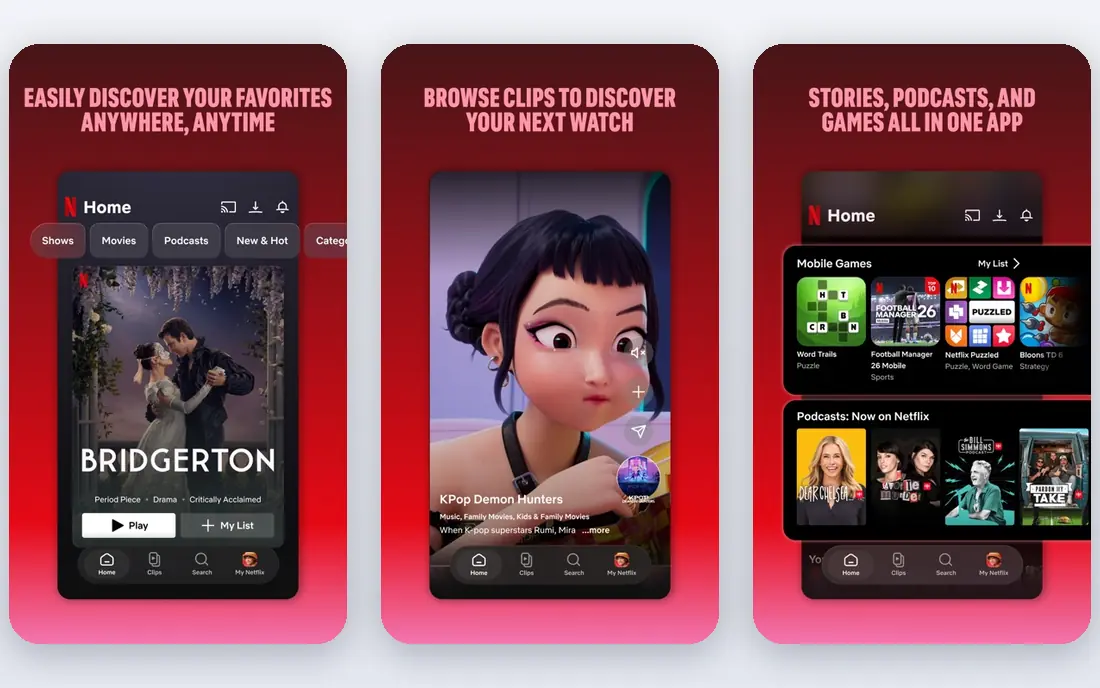
Netflix remains the default paid service for viewers who want variety. Its original films and series cover drama, comedy, documentary, and international titles, and its licensed catalog still adds breadth beyond originals. Recommendations help viewers find something quickly, and device support is broad, from smart TVs and phones to game consoles and streaming sticks. For a household that watches many genres, Netflix covers the most ground in one subscription.
The catch is price and ads. There is no free plan, and the cheapest tier includes ads and limits on resolution and simultaneous streams. Prices have also risen over time, so Netflix is no longer the cheap add-on it once was. If you watch a lot and value originals, Netflix is worth it. If you watch rarely, a free service plus one cheaper paid service may save money.
- Large original catalog
- Strong recommendations
- Wide device support
- No free plan
- Ad-supported tier has limits
- Prices have risen over time

Hulu suits viewers who want current US television without waiting months for a season to finish. Many ABC, FX, and NBC shows appear the next day, which helps viewers keep up with ongoing series. Originals have grown stronger in recent years, and the catalog includes a solid back library of comedies, dramas, and documentaries. For a viewer who follows network TV closely, Hulu is the most practical paid pick.
The tradeoff is ads and bundle cost. The cheapest tier includes ads, and ad-free viewing costs more. The live TV bundle, which adds channels and sports, is far more expensive and should be judged separately from on-demand Hulu. If current TV is your main habit, Hulu fits well. If you mainly watch films, Netflix or Max may offer more for the same money.
- Next-day US TV episodes
- Strong FX and ABC catalog
- Useful originals
- No free plan
- Ad tier has frequent ads
- Live TV bundle is costly
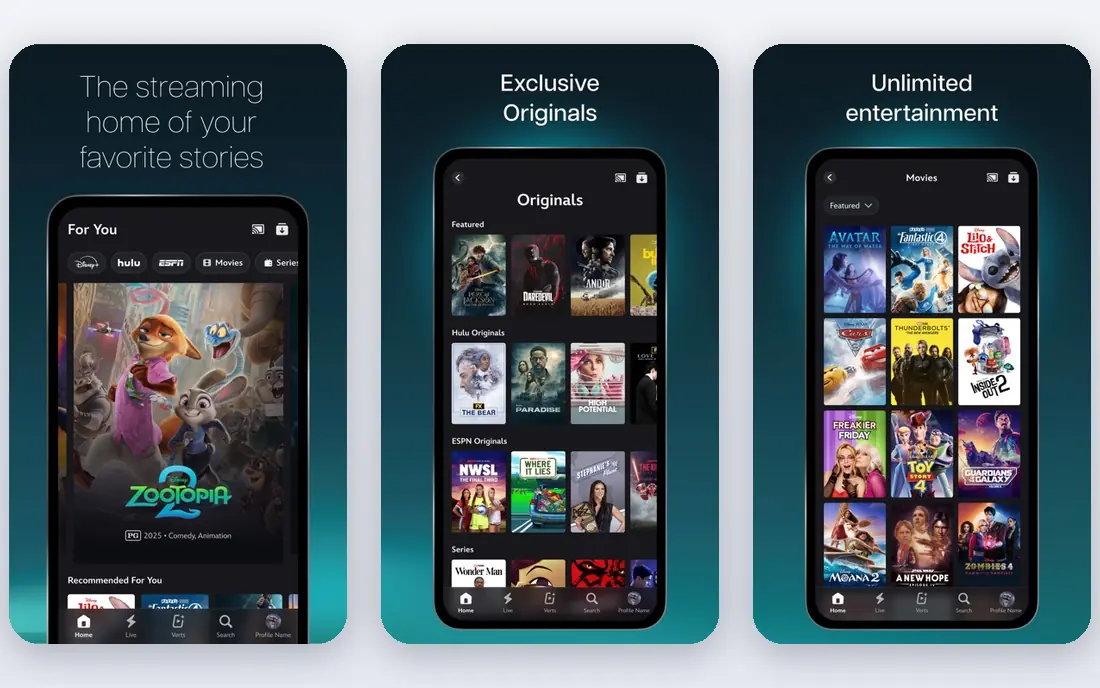
Disney+ is the clear pick for families and for fans of its core franchises. Disney animation, Pixar, Marvel, Star Wars, and National Geographic live in one place, which makes it easy for households with children or franchise fans to find something to watch. Bundles with Hulu and ESPN+ can lower the combined cost for viewers who want all three, and the interface is simple for family profiles and parental controls.
The catch is breadth for adult viewers. If you mainly watch prestige adult drama or a wide range of licensed films, Disney+ alone will feel narrower than Netflix or Max. There is also no free plan, so you pay from day one. If your household includes children or franchise fans, Disney+ is an easy recommendation. If not, pair it with a broader service or choose a different paid pick.
- Disney, Marvel, Star Wars, and Pixar
- Strong family catalog
- Useful bundles
- No free plan
- Adult drama catalog is thinner
- Price rises with bundles
Prime Video is best judged as part of Amazon Prime, where many members already get it included with shipping and other benefits. The film catalog is broad, with a mix of Amazon originals, licensed films, and titles available to rent or buy. That rental store is useful when a film is not included in any subscription, because you can pay once rather than adding another monthly service. For Prime members, Prime Video is already paid for, so it is a natural first service to use.
The tradeoff is interface and consistency. Browsing can feel cluttered, because included titles sit next to rental titles, and original quality varies. A standalone Prime Video subscription, without full Prime, also adds a monthly cost that should be compared with other paid services. If you already pay for Prime, use Prime Video heavily. If you do not, judge it on its catalog alone, not on Prime shipping benefits.
- Included with Prime for many members
- Strong film catalog
- Useful rentals
- Interface can feel cluttered
- Originals vary in quality
- Standalone price adds up
Max, formerly HBO Max, suits viewers who prioritize prestige drama and theatrical films. HBO originals remain a strong draw, and Warner Bros films, documentaries, and Discovery content add breadth. For viewers who watch a few high-quality series closely, Max often delivers more memorable shows per month than a broader service. The film rotation also helps viewers who like recent theatrical releases.
The catch is licensing churn and tier limits. Catalog titles can leave as licenses change, and the cheapest ad-supported tier limits downloads and resolution. There is also no free plan. If prestige drama is your main taste, Max is a top pick. If you want the widest variety for one subscription, Netflix may cover more genres.
- HBO originals
- Warner Bros films
- Strong documentary and prestige catalog
- No free plan
- Ad tier limits downloads
- Catalog changes with licensing
Peacock is a good low-cost paid option for viewers who follow NBC, Bravo, and Universal content. Classic comedies, current NBC shows, and live sports coverage give it a distinct mix, and the free tier lets viewers test part of the catalog without paying. For sports fans who want certain live events without a full live TV bundle, Peacock can be a useful add-on at a lower price than a cable replacement.
The tradeoff is depth. The free tier is limited, lower paid tiers include ads, and originals are thinner than Netflix, Hulu, or Max. Peacock works best as a second service or as a sports and NBC supplement, rather than as a single-service replacement for Netflix. If NBC shows and sports matter to you, Peacock is good value. If you want a broad single service, start elsewhere.
- NBC and Bravo catalog
- Live sports options
- Free tier available
- Free tier is limited
- Ads on lower tiers
- Originals are thinner than leaders
Paramount+ offers one of the lowest paid entry prices on this list, with CBS shows, Paramount films, classic series, and live sports and news. That mix suits viewers who follow CBS dramas, reality shows, and sports, and who want a back catalog of classic television. The low entry price reported in recent comparisons also makes Paramount+ an easy second subscription alongside a free service or a broader paid service.
The catch is polish and tiering. The interface can feel uneven, original quality varies, and the full Showtime catalog requires a higher tier. Paramount+ is best seen as a focused service with a clear catalog strength, not as a one-service replacement for Netflix. If CBS, sports, and classics fit your taste, it is good value. If you want prestige drama breadth, Max may suit you better.
- CBS and Paramount catalog
- Live sports and news
- Low entry price
- Interface can feel uneven
- Originals vary
- Higher tier needed for full Showtime catalog
Tubi is the best free licensed alternative for viewers who want movies and TV on demand without a subscription. Its catalog is large for a free service, with films, series, and documentaries across many genres, all licensed and ad-supported. No account payment is needed to start watching, and device support covers smart TVs, phones, and streaming devices. For budget viewers, Tubi removes the price decision entirely.
The tradeoff is ads and recency. Ads interrupt viewing, and newer theatrical releases are limited, because Tubi focuses on library titles rather than day-one releases. Catalog also varies by region, so a title available in one country may not appear in another. If you can tolerate ads and you like library films and series, Tubi is excellent. If you need new releases, pair Tubi with one paid service.
- Large free licensed catalog
- No subscription needed
- Wide device support
- Ads interrupt viewing
- Newer releases are limited
- Catalog varies by region
Pluto TV suits viewers who miss channel surfing. It offers many free live channels organized by genre, from movies and news to reality and classic TV, plus on-demand titles. That linear feel helps when you want something on in the background without choosing a specific title. Like Tubi, Pluto TV is licensed and ad-supported, so you pay nothing monthly for a legal service.
The catch is control. Live channels mean you watch what is playing, not always the exact episode you want, and ads interrupt viewing. Channel lineups also change over time as licenses shift. Pluto TV works best alongside Tubi: use Pluto TV when you want live, lean-back viewing, and use Tubi when you want to pick a specific title. Together, they cover much of what viewers once sought from unlicensed sites, without the legal and security risks.
- Many free live channels
- On-demand titles included
- Cable-like browsing
- Less control over exact titles
- Ads interrupt viewing
- Channel lineup changes
How we picked these
We compared official catalog pages, pricing pages, and device support for each service, and we checked licensing status rather than catalog size alone. We favored services that are licensed in the United States in October 2026, that work on common devices, and that fit movie and TV viewing rather than short-form video alone. We excluded unlicensed streaming sites entirely, because they carry legal risk, malware risk, and unstable catalogs, even when they appear to offer more titles for free.
How to choose a streaming service legally
Start with what you actually watch. List your top five shows and films from the past month, then check which licensed service carries them. That simple check avoids paying for a service whose catalog you rarely use. Next, decide your ad tolerance. Free services like Tubi and Pluto TV use ads, while paid ad-free tiers cost more. A mix of one free service and one paid service often covers more viewing than two paid services at a higher total cost.
Check device support before you subscribe, especially for older smart TVs, and check if a bundle saves money. Disney bundles, Prime membership, and mobile carrier offers can change the effective price. Finally, remember that you can rotate services: subscribe to one paid service for a month, watch its key titles, cancel, and switch to another. Rotation is legal, saves money, and works well if you do not need every service at once.
Why licensed services matter
Licensed services pay studios and rights holders, which keeps catalogs stable and apps safe to install. Unlicensed sites often carry aggressive ads, malware risks, and broken links, and they can expose viewers to legal notices and account security problems. A free licensed service may show ads, but it does not carry those same risks. If a site offers new theatrical releases for free with no ads and no account, treat that as a warning sign, not as a bargain.
Frequently asked questions
What is the best legal Vumoo alternative?
Tubi and Pluto TV are the best free legal alternatives, because they offer large licensed catalogs at no cost. Netflix is the best paid alternative for breadth, while Hulu suits current US TV viewers. The best choice depends on your taste, but every service on this list is licensed, so you avoid piracy risk whichever you pick.
Are Tubi and Pluto TV really free and legal?
Yes. Both services are ad-supported and licensed, which means studios grant them rights to stream titles in exchange for ad revenue. You do not pay a monthly fee, though you will see ads during viewing. That model is different from unlicensed sites, which stream titles without rights and often carry security risks.
Which service is best for movies only?
Netflix and Max offer the strongest film mixes among paid services, with originals and Warner Bros and licensed titles. Tubi offers the strongest free film library for library titles. If you want new theatrical releases, check rental options on Prime Video, because new films often appear for rent before they join a subscription catalog.
Can I replace cable with these services?
Tubi and Pluto TV plus one or two paid services can replace much of on-demand cable viewing, but they do not fully replace live sports and news channels. Peacock and Paramount+ add some live sports and news, while a live TV bundle would be needed for a full cable channel lineup. Decide which live channels you truly watch before paying for a live bundle.
Do streaming prices change often?
Yes. Streaming services have raised prices several times in recent years, and entry prices in this article are rounded figures that you should verify on the vendor page before subscribing. Free services remain free, but paid tiers, ad-free upgrades, and bundles change. Check the current price at signup, and review your subscriptions every few months to cancel services you no longer use.
Sources
See where you really rank - block by block
ProMapRanker scans Google Maps across a grid of your service area. Simple monthly plans from $19, white-label on every plan.
Start freeKeep reading
 zoro.to alternatives
Best Zoro.to Alternatives in 2026
We compare the best zoro.to alternatives in 2026, listing only legal licensed anime streaming services, from Crunchyroll to free options for fans today.
Read → zip alternatives
Best Zip Alternatives in 2026
We compare the best zip alternatives for buy now, pay later in 2026, covering pay-in-4 plans, fees, spending limits, and credit reporting options today.
Read → yesware alternatives
Best Yesware Alternatives in 2026
Compare the best yesware alternatives for sales email tracking, templates, and sequences, with current pricing and honest tradeoffs for small sales teams.
Read →