 ProMapRanker
VPN Alternatives for Business in 2026


Small teams wanting a free zero trust start · Pricing starts at: Free
Key takeaways
- Zero trust access beats a full-network VPN for most firms because it grants access per application, not per network.
- Cloudflare Zero Trust offers the most generous free start in this list, with a free tier for up to 50 users.
- Tailscale and NetBird suit engineering teams that want a private mesh between devices, servers and cloud resources.
- Zscaler, Cato and Cisco suit larger firms that need filtering, inspection and branch networking alongside private access.
- Check device posture, single sign-on and audit logs before you buy, because those controls decide how safe the system is in practice.
Quick comparison
| Pick | Great for | Pricing starts at | Free tier | |
|---|---|---|---|---|
| Cloudflare Zero Trust | Small teams wanting a free zero trust start | Free | Yes | Visit |
 Tailscale | Engineering teams and device meshes | $8 per user per month | Yes | Visit |
 Twingate | Small and mid-size teams replacing a VPN | $5 per user per month | Yes | Visit |
 Zscaler Private Access | Large firms needing enterprise zero trust | See website | No | Visit |
 NordLayer | Teams wanting fast rollout and control | See website | Free trial | Visit |
 NetBird | Teams wanting a self-hosted mesh option | See website | Yes | Visit |
 Check Point SASE | Mid-size firms wanting ZTNA plus filtering | See website | No | Visit |
 Cisco Secure Access | Cisco shops and larger networks | See website | Free trial | Visit |
 Cato SASE | Multi-site firms wanting network plus security | See website | No | Visit |
 GoodAccess | Small firms wanting simple zero trust | See website | Free trial | Visit |
The best VPN alternatives for business
A traditional VPN puts a remote worker inside the whole company network once they sign in. That broad access is the problem. If one laptop is compromised, an attacker can move to systems that worker never needed. Modern alternatives give access to one named application at a time, check identity and device health, and keep the rest of the network hidden.
We compared zero trust network access tools, mesh networks and secure access platforms that replace or sit alongside a VPN. The list covers small teams that need a free start, engineering teams that want a private mesh, and larger firms that need web filtering, compliance controls and branch networking in one platform.
Our pick for most small teams is Cloudflare Zero Trust, because the free tier covers up to 50 users and paid seats are priced clearly. Tailscale is our pick for engineering-led teams, while Zscaler and Cato suit larger firms with compliance and network needs that a simple tool cannot cover.
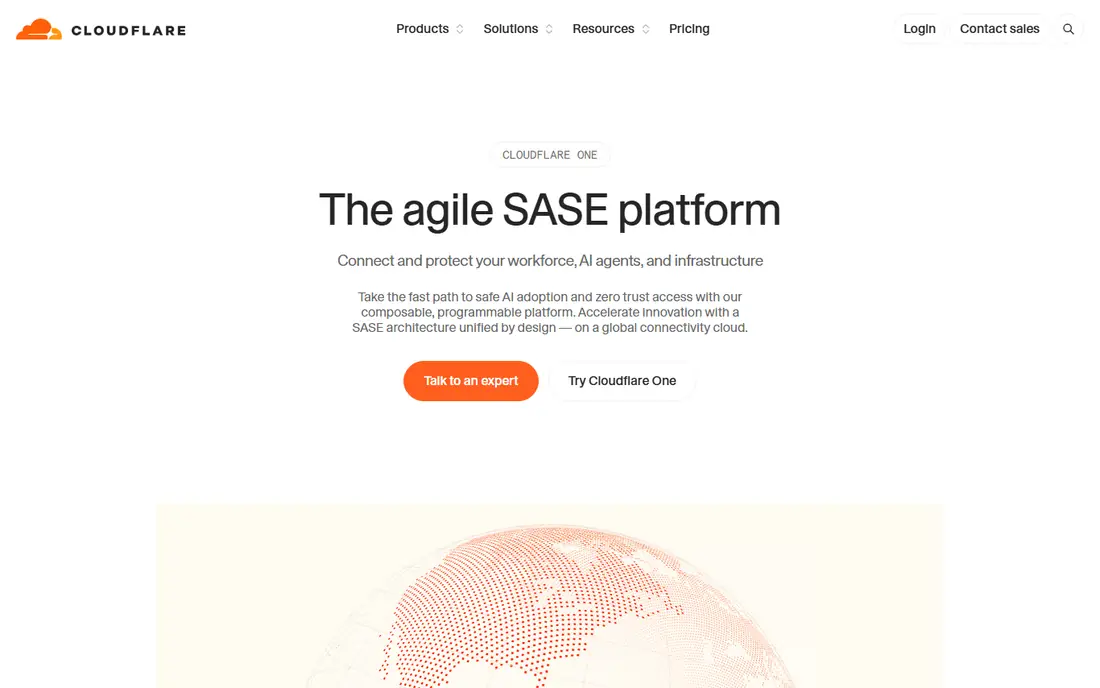
Cloudflare Zero Trust replaces a VPN with identity-based access to private web apps, servers and networks. Staff sign in once, and Cloudflare checks who they are before showing an application, rather than opening a tunnel to the whole office network. The free tier covers up to 50 users, which makes a pilot almost free for a small firm.
Paid plans add gateway filtering, browser isolation and logging at a published per-user price. The catch is that larger network features, such as dedicated egress addresses, sit in higher tiers or add-ons. Teams that only need private app access will find the core product strong, while firms that want a full branch network should compare Cato or Cisco.
- Free tier for up to 50 users
- Clear paid seat price
- Broad global network
- Enterprise features are add-ons
- Setup needs some IT time
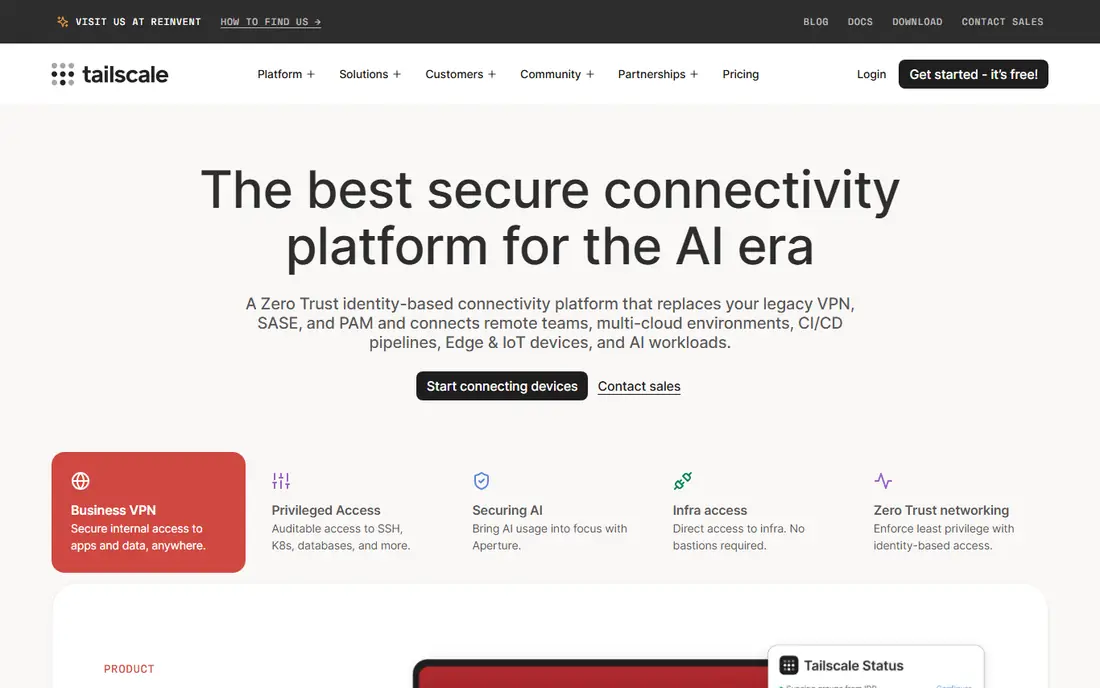
Tailscale builds a private mesh network with WireGuard, so each device connects directly to the devices and servers it needs. It is popular with developers because setup is quick, access rules are written in plain configuration, and it covers laptops, servers and cloud virtual machines in one network. A free personal plan exists, while business use starts on a paid plan.
Tailscale is not a web filter or a threat inspection product, so firms that need content filtering must pair it with another tool. Audit logging and some access controls sit on the higher Premium tier, which raises the price for compliance-heavy teams. For pure private connectivity, though, few tools are easier to run.
- Simple WireGuard mesh
- Works across laptops, servers and cloud
- Clear per-user pricing
- No web filtering or content inspection
- Some controls need the higher tier
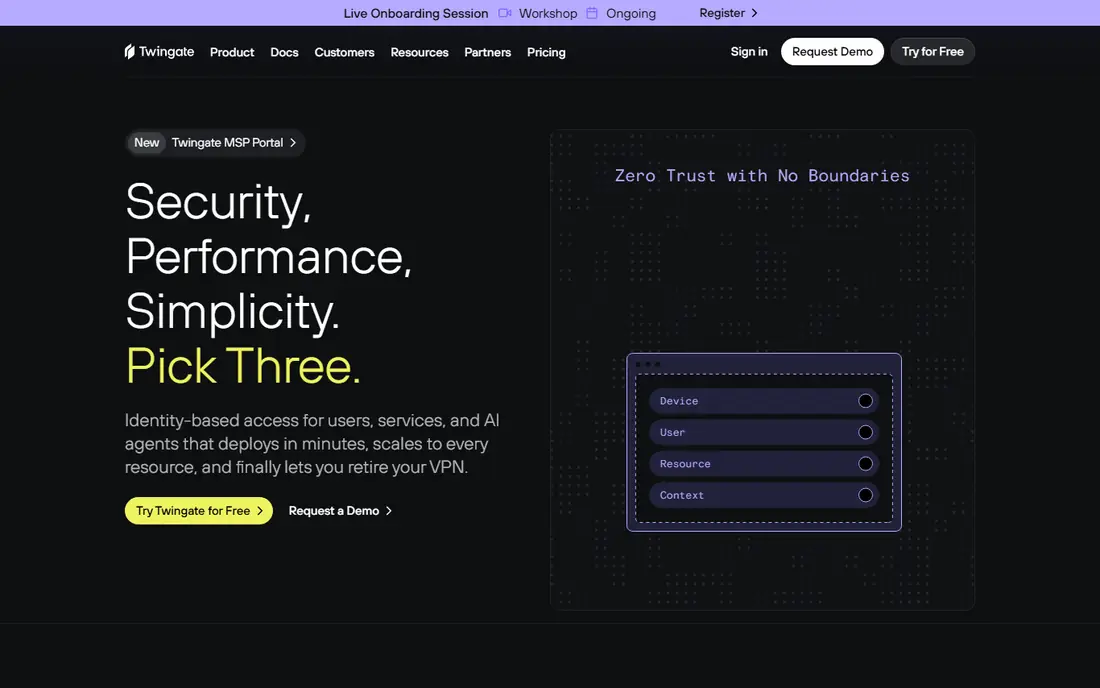
Twingate gives each user access to specific private resources through lightweight connectors, without joining a broad network. Staff see only the apps they are allowed to use, and admins can tie access to identity provider groups. The free starter tier covers a small team, and paid plans start at a low per-user price.
Twingate is focused on private access, so it does not replace a full secure access service edge platform with web filtering and branch routing. Deployment also needs connectors placed near each private resource, which takes IT time on the first setup. For a VPN replacement with clear per-app control, it is a strong and affordable pick.
- Per-application access
- Free starter tier
- Simple admin controls
- Needs connectors on private resources
- No full SASE bundle
Zscaler Private Access, known as ZPA, routes users to private applications through a global cloud rather than through a company data center. It is built for large firms with many offices, contractors and compliance needs, and it pairs with Zscaler Internet Access for web security. Access is granted per application based on identity and policy.
The trade is cost and complexity. Pricing is quoted rather than published, and deployment often needs dedicated planning for large estates. Small firms will find Cloudflare, Twingate or Tailscale simpler and cheaper. Large firms that already buy Zscaler for web security may find the combined platform worth that effort.
- Global cloud platform
- Strong compliance story
- Per-app access at scale
- Quoted pricing only
- Deployment can be complex
NordLayer is the business arm of the NordVPN family, built for teams rather than consumers. It offers dedicated servers, dedicated IP addresses, shared gateways and admin controls in a dashboard that small IT teams can learn quickly. Single sign-on and site-to-site options help firms that still need some network-level links.
NordLayer is closer to a managed business VPN than a pure zero trust platform, so firms that want strict per-application access should compare Twingate or Zscaler first. Add-ons such as dedicated IPs raise the total bill, so price the full setup, not just the base seat. For fast rollout with familiar VPN controls, it remains a practical choice.
- Simple admin panel
- Dedicated servers and IPs
- Single sign-on support
- Per-user cost rises with add-ons
- Less deep than enterprise SASE tools
NetBird is a WireGuard-based mesh network with a managed cloud option and a self-hosted option for teams that want to run the control plane themselves. It supports access groups, routing and single sign-on, and it suits firms that like Tailscale but want more control over where coordination data lives.
NetBird is a smaller vendor, so support depth and third-party integrations are less mature than Tailscale or Cloudflare. The free tier covers small teams, while larger deployments move to paid plans with quoted or published per-user pricing depending on the tier. For self-hosting fans, it is one of the best VPN alternatives in this list.
- WireGuard mesh
- Managed cloud or self-hosted control
- Free tier for small teams
- Smaller vendor than Tailscale
- Enterprise features need higher tiers
Check Point SASE, formerly Perimeter 81, combines zero trust access with web filtering and a private backbone for remote and office users. It suits mid-size firms that want one vendor for private access and internet security, without building a mesh or managing many separate tools. Onboarding is aimed at IT teams without a large security staff.
Pricing is not published as a simple per-user list price, so firms must talk to sales or a partner for a quote. That makes budgeting harder than with Cloudflare or Twingate. Teams that already use Check Point products will get more value from the shared management, while others should weigh the quote against simpler tools.
- ZTNA, web filtering and private backbone in one service
- Quick onboarding
- Pricing not published
- Part of a large vendor suite
Cisco Secure Access brings zero trust access, secure web gateway and firewall controls into one cloud service for firms that already run Cisco networking. It supports per-application access, posture checks and policy controls at enterprise scale, and it fits firms with branches, data centers and cloud workloads to connect.
Small teams will find Cisco Secure Access heavier than Cloudflare or Twingate, and pricing often requires a quote. The value shows when a firm already uses Cisco hardware and identity tools, because policies and reporting can stay in one place. Standalone buyers should test the trial and compare total cost carefully.
- Deep Cisco integration
- ZTNA plus secure web gateway
- Strong enterprise controls
- Complex for small teams
- Pricing by quote for many deals
Cato Networks offers a full secure access service edge platform that connects offices, remote users and cloud resources through one global backbone. It combines SD-WAN, firewall, zero trust access and threat prevention, which suits firms with many sites that want one policy and one vendor for network and security.
Cato is priced by quote and aimed at mid-size and large firms, so a small team with one office will pay for capacity it does not need. Deployment also takes planning across sites. For multi-site firms that want to retire separate VPN, firewall and WAN contracts, the single platform can simplify both management and support.
- Single SASE platform for sites, users and cloud
- Global private backbone
- Quoted pricing
- Overkill for a single-office small team
GoodAccess is a smaller zero trust platform built for small and mid-size firms that want VPN replacement without enterprise complexity. It offers per-application access, dedicated IP addresses, threat blocking and a straightforward admin panel, with a trial for testing before purchase.
GoodAccess has fewer integrations and a smaller partner network than Cloudflare, Zscaler or Cisco, so firms with complex identity or compliance stacks should check compatibility first. For a small team that wants a clear zero trust start at a modest price, it is a useful alternative to a traditional business VPN.
- Simple setup
- Per-app access
- Dedicated IPs and threat blocking options
- Smaller ecosystem
- Fewer enterprise integrations
How we picked these
We focused on tools that replace the broad network access of a VPN with per-application or mesh access, and we kept only products that are live for business use in October 2026. We checked official product pages and pricing pages for free tiers, per-user prices and whether pricing is quoted, and we noted where a tool is a full SASE platform rather than a pure access tool.
We weighed ease of rollout, identity and device checks, audit logging, single sign-on support and the total cost at small and large team sizes. We did not claim hands-on testing. Instead we compared published features and pricing, and we flagged where a tool needs another product for web filtering or branch networking.
Choosing the right option for you
Start by listing what remote staff actually need. If they only use three or four web apps and a file server, a zero trust tool such as Cloudflare or Twingate will cover it with less risk than a VPN. If engineers need to reach servers, databases and cloud machines, a mesh such as Tailscale or NetBird fits better. If offices and branches also need network security, a SASE platform such as Cato or Cisco makes more sense.
Check identity first. The tool should work with your identity provider, support multi-factor authentication, and let you remove a user in one place when staff leave. Then check device posture, audit logs and whether contractors can be given time-limited access to one app. Price the team at its largest size, because per-user billing grows fast, and test a pilot with a small group before moving everyone off the VPN.
Keep the old VPN running during the pilot, and move one application at a time. That way a failed login or a missing connector does not block a whole team. Document who can reach each app, review that list each quarter, and keep an offline path for IT staff to fix access when the main tool itself has a problem.
Frequently asked questions
What are the best alternatives to a VPN for business?
Zero trust network access tools such as Cloudflare Zero Trust, Twingate and Zscaler Private Access are the main alternatives, because they grant access per application. Mesh networks such as Tailscale and NetBird are another route, especially for engineering teams. Full SASE platforms such as Cato suit firms that also need branch networking.
What is the difference between a VPN and zero trust access?
A VPN connects a user to a whole network and trusts them once inside, which lets a compromised device reach many systems. Zero trust access connects a user to one named application after checking identity and device health, and it hides the rest of the network. That narrower access is the core security gain.
Is Cloudflare Zero Trust free for business use?
Cloudflare Zero Trust offers a free tier for up to 50 users, which covers many small teams for basic access. Paid plans add gateway filtering, browser isolation and deeper logging at a per-user price. Check the current plan limits before relying on the free tier for a whole company.
Which VPN alternative is best for developers?
Tailscale is a strong pick for developer teams because it builds a simple WireGuard mesh across laptops, servers and cloud resources. NetBird is a close alternative for teams that want a self-hosted control plane. Both are easier to run for server access than a traditional VPN.
Do VPN alternatives work for contractors?
Yes, and this is one of their strengths. Most tools in this list let admins grant a contractor access to one application for a set period, then remove it in one place. Check that the tool supports your identity provider and audit logs, so contractor access can be reviewed later.
Sources
See where you really rank - block by block
ProMapRanker scans Google Maps across a grid of your service area. Simple monthly plans from $19, white-label on every plan.
Start freeKeep reading
 zoho inventory alternatives
6 Alternatives to Zoho Inventory, Compared on Price and Fit
Zoho Inventory alternatives: 6 tools compared on price, free plans and fit. Katana leads the list for manufacturers. Fit and flaws are laid out for each entry.
Read → zoho crm alternatives
Best Zoho CRM Alternatives (2026)
Need Zoho CRM alternatives? We compare 7 tools on cost, free access and who each suits. Every pick gets a straight assessment. Built for quick decisions.
Read → zelle alternatives
Best Zelle Alternatives in 2026
Compare the best Zelle alternatives for sending money to friends, paying sellers and moving funds abroad, with honest notes on fees, speed and safety in 2026.
Read →