 ProMapRanker
Best Voucherify Alternatives in 2026

Key takeaways
- Talon.One is the closest API-first match for Voucherify, while Vouchery and Uniqodo suit teams that want coupon logic without a large build.
- Stores that want loyalty and referrals without code should start with Smile.io, Yotpo or ReferralCandy rather than an enterprise engine.
- Coupon Carrier solves a narrower problem well, namely getting single-use codes to the right person at the right time.
- Pricing varies by volume, orders and features, so compare the total for your campaign size, not just the starting monthly figure.
Quick comparison
| Pick | Great for | Pricing starts at | Free tier | |
|---|---|---|---|---|
 Talon.One | Enterprise promotion rules | See website | Free trial | Visit |
 Vouchery | Coupon automation | See website | Free trial | Visit |
 Uniqodo | Single-use coupon codes | See website | Free trial | Visit |
 Coupon Carrier | Code distribution | See website | Free trial | Visit |
 Antavo | Loyalty programmes | See website | Free trial | Visit |
 Smile.io | Store loyalty and rewards | See website | Yes | Visit |
 Yotpo | Loyalty and reviews | See website | Yes | Visit |
 ReferralCandy | Referral programmes | See website | Free trial | Visit |
 Open Loyalty | Loyalty and coupons together | See website | Free trial | Visit |
The best voucherify alternatives
Voucherify is an API-first platform for coupons, discounts, referrals and loyalty, so a good replacement depends on how much code your team wants to write. The tools below range from developer engines to store apps that run with little setup. We compared official feature and pricing pages, and we did not claim hands-on testing that did not happen.
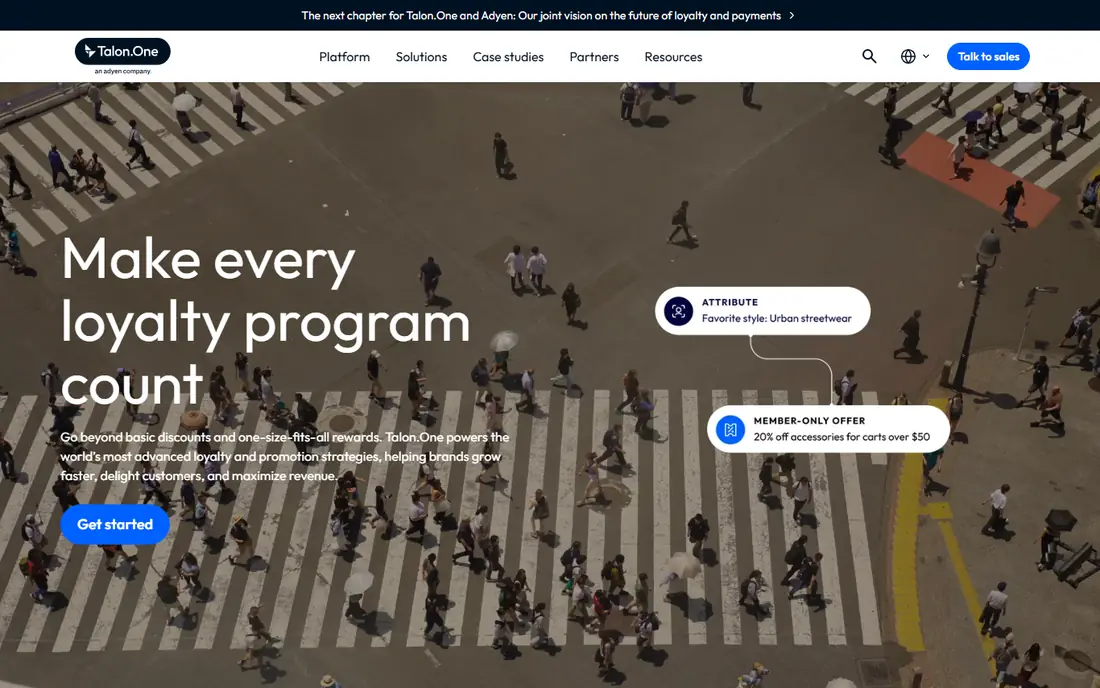
Talon.One is the most direct alternative for teams that liked Voucherify for its API-first design but want a platform built for larger, more complex promotions. It handles coupons, discounts, referrals, loyalty and bundles through a rule engine, so a team can set conditions based on customer data, order history or session details rather than handing out one flat code to everyone. That depth matters for retailers running many campaigns at once, where rules can clash and a simple discount app quickly becomes a mess.
The trade-off is effort and cost. Talon.One is built for teams with developers and a clear promotion strategy, and it is not a quick install for a single small store. Pricing is quoted, so a small business may find the total higher than expected once volume and features are counted. If your campaigns are complex and your team can support an API platform, Talon.One is a strong pick. If you only need a welcome code and a seasonal sale, a simpler tool below will save time and money.
- Programmable promotion and loyalty rules
- High-volume campaign support
- Broad integration options
- Needs developer time
- Pricing is sales led and can grow with volume
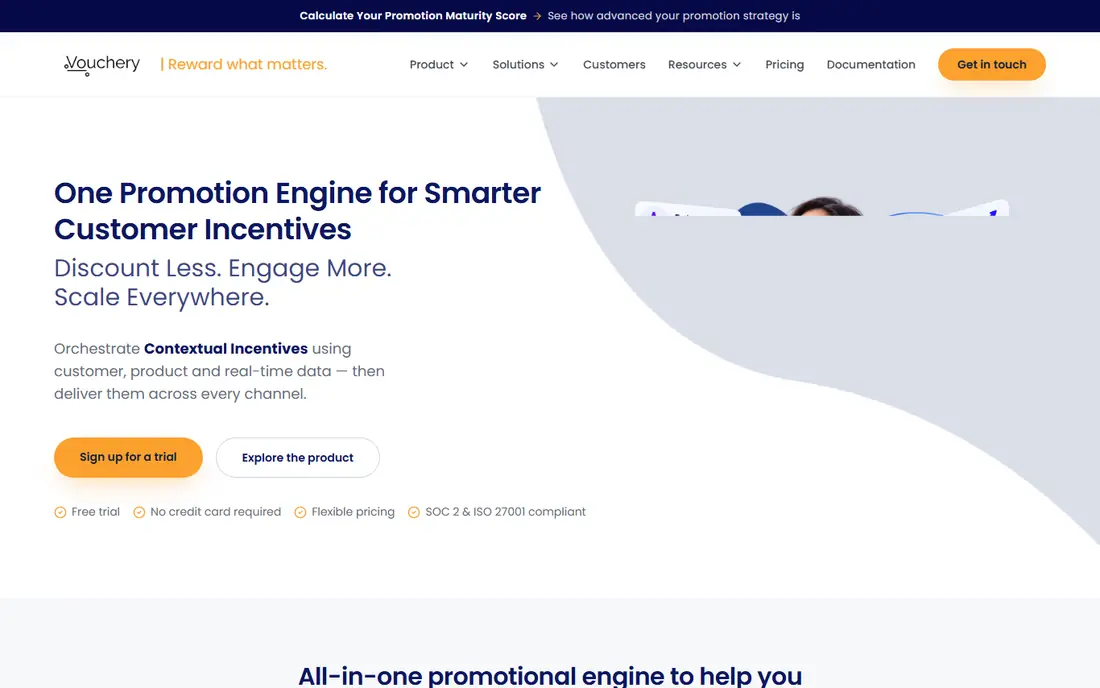
Vouchery focuses on coupon automation for ecommerce and mid-market teams, with tools to create, distribute and track promotions without building a full engine from scratch. It suits a team that wants more control than a basic discount code in a store admin, but does not want to maintain promotion logic in its own code. Campaign setup, targeting and reporting sit together, which helps a marketing team see which offers actually drove orders rather than guessing from code redemptions alone.
The catch is scale and fit. Vouchery is not as broad as Talon.One for enterprise loyalty and wallet features, and its pricing for high-volume use needs a direct quote. For a growing store that runs frequent promotions, that is often a fair trade, since the team gains automation without hiring promotion engineers. Trial it with one real campaign, check how codes behave at checkout, and confirm how refunds and cancellations are handled before you move a full programme across.
- Coupon and promotion automation
- Campaign management in one place
- Built for ecommerce teams
- Smaller ecosystem than enterprise rivals
- Pricing needs a vendor quote for larger use
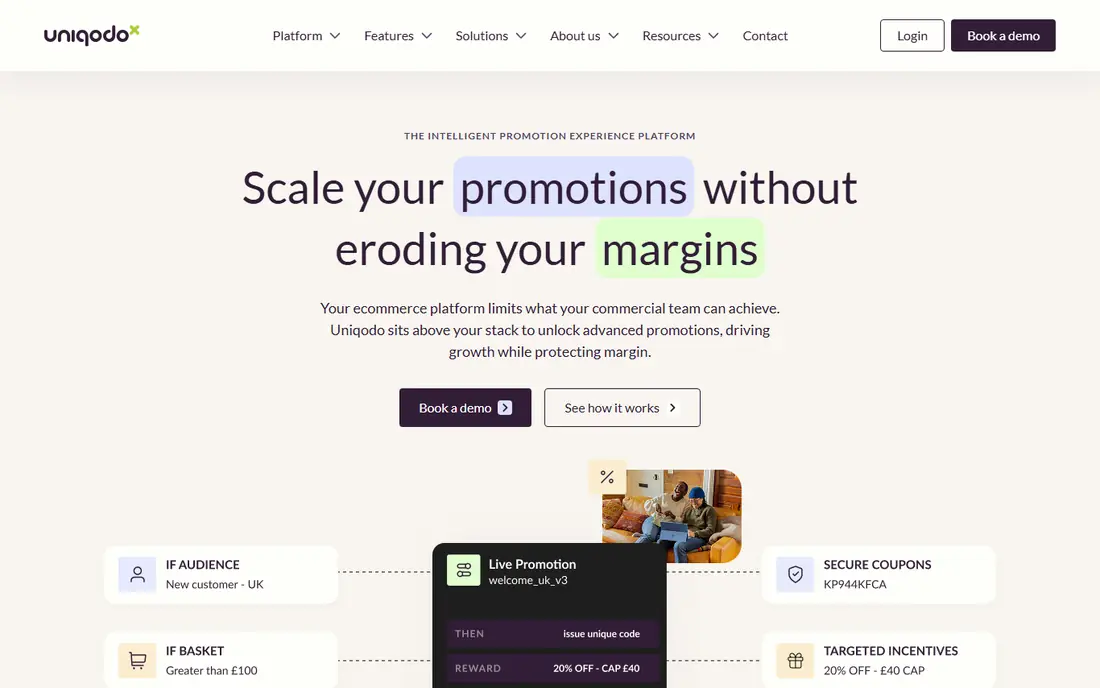
Uniqodo specialises in coupon codes that are meant for one person and one use, which solves a common problem with public codes: they spread, get shared on deal sites, and eat margin. With Uniqodo, a brand can issue personal codes for email, SMS or partner channels, set expiry and usage rules, and track redemption per code. That control is valuable for acquisition campaigns, win-back offers and influencer codes, where knowing who redeemed what matters as much as the discount itself.
The limit is breadth. Uniqodo is a coupon platform first, not a full loyalty suite, so a team that also wants points, tiers and rewards will need another tool or a wider platform. It also rewards careful planning, since code lists, channels and expiry rules need to be set up cleanly before a campaign goes live. If code leakage and attribution are your main pain points, Uniqodo is a focused and sensible choice.
- Single-use and personalised codes
- Fraud controls
- Works across channels
- Narrower than full loyalty platforms
- Setup needs planning for large lists
Coupon Carrier does one job well: it hands out unique coupon codes to customers through email and other channels, and it tracks which codes were sent and used. That sounds simple, but it fixes a real headache for stores that send the same code to a whole list and then cannot tell which channel worked. It pairs with email tools and store platforms, so a team can run a welcome series, a referral reward or a review incentive without building code distribution itself.
The honest limit is scope. Coupon Carrier is not a rule engine for complex promotions, and it will not run a points programme on its own. Think of it as a delivery layer that sits beside your store and email system. For a small team that wants personal codes quickly, that narrow focus is a strength, since setup is fast and the cost is easier to judge. For a team that needs deep promotion rules, pair it with a wider platform or pick Talon.One or Vouchery instead.
- Distributes unique codes by email and other channels
- Simple setup
- Clear delivery tracking
- Not a full promotion engine
- Needs a store or email tool alongside it
Antavo is an enterprise loyalty platform that covers points, tiers, rewards and member engagement across online and in-store channels. It suits brands that want loyalty to be a programme, not just a discount at checkout, with member segments, reward catalogues and campaigns that change by tier or behaviour. That depth helps larger retailers keep regular customers engaged without relying on constant public discounts, which can train shoppers to wait for a sale.
The downside is effort. Antavo is a platform purchase with onboarding and configuration, not a plug-in that runs in an afternoon, and its pricing is quoted for each business. A small store with a few hundred customers will likely find Smile.io or Yotpo faster and cheaper. A mid-size or large brand with a real loyalty strategy, multiple channels and a team to run it, will get more from Antavo over time.
- Loyalty, rewards and tiers
- Omnichannel programme support
- Enterprise reporting
- Pricing is quote based
- Implementation takes more time than a store app
Smile.io is a popular loyalty app for online stores, especially Shopify, and it is one of the easiest ways to add points, referral rewards and VIP tiers without code. Customers earn points for purchases and actions, redeem rewards at checkout, and see their balance in a small widget, which keeps the programme visible without a separate login. The free plan lets a small store test whether loyalty actually changes repeat purchase behaviour before paying.
The catch is that the most useful features, such as deeper VIP tiers, advanced rewards and wider integrations, sit on paid plans, so the free tier is a trial of the idea rather than a full programme. Design options are also more limited on lower plans, which may matter for a brand with a strong visual identity. Even so, for a store that wants loyalty live this week, Smile.io is a practical starting point, and it pairs well with a separate coupon tool if you need personal codes.
- Easy store setup
- Points, referrals and VIP tiers
- Free plan to start
- Advanced features sit on paid plans
- Design control is limited on lower tiers
Yotpo combines loyalty, reviews and referrals, which suits a store that wants social proof and repeat purchase work in one contract. A customer who leaves a review can earn points, a referred friend can get a reward, and the store can show reviews where shoppers actually decide. That link between reviews and loyalty is the main reason to pick Yotpo over a loyalty-only app, since the two jobs often sit with the same small marketing team.
The trade-off is cost and complexity as you add modules. The free tier covers a starting point, but a store that wants the full loyalty, reviews and SMS or email set will pay more, and setup takes longer than a single-purpose app. Our advice is to start with the module you need most, prove it works, and then add the next one. If you only need loyalty, Smile.io may be simpler. If reviews matter as much as repeat orders, Yotpo earns its place.
- Loyalty plus reviews and referrals in one suite
- Strong store integrations
- Free starting tier
- Full suite pricing grows with features
- Smaller stores may only need one module
ReferralCandy focuses on referral programmes for online stores: a customer shares a link, a friend buys, and both sides can receive a reward. Setup is close to plug-and-play for common store platforms, with automated emails, reward delivery and basic fraud checks to stop self-referrals and fake orders. That focus makes it a good fit for a store that already has happy customers and wants them to bring friends, without building a points system first.
The limit is scope. ReferralCandy is not a full loyalty platform, so a team that wants points, tiers and member rewards will need another tool. Pricing also needs care, since some plans include a commission on referred sales in addition to a monthly fee, which changes the total as referrals grow. Even with that cost, a referral programme that pays only on a completed sale is easy to judge, since the store can compare reward cost directly with new order value.
- Simple referral setup
- Automated rewards
- Fraud checks for referred orders
- Referral only, not full loyalty
- Pricing includes a commission element on some plans
Open Loyalty is a loyalty and coupon platform with an open approach, aimed at teams that want control over member data, campaigns and integrations. It covers loyalty members, points, coupons and campaigns in one system, with API access for teams that want to connect it to a store, app or point-of-sale system. That combination suits a mid-size business that has outgrown a simple store app but does not want a fully closed enterprise suite.
The catch is technical effort. Open Loyalty rewards a team that can plan data, segments and integrations, and it will feel slower to launch than Smile.io for a small store with no developer help. Support and ready-made integrations are also thinner than those of the largest rivals, so check the connectors you need before committing. If control and flexibility matter more than speed, Open Loyalty is worth a trial. If speed matters most, start with a store app and revisit later.
- Open approach to loyalty and coupons
- Member and campaign management
- API access
- Needs technical setup
- Smaller support ecosystem than large rivals
How we picked these
We compared official feature and pricing pages for platforms that handle coupons, promotions, loyalty or referrals and are live in October 2026. We kept a mix of API-first engines, coupon specialists and no-code store apps, so a developer team and a small store owner can both find a fit. We did not include Voucherify itself, we did not claim hands-on testing, and we marked pricing as See website where the vendor does not publish a simple starting figure or where the total depends on volume and plan.
How to choose the right promotion platform
Start by naming the one job you need done first. If the job is complex rules across many channels, you need an engine such as Talon.One. If the job is a loyalty programme for a store, start with Smile.io or Yotpo. If the job is stopping code sharing, pick Uniqodo or Coupon Carrier. Buying a wider platform than your job needs adds cost and setup time without adding sales.
Count the real cost of a campaign
Ask each vendor how pricing changes with orders, redemptions, members and channels, and whether there are fees per referred sale or per code. A low monthly fee can grow fast once a campaign succeeds, so model a good month, not just a quiet one. Also check how refunds, cancellations and expired codes are handled, since those edge cases decide whether your margin survives a promotion.
Test at checkout before you migrate
Run a small live campaign with a test segment, and watch the checkout, email delivery and reporting end to end. Check that codes apply once, that rewards do not stack in ways you did not intend, and that customer support can explain the offer clearly. A promotion that confuses shoppers at checkout costs more in lost orders than it gains in attention.
Frequently asked questions
What is the closest Voucherify alternative for developers?
Talon.One is the closest match for API-first teams, since it offers programmable promotion, loyalty and referral rules through a rule engine. Vouchery and Uniqodo are also developer friendly, but they are narrower in scope, so pick Talon.One when your rules are complex and your team can support an API platform.
Is there a free Voucherify alternative?
Smile.io and Yotpo both offer free starting tiers for stores, which is enough to test points and basic rewards. Free tiers have limits on features and volume, so treat them as a trial of the idea, and check paid plan pricing before you build a programme around a free feature that may move to a paid tier.
Can I run coupons and loyalty in one tool?
Yes, with platforms such as Talon.One, Antavo and Open Loyalty, which cover both coupons and loyalty in one system. Store apps such as Smile.io and Yotpo also combine points with referral rewards, though their coupon control is simpler than a dedicated coupon engine. Choose one tool when you want one member record, and use two tools when each job needs specialist depth.
How do I stop coupon codes from leaking online?
Use single-use, personal codes from a tool such as Uniqodo or Coupon Carrier, set expiry dates and usage limits, and avoid posting public codes on deal sites. Also monitor redemptions by channel, since a sudden spike from one source often means a code has spread beyond its intended audience.
Do these tools work with Shopify and WooCommerce?
Many store-focused tools, including Smile.io, Yotpo and ReferralCandy, offer direct integrations for Shopify and WooCommerce, while API-first platforms connect through code or middleware. Check the integration list for your exact store version and checkout setup before you sign, since a missing connector can add weeks to a launch.
Sources
See where you really rank - block by block
ProMapRanker scans Google Maps across a grid of your service area. Simple monthly plans from $19, white-label on every plan.
Start freeKeep reading
 zoro.to alternatives
Best Zoro.to Alternatives in 2026
We compare the best zoro.to alternatives in 2026, listing only legal licensed anime streaming services, from Crunchyroll to free options for fans today.
Read → zip alternatives
Best Zip Alternatives in 2026
We compare the best zip alternatives for buy now, pay later in 2026, covering pay-in-4 plans, fees, spending limits, and credit reporting options today.
Read → yesware alternatives
Best Yesware Alternatives in 2026
Compare the best yesware alternatives for sales email tracking, templates, and sequences, with current pricing and honest tradeoffs for small sales teams.
Read →