 ProMapRanker
Best v0 Alternatives in 2026

Key takeaways
- v0 by Vercel focuses on frontend interfaces, so the best alternative depends on whether you need a backend, a database or just a design.
- Lovable, Bolt.new and Replit cover more of a full app than v0, including backend and database options.
- Cursor suits developers who want AI help inside a code editor they already control.
- Framer and Base44 suit marketing sites and fast prototypes, but they are not full development platforms.
- Credit and token limits matter as much as the monthly price, because complex prompts can use a large share of a monthly allowance.
Quick comparison
| Pick | Great for | Pricing starts at | Free tier | |
|---|---|---|---|---|
 Lovable | Full-stack prototypes | $25 per month | Yes | Visit |
 Bolt.new | Browser-based full-stack apps | $25 per month | Yes | Visit |
 Replit | Whole-app building with hosting | $20 per month | Yes | Visit |
 Cursor | AI-assisted coding in an editor | $20 per month | Yes | Visit |
 Framer | Marketing sites from prompts | $10 per month | Yes | Visit |
 Base44 | Apps with generated data and logic | $20 per month | Yes | Visit |
 Uizard | Rapid interface prototypes | $12 per month | Yes | Visit |
 Bubble | No-code apps with a database | See website | Free trial | Visit |
 Emergent | Web and mobile apps from prompts | $20 per month | Yes | Visit |
The best v0 alternatives
v0 by Vercel turns text prompts into React interfaces, which is useful for a first design pass. It does not cover a full app on its own, because backend logic, databases and authentication need separate work. The tools below fill different gaps, from full-stack prototypes to developer editors and no-code platforms.

Lovable is the closest full-stack alternative to v0 for non-technical founders. A prompt can produce a working app with authentication, a database and hosting, rather than just an interface. The Supabase integration handles data and auth, and GitHub sync gives developers a way to take the code further.
Pricing is credit-based, with paid plans starting at $25 per month in the sources we checked. Credits are used by complexity, so a long debugging session can use more than a simple build. The free plan offers a daily grant of build credits, which is enough for testing but not for a large project.
Lovable fits founders who want a working prototype fast and are willing to clean up complex logic later. Developers who want full control from the start may prefer Cursor or Replit.
- Builds frontend, backend and database from prompts
- Supabase integration
- GitHub sync for code ownership
- Credit-based pricing can rise with complex prompts
- Complex logic may need manual cleanup
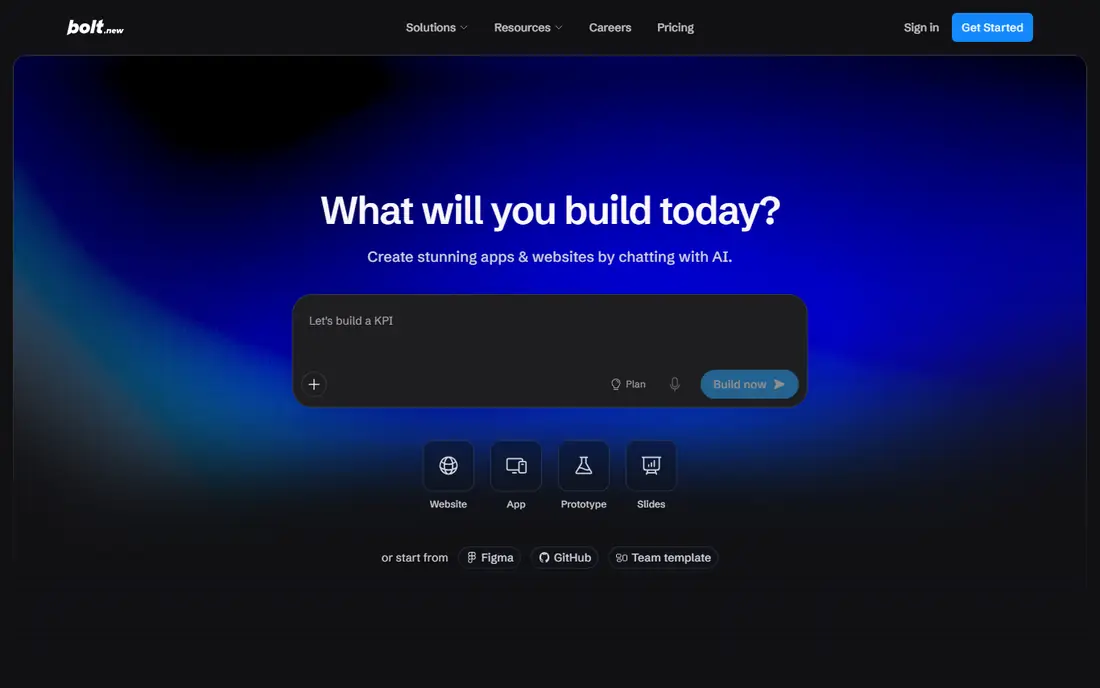
Bolt.new runs a full development environment in the browser, so a user can prompt, preview and deploy without installing tools locally. That zero-setup model suits demos, hackathons and fast prototypes, and it covers more of the stack than v0, including backend code and database connections.
The main cost risk is token use. Complex apps and long fix cycles consume tokens quickly, and the monthly allowance on a $25 per month plan in the sources we checked may not cover a large project. Users should start with a clear, small scope and expand in stages rather than prompting for a huge app at once.
Bolt.new fits rapid prototyping in the browser, especially for users without a local setup. For a long-term production app, plan to export the code and continue in a standard development workflow.
- Full Node.js environment in the browser
- No local setup
- Instant preview and deployment
- Token use can be high on complex apps
- Long sessions can lose context
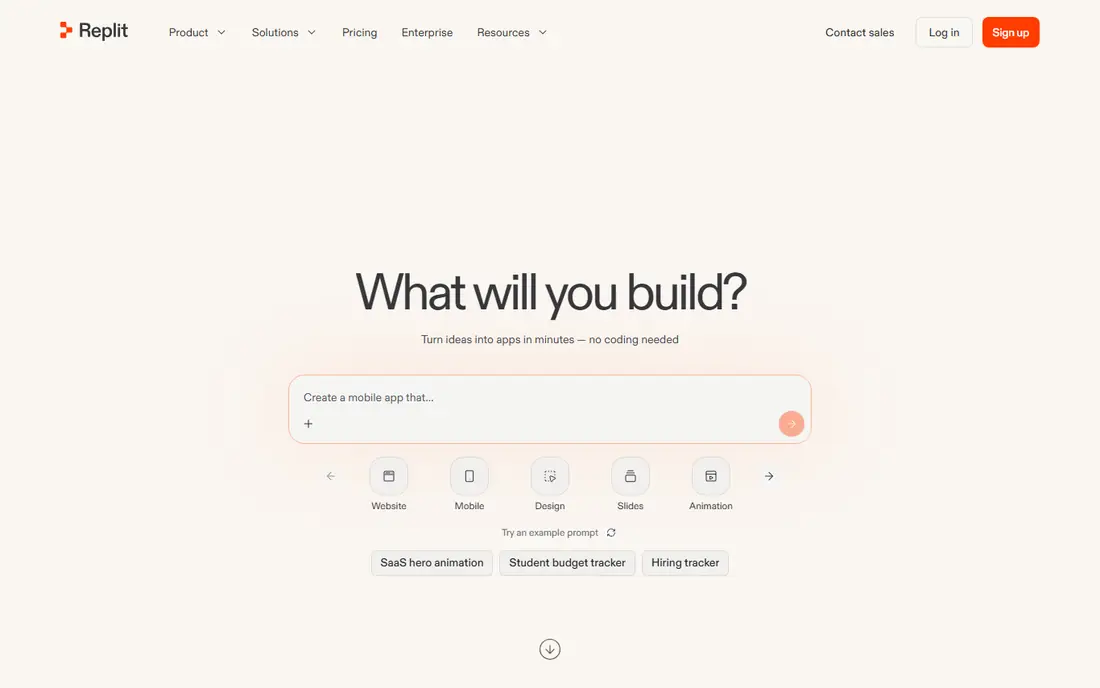
Replit combines an online editor, AI assistance, a database and deployment in one workspace. A user can prompt for an app, edit the code in the same place, and publish it without a separate hosting setup. That all-in-one model makes Replit a practical step up from a frontend-only tool.
The browser environment is also a limit for very large projects, where a local editor and a dedicated hosting setup give more control. Paid plans start at $20 per month in the sources we checked, with annual billing lowering the monthly figure, but usage and team features can change the total.
Replit fits developers and small teams who want to build and host in one place. It also works well for learning, because code, preview and deployment sit together.
- Online development environment with AI help
- Built-in database and deployment
- Good for learning and teams
- Larger projects can feel constrained in the browser
- Pricing varies by plan and usage
Cursor is the developer choice in this list. It is an AI-powered code editor that helps write, edit and understand code in a repository you own. Unlike prompt-to-app tools, Cursor does not hide the code, so a developer keeps full control over architecture, dependencies and deployment.
That control comes with a skill requirement. Cursor helps a developer work faster, but it does not turn a non-technical founder into a developer on its own. Paid plans start at $20 per month in the sources we checked, with a free plan for testing.
Cursor fits developers who liked v0 for interface ideas but want AI help across a real codebase. Non-technical users should choose Lovable, Bolt.new or Bubble instead.
- AI help inside a full code editor
- You own the repository
- Works for any language or stack
- Needs coding skill
- It is an editor, not a prompt-to-app platform
Framer turns prompts into marketing websites quickly, with templates, AI generation and built-in hosting. A startup can publish a landing page or a small marketing site in hours, and the result usually looks current without a designer. Paid plans start at $10 per month billed annually in the sources we checked.
Framer is not a v0 replacement for app logic. It does not provide a full backend or database in the way Lovable or Bolt.new do, and sites are hosted on Framer without full code export. That makes Framer a marketing-site tool, not a general app builder.
Framer fits teams that need a polished site in front of a product built elsewhere. For a working app, choose a full-stack tool from this list.
- AI site generation with modern templates
- Fast hosting
- Easy publishing
- Hosted only, with no code export
- Not a full app platform
Base44 builds whole apps from prompts, including data models, logic and hosting, which makes it a closer full-stack alternative to v0 than a pure interface tool. It suits internal tools, dashboards and small business apps where the data model matters as much as the look.
The first pass can be slower than some rivals, and highly custom logic may still need manual editing. Paid plans start at $20 per month in the sources we checked, with annual billing lowering the monthly figure. Credit and usage limits apply, so check the plan that matches your project size.
Base44 fits teams that want an app with real data and logic, not just a landing page. For the fastest first draft, Lovable or Bolt.new may feel quicker.
- Generates data models and logic from prompts
- Built-in hosting
- Good for internal tools
- First pass can be slower than Lovable or Bolt.new
- Complex custom logic may need manual work
Uizard is the prototyping pick in this list. It turns text prompts or sketches into editable interface prototypes that a team can test with users before building. That early testing can save weeks of development on the wrong design, and it is closer to v0's interface focus than a full-stack builder.
Uizard does not build a production app. There is no backend, database or authentication in the same way as Lovable or Replit, so a prototype still needs a development step after testing. Paid plans start at $12 per month in the sources we checked, with a free plan for basic testing.
Uizard fits product teams that need to test an interface quickly. For a working app, pair it with a full-stack builder or a development team.
- Fast prototyping from text or sketches
- Editable prototypes
- Good for design testing
- Prototypes, not production apps
- No backend or database
Bubble is the no-code platform in this list, and it covers more of an app than v0 without writing code. Users can build interfaces, workflows, user accounts and a database visually, and plugins extend the platform. That makes Bubble a real app platform, not just a design tool.
The learning curve is steeper than a prompt-to-app tool, because complex apps need careful workflow design. Pricing is based on workload units as well as plan level, so a busy app can cost more than the entry plan suggests. We list See website for the entry price, because Bubble plan pricing changes and depends on the workload tier.
Bubble fits non-technical founders who want a full app and are willing to learn a visual platform. For the fastest prompt-to-prototype path, Lovable or Bolt.new are quicker to start.
- Visual building with a built-in database
- Workflows and user accounts
- Large plugin range
- Learning curve for complex apps
- Workload-based pricing can rise with use
Emergent builds web and mobile apps from prompts, which sets it apart from tools that only target the web. A founder can test an idea on both web and mobile without managing two codebases, and hosting is included. Paid plans start at $20 per month in the sources we checked, with annual billing lowering the monthly figure.
As a newer platform, Emergent has a smaller ecosystem of templates, plugins and community resources than Lovable, Replit or Bubble. Complex apps may still need developer cleanup, and teams should check export and hosting terms before building a long-term product on it.
Emergent fits founders who want a web and mobile MVP from one prompt. For a web-only prototype with a larger ecosystem, Lovable or Bolt.new are safer picks.
- Builds web and mobile apps from one prompt
- Hosting included
- Good for MVPs
- Newer platform with a smaller ecosystem
- Complex apps may need developer cleanup
How we picked these
We compared official feature pages, pricing pages and public v0 comparisons, and we kept only tools that are live in October 2026. We covered full-stack builders, developer editors, no-code platforms and prototyping tools, because v0 users leave for different reasons. Where pricing was credit-based or workload-based, we used the published entry figure where we could verify it, and See website where the figure was not stable.
What to check before you switch
Start by naming the missing piece in v0 for your project. If you need a database and auth, choose a full-stack builder. If you need a marketing site, choose Framer. If you already code, Cursor may be the best upgrade, because it keeps you in control of the repository.
Next, check code ownership and export. Some tools let you sync to GitHub or export code cleanly, while hosted tools keep the site on their platform. That difference matters if you later hire developers or move hosting.
Finally, budget for credits. Prompt-to-app tools meter usage, so a complex project can cost more than the monthly plan alone. Start small, test the first version, and add features in stages to keep credit use under control.
Frequently asked questions
What is v0, and why do people look for alternatives?
v0 by Vercel generates React interfaces from text prompts. People look for alternatives when they need a backend, a database, authentication or a full app, because v0 focuses on the frontend. Others move for clearer pricing, code ownership or a no-code workflow.
What is the best v0 alternative for a full app?
Lovable and Bolt.new are the strongest full-stack picks for most founders, because both cover backend, database and hosting from prompts. Replit is also strong for teams that want an online editor and deployment in one place. The best pick depends on whether you need mobile support or GitHub sync.
Can I use a v0 alternative without coding?
Yes. Lovable, Bolt.new, Base44, Bubble and Emergent all let non-technical users build apps from prompts or visual tools. Bubble needs more learning, while prompt tools are faster to start. Cursor is the exception here, because it is built for developers.
Do I own the code from these tools?
It depends on the tool. Lovable offers GitHub sync, and Cursor and Replit keep you in a repository you control. Hosted site builders such as Framer do not offer full code export. Check ownership and export terms before you build a long-term product.
How much do v0 alternatives cost?
Entry paid plans in this list range from $10 per month for Framer to $25 per month for Lovable and Bolt.new, with annual billing often lowering the monthly figure. Credit, token and workload limits can add cost, so check the usage terms for your project size.
Sources
See where you really rank - block by block
ProMapRanker scans Google Maps across a grid of your service area. Simple monthly plans from $19, white-label on every plan.
Start freeKeep reading
 zscaler alternatives
Best Zscaler Alternatives in 2026
Looking for zscaler alternatives? We compare 9 SASE and zero trust platforms on architecture, data protection, pricing, and fit for your network and team.
Read → zapier alternatives free
Best Zapier Alternatives Free in 2026
Nine automation tools for zapier alternatives free in 2026, all with genuinely free tiers, plus free plan limits, starting prices and upgrade paths explained.
Read → which platform is best for online reputation
Which Platform Is Best for Online Reputation in 2026
Wondering which platform is best for online reputation? We compare 8 review, listing, and response tools for small and multi-location businesses and agencies.
Read →