 ProMapRanker
Best UserVoice Alternatives in 2026

Key takeaways
- Canny and Featurebase are the closest direct replacements for a public voting board, with free tiers that suit small teams.
- Productboard and Aha suit larger product teams that need planning, scoring and roadmaps alongside feedback.
- Frill, Sleekplan, Savio and Nolt cost less and keep the setup simpler, but they offer less depth for enterprise planning.
- Pricing models differ a lot, so check tracked users, seats and makers before you compare headline prices.
- We did not list UserVoice itself here, since this article covers alternatives to it.
Quick comparison
| Pick | Great for | Pricing starts at | Free tier | |
|---|---|---|---|---|
 Canny | Mature public voting boards | $79 per month | Yes | Visit |
 Productboard | Planning feedback against product goals | $19 per maker per month | Yes | Visit |
 Aha | Strategy, ideas and roadmaps in one suite | $59 per user per month | Free trial | Visit |
 Featurebase | Feedback plus support on a budget | $29 per seat per month | Yes | Visit |
 Frill | Simple boards with a flat monthly price | $25 per month | Free trial | Visit |
 Sleekplan | Low cost boards, roadmaps and changelogs | $15 per month | Yes | Visit |
 Savio | Feedback tied to customers and revenue | $39 per month | Free trial | Visit |
 Nolt | Lightweight public boards | See website | See website | Visit |
The best UserVoice alternatives
UserVoice built its name on structured feedback collection for larger companies, with voting, forums and account context. The tools below cover the same job in different ways, from a simple public board to a full product planning suite. We compared official feature pages, pricing pages and public documentation, not hands-on trials.
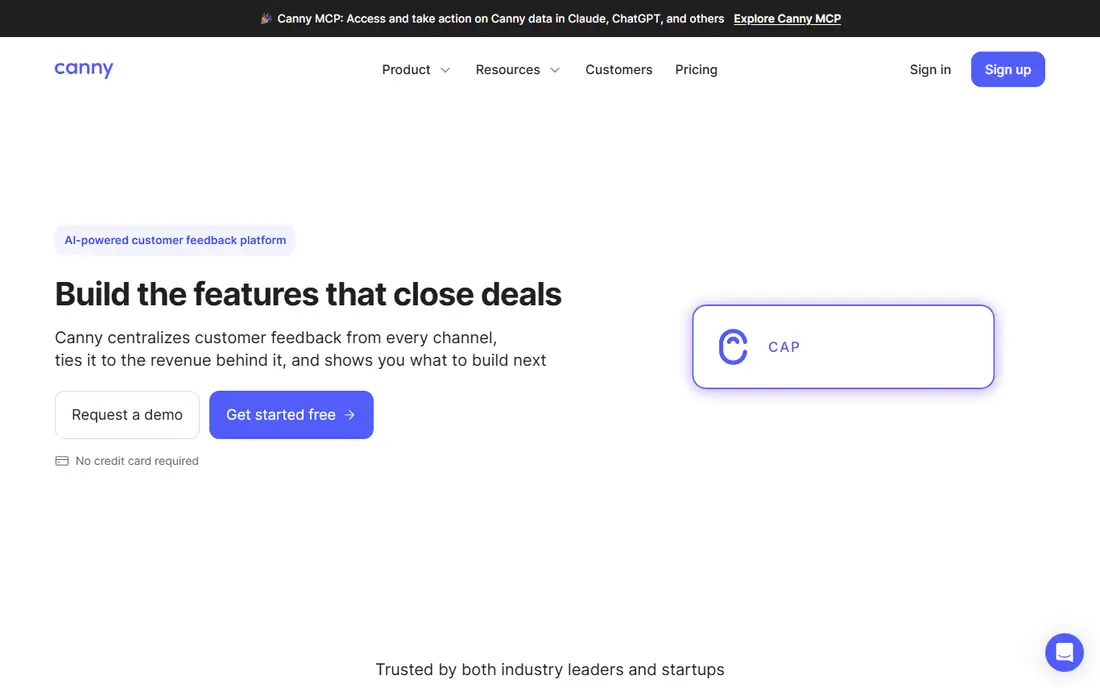
Canny is the most direct answer for teams that want customers to submit ideas, vote on them and see what ships next. Boards are easy to read, statuses are clear, and the changelog keeps the loop closed when a request moves from planned to live. Support teams can vote on behalf of customers, which helps when feedback arrives by email or chat instead of on the board itself.
The catch is the pricing model. The free tier covers a small number of tracked users, and the paid plan starts at 79 dollars per month when billed annually. That is fair for a growing software company, but a small team with a large free user base should check how tracked users are counted before signing up. Canny also focuses on feedback rather than full product planning, so teams that need deep roadmapping may pair it with another tool.
- Clean voting boards
- Public roadmaps and changelogs
- Integrations with support tools
- Paid pricing is based on tracked users
- Costs can rise as your audience grows

Productboard treats feedback as input to planning, not as a standalone board. Teams can collect insights from many sources, link them to features, score them against objectives and share roadmaps with stakeholders. That structure helps when several teams argue about what to build next, because the reasoning stays attached to the feature rather than buried in a thread.
The trade-off is scope. Productboard is a planning product first, so a team that only wants a simple voting page may find the setup heavier than needed. Pricing is per maker per month on paid plans, so count who actually builds roadmaps and who only views them. For product-led companies that already plan in this way, it is one of the strongest alternatives on this list.
- Strong insights and prioritisation features
- Clear roadmaps
- Broad integrations
- Maker based pricing needs care
- Lighter feedback-only teams may find it large
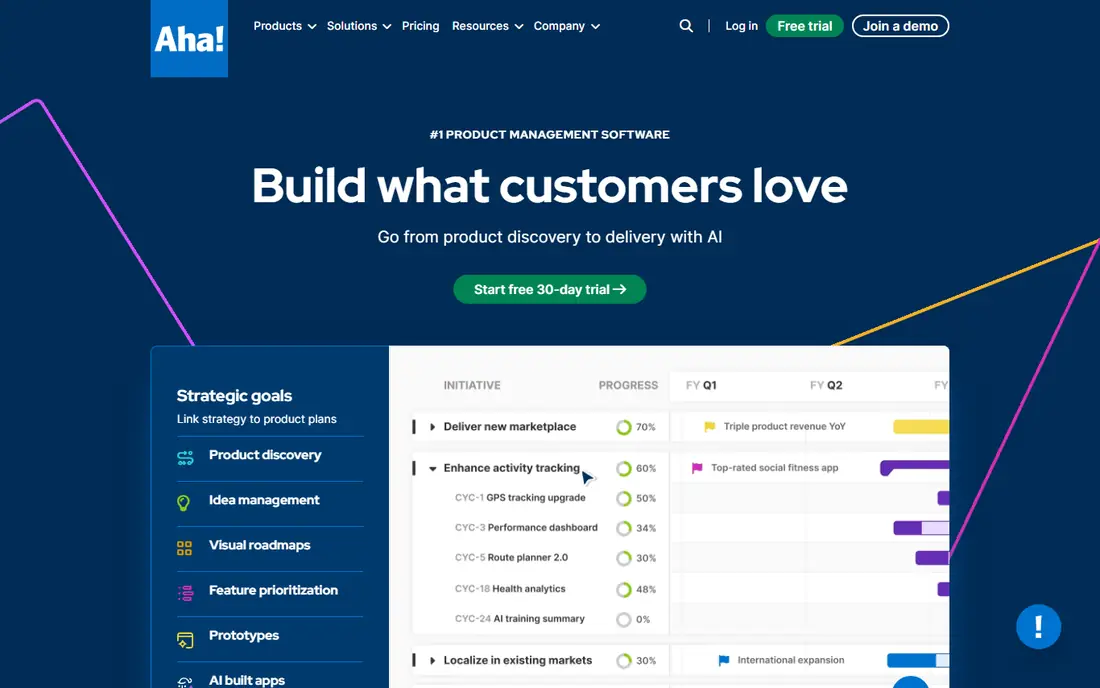
Aha covers the full journey from strategy to idea to roadmap, which makes it a good fit for companies that outgrew a simple board. Idea portals let customers submit and vote, while internal teams can score ideas, link them to goals and plan releases in the same workspace. Integrations with development tools help keep roadmaps connected to delivery work.
That depth comes with cost and complexity. Roadmaps pricing starts at 59 dollars per user per month when billed annually, and larger suites add more. Small teams may find the setup time hard to justify, and casual users may need training before they use it well. Choose Aha when product planning itself is the problem, not just when you need a place for votes.
- Deep strategy and roadmap tools
- Idea portals with scoring
- Strong integrations
- Higher price per user
- Learning curve for small teams
Featurebase is a practical middle ground. It offers a feedback board, a public roadmap, a changelog and a help centre, so small teams can replace several small tools with one account. The free tier covers one seat, which is enough to test the board with real customers before paying. Paid plans start at 29 dollars per seat per month when billed annually.
The limit is scale. Per seat pricing means costs grow as support and product staff join, and the planning tools are simpler than those in Productboard or Aha. For a startup or a small software team that wants one tidy portal without enterprise pricing, that trade is easy to accept. Larger teams should compare total seat cost, not just the entry price.
- Low cost paid plans
- Feedback, roadmap and help centre in one place
- Free tier for one seat
- Seat costs add up as more staff join
- Less planning depth than Productboard or Aha
Frill keeps the feedback loop short. Customers post ideas, vote, and follow a public roadmap, while the team posts announcements when things ship. The flat monthly price makes budgeting simple, since you are not counting seats or tracked users in the same way as with some rivals. Paid plans start at 25 dollars per month.
Frill is less suited to teams that need deep insight analysis, scoring models or complex planning. It also offers a trial rather than a lasting free plan, so very small projects may prefer a tool with a free tier. Pick Frill when you want a board live this week, with clear pricing and little admin work.
- Simple setup
- Flat pricing
- Public roadmap and announcements included
- No free plan, only a trial
- Lighter analysis than larger tools
Sleekplan is one of the cheapest ways to run a proper feedback board. The free tier covers a small workspace, and paid plans start at 15 dollars per month when billed annually. You get feedback collection, a roadmap view and a changelog, which covers the core loop that most small products need. Setup is quick, and the interface stays focused on those jobs.
The limits show up as your audience grows. Lower plans cap monthly tracked users, and extra tracked users add cost. Teams that need advanced scoring, deep integrations or enterprise controls will find Sleekplan thin. For side projects, early stage products and small SaaS teams, it is a strong value pick.
- Very low cost paid plans
- Free tier available
- Boards, roadmap and changelog together
- Tracked user limits on lower plans
- Simpler feature set than enterprise tools
Savio suits business to business teams whose feedback arrives through sales calls, support tickets and customer success chats. It pulls feedback into one place and links it to customer accounts, so a product manager can see which requests come from high value accounts rather than counting votes alone. That context changes prioritisation in a useful way for sales led companies.
Savio is less of a public community board than Canny or Featurebase, so teams that want an open voting page may need to check how public sharing works on their plan. Paid plans start at 39 dollars per month when billed annually, with a trial rather than a free tier. Choose Savio when the question is not just what customers ask for, but who is asking and what that account is worth.
- Links feedback to customer records
- Useful for sales led teams
- Central feedback inbox
- No lasting free plan
- Less focus on public boards than Canny
Nolt is the simplest tool on this list, and that is its appeal. A team can set up a board, invite suggestions and let visitors vote without teaching anyone a new system. The clean design keeps attention on the ideas themselves, which helps for small products, community projects and early feedback rounds.
The trade-off is depth. Nolt does not try to match the planning, scoring or integration range of Productboard, Aha or Savio. Check the current pricing and plan limits on the official site before you commit, since its published plans have changed over time. Pick Nolt when simplicity matters more than analysis, and when a public board is the whole job.
- Very simple boards
- Quick setup
- Easy for visitors to use
- Fewer planning and analysis features
- Pricing details should be checked on the site
How we picked these
We compared official feature pages, pricing pages and public documentation for tools that collect product feedback, run voting boards or link feedback to roadmaps. We kept only tools that are live and that offer a real feedback workflow, and we left out general survey tools and full help desks that do not centre on product ideas. We also left UserVoice itself off the list, since this article is about alternatives to it. Prices are starting paid prices from vendor pages and roundups checked in October 2026, and they can change, so confirm the current plan before you buy.
What to check before you switch
Count the right thing
Some tools charge per seat, some per maker and some per tracked user. A low headline price can become expensive if your whole customer base counts as tracked users, or if every support agent needs a paid seat. List who will administer the board, who will only view it and how many customers will vote, then price each tool on that basis.
Decide how public the board should be
A public board builds trust and lets customers see that others want the same feature. A private board suits business customers who share sensitive requests, or teams that want to control the conversation. Check moderation, spam controls, single sign on and private board options on the plan you intend to buy, not just on the top plan.
Plan the closing of the loop
A board fails when ideas go in and nothing comes back. Look for roadmaps, changelogs, status updates and email notices that tell voters when a request ships. Also check integrations with your support tool and your development tracker, since feedback that stays separate from delivery work is easy to ignore.
Test with real feedback first
Run a short trial with a small set of real requests, including a duplicate, a vague idea and a request from a key account. That test shows how merging, tagging, scoring and status changes feel in daily use. It also shows if customers understand the board without help, which matters more than a long feature list.
Frequently asked questions
What is the best free alternative to UserVoice?
Canny, Productboard, Featurebase and Sleekplan all offer free tiers with limits, and the best choice depends on your size. Canny suits a small team that wants a polished voting board, while Featurebase suits a team that also wants a help centre. Check tracked user and seat limits on the free tier before you invite your full customer base.
Are alternatives to UserVoice cheaper than UserVoice?
Many are cheaper at the entry level, since UserVoice pricing is quote based and aimed at larger programs. Tools such as Sleekplan, Frill and Featurebase publish low monthly starting prices, while Productboard and Aha cost more because they add planning depth. Compare total cost for your team size and audience, not just the entry price.
Can these tools replace a help desk?
No, not fully. Feedback boards collect ideas and votes, while a help desk handles support tickets, live chat and account help. Featurebase comes closest by adding a help centre, but most teams on this list still run a separate support tool and connect the two with an integration.
Which UserVoice alternative is best for a small startup?
Sleekplan or Featurebase are strong starting points because both offer free tiers and low paid prices. Frill is also worth a trial if you prefer flat pricing and a simple board. Start small, learn which requests repeat, and move to a planning tool later if roadmapping becomes the bottleneck.
Do these tools work with Jira, Slack and other product tools?
Most of the tools on this list offer integrations with development trackers, chat tools and support platforms, but the depth varies by plan. Canny, Productboard, Aha and Frill all document integrations with common product and development tools. Check the integration list for your exact tools before you buy, since some links need a higher plan.
How do I move existing feedback from UserVoice?
Export your ideas, votes and comments if your plan allows it, then clean duplicates before import. Most alternatives support import from a file or offer help with migration on paid plans. Keep the original vote counts and requester details where possible, so long standing requests do not lose their history in the move.
Sources
See where you really rank - block by block
ProMapRanker scans Google Maps across a grid of your service area. Simple monthly plans from $19, white-label on every plan.
Start freeKeep reading
 zscaler alternatives
Best Zscaler Alternatives in 2026
Looking for zscaler alternatives? We compare 9 SASE and zero trust platforms on architecture, data protection, pricing, and fit for your network and team.
Read → zapier alternatives free
Best Zapier Alternatives Free in 2026
Nine automation tools for zapier alternatives free in 2026, all with genuinely free tiers, plus free plan limits, starting prices and upgrade paths explained.
Read → which platform is best for online reputation
Which Platform Is Best for Online Reputation in 2026
Wondering which platform is best for online reputation? We compare 8 review, listing, and response tools for small and multi-location businesses and agencies.
Read →