 ProMapRanker
Best Twilio Alternatives for South Africa in 2026

Key takeaways
- South African delivery depends on local routes and sender ID rules, so test with real numbers on MTN, Vodacom, Cell C, and Telkom before you commit.
- Vonage, Sinch, and Infobip give the broadest mix of SMS, voice, and WhatsApp in one account, while Plivo and Telnyx tend to suit developers who want pay-as-you-go pricing.
- Africa's Talking and Clickatell bring the closest regional focus, with African coverage and channels such as USSD that global providers may not match.
- If you send one-time passcodes, pick a provider with a dedicated verification product and fraud controls, not just a raw SMS API.
- Prices for South African routes are often quoted per destination and change with carrier fees, so confirm the current rate for South Africa on the pricing page before you budget.
Quick comparison
| Pick | Great for | Pricing starts at | Free tier | |
|---|---|---|---|---|
 Vonage | Broad SMS, voice, and WhatsApp coverage | See website | Free trial | Visit |
 Sinch | Enterprise messaging and verification | See website | No | Visit |
 Infobip | Omnichannel messaging at scale | See website | No | Visit |
 Plivo | Developer-friendly pay-as-you-go SMS and voice | See website | Free trial | Visit |
 Telnyx | Voice and messaging on a private network | See website | Free trial | Visit |
 Africa's Talking | African markets and USSD | See website | Free trial | Visit |
 Clickatell | WhatsApp and SMS for Southern Africa | See website | Free trial | Visit |
 Bird | WhatsApp-first customer messaging | See website | Free trial | Visit |
 Bandwidth | Carrier-grade voice and messaging | See website | No | Visit |
The best Twilio alternatives for South Africa
We compared providers that actually send to South African numbers and offer the messaging and voice tools most teams replace Twilio with. The list below covers global platforms with South African routes and regional specialists with deeper local knowledge.
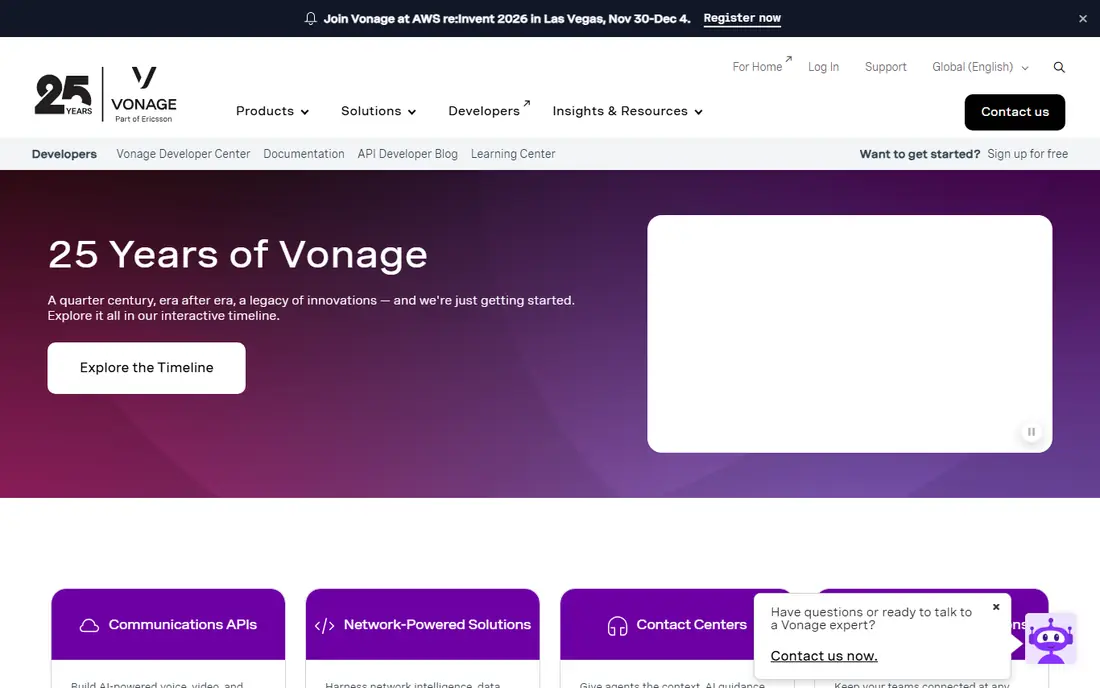
Vonage is the most direct like-for-like replacement for Twilio for many teams. Its Communications APIs cover SMS, voice, WhatsApp, and verification, and South African numbers are supported for messaging. The developer documentation is thorough, with code samples in common languages and clear webhook references, so a team moving from Twilio should find the migration familiar in shape even if the method names differ.
The trade-off is pricing transparency. Vonage prices vary by destination and channel, and enterprise plans are often quoted. That makes a small test send to South African numbers worth doing early. Check delivery reports, latency, and sender ID handling on your real routes before you move a full workload across.
- Wide global carrier reach
- SMS, voice, WhatsApp, and verification APIs in one platform
- Detailed developer documentation
- Pricing is quoted per destination and can be hard to compare at a glance
- Some features need sales contact
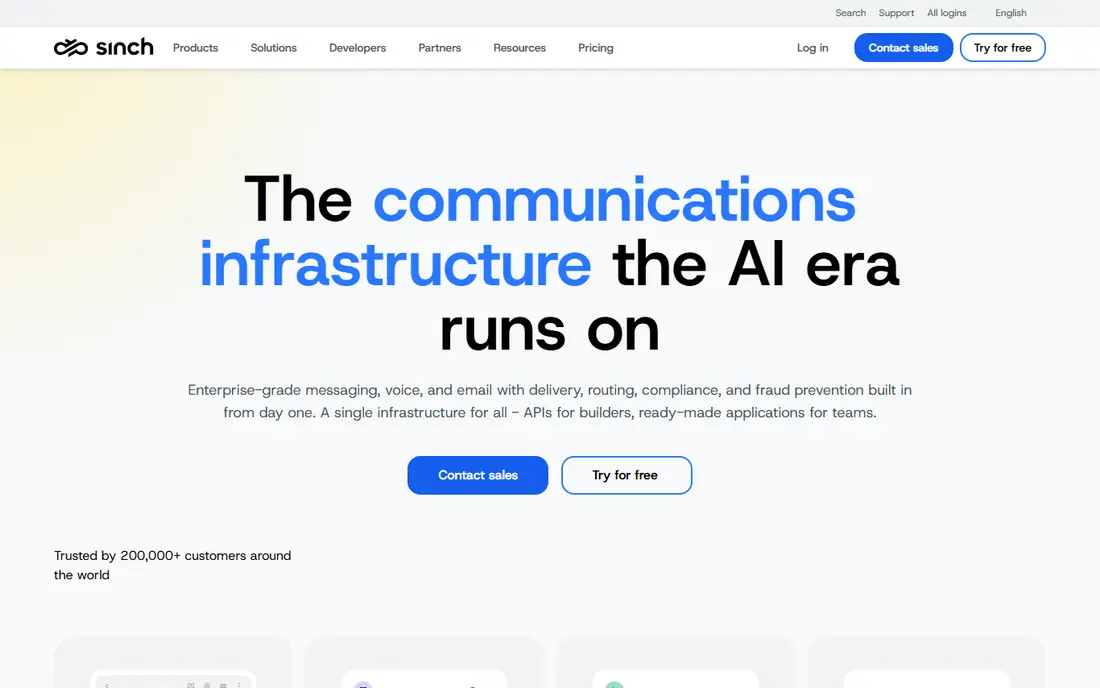
Sinch is a strong pick when message delivery is business critical and you want a provider with deep carrier relationships. It offers SMS, voice, verification, and conversational messaging across WhatsApp and other channels. For South Africa, that breadth matters because a customer who misses an SMS can often be reached on WhatsApp instead, and Sinch can handle both from one platform.
Sinch is built for volume and compliance, which suits banks, retailers, and delivery firms. Smaller teams should expect a quoted price rather than a simple self-serve checkout. Ask for South Africa-specific rates, delivery reporting, and fallback options during the trial so there are no surprises at scale.
- Large global messaging reach
- Dedicated verification product
- SMS, voice, WhatsApp, and RCS support
- Enterprise pricing is usually quoted
- Smaller teams may find the sales process slow
Infobip is one of the largest messaging platforms in the world, and it has a genuine footprint across Africa. That matters in South Africa because local routing knowledge and carrier relationships tend to improve delivery rates compared with a provider that treats the region as an afterthought. Its platform also covers email and chat apps, so a team can run transactional messages and customer conversations in one place.
The catch is complexity. Infobip offers a lot, and a team that only needs SMS may find the dashboard and pricing model heavier than a leaner API provider. It fits best when you plan to use several channels or you send at high volume and want one vendor to manage them all.
- Very wide channel mix including SMS, voice, WhatsApp, and email
- Strong presence in African markets
- Analytics and chatbot tools
- Pricing is quoted for most plans
- The platform can feel large for a simple SMS job
Plivo appeals to developers who want to get sending quickly without a sales call. Its SMS and voice APIs are well documented, and its verification API covers one-time passcodes over SMS and voice. For a South African startup or a small product team, that simplicity is a real advantage, and pay-as-you-go billing keeps costs tied to actual use.
Plivo is less of a marketing suite than Infobip or Sinch. If you need visual campaign builders, chatbots, and rich analytics in the same product, you may need another tool alongside it. For transactional messaging and voice calls, though, it is a solid and affordable place to start.
- Clear API design
- Pay-as-you-go pricing
- Voice and SMS with verification options
- Fewer built-in marketing tools than omnichannel suites
- Support tiers vary by plan
Telnyx runs its own private network and sells voice, messaging, and number services through APIs and a customer portal. Teams that care about call quality and control over routing often like this approach. It supports SMS and voice for international destinations, and its portal gives detailed call and message records that help with debugging.
Telnyx speaks the language of telecom more than the language of marketing. That is a strength for voice-heavy products such as contact centres and appointment reminders, and a weakness if you want ready-made campaign templates. Test South African delivery and voice quality early, and confirm number availability for your use case.
- Private global network
- Competitive voice pricing
- Number porting and SIP trunking support
- More carrier-focused than marketing-focused
- Some features need telecom knowledge
Africa's Talking is built for African markets first, which is exactly why it belongs on a South Africa list. Alongside SMS and voice, it offers USSD, which still matters for reaching customers on basic phones and for services that need menu-based interaction. Its sandbox lets developers test before spending, and its documentation covers the country-by-country differences that global docs sometimes gloss over.
The limit is scope. If your product also needs deep coverage in North America, Europe, and Asia from the same account, a global provider may fit better. For a product centred on South Africa and neighbouring markets, Africa's Talking is often the most practical regional choice.
- Strong African coverage
- SMS, voice, USSD, and airtime APIs
- Sandbox for testing
- Channel depth outside Africa is thinner than global providers
- Pricing varies by country
Clickatell was founded in South Africa and has long served businesses across the region. Its strength today is chat commerce and customer messaging on WhatsApp, backed by SMS for reach. That combination suits retailers, banks, insurers, and service firms that want customers to ask questions, get updates, and complete simple transactions inside a chat thread.
WhatsApp business messaging brings rules of its own, including template approval for notifications and per-conversation pricing set by Meta. Clickatell helps teams work within those rules, but setup takes longer than plain SMS. Factor that time into your launch plan if WhatsApp is a core channel for you.
- South African roots and regional experience
- Strong WhatsApp business messaging
- Chat commerce tools
- Pricing is quoted for many plans
- WhatsApp template approval adds setup time
Bird, formerly MessageBird, focuses on customer conversations across WhatsApp, SMS, email, and other channels. Its inbox and flow builder suit teams that want marketing messages and support replies in one place rather than raw APIs alone. For South African businesses that already talk to customers on WhatsApp, that inbox view can be more useful than a developer-only API.
Bird is less of a pure voice provider than Vonage, Telnyx, or Bandwidth. If programmable voice calls are central to your product, check its voice coverage for your routes before choosing it. For chat-led customer communication, it is one of the friendlier options here.
- Strong WhatsApp and omnichannel inbox
- Marketing and support flows in one tool
- Modern dashboard
- Voice is not its main strength
- Pricing is bundled and can rise with volume
Bandwidth operates as a carrier as well as a software provider, which gives it direct control over much of its voice traffic. That control appeals to contact centres, healthcare firms, and other teams where call quality and compliance matter. Its messaging APIs cover SMS for supported destinations, and its number management tools suit teams that run many numbers.
Bandwidth is enterprise oriented, and pricing is quoted rather than published for most use. A small team sending a few hundred messages a month will likely find a leaner provider simpler. A larger team with heavy voice traffic should ask for South African route pricing and test call quality before signing.
- Owns much of its network
- Strong voice quality and emergency calling support
- Detailed APIs
- Pricing is quoted and enterprise oriented
- Less suited to tiny send volumes
How we picked these
We compared official feature pages, pricing pages, developer documentation, and public coverage information for each provider, with a focus on South African SMS and voice support. We kept only providers that offer messaging or voice APIs for South African destinations and that are actively sold in October 2026. We left out providers with no clear South African route, and we did not include Twilio itself, since this list is about alternatives to it.
What to check before you switch providers
Start with a real delivery test, not a marketing page. Send test messages to numbers on each major South African network, at different times of day, and check how long delivery takes and how sender IDs display. Ask each provider how it handles failed deliveries, retries, and delivery receipts, because those details decide how reliable your alerts and passcodes feel to customers.
Next, compare total cost for your actual traffic mix. A low headline SMS rate means little if your volume sits on a pricier route, or if WhatsApp conversations and voice minutes dominate your bill. Get a written quote for South Africa, confirm taxes and carrier surcharges, and check whether numbers, verification attempts, and support carry separate fees.
Sender IDs, consent, and compliance
South Africa regulates electronic communications and personal information, so keep your consent records clean. Only message people who agreed to hear from you, offer a clear opt-out in every marketing message, and keep transactional messages separate from promotions. Ask your provider about sender ID registration for South Africa and about its data handling, so your team can answer questions from customers and regulators with confidence.
Migration tips
Move in stages rather than all at once. Port or provision numbers early, since porting can take days. Run both providers side by side for a short period, route a small share of traffic to the new provider, and watch delivery reports before shifting the rest. Keep your webhook handling and retry logic provider neutral where possible, so a future switch is a configuration change rather than a rebuild.
Frequently asked questions
Can I send SMS to South Africa with all of these providers?
Most providers on this list support SMS to South African numbers, but routes, sender ID rules, and prices differ by provider. Confirm South Africa coverage on the provider's pricing or coverage page and run a live test before you commit.
Which Twilio alternative is best for WhatsApp in South Africa?
Clickatell, Bird, Sinch, Infobip, and Vonage all support WhatsApp business messaging. Clickatell and Bird lean hardest into chat-led customer messaging, while Sinch and Infobip suit high-volume omnichannel work. Pick based on how much of your traffic is WhatsApp and how much is SMS or voice.
Do I need a local South African number?
Not always, but a local number or an approved sender ID often improves trust and delivery for customer-facing messages. Ask your provider what number types are available for South Africa and what registration each type needs.
What is USSD, and do I need it?
USSD is the menu system that works on basic phones without internet access, using codes dialled on the handset. You need it if you serve customers on feature phones or offer services such as balance checks and simple transactions. Africa's Talking is the strongest pick here for USSD.
How long does it take to migrate from Twilio?
A simple SMS-only migration can take days, while voice, WhatsApp templates, and number porting can stretch it to weeks. Budget time for testing, template approval, and a dual-run period where both providers carry traffic.
Is pay-as-you-go or a quoted plan better?
Pay-as-you-go suits variable or modest volume, since you pay for what you send. Quoted plans can be cheaper at high volume and often include support and committed rates. Compare both against your real monthly traffic, not your best-case forecast.
Sources
See where you really rank - block by block
ProMapRanker scans Google Maps across a grid of your service area. Simple monthly plans from $19, white-label on every plan.
Start freeKeep reading
 zscaler alternatives
Best Zscaler Alternatives in 2026
Looking for zscaler alternatives? We compare 9 SASE and zero trust platforms on architecture, data protection, pricing, and fit for your network and team.
Read → zapier alternatives free
Best Zapier Alternatives Free in 2026
Nine automation tools for zapier alternatives free in 2026, all with genuinely free tiers, plus free plan limits, starting prices and upgrade paths explained.
Read → which platform is best for online reputation
Which Platform Is Best for Online Reputation in 2026
Wondering which platform is best for online reputation? We compare 8 review, listing, and response tools for small and multi-location businesses and agencies.
Read →