 ProMapRanker
Best Triple Whale Alternatives in 2026


High-spend brands needing modelled attribution · Pricing starts at: $1,500 per month
Key takeaways
- Northbeam is our pick for high-spend brands that need modelled attribution and incrementality testing.
- ThoughtMetric and Lifetimely offer the lowest entry prices for smaller Shopify stores.
- Wicked Reports suits email-heavy brands with long purchase windows and lifetime customer views.
- Hyros fits high-ticket funnels and call-based sales better than a standard Shopify dashboard.
- Pricing models differ sharply, so compare costs at your order volume and ad spend, not just the entry price.
Quick comparison
| Pick | Great for | Pricing starts at | Free tier | |
|---|---|---|---|---|
| Northbeam | High-spend brands needing modelled attribution | $1,500 per month | No | Visit |
 Wicked Reports | Email-heavy brands with long buying cycles | $499 per month | No | Visit |
 Hyros | High-ticket funnels and call sales | See website | No | Visit |
 Polar Analytics | All-in-one Shopify analytics and profit | $750 per month | Free trial | Visit |
 ThoughtMetric | Budget-friendly Shopify attribution | $99 per month | Free trial | Visit |
 Lifetimely | Profit, lifetime value, and cohort tracking | $79 per month | Free trial | Visit |
 SegMetrics | Funnel and email source revenue | See website | Free trial | Visit |
 Cometly | Simple multi-channel ad tracking | See website | Free trial | Visit |
 Littledata | Accurate server-side Shopify data | See website | Free trial | Visit |
The best triple whale alternatives
Triple Whale combines Shopify analytics, attribution, and creative reporting in one dashboard, with pricing that rises with gross merchandise value. The alternatives below cover the same ground in different ways: modelled attribution, lifetime value, profit tracking, and server-side data collection. We compared official pricing pages, product documentation, and published plan details, and we focused on attribution method, Shopify fit, and cost at different store sizes.
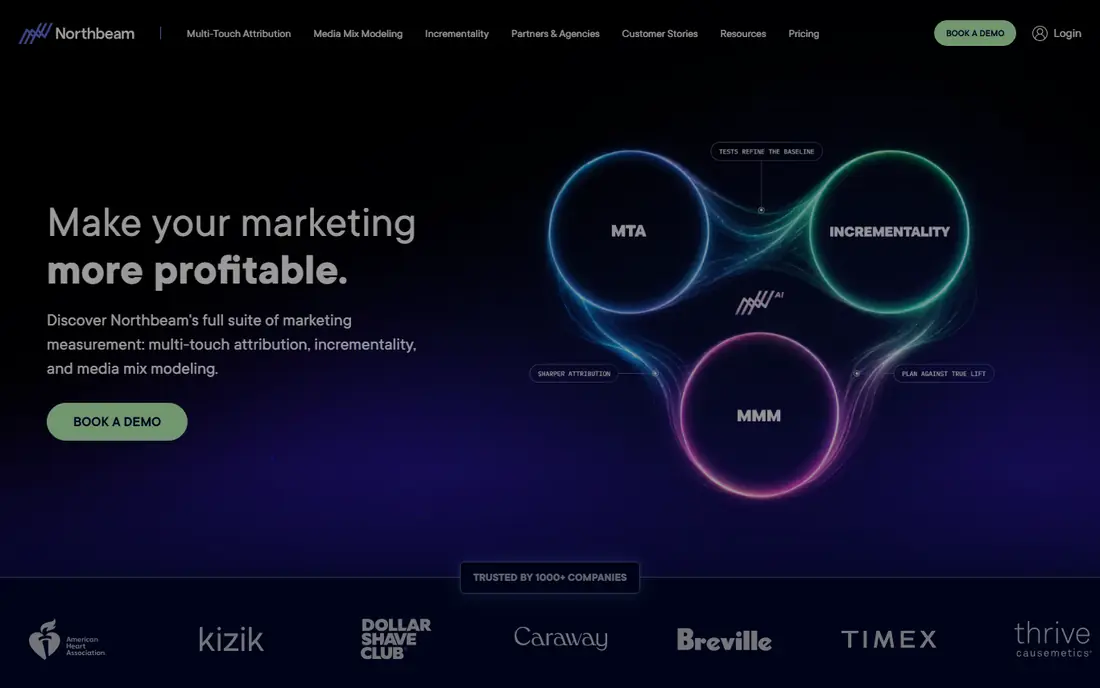
Northbeam is built for brands spending heavily on paid media where blended ROAS alone no longer answers the budget question. Its models combine click and view data across channels, with optional media mix modelling and incrementality testing on higher plans. That depth helps teams decide whether a channel truly drives new orders or simply takes credit for demand that already existed.
The cost and setup reflect that ambition. Starter pricing starts at $1,500 per month in published comparisons, and onboarding can take weeks including a warm-up period. Smaller stores will find ThoughtMetric or Lifetimely more practical. For a brand spending well into six figures a month on ads, Northbeam's modelling can pay for itself if it prevents even a modest misallocation of budget.
- Multi-touch and modelled attribution
- Incrementality options on higher plans
- First-party data approach
- High entry price
- Onboarding and warm-up take time

Wicked Reports focuses on a problem many dashboards handle poorly: purchases that happen weeks after the first click, often after several emails. Its contact-based attribution tracks clicks, email opens, and orders over a long window, then ties revenue back to the campaigns that influenced it. That view suits subscription, course, and membership brands where email nurture does much of the selling.
Pricing starts at $499 per month in published comparisons, with higher tiers for larger revenue bands. There is no free plan, and most buyers start with a demo. If your funnel is short and impulse-led, a simpler tool will be cheaper and faster. If email drives a large share of revenue over a long window, Wicked Reports gives a clearer story than last-click reporting.
- Lifetime lookback across clicks and emails
- Order and CRM verification
- Meta and Google conversion APIs
- Entry price is high for small stores
- Setup benefits from a demo and onboarding
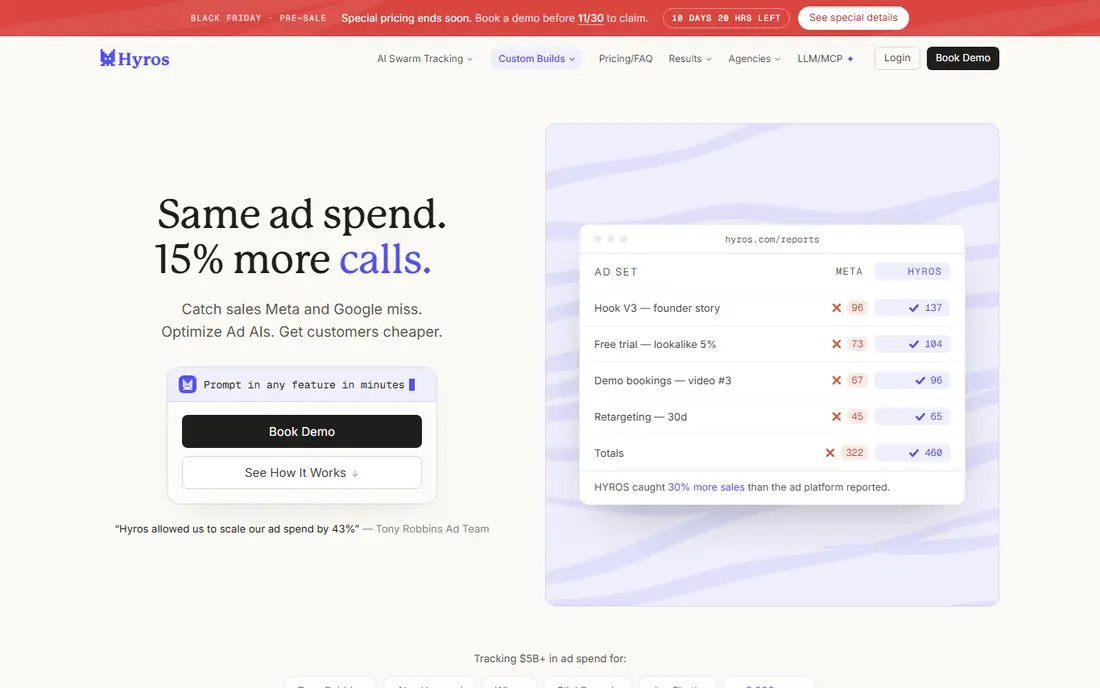
Hyros is designed for businesses where a sale rarely happens in one session: coaching, courses, agencies, and high-ticket offers with calls and long email sequences. Its server-side tracking follows a prospect across ads, email clicks, and phone calls, and attributes revenue even when the purchase happens much later. That makes it a strong fit for funnels that a Shopify-only dashboard would misread.
Pricing is quoted after a call and scales with tracked revenue, so budgeting requires a conversation rather than a pricing page visit. Onboarding also takes longer than a self-serve Shopify app. For a standard Shopify store with short purchase cycles, Hyros is usually more system than needed. For a high-ticket funnel business, it belongs at the top of the shortlist.
- Server-side tracking across ads, emails, and calls
- Long attribution windows
- AI attribution tools
- Pricing is quoted on a sales call
- Onboarding can take weeks
Polar Analytics aims to replace several Shopify reporting apps with one dashboard covering analytics, attribution, profit, and customer behaviour. Server-side tracking improves data quality as browser tracking becomes less reliable, and causal lift tests on some plans help check whether a campaign truly caused incremental orders. For a growing Shopify brand, having profit and attribution in the same view reduces the need to reconcile separate tools.
The entry Core price is reported from $750 per month in published comparisons, which puts it out of reach for very small stores. Some features also require a demo rather than self-serve sign-up. If your store already pays for separate profit, analytics, and attribution apps, Polar may cost less in total. If you only need one of those jobs, a focused cheaper tool will serve you better.
- Shopify analytics, attribution, and profit in one dashboard
- Server-side tracking
- Causal lift testing options
- Entry price is high for small stores
- Some features are demo-gated
ThoughtMetric gives smaller Shopify stores a first-party attribution tool without an enterprise price. It tracks orders and ad clicks using first-party data, which helps as third-party cookies become less reliable, and it presents channel performance in a dashboard a small team can read without an analyst. The $99 per month entry price in published comparisons makes it one of the most accessible options here.
Modelling depth is lighter than Northbeam or SegmentStream, and incrementality testing is not its core strength. That trade is reasonable at this price: most small stores need clear channel ROAS and creative insight more than media mix models. Start here if Triple Whale's price or complexity feels too much, and move up only when ad spend justifies deeper modelling.
- Low entry price
- First-party attribution
- Privacy-focused tracking
- No incrementality testing in the basic sense
- Modelling depth is lighter than Northbeam
Lifetimely answers a different question from pure attribution: how much is a customer worth over time, and which products and channels produce profitable customers. Its cohort and lifetime value reports help stores decide whether a cheap first order is worth acquiring, and profit tracking by product shows which lines actually make money after costs. At $79 per month in published comparisons, it is one of the cheapest tools here.
It is not a full replacement for a modelled attribution platform if you need cross-channel incrementality. Many stores use Lifetimely beside an attribution tool, with Lifetimely owning profit and lifetime value and the other tool owning channel credit. For a store that already trusts its ad platform reporting but lacks a clear profit picture, Lifetimely is a strong first buy.
- Low entry price
- Lifetime value and cohort reports
- Profit tracking by product and channel
- Attribution depth is lighter than dedicated attribution platforms
- Best as a complement to ad tools
SegMetrics focuses on the funnel between first touch and revenue, with a strong emphasis on email and lead sources. It connects ad platforms, email tools, and CRMs to show which lead sources turn into paying customers, not just clicks. That view helps info-product and lead-generation businesses that sell through email sequences and longer funnels.
The tool rewards clean data. If UTM tags, email links, and CRM records are messy, reports will be messy too, so budget time for setup and tagging discipline. Pricing varies by plan and is best confirmed on the vendor site or by trial. For teams that live in email funnels, SegMetrics offers a clearer revenue story than a last-click dashboard.
- Funnel reports tied to revenue
- Email and lead source tracking
- Connects ads, email, and CRM data
- Pricing is not always published clearly
- Setup needs clean UTM and CRM data
Cometly offers straightforward server-side attribution for brands and agencies that need reliable conversion tracking without enterprise complexity. It covers major ad platforms, supports multiple accounts for agency use, and sends conversion data back to ad platforms to improve optimisation. Setup is faster than a modelled platform, which suits early-stage brands and media buyers managing several clients.
Pricing is quoted in many listings and can be based on pageviews, so confirm the cost at your traffic level before committing. Reporting depth is also lighter than Northbeam or Wicked Reports, with less emphasis on lifetime or incrementality analysis. If you need clean, server-side tracking and clear channel ROAS at a manageable price, Cometly is a practical choice.
- Server-side conversion tracking
- Multi-account support for agencies
- Broad ad platform coverage
- Pricing is quoted by pageviews in some listings
- Reporting depth is lighter than enterprise tools
Littledata solves the data quality problem that sits underneath attribution: browser tracking misses orders, misattributes checkouts, and breaks as privacy rules change. Its server-side tracking for Shopify sends cleaner order and customer data to Google Analytics and other tools, which improves every report built on top of it. That makes it a useful foundation even if you keep another dashboard for decisions.
It is not, on its own, a full Triple Whale replacement for creative reporting and modelled attribution. Think of it as the plumbing: it makes your existing analytics more trustworthy, and it pairs well with a dedicated attribution or profit tool. Pricing depends on order volume and features, so check the current plan at your store size and use the trial to compare data accuracy before and after.
- Server-side tracking for Shopify and Google Analytics
- Improved checkout data accuracy
- App integrations
- It is a data pipeline more than a full attribution dashboard
- Pricing depends on orders and features
How we picked these
We compared official pricing pages, product documentation, and published plan comparisons for attribution and analytics tools that serve Shopify and direct-to-consumer brands in October 2026. We kept only tools with live sign-up or demo access and a clear attribution, profit, or server-side tracking product. We excluded tools that are purely generic web analytics without ecommerce attribution, and we marked quote-based pricing as See website rather than estimating a figure.
What to check before you switch
Start with the decision you need to make. If the question is where to move ad budget next week, a modelled attribution tool matters most. If the question is which products and customers are profitable, a profit and lifetime value tool matters more. If your data itself is unreliable, fix tracking first with a server-side tool before buying a fancier dashboard.
Then compare total cost at your size. Some tools price by gross merchandise value, some by orders, some by ad spend, and some by pageviews, so the cheapest entry price can become the most expensive at scale. Run a trial with your real ad accounts connected, check whether reported revenue matches Shopify orders, and confirm how long data takes to stabilise. A tool that looks good on day one but drifts from Shopify totals will mislead budget decisions.
Frequently asked questions
What is the best Triple Whale alternative for Shopify?
Northbeam is best for high-spend stores that need modelled attribution, while ThoughtMetric is best for smaller stores on a budget. Polar Analytics is a strong all-in-one choice if you also want profit reporting in the same dashboard.
Is there a free Triple Whale alternative?
No full-featured free match exists in this list, though several tools offer free trials. Google Analytics 4 remains a free baseline for traffic and revenue reporting, but it does not replace modelled attribution or profit tracking on its own.
Which Triple Whale alternative is cheapest?
Lifetimely at $79 per month and ThoughtMetric at $99 per month are the lowest published entry prices in this list. Both suit smaller stores, with Lifetimely favouring profit and lifetime value and ThoughtMetric favouring channel attribution.
Do these tools replace Shopify analytics?
They complement it rather than replace it entirely. Shopify reports orders and store performance well, while these tools add cross-channel attribution, profit, lifetime value, or cleaner server-side data that Shopify alone does not provide.
How long does setup take?
Self-serve tools such as ThoughtMetric and Lifetimely can be connected in a day or less, though data needs time to build. Modelled platforms such as Northbeam and Hyros often need onboarding and a warm-up period of weeks before reports stabilise.
Should I choose attribution or profit tracking first?
Choose attribution first if ad budget allocation is your main problem. Choose profit tracking first if you are unsure which products and customers actually make money. Many growing stores eventually need both, in separate tools or in one all-in-one dashboard.
Sources
See where you really rank - block by block
ProMapRanker scans Google Maps across a grid of your service area. Simple monthly plans from $19, white-label on every plan.
Start freeKeep reading
 zscaler alternatives
Best Zscaler Alternatives in 2026
Looking for zscaler alternatives? We compare 9 SASE and zero trust platforms on architecture, data protection, pricing, and fit for your network and team.
Read → zapier alternatives free
Best Zapier Alternatives Free in 2026
Nine automation tools for zapier alternatives free in 2026, all with genuinely free tiers, plus free plan limits, starting prices and upgrade paths explained.
Read → which platform is best for online reputation
Which Platform Is Best for Online Reputation in 2026
Wondering which platform is best for online reputation? We compare 8 review, listing, and response tools for small and multi-location businesses and agencies.
Read →