 ProMapRanker
Best Tray.io Alternatives in 2026

Key takeaways
- Tray.io, now Tray.ai, is an enterprise automation platform, so its closest rivals are Workato, Boomi, MuleSoft and SnapLogic, not simple task tools.
- Zapier and Make are our picks for most small teams, with Zapier offering the widest app coverage and Make offering far more steps per dollar.
- Developers who want control and low cost should look at n8n, Pipedream and Activepieces, all of which allow code and self-hosting or generous free tiers.
- Pricing units differ wildly across this market, so compare cost per completed workflow, not headline monthly price, before you commit.
Quick comparison
| Pick | Great for | Pricing starts at | Free tier | |
|---|---|---|---|---|
 Workato | Enterprise automation | See website | Free trial | Visit |
 Zapier | Widest app coverage | $19.99 per month | Yes | Visit |
 Make | Visual workflows on a budget | $9 per month | Yes | Visit |
 n8n | Developers and self-hosting | €20 per month | Yes | Visit |
 Boomi | Hybrid enterprise integration | See website | Free trial | Visit |
 MuleSoft Anypoint | API-led large enterprises | See website | Free trial | Visit |
 Pipedream | Code-first automation | $99 per month | Yes | Visit |
 Activepieces | High-volume low-cost automation | $25 per month | Yes | Visit |
 Celigo | NetSuite and Salesforce integration | See website | Free trial | Visit |
 SnapLogic | Enterprise data integration | See website | Free trial | Visit |
The best Tray.io alternatives
Tray.io, now branded Tray.ai, connects apps and data with visual workflows plus AI agents, aimed squarely at enterprise teams. People usually leave it for one of three reasons: price, complexity, or a wish for simpler or more developer-friendly tooling. The list below covers all three escape routes.
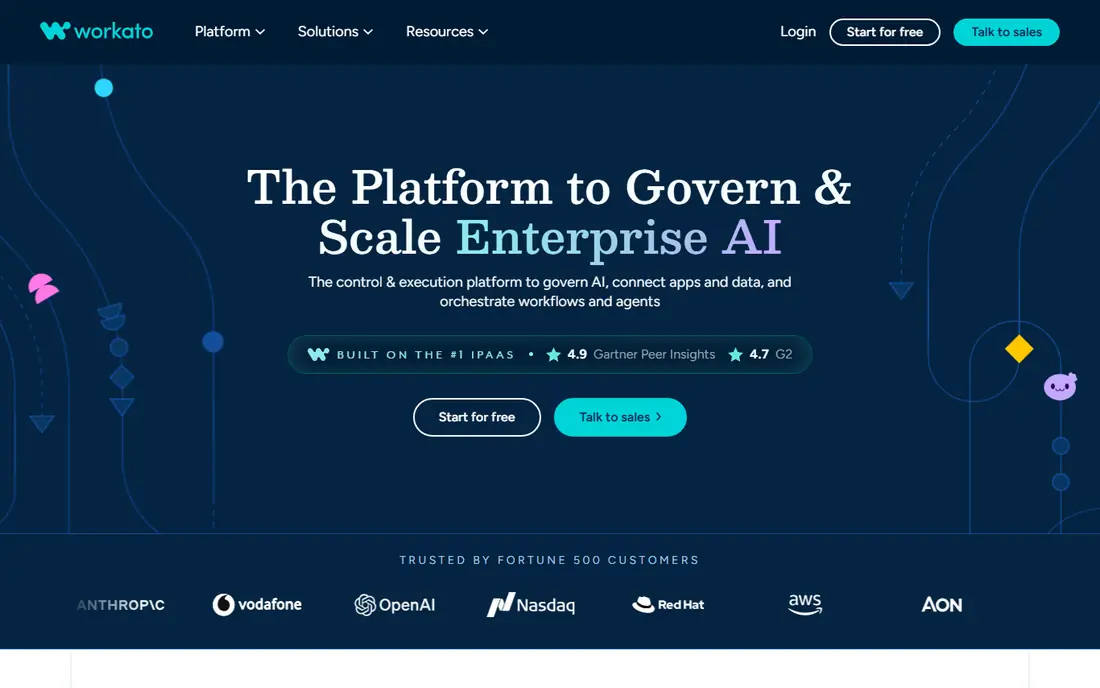
Workato is the most direct enterprise rival to Tray. It offers recipe-based automation across more than a thousand apps, with governance, role-based access, audit logs and compliance controls that large IT teams require. Its AI copilot helps build recipes, and its agent tools extend automation into AI-driven workflows.
The catch is cost and sales process. Workato does not publish prices, and entry contracts commonly run into five figures a year, so small teams should look elsewhere. For enterprises that need governed automation across Salesforce, NetSuite, Workday and hundreds of other systems, Workato is the safe, proven choice.
- Strong governance and compliance
- Large enterprise connector library
- AI copilot and agent tools
- Quote-only pricing
- Entry contracts are expensive
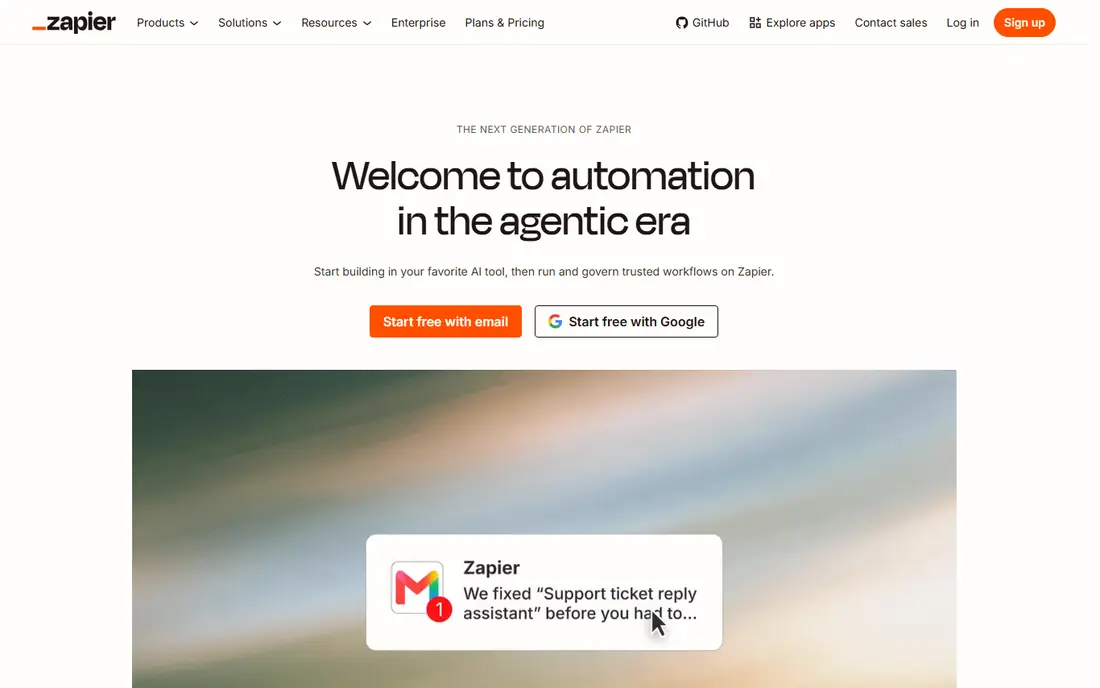
Zapier remains the default automation tool for non-technical teams, and its app coverage is still unmatched, with thousands of supported apps. Building a Zap is genuinely simple: pick a trigger, add steps, and test. AI agents and MCP support extend it into newer agent-style workflows without leaving the platform.
The honest weakness is price at scale. The Professional plan starts at $19.99 per month billed annually for 750 tasks, and each completed action step counts as a task, so busy workflows burn through allowances fast. If your automations are simple and your volume is modest, Zapier is the easiest win here. Heavy users should compare Make or n8n.
- Largest app ecosystem
- Easiest builder for non-technical teams
- AI agents and MCP support
- Task-based pricing gets expensive at volume
- Free plan limited to 100 tasks

Make is our pick for teams that want real workflow power without enterprise pricing. Its visual canvas handles branching, iterators, filters and error handling that Zapier only reaches on higher plans. The Core plan costs $9 per month billed annually for 10,000 credits, and the free plan gives 1,000 credits a month with two active scenarios.
The trade-off is app coverage and onboarding. Make supports fewer apps than Zapier, and its canvas takes longer to learn, though it repays that effort quickly. For teams building multi-step workflows on a budget, Make delivers the best value in this list.
- Visual branching flows
- 10,000 credits on the entry paid plan
- Low cost per step
- Smaller app library than Zapier
- Steeper learning curve for beginners
n8n is the developer favourite in this list. Its visual builder includes code nodes, an HTTP request node for any API, and AI agent nodes, and the self-hosted community edition is free with no execution limit beyond your own server. The cloud Starter plan costs €20 per month billed annually for 2,500 executions.
Self-hosting means you own maintenance, updates and uptime, which is a real responsibility. Teams without technical staff should choose the cloud plan or a simpler tool. For developers and technical teams that want full control and low cost, n8n is hard to beat.
- Self-hosted community edition is free
- Code nodes for JavaScript and Python
- AI agent nodes
- Self-hosting needs technical skill
- Cloud pricing is in euros
Boomi is a full integration platform as a service, built for companies that need to connect cloud apps with on-premises systems. Its visual mapping, reusable components and runtime options suit IT teams managing complex data flows, and its Agentstudio tooling covers newer AI agent use cases. A 30-day trial is available.
Boomi is quote-based and aimed at mid-market and enterprise buyers, so it is overkill for simple app-to-app tasks. If your integration work involves on-premises systems, large data volumes or strict runtime control, Boomi is a serious Tray rival. Simple workflow buyers should stick with Zapier or Make.
- Hybrid and on-premises runtimes
- Strong data mapping
- Agent and MCP tooling
- Quote-based pricing
- Heavier than task automation tools
MuleSoft Anypoint Platform is the enterprise choice for API-led integration. It treats APIs as reusable products, with design, management and governance tools plus DataWeave for complex transformations. Large organisations with hundreds of systems and strict architecture standards use it to build a connected application network rather than a pile of point-to-point workflows.
That power demands skilled developers and a quote-based contract, so it is not a tool a small team adopts casually. If your company already runs Salesforce and needs governed, reusable APIs across the business, MuleSoft is the heavyweight option. Everyone else will move faster with Workato or Boomi.
- API-led connectivity at scale
- DataWeave transformations
- Strong governance
- Quote-based pricing
- Needs skilled developers
Pipedream is built for developers who find visual builders limiting. Workflows mix prebuilt app actions with real code steps in Node.js or Python, with access to npm packages and API glue that visual tools cannot match. It is free to build, and the Startup plan costs $99 per month billed annually for 10,000 credits.
The catch is that production use starts at a higher price than Make or n8n cloud, and non-developers will struggle with its code-first design. For engineering teams that want automation as code with a hosted runtime, Pipedream is a strong, flexible Tray alternative.
- Write Node.js or Python inside workflows
- Huge npm package access
- Free to build
- Production pricing starts higher than rivals
- Code-first design excludes non-developers
Activepieces is an open-source automation platform with a hosted cloud option starting at $25 per month. Its pitch is simple: high-volume automation at a flat price, without the task-meter anxiety that makes Zapier bills balloon. The visual builder is friendly, and the open-source edition lets technical teams self-host.
The app library is smaller than Zapier or Make, and the platform is younger, so some niche connectors may be missing. Teams with common apps and high volumes will find Activepieces a good value, and open-source fans get a self-hosting path that most rivals do not offer.
- Flat pricing with generous task allowance
- Open-source option
- Easy visual builder
- Smaller app library than Zapier
- Younger platform
Celigo specialises in the integrations that break most often: NetSuite, Salesforce and ecommerce platforms. Its prebuilt integration apps and templates cut implementation time for order-to-cash, inventory and finance flows, and its flat-rate pricing is based on endpoints and flows rather than task counts. A 30-day trial is available.
Pricing is quote-based, and Celigo is narrower than a general platform such as Workato. If your core need is NetSuite or Salesforce integration done properly, Celigo is a focused, credible Tray alternative. General workflow buyers will get more breadth elsewhere.
- Prebuilt NetSuite, Salesforce and ecommerce integrations
- Flat-rate endpoint pricing
- JavaScript hooks
- Quote-based pricing
- Narrower focus than general platforms
SnapLogic is an enterprise integration platform built around visual data pipelines called Snaps. It connects apps, databases and data warehouses with transformation and expression tools, plus AI-assisted building and agent creation. It suits data-heavy teams that move large volumes between systems, not just trigger-and-action workflows.
Pricing is quote-based and the sales process is enterprise-grade, so small teams should not start here. For organisations that need data integration and application integration in one platform, SnapLogic is a mature Tray rival with a long track record.
- Visual data pipelines
- Strong REST and database connectivity
- AI and agent tooling
- Quote-based pricing
- Enterprise focus and sales process
How we picked these
We compared official pricing pages, product documentation and platform descriptions for integration and automation tools that cover the same ground as Tray: connecting SaaS apps, moving data between systems and automating multi-step workflows. We included enterprise platforms, general automation tools and developer-first options, and we favoured tools that are live and supported in October 2026. Where a vendor does not publish a price, we wrote See website rather than guess.
What to check before you switch
Start by counting what you actually automate. List your workflows, the apps each one touches, and the monthly run volume, because pricing units differ: tasks, credits, executions and endpoints all measure different things. A tool that looks cheap at 100 runs a month can be the most expensive at 100,000. Check connector depth for your specific apps too, since a platform with thousands of connectors may still lack the exact trigger you need.
Test the hard workflow first
Rebuild your most complex workflow during the trial, not the simplest one. Test error handling, retries and approvals, and check how the platform logs failures, because debugging a broken workflow at 2 a.m. is where cheap tools show their limits. Confirm data residency, security certifications and SSO support if your company requires them, since enterprise tools win on governance even when they cost more.
Pick by team type
Non-technical teams should start with Zapier or Make, developers with n8n, Pipedream or Activepieces, and enterprises with Workato, Boomi, MuleSoft or SnapLogic. NetSuite and Salesforce teams should add Celigo to the shortlist. Match the tool to the people who will build and maintain the workflows, not just to the feature list.
Frequently asked questions
Is Tray.io now called Tray.ai?
Yes. Tray.io rebranded as Tray.ai as its platform added AI agent building alongside its original workflow automation. The product still covers app integration and automation, with AI agents as a newer focus.
What is the cheapest Tray.io alternative?
Make and n8n are the cheapest serious options. Make starts at $9 per month billed annually, and n8n offers a free self-hosted edition plus a cloud plan from €20 per month. Activepieces at $25 per month is also strong for high volumes.
Can I replace Tray with Zapier?
Yes, for simpler workflows. Zapier covers thousands of apps and is easier to use, but task-based pricing gets expensive at high volume, and it lacks the enterprise governance and complex data handling of Tray. Heavy or governed workloads fit Workato or Boomi better.
Do I need developers to use these tools?
No for Zapier, Make and Activepieces, which are built for non-technical users. n8n, Pipedream and MuleSoft reward technical skill, and enterprise platforms such as Workato and Boomi usually need IT involvement for setup and governance.
How do I compare pricing across these tools?
Compare cost per completed workflow at your real monthly volume, not headline price. Count tasks, credits or executions per workflow, multiply by monthly runs, and include any platform fees. A trial with real workflows gives the only honest number.
Sources
- https://www.workato.com
- https://zapier.com
- https://www.make.com
- https://n8n.io
- https://boomi.com
- https://www.mulesoft.com
- https://pipedream.com
- https://www.activepieces.com
- https://www.celigo.com
- https://www.snaplogic.com
- https://www.integrate.io/blog/api-integration-tools/
- https://dev.to/stimlau/6-best-make-alternatives-in-2026-tested-with-pricing-cmo
See where you really rank - block by block
ProMapRanker scans Google Maps across a grid of your service area. Simple monthly plans from $19, white-label on every plan.
Start freeKeep reading
 zoro.to alternatives
Best Zoro.to Alternatives in 2026
We compare the best zoro.to alternatives in 2026, listing only legal licensed anime streaming services, from Crunchyroll to free options for fans today.
Read → zip alternatives
Best Zip Alternatives in 2026
We compare the best zip alternatives for buy now, pay later in 2026, covering pay-in-4 plans, fees, spending limits, and credit reporting options today.
Read → yesware alternatives
Best Yesware Alternatives in 2026
Compare the best yesware alternatives for sales email tracking, templates, and sequences, with current pricing and honest tradeoffs for small sales teams.
Read →