 ProMapRanker
Top Software Companies in the US in 2026

Productivity, cloud and business platforms · Pricing starts at: See website
Key takeaways
- Microsoft, Oracle, Adobe and Salesforce remain the broadest US software platforms for business, covering productivity, databases, creative work and customer data.
- Intuit, ServiceNow, Workday and Autodesk show how focused platforms can lead a niche, from small business finance to IT workflows, HR and design.
- Palo Alto Networks and Snowflake represent the newer enterprise layer, with security and cloud data work that now sits alongside classic software suites.
- This list is not investment advice and is not a ranking by market value alone; we selected companies for US presence, product breadth and relevance to buyers and job seekers.
- For a buyer, the practical test is product fit, support and total cost, while for a job seeker, the test is team, role and location rather than brand size alone.
Quick comparison
| Pick | Great for | Pricing starts at | Free tier | |
|---|---|---|---|---|
| Microsoft | Productivity, cloud and business platforms | See website | No | Visit |
 Oracle | Databases and enterprise applications | See website | No | Visit |
 Adobe | Creative and document software | See website | No | Visit |
 Salesforce | Customer relationship management | See website | No | Visit |
 Intuit | Small business finance and tax | See website | No | Visit |
 ServiceNow | IT and enterprise workflows | See website | No | Visit |
 Palo Alto Networks | Enterprise cybersecurity | See website | No | Visit |
 Autodesk | Design and engineering software | See website | No | Visit |
 Workday | HR and finance for large employers | See website | No | Visit |
 Snowflake | Cloud data platform | See website | No | Visit |
The best top software companies in the US
We compared official company and product pages and public company information for US software companies live in October 2026. Our view for most business buyers is to start with Microsoft or Salesforce for breadth, then add a specialist such as Intuit, Workday or Autodesk for a specific function.
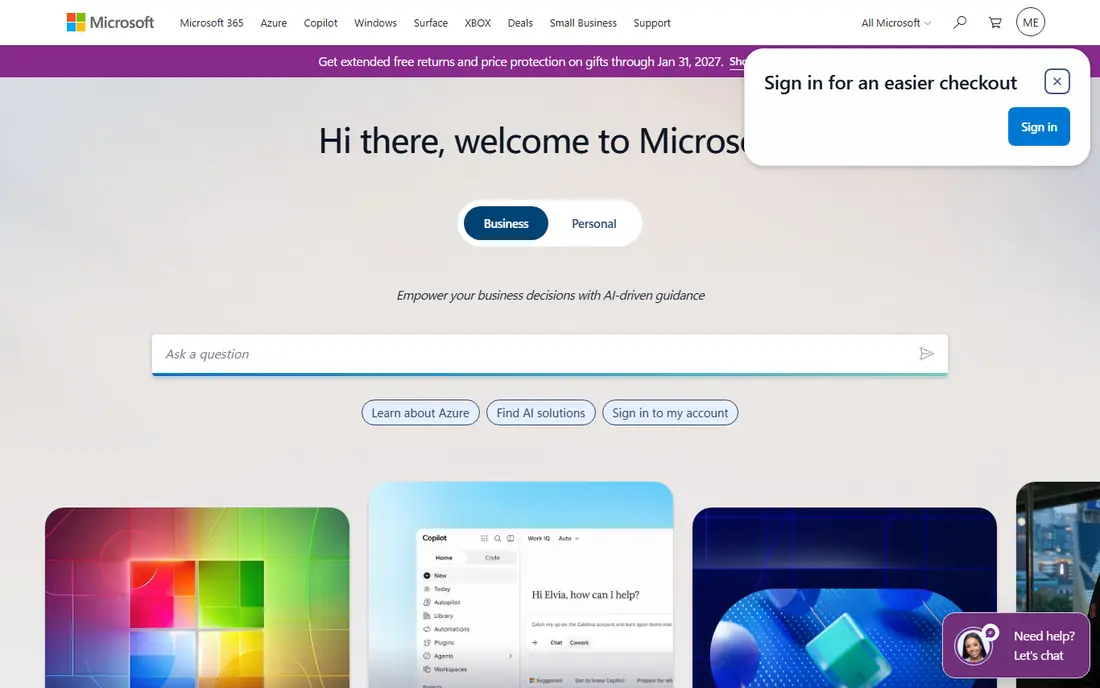
Microsoft is the broadest US software company in this list. Its products cover office productivity, Windows, cloud computing through Azure, business applications through Dynamics, and developer tools through GitHub. For a US business, that breadth means many needs can be met inside one vendor relationship, with shared identity, security and support structures.
The downside is complexity. Licensing for Microsoft 365, Azure and Dynamics varies by plan, user type and commitment, so a small team can easily buy more than it needs or miss a cheaper bundle. Microsoft also competes in many markets at once, so a specialist rival may beat it in one niche. For most buyers, start with the specific product, not the brand, and confirm the plan that fits your user count.
- Very broad product range from Office to Azure
- Deep US business and government presence
- Strong integration across products
- Licensing and plan structures can be complex
- Some products overlap and need careful selection

Oracle is best known for databases and enterprise applications, and its cloud infrastructure business has grown alongside that core. Large US companies use Oracle for finance, supply chain, human resources and data work where reliability and scale matter. Its database technology remains a foundation for many enterprise systems.
The trade-off is enterprise weight. Contracts, licensing and implementation can be heavy, and a small business will usually find a simpler accounting or CRM tool faster to adopt. Oracle fits best when data scale, enterprise applications or existing Oracle systems already shape the decision. For a new small team, compare a focused SaaS tool first.
- Deep database and enterprise application strength
- Large cloud infrastructure business
- Long enterprise track record
- Enterprise pricing and contracts are complex
- Smaller businesses may find lighter cloud rivals easier to start with
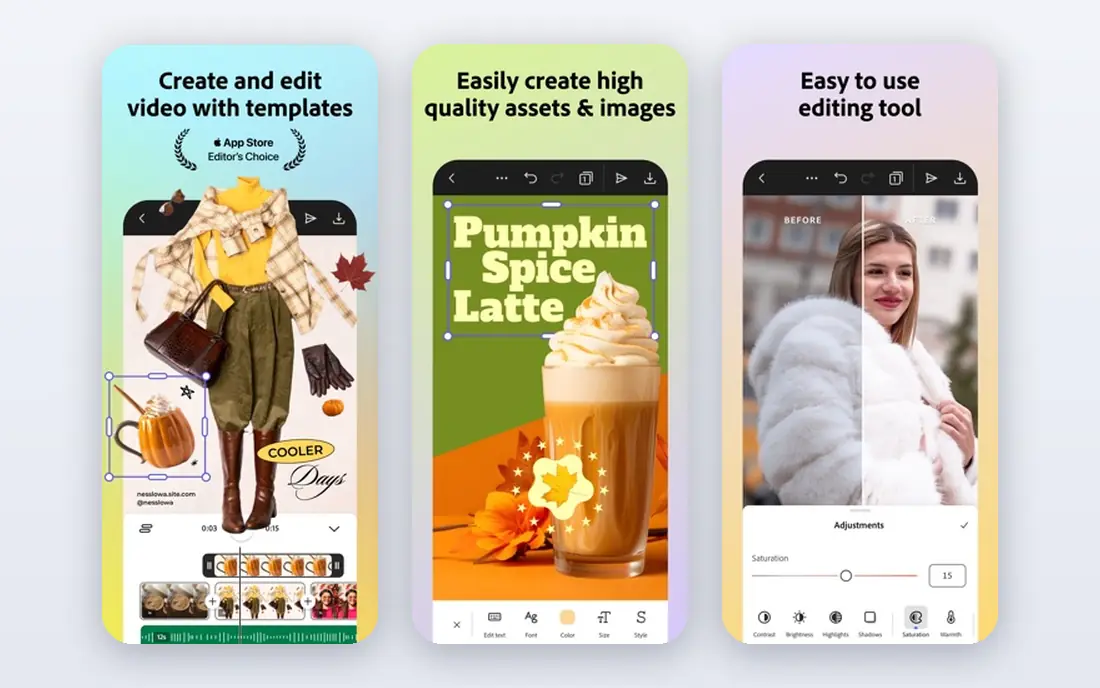
Adobe leads creative software in the US through Photoshop, Illustrator, Premiere Pro, Acrobat and related tools. Creative teams, marketers and publishers rely on its formats and workflows, and its document tools are standard in many offices. For design, video and document work, Adobe remains the default shortlist.
Cost is the main complaint. A full Creative Cloud subscription covers many apps, but a user who needs only one app may still face a bundle decision. Adobe also faces competition from simpler, cheaper tools for basic editing and design. For professional creative work, its depth justifies the price. For occasional edits, a lighter tool may be enough.
- Industry-standard creative tools
- Strong document and PDF workflows
- Broad creative and marketing ecosystem
- Subscription pricing adds up across apps
- Individual apps can be more than a casual user needs
Salesforce is the leading US CRM company, with products for sales, service, marketing and commerce built around customer data. Its AppExchange ecosystem and partner network make it possible to extend the platform for many industries, from finance to healthcare. For a growing US business that needs a shared customer record, Salesforce is often the first enterprise option considered.
The catch is total cost and setup. Licenses, add-ons and implementation can rise fast, and a small team with simple pipeline needs may do better with a lighter CRM. Salesforce rewards companies that invest in data quality, process design and training. Without that investment, a powerful CRM can become an expensive contact list.
- Leading CRM platform with a large app ecosystem
- Strong sales, service and marketing clouds
- Extensive US partner network
- Pricing and customization can grow quickly
- Smaller teams may find setup heavier than a simple CRM
Intuit serves US small businesses and consumers through QuickBooks, TurboTax, Credit Karma and Mailchimp. QuickBooks Online is the default accounting choice for many US firms, with a large accountant and bookkeeper ecosystem that makes support easier to find. That practical, small business focus sets Intuit apart from enterprise-only rivals.
The weakness is price movement and product separation. Several QuickBooks Online plans rose in price in 2026, and users of multiple Intuit products may still feel they are using separate tools. For a US small business, Intuit remains a strong default, but confirm the current plan price and whether payroll, payments or marketing add-ons are included in the total.
- QuickBooks, TurboTax and related products serve millions of US users
- Strong accountant ecosystem
- Practical small business focus
- Pricing has risen on several QuickBooks plans in 2026
- Product lines can feel separate rather than fully unified
ServiceNow helps large organizations run IT service, employee workflows, customer service and risk processes on one platform. Its workflow automation and AI features help teams route work, track requests and reduce manual handoffs. For a US enterprise already using ServiceNow for IT, expanding into other workflows is a natural step.
For smaller companies, ServiceNow is usually too large and too costly to adopt for a single workflow. Pricing is quote-based and tied to modules and users, so a scoped quote is essential. Buyers should compare a focused help desk or workflow tool before committing to an enterprise platform.
- Strong IT service and enterprise workflow platform
- Automation across departments
- Large enterprise customer base
- Enterprise pricing and implementation scope
- Best value inside a wider ServiceNow estate
Palo Alto Networks is one of the largest US cybersecurity software companies, with products for network security, cloud security and security operations. Enterprises and government agencies use its platform to protect networks, cloud workloads and endpoints, with threat research feeding its products. For a large organization consolidating security tools, it is a leading option.
The trade-off is scope for smaller buyers. A small business will usually need a simpler endpoint or firewall product, not a full enterprise security platform. Pricing is quote-based and varies by product and scale. For enterprise security teams, Palo Alto Networks earns its place through breadth, but smaller firms should start with a right-sized security tool.
- Broad security platform covering network, cloud and operations
- Strong enterprise and government use
- Large security research base
- Enterprise pricing and product breadth can overwhelm smaller buyers
- Consolidation needs careful planning
Autodesk serves architects, engineers, builders and manufacturers through AutoCAD, Revit, Fusion and related tools. Its software defines how many US design and construction projects are drawn, modeled and shared, and its cloud collaboration features help distributed teams work on the same models. For professional design work, Autodesk remains the standard.
Cost and learning curve are the barriers. Professional subscriptions are priced for commercial use, and new users need training to use the tools well. Hobbyists and small firms may find lighter design tools enough for simple work. For commercial design, engineering and construction, Autodesk depth is hard to replace.
- Industry-standard design tools such as AutoCAD and Revit
- Strong architecture, engineering and manufacturing use
- Cloud collaboration features
- Subscription pricing for professional tools is high
- Learning curve for new users is steep
Workday provides human resources and finance software for large US employers, covering hiring, payroll, benefits, planning and financial management in one cloud system. Its unified data model helps large organizations report on people and money together, rather than reconciling separate HR and finance systems.
The limit is size. Workday is designed for mid-to-large employers, with implementation and pricing to match, so a small business should choose a lighter HR or accounting tool instead. For a large employer replacing legacy HR and finance systems, Workday is a leading choice, but the project needs executive sponsorship and careful change management.
- Unified HR and finance platform for large employers
- Strong workforce planning and reporting
- Cloud-native design
- Enterprise pricing and implementation time
- Not built for very small businesses
Snowflake provides a cloud data platform that lets companies store, share and analyze large data sets, and run AI workloads on that data. Its separation of storage and compute helps teams scale analytics without a fixed hardware footprint, and its data sharing features help partners and customers work from the same data. For US enterprises building analytics and AI programs, Snowflake is a common foundation.
The risk is cost control. Usage-based pricing rewards efficient queries and punishes wasteful ones, so teams need governance, monitoring and clear ownership. Snowflake also depends on clean, governed data; a messy data estate will not become useful simply by moving it to a new platform. For data-driven enterprises, it is a strong choice with disciplined cost management.
- Cloud data platform for analytics and AI workloads
- Separates storage and compute
- Strong enterprise data ecosystem
- Usage-based pricing needs cost controls
- Data platform value depends on data quality and governance
How we picked these
We compared official company and product pages and public company information for US software companies live in October 2026, and we favored companies with a clear US presence, a broad or leading product in their field, and relevance to business buyers or job seekers. We included broad platforms and focused leaders, rather than ranking by a single financial metric, because market value alone does not tell a buyer which product fits. We did not treat this list as investment advice, and we used See website for pricing because enterprise software pricing is often quote-based or plan-dependent.
What to check before you buy or apply
For buyers, start with the product and the problem, not the company name. A leading vendor can still be the wrong fit for a small team, a single workflow, or a tight budget.
For business buyers
List the users, integrations and compliance needs before requesting a quote. Check whether the product works with your existing accounting, CRM, HR or security tools, and whether support, training and implementation are included. Ask for the annual total, including add-ons and renewal terms, because enterprise pricing often changes after the first year.
For job seekers
Look at the specific team, role and location, not only the brand. Large software companies contain many different cultures, products and work patterns, and a role in one division can feel very different from a role in another. Check the product area, hiring manager and work model, and compare total compensation and growth paths across offers.
For students and career changers
Use free trials, documentation and community resources to learn the product before applying. Skills in Microsoft, Salesforce, Adobe, ServiceNow, Workday or Snowflake transfer across employers, but depth in one product area usually matters more than a shallow overview of many. Pick one platform that matches your target roles and build real projects with it.
Frequently asked questions
What are the top software companies in the US?
Microsoft, Oracle, Adobe, Salesforce, Intuit, ServiceNow, Palo Alto Networks, Autodesk, Workday and Snowflake are among the most prominent US software companies in 2026, covering productivity, databases, creative work, CRM, finance, workflows, security, design, HR and cloud data. The best company for you depends on your goal: buying software, seeking a job, or comparing products for a specific task.
Which US software company is best to work for?
There is no single answer, because experience varies by team, role and location. Microsoft, Salesforce, Adobe and Intuit often appear in workplace discussions for scale and benefits, while smaller or focused firms may offer faster growth or closer product work. Compare the specific role, manager, compensation and work model, not only the brand.
What is the best software company for small businesses?
For most US small businesses, Microsoft for productivity, Intuit for finance and tax, and Adobe for creative work cover the common needs, with Salesforce or a lighter CRM for customer management. Start with the function you need most, and avoid buying an enterprise platform before the team and process are ready for it.
Are these companies good investments?
This article does not give investment advice. Company size, product strength and market position do not predict future share performance, and enterprise software pricing, competition and regulation can change quickly. If you are considering an investment, review current financial reports and seek independent financial advice.
Which US software companies hire software engineers most?
Large platforms such as Microsoft, Oracle, Salesforce, ServiceNow and Snowflake hire many engineers across cloud, data, security and application teams, while Adobe, Autodesk, Intuit, Workday and Palo Alto Networks hire for specialized product areas. Hiring varies by quarter and location, so check current openings and the specific team rather than assuming a company-wide pattern.
Sources
See where you really rank - block by block
ProMapRanker scans Google Maps across a grid of your service area. Simple monthly plans from $19, white-label on every plan.
Start freeKeep reading
 zscaler alternatives
Best Zscaler Alternatives in 2026
Looking for zscaler alternatives? We compare 9 SASE and zero trust platforms on architecture, data protection, pricing, and fit for your network and team.
Read → zapier alternatives free
Best Zapier Alternatives Free in 2026
Nine automation tools for zapier alternatives free in 2026, all with genuinely free tiers, plus free plan limits, starting prices and upgrade paths explained.
Read → which platform is best for online reputation
Which Platform Is Best for Online Reputation in 2026
Wondering which platform is best for online reputation? We compare 8 review, listing, and response tools for small and multi-location businesses and agencies.
Read →