 ProMapRanker
Top Security Software Companies in 2026


Large teams wanting network plus endpoint in one platform · Pricing starts at: See website
Key takeaways
- Palo Alto Networks and CrowdStrike suit buyers who want a broad platform, while Fortinet suits network-first teams.
- CrowdStrike and SentinelOne publish clearer per-device prices than most enterprise rivals.
- Application security buyers should shortlist firms with code scanning and runtime protection, not endpoint tools alone.
- Expect a quoted price for most enterprise platforms, and ask about renewal terms early.
Quick comparison
| Pick | Great for | Pricing starts at | Free tier | |
|---|---|---|---|---|
| Palo Alto Networks | Large teams wanting network plus endpoint in one platform | See website | Free trial | Visit |
 CrowdStrike | Endpoint and threat hunting for mid-size and large teams | $59.99 per device per year | Free trial | Visit |
 Fortinet | Network security and secure connectivity | See website | Free trial | Visit |
 Check Point | Firewall and threat prevention for established IT teams | See website | Free trial | Visit |
 Trend Micro | Multi-layer protection across endpoints and cloud | See website | Free trial | Visit |
 SentinelOne | Autonomous endpoint response and rollback | $69.99 per endpoint per year | No | Visit |
 Sophos | Small and mid-size teams wanting endpoint plus firewall | See website | Free trial | Visit |
 Cisco Security | Organisations already invested in Cisco networking | See website | Free trial | Visit |
 Bitdefender | Cost-conscious teams needing strong endpoint protection | See website | Free trial | Visit |
 Zscaler | Cloud-first teams securing remote and hybrid work | See website | Free trial | Visit |
The best security software companies
We compared firms that sell protection for endpoints, networks, cloud workloads and identities, not just a single antivirus app. The shortlist below covers large platform vendors and focused specialists, so a small team and a large enterprise can both find a realistic starting point. Prices for enterprise platforms are often quoted, so check the vendor page before you budget.
Palo Alto Networks
Great for: Large teams wanting network plus endpoint in one platform
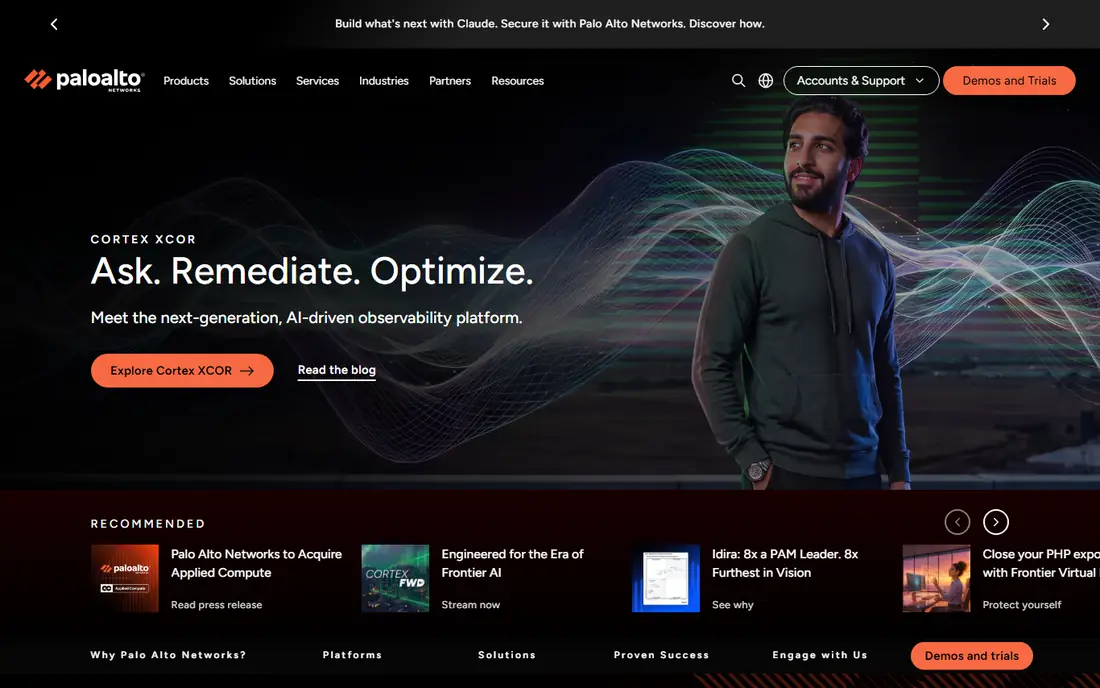
For a large organisation that already runs firewalls, Palo Alto Networks is the natural first call. Its network, cloud and endpoint products share a common approach to threat data, which helps a security team see an incident from more than one angle. The breadth is the point here, and it suits teams with dedicated staff to run it.
The catch is cost and complexity. Pricing is quoted, hardware and subscriptions are separate in many cases, and a small team can feel lost in the product range. Ask for a scoped quote for only the modules you need, and confirm what support and onboarding are included before you sign.
- Broad platform coverage
- Strong firewall heritage
- Wide partner network
- Quoted pricing
- Platform can be complex for small teams
CrowdStrike
Great for: Endpoint and threat hunting for mid-size and large teams
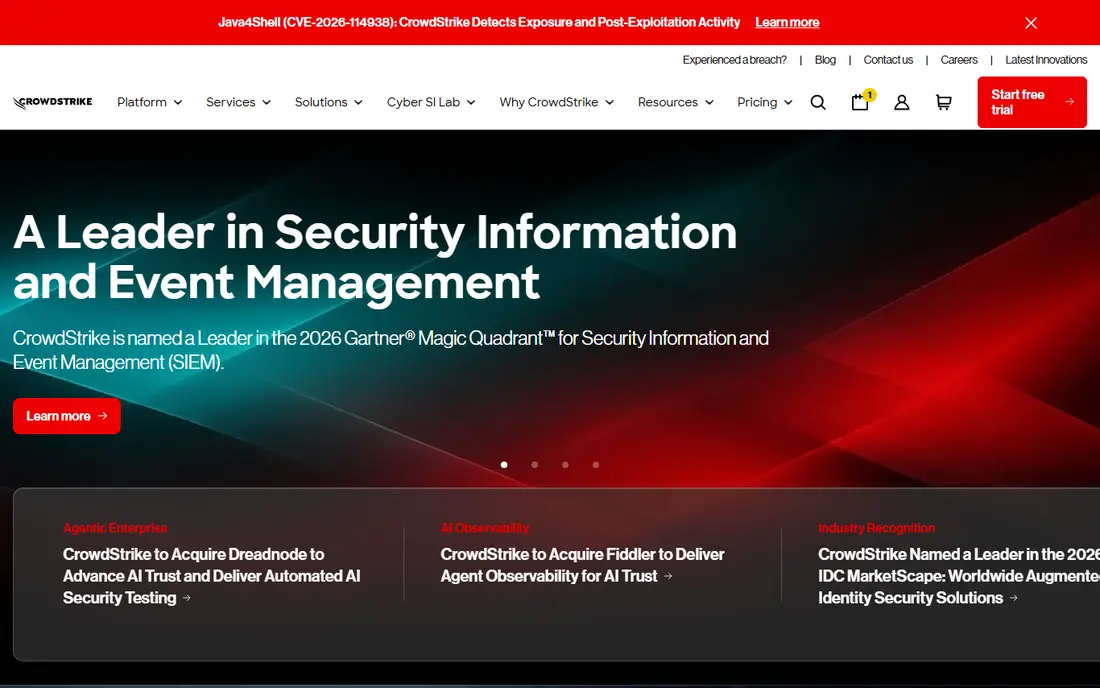
CrowdStrike built its name on a single lightweight agent and a cloud console, and that design still appeals to teams that hate managing on-premise servers. Falcon covers endpoint detection, threat hunting and related modules, and the published entry price makes early budgeting easier than with quote-only rivals. It fits companies that want detection speed without a large hardware footprint.
The trade-off is that the most useful hunting and response features sit in higher tiers. A buyer who only buys the entry tier may miss the depth that makes CrowdStrike stand out. Compare tier by tier, and check whether managed response is included or sold separately.
- Cloud-native agent
- Well known threat intelligence
- Published entry price
- Higher tiers add cost quickly
- Smaller teams may not need the full platform
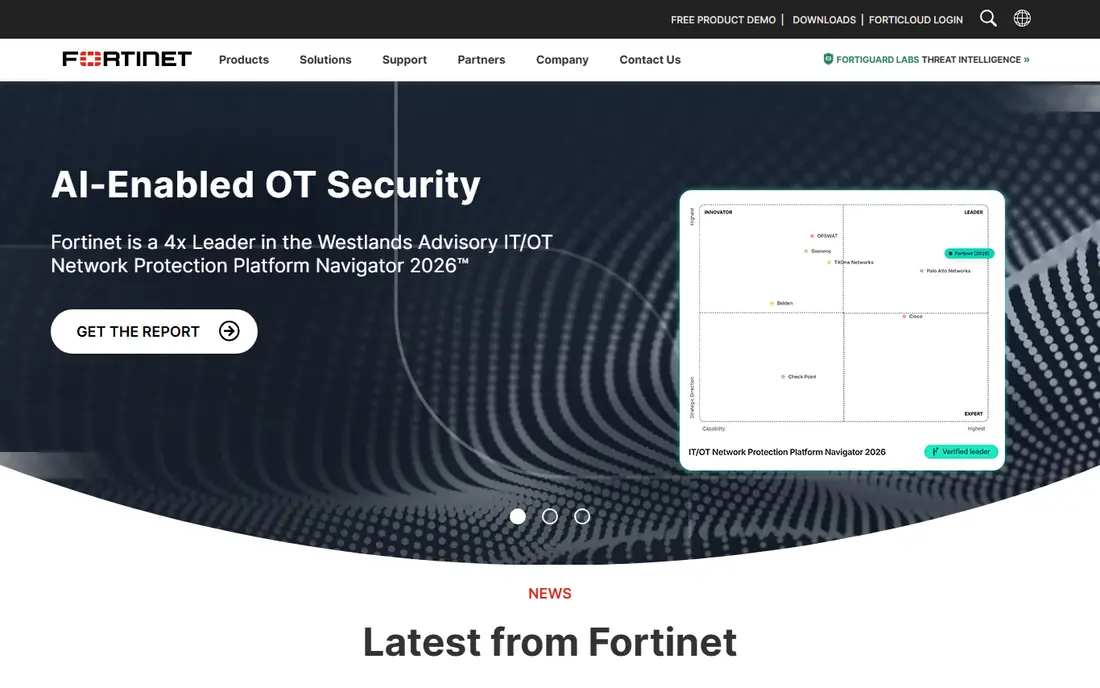
Fortinet appeals most to teams that think in networks first. Its FortiGate firewalls cover small offices through to large data centres, and its secure networking products sit alongside them in the same management view. That pairing matters when a branch office, a VPN and a firewall policy all need to change at once.
Licensing is the weak spot. Bundles, hardware models and subscription tiers interact, so two quotes can look very different for similar coverage. Get the bundle name, the term and the renewal price in writing, and test the management console during a trial if one is offered.
- Strong firewall range
- Integrated networking and security
- Broad hardware choice
- Licensing bundles can confuse buyers
- Interface takes time to learn
Check Point has sold firewalls for decades, and that history shows in its central management tools. Policies, logs and threat prevention can be handled from one place, which helps teams that manage many sites. It is a steady choice rather than a fashionable one, and many enterprises value that stability.
The downside is price transparency. Most deals are quoted, and the full range includes products a smaller buyer will never use. Keep the shortlist narrow, ask which prevention blades are included, and confirm hardware refresh costs before you commit to a multi-year term.
- Long track record in firewalls
- Strong threat prevention options
- Central management
- Quoted pricing
- Product range can feel dated to some buyers
Trend Micro covers a wide span, from endpoint protection to cloud workload security and email security. That breadth helps a team that wants fewer vendors and one set of policies across servers, laptops and cloud accounts. Its Vision One platform is the hub that ties those layers together.
For a small team, the range can be more than needed, and enterprise pricing is quoted rather than published. Start with the layers you actually run, such as endpoints and cloud workloads, and add email or network modules only where you have a clear gap.
- Broad coverage from endpoint to cloud
- Long vendor history
- Managed options
- Quoted enterprise pricing
- Console depth can overwhelm small teams
SentinelOne pitches itself on action, not just alerts. When it finds malicious behaviour, it can kill processes, isolate a device and roll back files affected by ransomware, which reduces the manual work after an incident. That automation is attractive to teams with limited analysts on call.
Published pricing covers an entry point, but larger deployments and managed services change the total. Test rollback and isolation in a trial environment, and confirm how the agent behaves on older machines, since performance on varied hardware matters in a mixed fleet.
- Automated response
- Ransomware rollback features
- Published entry price
- Enterprise features sit in higher tiers
- Management needs care at scale
Sophos is often the practical pick for a team without a large security department. Its endpoint product and firewall product work together, and managed detection can add human review for teams that cannot staff a security operations centre around the clock. The result is less tool juggling for a modest team.
The limit is scale. Very large enterprises with complex cloud estates may find deeper platform vendors a better fit. Sophos suits organisations that want solid protection, clear management and a partner to help with deployment, rather than a sprawling platform project.
- Good fit for smaller IT teams
- Endpoint and firewall pairing
- Managed detection option
- Enterprise depth is narrower than the largest platforms
- Pricing via partners
If your network already runs on Cisco gear, Cisco Security deserves a serious look. Its security products integrate with that networking base, from secure access to extended detection and response, and support is available worldwide. The value is in that existing investment, not in buying security in isolation.
Buying is the hard part. The portfolio is wide, names change, and pricing is quoted. Work with a Cisco partner to map products to your actual network, and avoid buying overlapping modules that duplicate protection you already have.
- Deep networking integration
- Broad security portfolio
- Global support
- Quoted pricing
- Portfolio breadth can complicate buying
Bitdefender is known for detection quality at a price that smaller businesses can defend. Its GravityZone business platform covers endpoints, risk and related controls from a central console, without forcing a buyer into an enterprise platform project. For a team replacing basic antivirus, that step up is meaningful.
The catch is scope. It is not the first choice for a buyer who needs a full network, cloud and identity platform from one vendor. Judge it on endpoint and risk coverage, and pair it with a separate firewall or cloud tool where those gaps matter.
- Strong detection record
- Business console
- Good value positioning
- Enterprise platform depth trails the largest vendors
- Some features need higher tiers
Zscaler takes a different route: instead of backhauling traffic through a central firewall, it inspects traffic in the cloud and grants access per application. That model suits remote and hybrid teams, since users connect from anywhere without a traditional VPN bottleneck. It is a strong fit for cloud-first organisations.
The trade-off is dependence on a cloud design. Policy, identity integration and internet routing all need careful planning, and pricing is quoted. Run a pilot with a real group of remote users before you move critical applications behind it.
- Cloud-delivered access control
- No VPN hardware for users
- Scalable model
- Quoted pricing
- Depends on cloud service availability and design
How we picked these
We started with firms that sell security software as a core business, not resellers or single-feature utilities. We checked official product pages, pricing pages where prices are published, and public product documentation, and we favoured vendors with a current, supported product range in October 2026. Where pricing was not published, we wrote See website rather than guessing a figure.
We also weighed fit by buyer type. A platform vendor makes sense for a large team, while a focused endpoint or network vendor may serve a smaller team better. That is why the list mixes broad platforms with specialists, and why each write-up names the buyer it suits best.
How to choose a security software company
Start with your biggest risk, not the longest feature list. If most work happens on laptops, endpoint detection matters most. If branch offices and remote users dominate, network and secure access matter more. If developers ship code daily, application security deserves its own shortlist, separate from endpoint tools.
Ask for a trial with your own devices and policies, not a vendor demo on clean machines. Check agent performance, alert volume and how long it takes a small team to respond to a test incident. Finally, get renewal pricing, support hours and data retention terms in writing, since those costs shape the second year far more than the first-year quote.
Frequently asked questions
Which company is best for security software?
There is no single best firm for every buyer. Palo Alto Networks and CrowdStrike suit large platform buyers, Fortinet suits network-first teams, and Sophos and Bitdefender suit smaller teams. Match the vendor to your main risk, your team size and your existing tools.
What are the best application security companies?
Application security firms focus on code scanning, software composition and runtime protection for developers, which differs from endpoint protection. Look for vendors that cover your programming languages and integrate with your code pipeline, and trial them on your own code rather than sample projects.
What are the best security system companies?
The term covers different things, from network firewalls to endpoint platforms and cloud access tools. Define the system you need first, such as firewall, endpoint or cloud access, then compare vendors in that category. A vendor that leads in one category may be average in another.
What are the best security solution companies for small businesses?
Small teams should favour managed options, clear consoles and published or simple pricing. Sophos, Bitdefender and entry tiers from larger vendors are common starting points. Avoid a platform that needs a dedicated analyst team to run well.
Should we buy one platform or several specialist tools?
One platform simplifies management and policy, while specialists can offer deeper coverage in one area. Many mid-size teams use a platform for endpoints and network, plus a specialist for application security. Keep the count low, since every extra console adds work.
Sources
See where you really rank - block by block
ProMapRanker scans Google Maps across a grid of your service area. Simple monthly plans from $19, white-label on every plan.
Start freeKeep reading
 zscaler alternatives
Best Zscaler Alternatives in 2026
Looking for zscaler alternatives? We compare 9 SASE and zero trust platforms on architecture, data protection, pricing, and fit for your network and team.
Read → zapier alternatives free
Best Zapier Alternatives Free in 2026
Nine automation tools for zapier alternatives free in 2026, all with genuinely free tiers, plus free plan limits, starting prices and upgrade paths explained.
Read → which platform is best for online reputation
Which Platform Is Best for Online Reputation in 2026
Wondering which platform is best for online reputation? We compare 8 review, listing, and response tools for small and multi-location businesses and agencies.
Read →