 ProMapRanker
6 Best Revenue Cycle Management Software Options for 2026

Direct answer
Our first pick is CareCloud, best for small to mid-sized practices that want EHR and RCM from one vendor. For a different need, Tebra covers teams comparing choices in this category and Veradigm covers teams comparing choices in this category. The full list of 6 tools follows, with prices and free plan facts.
Key takeaways
- Top of the list is CareCloud, which targets small to mid-sized practices that want EHR and RCM from one vendor.
- A permanent free plan is missing from all 6 tools, CareCloud and FinThrive included; plan for a trial or a premium start.
- What to know about Tebra first: full pricing needs a quote and some users report unexpected add-on fees.
- CareCloud, FinThrive and the 4 others all sell by quote; expect sales conversations before you see a price.
Quick comparison
| Pick | Great for | Pricing starts at | Free tier | |
|---|---|---|---|---|
 CareCloud | Small to mid-sized practices | See website | No | Visit |
 Tebra | Teams comparing choices in this category | See website | No | Visit |
 Veradigm | Teams comparing choices in this category | See website | No | Visit |
 Waystar | Providers of any size | See website | No | Visit |
 athenahealth | Billing, and RCM in one cloud product | See website | No | Visit |
 FinThrive | Hospitals and health systems centred on denial prevention | See website | No | Visit |
Revenue Cycle Management Software compared in detail
Choosing revenue cycle management software usually comes down to price, fit and limits. This ProMapRanker guide sets 6 tools side by side on those three points, with the facts kept short and checkable.
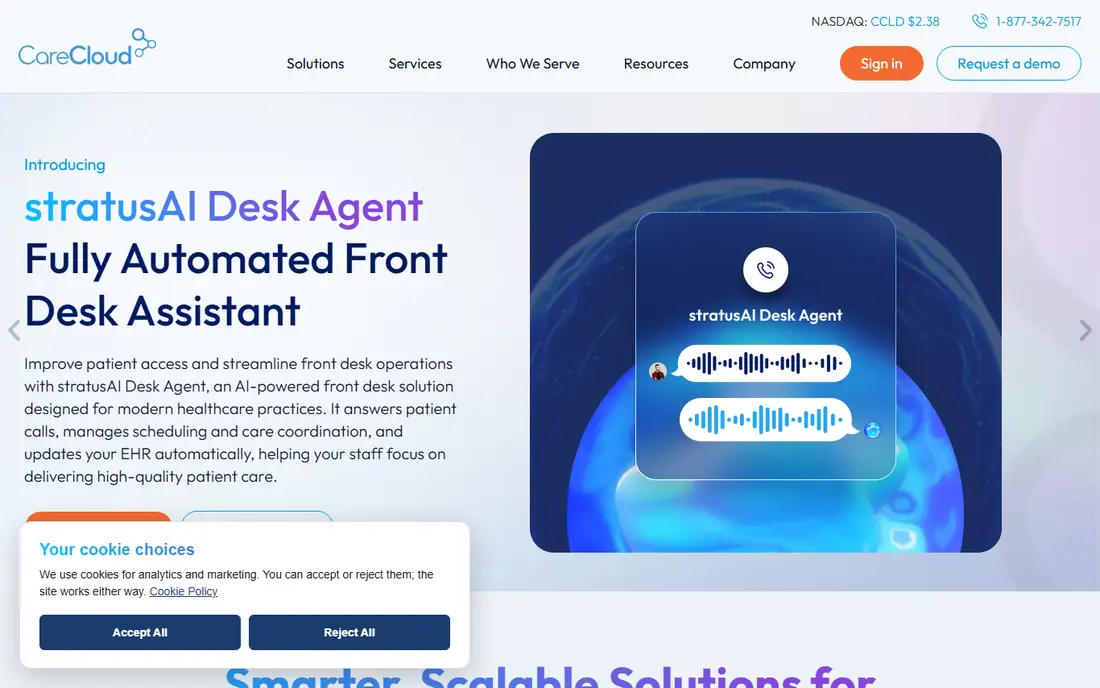
CareCloud serves small to mid-sized practices that want EHR and RCM from one vendor. The system bundles EHR, practice management, and revenue cycle tools, with tiered plans: Central for the software, Complete for more, and Concierge for full-service RCM where CareCloud's team runs your billing for a percentage of collections. That ladder lets a practice start with software and graduate to outsourcing without changing vendors.
Watch-outs: Support responsiveness draws mixed reviews.
In practice, the AI features (branded cirrusAI) deal with documentation assistance, billing automation, and even appeal letters, which targets the exact administrative burden small practices complain about. On top of that, for a practice that wants one throat to choke for both clinical and financial software, with a visible path from DIY billing to full outsourcing, CareCloud's structure is appealing. Pricing for CareCloud is not stated here, so ask the vendor for current figures. CareCloud has no free plan.
- Concierge level gives you full RCM outsourcing at 3 to 7 percent of collections
- Tiered pricing with published starting points (Central from $349/month per the vendor's materials)
- Pricing details beyond the starting levels need a sales conversation

Tebra is built with teams comparing choices in this category in mind. The Practice Management level's published $150 per month starting price makes budgeting simpler than with most competitors, though the full EHR+ product is quote-based.
The billing engine manages claim scrubbing, live eligibility, denial management, and payment posting, whereas the same login handles online scheduling, reminders, reviews, and marketing. Pricing for Tebra is not stated here, so ask the vendor for current figures. There is no free plan with Tebra.
Upsides: EHR+ system links clinical, billing, scheduling. Watch-outs: Full pricing needs a quote and some users report unexpected add-on fees.
- Practice Management level opens at a published $150/month
- Reputation management
- Billing and insurance enrollment setup can take longer than expected

Think of Veradigm for teams comparing choices in this category. Veradigm (formerly Allscripts' practice business) provides Revenue Cycle Services as a managed service: their billing experts run your coding, claims, payer communication, and denial management whereas the technology links up with the EHR you already use. From a buyer's view, the trade-off is the standard services bargain: you gain expertise and consistency, you lose direct control, and the pricing is a negotiated agreement instead of a price list.
What to check first: not software you operate yourself; Most useful for practices ready to hand off billing operations.
More specifically, the company publishes outcome metrics, including a 98 percent first-pass clean claims rate and 3 to 5 percent average revenue improvement in the first year, which provides buyers concrete numbers to hold them to. Rather than hiring, training, and retaining billing staff through every turnover cycle, the practice outsources the function to a team that does it at scale, with AI tools that surface denial trends and payment shifts early. Check the vendor site for Veradigm pricing; none is listed in this comparison. Veradigm has no free tier.
- End-to-end managed revenue cycle services with published outcomes (98% first-pass clean claims rate, 99% net collections per the vendor)
- Links up with your existing EHR instead of replacing it
- Quote-based pricing
Waystar was built for providers of any size that want AI across the entire revenue cycle. The strength for buyers is integration depth: Waystar plugs into the major EHRs instead of replacing them.
Reasons to shortlist it: Serves around a million providers, so payer behavior data is deep.
So a hospital or large practice can keep its clinical systems and fix the financial plumbing. Pricing for Waystar is not stated here, so ask the vendor for current figures. Waystar has no permanent free option.
Watch-outs: The system's breadth means a long evaluation.
- Patient payments
- Denial workflows
- Smaller practices may find it more than they need
athenahealth is built with billing, and RCM in one cloud product in mind. The athenaOne system runs your EHR, scheduling, billing, and claims on one cloud system, with a billing rules engine that scrubs claims against payer rules before submission. The main limit is commitment.
You are buying the entire system, not a bolt-on, so the sales process is long, pricing is quoted, and migration is a project. What distinguishes athenahealth from the pure-play RCM vendors is the network effect: because so numerous practices run on the same system, the company can benchmark your denial rates, days in A/R, and collection performance against similar practices and push fixes network-wide when a payer changes a rule. Athenahealth shows no starting price here, so confirm the cost on the vendor site. Athenahealth has no free plan.
Watch-outs: Some practices report the percentage-of-collections model gets expensive as revenue grows.
Upsides: revenue cycle with a 30,000-plus-rule billing engine.
- AthenaOne bundles EHR
- Network benchmarking compares your financial performance against peers
- Quote-based pricing with no public levels
In short, FinThrive is for hospitals and health systems focused on denial prevention. FinThrive positions itself as the intelligence layer for the revenue cycle instead of just another claims tool. Its pitch centers on prediction: machine learning trained on the company's clearinghouse data predicts which claims will deny and why, so staff fix problems before submission rather than working denials after.
Downsides: The full product is a lot to implement at once.
Beyond that, the product is modular, which matters for buyers who do not want to rip out everything: you can start with patient access or charge integrity and add claims management and contract modeling later. The Insurance Discover product continuously searches for patient coverage across the care journey, recovering revenue from encounters that would otherwise be written off. FinThrive shows no starting price here, so confirm the cost on the vendor site. There is no free plan with FinThrive.
- Charge integrity
- Or claims separately
- Best value comes at health-system scale
How we built this list
Selection started from tools commonly considered for revenue cycle management software, then narrowed to 6 that have clear pricing information or a clear quote process. Treat prices as a snapshot: vendors change plans often, so check the vendor site for the figure that applies today. Position on the page reflects fit for a typical buyer first, with price clarity and free access breaking ties. Treat it as a guide, not a ruling.
What to check before you buy
- Confirm the entry price with every vendor: no tool from CareCloud to FinThrive shows a fixed starting price.
- Read the limits listed for CareCloud first: pricing details beyond the starting tiers need a sales conversation.
- Ask whether athenahealth integrates with your current software, and whether that comes standard or as an add-on.
- Ask the daily users to test Waystar on a live task before you roll it out to everyone.
- Add up seats, add-ons and usage charges for FinThrive before comparing it with cheaper entries.
Frequently asked questions
Should a practice outsource its revenue cycle?
Outsource when billing is a chronic problem instead of a tooling problem: constant staff turnover, denial rates that never boost, A/R days stuck above 40. The middle path, a vendor's billing experts working inside your systems, fits practices that want help without a full handoff.
How are the tools for revenue cycle management software ordered?
CareCloud sits first and FinThrive last because the order follows typical fit for revenue cycle management software, then price clarity and free access. It is a judgement call, so read each profile for fit and limits.
What is a clean claim rate and why does it matter?
The clean claim rate is the percentage of claims accepted by payers on first submission without errors or rework. Beyond that, industry averages hover in the mid-90s, and each percentage point below that represents staff time spent fixing and resubmitting. Vendors like Veradigm publish rates around 98 percent. It matters since clean claims get premium in days; dirty claims get premium in months, if at all.
How do I cut claim denials?
Prevent them before submission. Verify eligibility at scheduling, scrub claims against payer rules before they go out, and use predictive tools to flag likely denials. In daily use, track denial reasons by code and fix the root causes: most practices find a handful of denial codes explain most of their rework. Appeal what slips through rapidly, since timely appeals recover far more than old ones.
Can I try these options before paying?
Not by default. None of the tools, from CareCloud to FinThrive, lists a free plan or a free trial here, so ask each vendor for a demo before committing.
Do these tools publish their prices?
No. None of the tools, from CareCloud to FinThrive, shows a fixed starting price here, so budget time for quotes.
Sources
See where you really rank - block by block
ProMapRanker scans Google Maps across a grid of your service area. Simple monthly plans from $19, white-label on every plan.
Start freeKeep reading
 zscaler alternatives
Best Zscaler Alternatives in 2026
Looking for zscaler alternatives? We compare 9 SASE and zero trust platforms on architecture, data protection, pricing, and fit for your network and team.
Read → zapier alternatives free
Best Zapier Alternatives Free in 2026
Nine automation tools for zapier alternatives free in 2026, all with genuinely free tiers, plus free plan limits, starting prices and upgrade paths explained.
Read → which platform is best for online reputation
Which Platform Is Best for Online Reputation in 2026
Wondering which platform is best for online reputation? We compare 8 review, listing, and response tools for small and multi-location businesses and agencies.
Read →