 ProMapRanker
Top Medical Software Companies in 2026

Key takeaways
- Epic and Oracle Health suit large hospitals and health systems, while athenahealth, eClinicalWorks, and NextGen suit ambulatory groups.
- Software alone does not make an organisation compliant, and compliance depends on policies, training, access controls, and audits as well as the system chosen.
- Most enterprise medical software is priced by contract, so compare implementation, training, and support costs, not only licence fees.
- Patient portals, telehealth, interoperability, and AI charting help are now common, so judge vendors on workflow fit and support, not on feature lists alone.
- A pilot with real clinicians, real schedules, and real billing workflows will reveal more than a sales demo.
Quick comparison
| Pick | Great for | Pricing starts at | Free tier | |
|---|---|---|---|---|
 Epic Systems | Large hospitals and health systems | See website | No | Visit |
 Oracle Health | Health systems and large groups | See website | No | Visit |
 athenahealth | Ambulatory groups with billing help | See website | No | Visit |
 eClinicalWorks | Ambulatory practices of many sizes | See website | No | Visit |
 MEDITECH | Community and mid size hospitals | See website | No | Visit |
 NextGen Healthcare | Multi specialty ambulatory groups | See website | No | Visit |
 Veradigm | Ambulatory and acute care flexibility | See website | No | Visit |
 DrChrono | Mobile first physician practices | See website | No | Visit |
 Tebra | Small practices and billing support | See website | No | Visit |
The best medical software companies
We compared official product pages, public EHR guides, and vendor descriptions for medical software companies serving US providers in October 2026. This is a guide based on publicly reported factors, not a verified ranking, and no scores, market share claims, or prices are presented as verified here. Software alone does not make an organisation compliant, and any vendor claim about compliance should be checked against your own policies, training, and audit process.
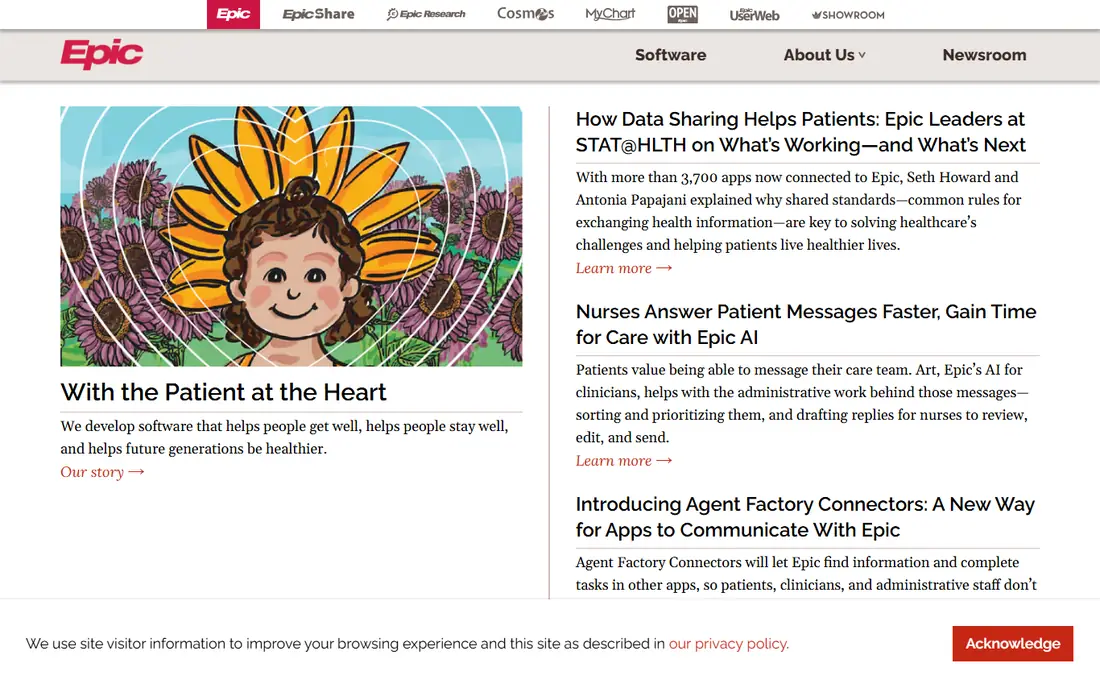
Epic suits large hospitals, academic centres, and health systems that need one record across many sites and specialties. Its platform covers clinical documentation, orders, revenue cycle, patient engagement through MyChart, and population health tools, which helps large organisations coordinate care across settings. That breadth is the reason Epic appears on most enterprise shortlists.
The honest catch is scale. Implementation, training, and ongoing support require serious staff time and budget, and a small practice will not get value from an enterprise system built for health systems. Ask for implementation timelines, training plans, and total contract costs, and involve clinicians early, because workflow fit decides whether Epic helps or slows daily work.
- Broad enterprise EHR coverage across inpatient, ambulatory, and population health
- Widely used patient portal
- Deep interoperability tools
- Enterprise contract and implementation effort are large
- Small or solo practices usually find it too heavy and too costly
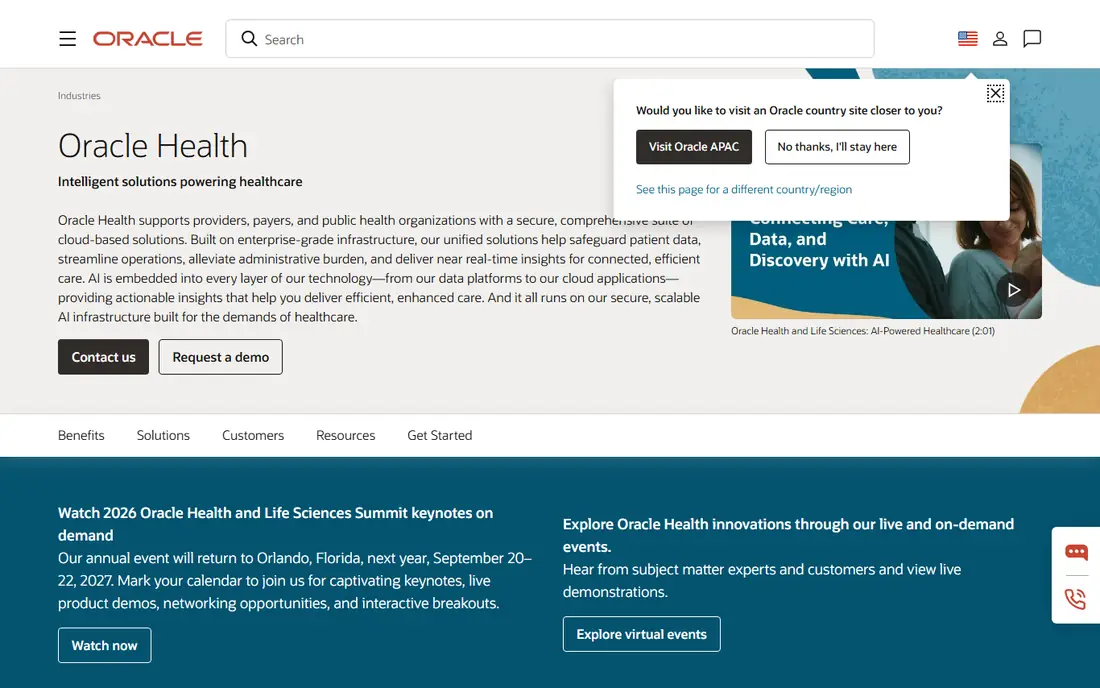
Oracle Health, formerly Cerner, suits health systems and larger ambulatory groups that need an enterprise EHR with strong clinical and financial tools. Its platform covers documentation, orders, decision support, revenue cycle, and population health, with cloud deployment options through Oracle infrastructure. That combination appeals to organisations already using Oracle systems.
The catch is change and migration risk. Large EHR migrations take time, and roadmap questions matter when a platform has been through an acquisition. Ask for the current product roadmap, migration support, interoperability with your existing tools, and a written implementation and support plan before committing.
- Enterprise EHR with clinical decision support
- Revenue cycle and population health tools
- Oracle cloud infrastructure behind the platform
- Enterprise contract and migration effort are large
- Product direction has changed since the Cerner acquisition, so confirm the roadmap
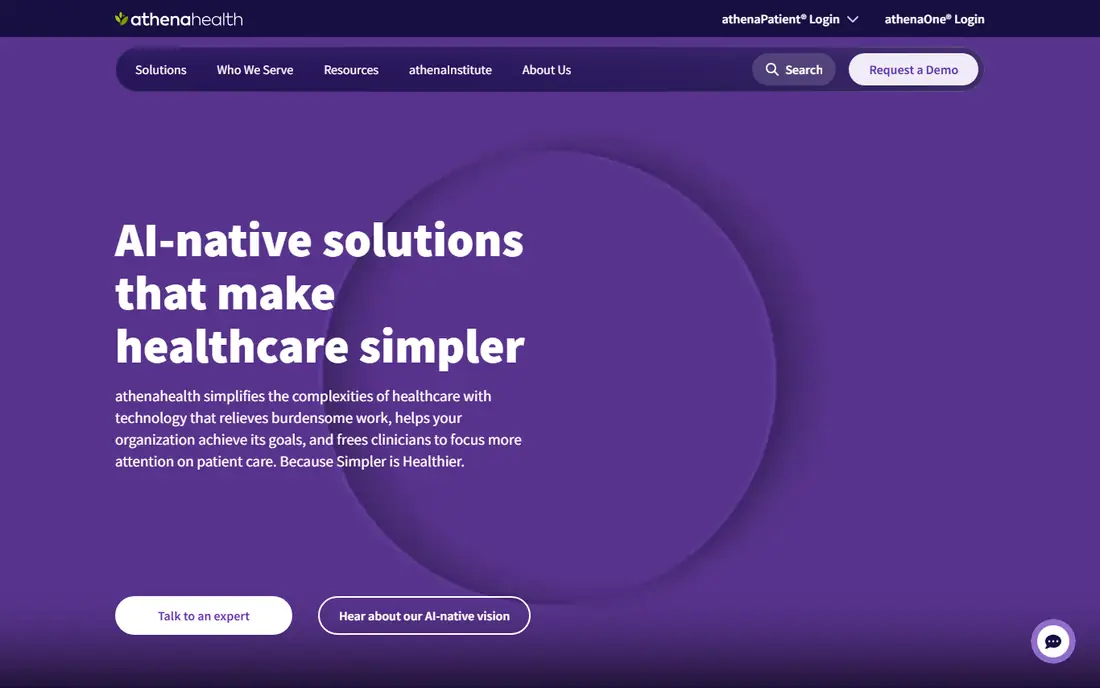
athenahealth suits ambulatory practices and mid size groups that want billing help alongside the EHR, rather than running revenue cycle as a separate project. Its athenaOne platform combines EHR, practice management, and revenue cycle services, with a network model that updates rules across clients. That shared network approach can help with payer rules and denial handling.
The trade off is cost structure and control. A percentage based or contract based model means costs move with collections or contract terms, so model the total at your current and expected volumes. Ask what billing work athenahealth handles, what stays with your staff, and how reporting and denial workflows are shared.
- Cloud based EHR with practice management
- Strong revenue cycle services
- Patient engagement and interoperability tools
- Pricing model often ties to collections or contract terms, so total cost needs careful modelling
- Customisation limits may frustrate some specialties
eClinicalWorks suits ambulatory practices from small groups to larger multi site groups that need an all in one EHR, scheduling, billing, and telehealth system. Its platform covers documentation, patient engagement, telehealth, and population health, which helps practices that want one vendor for most daily work.
The honest weakness is workflow variation. A system that covers many specialties will not fit every specialty equally well, so specialty templates, order sets, and billing workflows must be tested with real clinicians. Run a pilot on your busiest clinic day, not only on a demo patient, and check support response times before signing.
- Broad ambulatory EHR with telehealth and patient portal
- Practice management and population health tools
- AI charting assistance described on its site
- Interface and workflow fit vary by specialty, so a pilot is essential
- Support quality is a common point of variation in public reviews
MEDITECH suits community hospitals, critical access hospitals, and mid size health systems that need an integrated EHR without the scale of the largest enterprise vendors. Its Expanse platform covers clinical, financial, and patient engagement work in a web based system, which helps hospitals that want a single record across inpatient and outpatient care.
The catch is that hospital EHRs still demand implementation, training, and change management, even when the vendor is smaller than Epic or Oracle Health. Ask for implementation timelines, training for nurses and physicians separately, and a clear plan for interfaces with labs, imaging, and pharmacy systems.
- Integrated EHR for hospitals and ambulatory care
- Web based Expanse platform
- Revenue cycle and care coordination tools
- Enterprise implementation effort is still large
- Smaller practices may find hospital focused workflows heavier than needed
NextGen Healthcare suits multi specialty ambulatory groups that need specialty templates, billing, and analytics in one platform. Its EHR and practice management tools cover documentation, scheduling, billing, and patient engagement, with content for a range of specialties. That breadth helps groups that run several specialties under one organisation.
The limitation is fit by specialty. Ask for references from groups in your specialties, a demo using your own visit types and billing codes, and a written implementation plan covering templates, interfaces, and training. A generic demo will not reveal template gaps that slow clinicians every day.
- Ambulatory EHR with specialty content
- Practice management and revenue cycle tools
- Analytics and patient engagement features
- Pricing is by contract
- Specialty fit and implementation support vary, so references from similar groups matter
Veradigm, formerly Allscripts, suits organisations that need flexibility across ambulatory and acute settings, with interoperability and analytics alongside the EHR. Its platform covers clinical documentation, practice management, and population health, which helps groups that share data across sites and partners.
The catch is product clarity. A vendor with a long history and renamed products can confuse buyers about which product is current and supported. Ask for the exact product name, version, support terms, and roadmap, and confirm interface support for your labs, imaging, and payer systems in writing.
- Flexible EHR platform with interoperability tools
- Ambulatory and acute care options
- Analytics and population health features
- Product history includes the Allscripts name, so confirm the current product and support model
- Pricing is by contract
DrChrono suits mobile first physician practices that want charting, scheduling, and billing from a tablet friendly workflow. Its platform covers EHR, practice management, billing, and telehealth, with a patient portal for engagement. That mobile focus appeals to clinicians who move between rooms or sites.
The limitation is scale and specialty depth. A larger multi specialty group may need deeper templates, interfaces, or revenue cycle services than a mobile first platform offers. Test the full workflow, from scheduling to claim submission, with your own visit types before deciding.
- Mobile friendly EHR built around tablet workflows
- Scheduling, billing, and telehealth tools
- Patient portal and messaging
- Smaller scale than enterprise vendors
- Specialty depth and interface coverage need checking for larger groups
Tebra suits small practices and independent groups that want EHR, scheduling, billing, and patient engagement without an enterprise contract. Its platform grew from Kareo practice management and billing software, which gives it a practical billing focus for small teams that need clean claims and patient payments.
The catch is scope. Tebra is built for small to mid size practices, so a large health system or a complex multi specialty group will likely need a larger platform. Ask for plan details, billing support scope, interface coverage, and migration help from your current system.
- EHR and practice management for small practices
- Billing and patient engagement tools
- Roots in Kareo billing software
- Smaller practices focus means enterprise features are limited
- Pricing and plan details must be confirmed per practice size
How we picked these
We compared medical software companies with a live US product, an official product page, and a clear fit for hospitals or ambulatory care in October 2026. We included enterprise EHR vendors and ambulatory platforms, because readers searching for top medical software companies may need either, and we labelled the fit in each profile. We left out imaging only vendors, telehealth only vendors, and vendors with no clear US EHR product, to keep the list focused on record and practice systems.
We did not claim hands on use, and we did not invent market share, ratings, or prices. Software alone does not make an organisation compliant, and compliance also requires policies, workforce training, access controls, risk analysis, and audit processes. Check certification, security practices, and contract terms with your own compliance team before purchase.
What to check before you buy medical software
Start with workflow, not features. Map a full patient journey, from scheduling and intake to documentation, orders, billing, and follow up, then test each step with real clinicians in a pilot. A feature that looks strong in a demo can still slow a clinic if templates, order sets, or billing codes do not match your practice.
Check implementation, interfaces, and support in writing. Ask for implementation timelines, training plans, data migration scope, interface list, uptime terms, support hours, and exit and data export terms. For security and privacy, ask about access controls, audit logs, encryption, breach notification, and business associate agreement terms, and have your compliance team review them. Remember that software alone does not make an organisation compliant.
Questions to ask every vendor
Ask for references from organisations of your size and specialty, and ask those references about go live problems and support after go live. Ask how AI charting help is validated, how suggestions are shown to clinicians, and who is responsible when a suggestion is wrong. If a vendor cannot answer those questions clearly, treat that as a material gap.
Frequently asked questions
What are the best medical software companies?
The best company depends on setting and size. Large hospitals often shortlist Epic, Oracle Health, and MEDITECH, while ambulatory groups often shortlist athenahealth, eClinicalWorks, NextGen, and Tebra.
What are the top 10 medical software companies?
A top 10 list would add vendors beyond the nine here, such as specialty EHR and revenue cycle firms, depending on whether the list counts EHR vendors only or all medical software. Use the nine here as a starting shortlist, then add specialty vendors for your field.
Does buying certified EHR software make a practice compliant?
No, software alone does not make an organisation compliant. Compliance also needs policies, training, access controls, risk analysis, audit logs, and regular review, and your compliance team should review vendor security and contract terms.
How much does medical software cost?
Most enterprise and mid size medical software is priced by contract, based on providers, sites, modules, and services. Ask for a written total covering licences, implementation, training, interfaces, and ongoing support, not only a monthly licence figure.
Should a small practice buy an enterprise EHR?
Usually no, because enterprise EHRs carry implementation and support costs that small practices cannot use well. Small practices usually fit better with ambulatory platforms such as Tebra, DrChrono, or eClinicalWorks, with a pilot to confirm workflow fit.
Sources
See where you really rank - block by block
ProMapRanker scans Google Maps across a grid of your service area. Simple monthly plans from $19, white-label on every plan.
Start freeKeep reading
 zscaler alternatives
Best Zscaler Alternatives in 2026
Looking for zscaler alternatives? We compare 9 SASE and zero trust platforms on architecture, data protection, pricing, and fit for your network and team.
Read → zapier alternatives free
Best Zapier Alternatives Free in 2026
Nine automation tools for zapier alternatives free in 2026, all with genuinely free tiers, plus free plan limits, starting prices and upgrade paths explained.
Read → which platform is best for online reputation
Which Platform Is Best for Online Reputation in 2026
Wondering which platform is best for online reputation? We compare 8 review, listing, and response tools for small and multi-location businesses and agencies.
Read →