 ProMapRanker
Top Facilities Management Software in 2026

Key takeaways
- MaintainX, Limble, and UpKeep suit small to mid-size teams that need mobile work orders and preventive maintenance fast.
- Fiix, eMaint, and FMX suit asset-heavy and multi-site teams that need deeper maintenance programs and reporting.
- ServiceChannel, Corrigo, and Facilio suit multi-site operators that outsource repairs or manage large building portfolios.
- Hippo CMMS suits schools, healthcare, and public-sector teams that need a clear request portal and equipment tracking.
- Per-user pricing punishes broad adoption, so check free requester accounts and total seat cost before you choose.
Quick comparison
| Pick | Great for | Pricing starts at | Free tier | |
|---|---|---|---|---|
 MaintainX | Mobile-first frontline teams | Free | Yes | Visit |
 Limble | Preventive maintenance teams | $28 per user per month | Yes | Visit |
 UpKeep | Small mobile maintenance teams | $20 per user per month | Yes | Visit |
 Fiix | Asset-heavy industrial teams | $45 per user per month | Yes | Visit |
 eMaint | Configurable multi-site programs | $69 per user per month | No | Visit |
 FMX | Schools and multi-facility operations | $35 per user per month | No | Visit |
 Hippo CMMS | Healthcare, education, and government | $39 per user per month | No | Visit |
 ServiceChannel | Multi-site contractor management | See website | No | Visit |
 Corrigo | Outsourced multi-site maintenance | See website | No | Visit |
 Facilio | Multi-site building portfolios | See website | No | Visit |
The best facilities management software
Facilities management software covers work orders, preventive maintenance, assets, parts, and vendor work. The tools below range from simple mobile CMMS apps to enterprise portfolio platforms, so match the tool to your site count, crew type, and vendor mix. We compared official pricing pages and public CMMS guides.
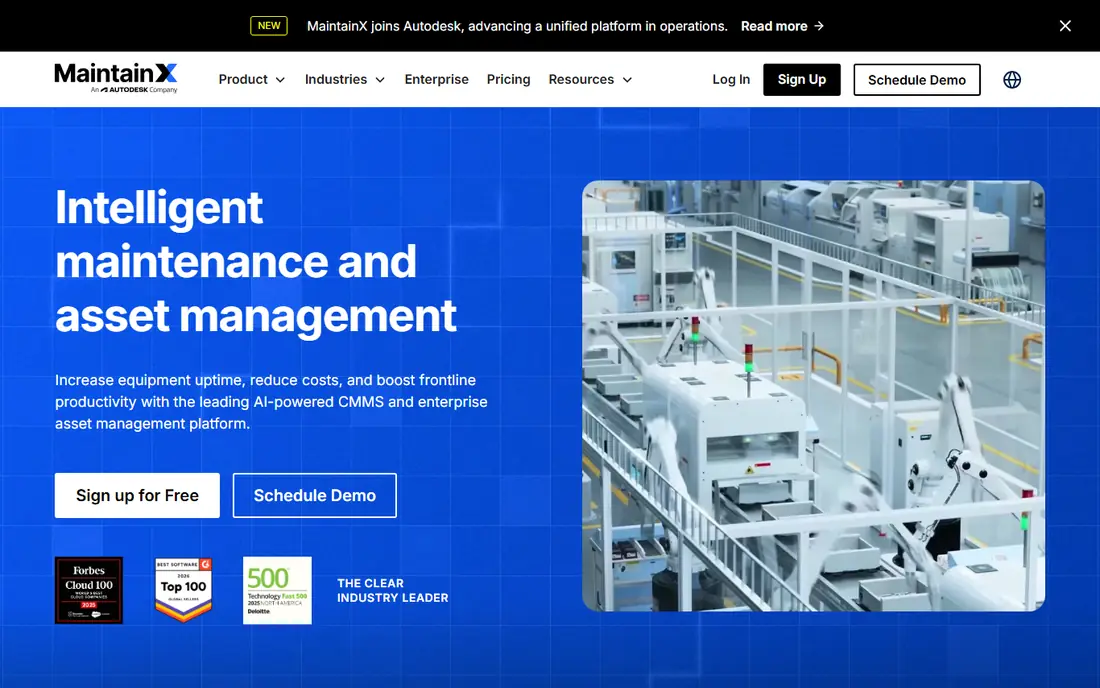
MaintainX is our pick for teams whose technicians live on phones. Work orders, procedures, checklists, and team messaging sit in one mobile app, and QR codes on equipment pull up the asset record fast. A free plan lets small teams move off paper before spending anything.
Depth is the trade-off. Meter-based preventive maintenance, stronger analytics, and some integrations sit on higher tiers, so complex reliability programs may outgrow the cheaper plans. For distributed teams and frontline adoption, MaintainX is the fastest path to a working system.
- Very easy mobile work orders
- Checklists, messaging, and QR codes in one app
- Free plan for small teams
- Advanced reporting sits on higher tiers
- Customization is thinner than enterprise tools
- No occupant portal on basic plans
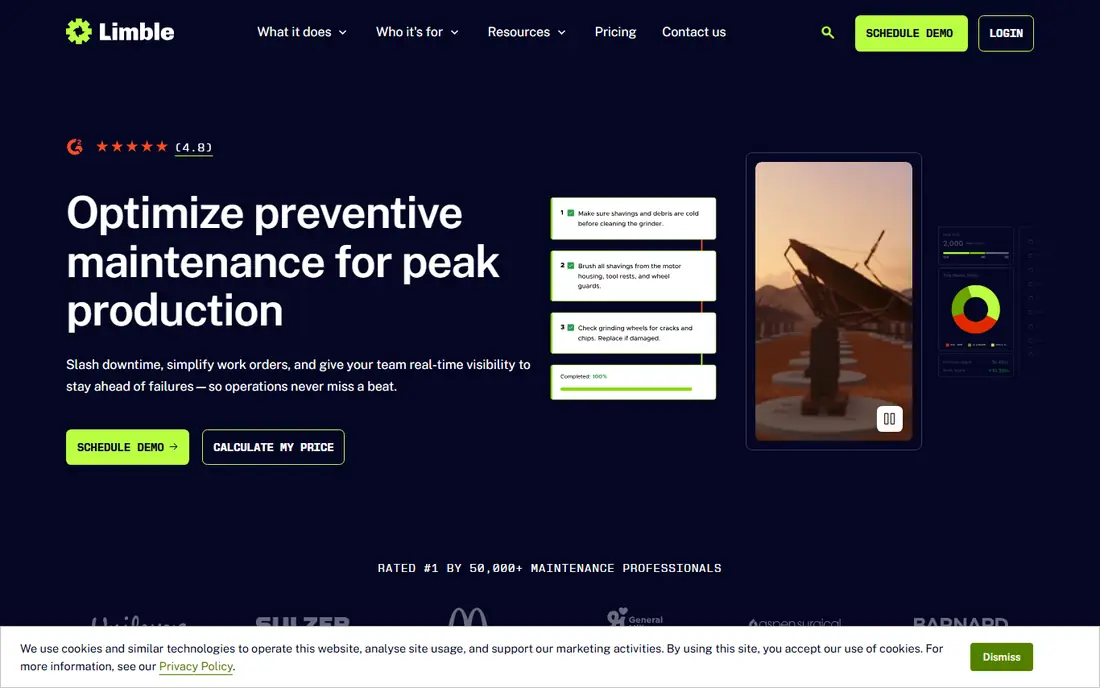
Limble suits teams where preventive maintenance is the core program, not an afterthought. Scheduling, recurring tasks, asset history, and parts tracking are easy to set up, and the interface is clean enough for technicians to use without long training. Unlimited assets on many plans also help growing teams.
Large multi-site operators may find enterprise configuration and vendor portals thinner than in ServiceChannel or Facilio. Advanced reporting also sits higher up the plan ladder. For lean maintenance teams that want a fast, clear CMMS, Limble is a strong choice.
- Clean interface with strong preventive maintenance
- Unlimited assets on many plans
- Helpful onboarding for small teams
- Multi-site enterprise config is thinner
- Vendor portal depth is limited
- Higher tiers needed for advanced reporting
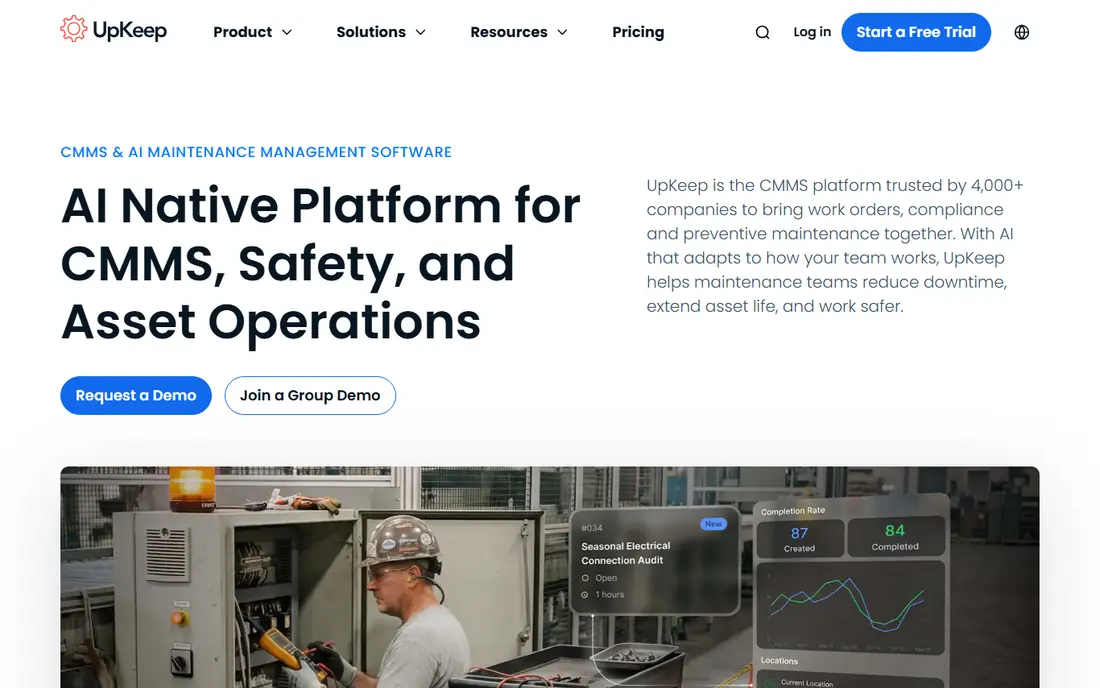
UpKeep suits small teams that want to get organized on mobile quickly. Work orders, assets, parts, and preventive tasks are simple to create, and QR codes let staff report issues from the equipment itself. That simplicity helps teams that have never used a CMMS before.
Reporting and multi-site depth are thinner than in Fiix or eMaint, and the per-user model can grow costly as the team expands. Teams with one or two sites and a modest crew will find UpKeep easy to adopt. Larger portfolios should test reporting depth before committing.
- Simple mobile work orders and asset tracking
- QR-code request flow
- Parts and inventory tools
- Multi-site depth and reporting are limited
- Per-user cost grows with team size
- Advanced features need higher tiers
Fiix, backed by Rockwell Automation, suits asset-heavy operations that need more than simple work orders. Asset hierarchy, preventive schedules, parts, and integrations with industrial systems give reliability teams a deeper base. A free tier lets teams test the core before paying.
The entry price is higher than the mobile-first tools, and setup rewards careful asset and schedule planning. Teams that only need simple requests may find Fiix heavier than needed. For plants and asset-heavy facilities, Fiix offers a good balance of depth and usability.
- Strong asset tracking and preventive scheduling
- Integrations with industrial systems
- Free tier for basic use
- Higher entry price than MaintainX or UpKeep
- Setup takes more care
- Advanced analytics need higher tiers
eMaint, from Fluke Reliability, suits teams that run configurable, multi-site maintenance programs with compliance needs. Condition monitoring, work management, and reporting cover industrial and regulated settings well. Sensor links help teams move from calendar-based maintenance to condition-based work where that fits.
Price is higher than the small-team tools, and storage fees can add cost. The interface is also less modern than MaintainX or Limble. For mid-size and larger teams that need configuration depth and compliance records, eMaint is a solid enterprise-leaning pick.
- Deep configuration for multi-site programs
- Condition monitoring with Fluke sensors
- Strong reporting and compliance tools
- Higher price per user
- Storage fees can apply
- Interface feels dated next to newer mobile apps
FMX suits schools, municipalities, and multi-facility operators that need maintenance plus scheduling in one place. Staff can submit requests through a portal, while teams manage work orders, assets, and facility bookings together. That mix fits education and public-sector workflows well.
Industrial teams with heavy reliability needs may find depth thinner than in Fiix or eMaint. There is a free trial but no permanent free plan, so budget for a subscription from the start. For multi-facility operations that also book rooms and spaces, FMX is a practical choice.
- Work orders plus scheduling and facility booking
- Request portal for staff
- Good fit for education and government
- Industrial depth is thinner than Fiix or eMaint
- Free trial only, with no free plan
- Customization has limits
Hippo CMMS suits facilities teams in healthcare, education, and government that need a clear request flow. Staff submit requests through a portal, technicians manage work orders and preventive tasks, and managers track equipment and parts. The calendar view helps teams plan work across a week at a glance.
The Starter plan limits facilities, equipment items, and requesters, so larger teams will need Plus or Pro. API access and single sign-on also sit on higher tiers. For single-facility and small multi-facility teams in regulated settings, Hippo offers a clear and steady CMMS.
- Clear maintenance request portal
- Equipment and parts tracking
- Calendar dashboard and reports
- Starter plan limits facilities and requesters
- Higher tiers needed for multi-site work
- API and SSO sit on higher tiers
ServiceChannel suits multi-location operators that outsource most repairs. Its contractor marketplace, dispatch, scorecards, and invoicing help chains manage third-party work across hundreds of sites. Vendor performance data also helps operators compare contractors and control spend.
Pricing is quote-based and enterprise-shaped, so small teams will find it heavy. Teams that mainly use in-house crews may also find the vendor focus less useful. For retail and restaurant chains with contractor-heavy maintenance, ServiceChannel is a leading platform.
- Large contractor marketplace with dispatch
- Vendor scorecards and invoicing
- Strong for retail and restaurant chains
- Quote-based pricing
- Retail-shaped workflows may not fit in-house teams
- Predictive analytics are thinner than Facilio
Corrigo, backed by JLL Technologies, suits very large portfolios that outsource maintenance across many sites. Work order management, vendor performance tools, and asset analytics support both daily repairs and longer capital planning. Its contractor network helps operators find vetted providers.
Public pricing is not published, and the platform fits best inside the JLL ecosystem, so outside teams should check integration effort early. Vendor onboarding can also take time. For large, contractor-heavy portfolios, Corrigo remains a strong enterprise option.
- Mature work order and vendor management
- Contractor network
- Asset analytics for capital planning
- Pricing is not published
- Best inside the JLL ecosystem
- Vendor onboarding can take time
Facilio suits multi-site building portfolios that want maintenance, vendor work, and building data in one system. Native building and IoT links, plus portfolio operations, set it apart from simple CMMS apps. Compliance and vendor tools also help property and facilities teams manage many sites together.
It is an enterprise platform, so a single small site will not need its depth and will face quote-based pricing. Implementation also needs planning across sites and systems. For portfolio operators and facilities service providers, Facilio is a strong top-end pick.
- Connected CMMS with building and energy data
- Portfolio-wide operations in one system
- Vendor and compliance tools
- Quote-based enterprise pricing
- More platform than a single site needs
- Implementation needs planning
How we picked these
We compared work order tools, preventive maintenance, asset tracking, vendor management, mobile use, and published pricing. We favored tools with clear commercial facility use, from small-team CMMS apps to portfolio platforms. We did not claim hands-on testing. Where pricing was quote-based or varied across public guides, we wrote See website rather than guessing.
How to choose facilities management software
Start with crew and site count. A single-site team with a small crew should test MaintainX, Limble, or UpKeep first. A multi-site team with in-house crews should test Fiix, eMaint, or FMX. A contractor-heavy chain should test ServiceChannel or Corrigo, while a building portfolio should test Facilio.
Count total seats, not just technicians
Many tools charge per user, so a plan that looks cheap for five technicians can grow costly when managers, requesters, and vendors need access. Check free requester accounts, since unlimited free requesters let all staff report issues without a license. Model cost at your real user count for a full year.
Pilot with real work orders
Run a two-week pilot with real requests, real assets, and real technicians, not demo data. Track time to create a work order, time to close it, and how often technicians use the mobile app. Adoption on the floor matters more than a long feature list, because a tool technicians avoid will not improve maintenance.
Frequently asked questions
What is the best software for commercial facility maintenance?
MaintainX, Limble, and UpKeep suit small to mid-size commercial teams, while Fiix and eMaint suit larger asset-heavy teams. Contractor-heavy chains should look at ServiceChannel or Corrigo, and building portfolios should look at Facilio. Match the tool to site count and crew type.
What is the top facility management software for a small team?
MaintainX is a strong small-team pick, thanks to its free plan and easy mobile work orders. Limble and UpKeep also suit small teams, with Limble strongest for preventive maintenance and UpKeep strongest for simple mobile setup.
Do these tools replace spreadsheets for maintenance?
Yes, for most teams. A CMMS replaces spreadsheet work orders with tracked requests, asset history, preventive schedules, and parts records. The gain comes from history and reminders, not just from moving a list into an app, so set up preventive schedules during the pilot.
How much does facilities management software cost?
Small-team CMMS tools often start around $20 to $45 per user per month, with free tiers on some tools. Mid-market tools run higher, and enterprise portfolio platforms use quote-based pricing. Always model total seats, not just technician seats, before comparing prices.
Can occupants or staff submit maintenance requests?
Yes, most tools on this list offer a request portal or QR-code flow for staff and occupants. MaintainX offers free requester accounts on some plans, while FMX and Hippo offer staff portals. Check requester limits on each plan, because limits differ.
Is facilities management software the same as a CMMS?
Not exactly. A CMMS focuses on maintenance work orders, assets, and preventive tasks. Facilities management software can also cover vendor management, space booking, compliance, and building data. Facilio and ServiceChannel cover more of that wider scope than a simple CMMS.
Sources
See where you really rank - block by block
ProMapRanker scans Google Maps across a grid of your service area. Simple monthly plans from $19, white-label on every plan.
Start freeKeep reading
 zscaler alternatives
Best Zscaler Alternatives in 2026
Looking for zscaler alternatives? We compare 9 SASE and zero trust platforms on architecture, data protection, pricing, and fit for your network and team.
Read → zapier alternatives free
Best Zapier Alternatives Free in 2026
Nine automation tools for zapier alternatives free in 2026, all with genuinely free tiers, plus free plan limits, starting prices and upgrade paths explained.
Read → which platform is best for online reputation
Which Platform Is Best for Online Reputation in 2026
Wondering which platform is best for online reputation? We compare 8 review, listing, and response tools for small and multi-location businesses and agencies.
Read →