 ProMapRanker
Top Enterprise Software Companies in 2026

Companies already using Microsoft 365 · Pricing starts at: $65 per user per month
Key takeaways
- Microsoft and Salesforce suit the widest range of buyers, because both cover sales, service and related work under one account system.
- SAP and Oracle fit large, complex operations best, but both usually need partner help and a quote, so budget for implementation time as well as licences.
- Workday stands out for HR and finance in larger organisations, while ServiceNow fits IT and employee service workflows.
- Adobe and IBM bring depth in marketing content and in large-scale technology services, but neither is a simple buy for a small team.
- This is a guide based on public reputation and published services, not a verified ranking, so shortlist two vendors and compare quotes before signing.
Quick comparison
| Pick | Great for | Pricing starts at | Free tier | |
|---|---|---|---|---|
| Microsoft | Companies already using Microsoft 365 | $65 per user per month | Free trial | Visit |
 Salesforce | Growing sales and service teams | $25 per user per month | Free trial | Visit |
 SAP | Complex manufacturing and supply chains | See website | No | Visit |
 Oracle | Cloud finance and large ERP work | See website | No | Visit |
 ServiceNow | IT and employee service workflows | See website | No | Visit |
 Workday | HR and finance at scale | See website | No | Visit |
 Adobe | Large marketing and content teams | See website | No | Visit |
 IBM | Large technology and consulting needs | See website | No | Visit |
The best enterprise software companies
Enterprise software is rarely one product. It is a set of connected tools for sales, finance, HR, service and operations, sold by companies that also provide support, partners and training. The names below are the firms buyers most often shortlist, and each one leads in a different area.
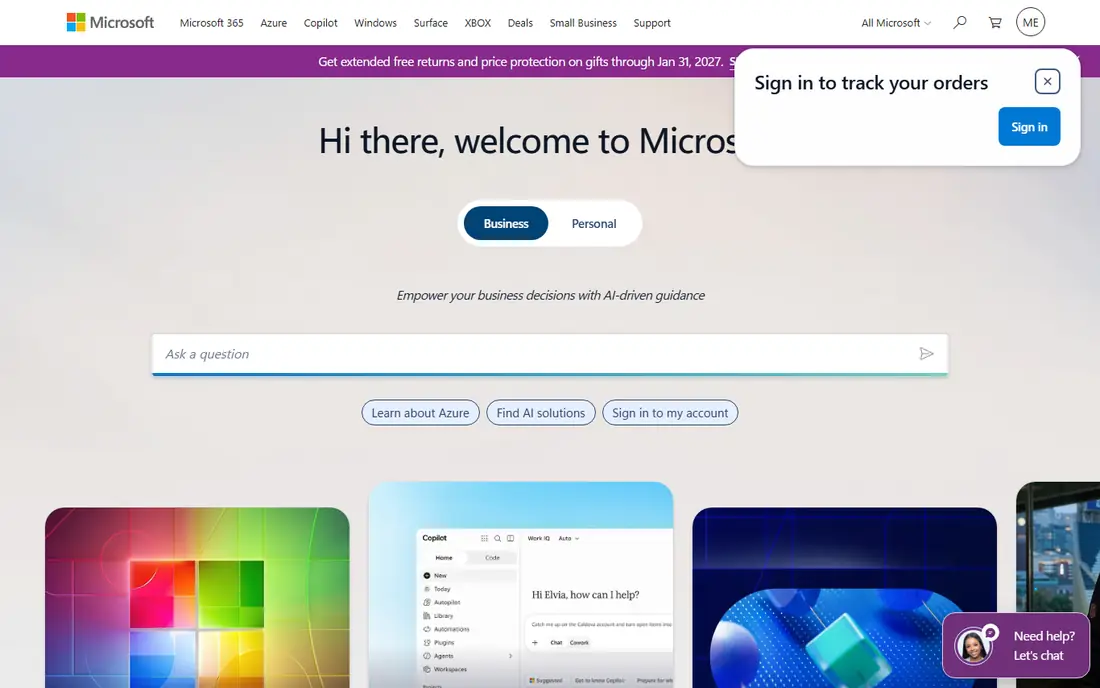
Microsoft is the safest first call for a business that already lives in Outlook, Teams and Excel. Dynamics 365 is a family of apps rather than one product, covering Sales, Customer Service, Field Service, Business Central for smaller ERP needs, and Finance and Supply Chain Management for larger operations. That structure lets a company start with one department and add more later without changing vendors.
Pricing is more open than most rivals at this level. Dynamics 365 Sales Professional is listed at $65 per user per month when paid yearly, with higher tiers for deeper features. A free trial of the Sales app lets a team test pipeline views and Outlook integration before talking to a sales representative. The catch sits in everything around the licence. Combining apps, added features and platform capacity creates a licensing puzzle that many buyers hand to a partner, and partners charge for setup and training. Budget for that work up front rather than discovering it in month two.
- Native ties to Outlook, Teams and Excel
- Published per-user prices for core Dynamics 365 apps
- Covers CRM, ERP, service and field work
- Licensing gets confusing when apps and add-ons are combined
- Implementation often needs a partner
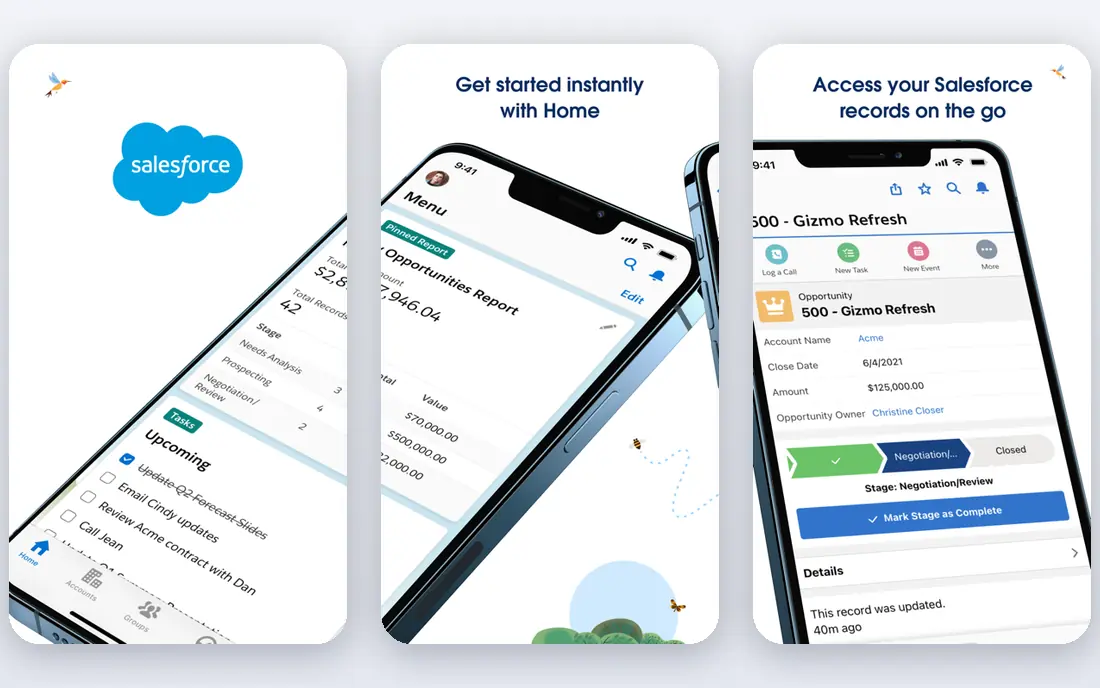
Salesforce built its name on customer relationship management, and it now covers sales, service, marketing and related work on one platform. For a growing team, that breadth matters, because the same customer record can support a salesperson, a support agent and a marketer without constant data moves. The company also has a large marketplace of third-party apps, which helps fill gaps without custom development.
Starter pricing is listed at $25 per user per month, which makes it possible to begin small. The honest limit is that many teams outgrow the entry tier, and higher tiers, added features and support plans raise the total. Admin work also matters. Salesforce rewards companies that keep data clean and set clear rules for who owns each record. Without that discipline, a powerful system can turn into a messy one.
- Very large app ecosystem and community
- Strong sales and service tools
- Scales from small teams to global firms
- Costs rise quickly with higher tiers and add-ons
- Setup can take time without in-house expertise
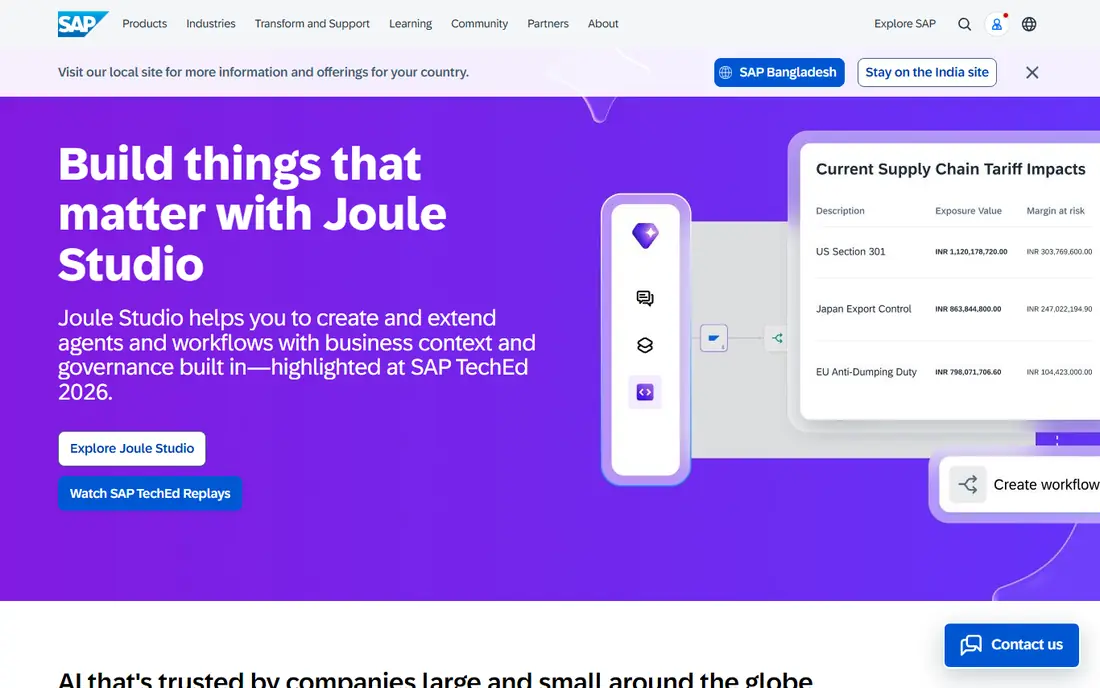
SAP is the name most large manufacturers reach for when operations span countries, plants and suppliers. Its S/4HANA platform brings finance, procurement, manufacturing, inventory and related work into one system, which helps when a company needs one version of the truth across many sites. For firms with strict controls and complex supply chains, that depth is hard to match.
The trade-off is effort. Pricing is quote-based, and implementation usually involves a partner, data cleanup and process changes. Smaller companies often find SAP heavier than they need, and should look at its smaller business products or at other vendors first. For a large firm that can commit the time and budget, SAP offers a platform that can run core operations for years.
- Deep ERP, finance and supply chain capability
- Strong fit for global and regulated operations
- Long history with large manufacturers
- Quote-based pricing
- Implementation is often long and partner-led
Oracle covers cloud ERP, finance, procurement, HR and database technology, and its Fusion Cloud ERP is a common choice for finance-led change. Companies that want finance, planning and procurement in one cloud system often put Oracle on the shortlist beside SAP and Workday. The company also brings deep experience with large, complex deployments.
As with SAP, pricing is quote-based, so the real cost only appears after a scoping conversation. Contract terms, user types and added services can change the total a great deal, so buyers should ask for a full written breakdown before comparing vendors. Oracle suits organisations with a clear finance transformation goal and the team to carry it through, rather than buyers looking for a quick, low-cost start.
- Strong cloud ERP and database heritage
- Good fit for finance-led transformations
- Broad enterprise product range
- Quote-based pricing
- Licensing and contract terms need careful review
ServiceNow started in IT service management and now covers employee service, customer service workflows and related automation. Its strength is turning requests into tracked work. A support ticket, an access request or an HR query can follow the same clear path, with approvals, owners and deadlines visible to everyone involved. That clarity helps large teams that handle thousands of requests each month.
The platform works best when a company first maps how work should flow, then builds it in ServiceNow. Buying licences without that design work leads to a system that mirrors old confusion. Pricing is quote-based, so expect a sales conversation and a scoped proposal. For IT-led buyers, ServiceNow is often the workflow layer that sits beside CRM and ERP systems.
- Strong workflow automation for IT and employee services
- Clear request and approval tracking
- Good reporting for service teams
- Quote-based pricing
- Best value comes after careful workflow design
Workday is known for human capital management and financial management in one cloud system. For services firms and other people-heavy organisations, that combination is useful, because headcount, pay, skills and finance plans can be read from the same data. Planning tools add another reason to consider it, since finance and HR teams can model hiring and spending together.
Workday is not a casual purchase. Pricing is quote-based, and a successful rollout needs clean HR data and senior support, because the system touches payroll, hiring and reporting. Smaller firms may find it more than they need. For employers with several hundred staff or more, and for firms that plan to grow through hiring, Workday deserves a place on the shortlist.
- Unified HR and finance data
- Strong planning tools
- Built for large and mid-size employers
- Quote-based pricing
- Implementation needs senior sponsorship and clean HR data
Adobe is best known for creative software, but its Experience Cloud serves large marketing teams with content management, analytics, campaign tools and personalisation. For a company that produces a high volume of content across web, email and other channels, having creative work and marketing delivery under related Adobe products can save time and reduce handoffs.
The catch is scope. Adobe Experience Cloud is aimed at larger teams, and pricing is quote-based, so a small business may get better value from simpler marketing tools. Buyers should also check which products they truly need, because Adobe sells many related tools and the full set can grow quickly. For large brands with a content-heavy marketing plan, Adobe remains a leading name.
- Leading content and creative tools
- Strong marketing and analytics products for large teams
- Wide partner network
- Enterprise pricing is quote-based
- The full suite can be more than a small team needs
IBM is a technology and consulting company as much as a software vendor. It sells software for automation, data, security and related enterprise work, and it also provides the consulting teams that install and run large systems. That combination suits banks, insurers, governments and other large buyers that need a partner for a long change programme, not just a licence.
The downside for smaller buyers is that IBM engagements are usually scoped, quote-based projects rather than simple self-serve purchases. A company that wants a quick tool for one team should look elsewhere first. A large organisation facing a complex migration, a security programme or a multi-year modernisation effort may find IBM a practical partner, provided it compares the full project cost, not just software fees.
- Deep experience with large, complex technology change
- Broad software and services range
- Strong fit for regulated industries
- Quote-based pricing
- Engagements often involve consulting services as well as software
How we picked these
We compared official product pages, published pricing and public descriptions of what each company sells, and we focused on firms that appear again and again in enterprise buying guides. We did not rank them by sales, market share or any invented score, and we did not claim hands-on use of every platform. Where a vendor publishes a starting price, we used it. Where pricing is quote-based, we wrote See website rather than guessing.
What to check before you choose a vendor
Start with the problem, not the brand. Write down the three processes that cause the most pain today, such as slow approvals, messy customer data or late financial close, and ask each vendor to show how its product handles those exact steps. A polished demo that avoids your hardest case tells you little.
Next, price the full project. Ask for licences, implementation, training, support and any add-ons in one written quote, and ask what happens when headcount or usage grows. Many enterprise bills rise because of extra users, added modules or higher support tiers, not because the entry price was wrong.
Finally, talk to a reference customer in a similar industry and size. Ask how long implementation really took, what data cleanup was needed and what the team wishes it had known before signing. That conversation often matters more than any feature list, and it can reveal whether a vendor is a good fit for your team or only a good fit on paper.
Frequently asked questions
What are the best enterprise software companies?
The best choice depends on the job. Microsoft and Salesforce suit many general buyers, SAP and Oracle fit large ERP work, Workday fits HR and finance at scale, ServiceNow fits service workflows, and Adobe and IBM fit marketing and large technology programmes. Shortlist by problem area first, then compare quotes.
Are these companies ranked in order?
No. The order here is a guide to different strengths, not a verified ranking. Public reputation and published services shaped the list, but no scores, sales figures or pay figures are claimed. A vendor lower on the list may still be the best fit for a specific need.
How much does enterprise software cost?
It varies widely. Some entry plans, such as Salesforce Starter and Dynamics 365 Sales Professional, publish per-user monthly prices. Many enterprise platforms, including SAP, Oracle, ServiceNow, Workday, Adobe and IBM, use quote-based pricing, so the total depends on users, modules and implementation.
Should a small business buy enterprise software?
Often not yet. Smaller teams usually get better value from simpler, self-serve tools with published prices and free trials. Enterprise platforms pay off when a company has complex processes, many users or strict controls that simpler tools cannot handle.
What is the biggest mistake when buying enterprise software?
Buying licences before fixing processes and data is the most common mistake. Clean customer, employee and finance records, clear owners for each process, and a realistic implementation plan matter more than the brand name on the contract.
Sources
See where you really rank - block by block
ProMapRanker scans Google Maps across a grid of your service area. Simple monthly plans from $19, white-label on every plan.
Start freeKeep reading
 zoho inventory alternatives
6 Alternatives to Zoho Inventory, Compared on Price and Fit
Zoho Inventory alternatives: 6 tools compared on price, free plans and fit. Katana leads the list for manufacturers. Fit and flaws are laid out for each entry.
Read → zoho crm alternatives
Best Zoho CRM Alternatives (2026)
Need Zoho CRM alternatives? We compare 7 tools on cost, free access and who each suits. Every pick gets a straight assessment. Built for quick decisions.
Read → zelle alternatives
Best Zelle Alternatives in 2026
Compare the best Zelle alternatives for sending money to friends, paying sellers and moving funds abroad, with honest notes on fees, speed and safety in 2026.
Read →