 ProMapRanker
Enterprise Software Brands in 2026


CRM that grows from 5 to 5,000 sellers · Pricing starts at: $25 per user/month (Starter Suite)
Direct answer
Our first pick is Salesforce, best for CRM that grows from 5 to 5,000 sellers. Alternatives: SAP for manufacturers and complicated supply chains, and Microsoft Dynamics 365 for companies already on Microsoft 365. The remaining 5 options are covered below with prices and limits.
Key takeaways
- Salesforce is the opening pick, best for CRM that grows from 5 to 5,000 sellers.
- One limit worth knowing about Salesforce: costs climb steeply in higher editions and extras.
- HubSpot stands alone as the one tool in this list with a free plan.
- ServiceNow suits IT and employee service workflows.
- The lowest published monthly entry price here is $25 per user/month, from Salesforce.
Quick comparison
| Pick | Great for | Pricing starts at | Free tier | |
|---|---|---|---|---|
| Salesforce | CRM that grows from 5 to 5,000 sellers | $25 per user/month (Starter Suite) | Free trial | Visit |
 SAP | Manufacturers and complicated supply chains | See website | No | Visit |
 Microsoft Dynamics 365 | Firms already on Microsoft 365 | $65 per user/month (Sales Professional, premium yearly) | Free trial | Visit |
 Workday | HR and finance for 500+ employees | See website | No | Visit |
 HubSpot | Marketing-led SMB and mid-market businesses | See website | Yes | Visit |
 Zoho One | All-in-one suite on a tight budget | See website | Free trial | Visit |
 Oracle NetSuite | Mid-sized businesses outgrowing QuickBooks | See website | No | Visit |
 ServiceNow | IT and employee service workflows | See website | No | Visit |
Enterprise Software Brands profiles
If you are comparing enterprise software brands, this page covers 8 tools in one place: what each is best for, what it costs to start, whether it has a free plan, and the main limit to know about.
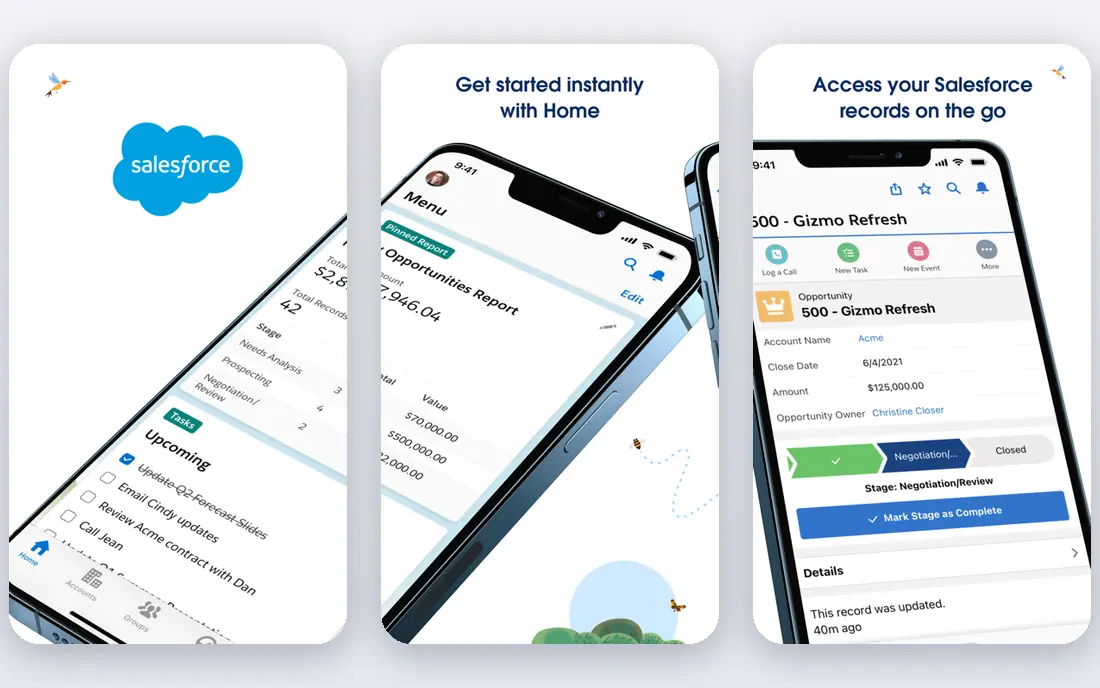
Think of Salesforce for CRM that grows from 5 to 5,000 sellers. Salesforce is still the reference point for CRM, and its small-business pricing makes it simpler to start than its reputation recommends. The honest weakness is what happens after year one.
On top of that, service Cloud also begins at $25 per user/month, so sales and support can share customer records from day one. Beyond that, the real strength is the ecosystem. As for the details, model your three-year cost, not just the entry price. Pro Suite, which brings more customization and automation, opens at $100 per user/month billed yearly. The starting price for Salesforce: $25 per user/month. As for free access: Free trial.
Trade-offs to know: Serious customization needs a trained admin.
- Scales from small teams to global sales orgs
- Huge AppExchange ecosystem and admin talent pool
- Costs climb steeply in higher editions and extras

SAP makes the most sense for manufacturers and complicated supply chains. SAP is the brand large manufacturers, distributors and multinational groups pick when their operations are too complicated for lighter ERP. The main limit is the road to running.
Points against: Pricing set by quote and frequently by partner.
SAP projects tend to be measured in months, and Business One pricing in the US is usually quoted by partners instead of shown on a public price list. S/4HANA deals with production planning, warehousing, multi-currency accounting and compliance at a level few vendors match. More specifically, if your business runs bills of materials, batch tracking, several plants or intercompany transactions, SAP has a module and an industry template for it. This comparison lists no price for SAP; ask the vendor. SAP has no free tier.
- Deepest ERP for manufacturing
- Inventory and multi-entity finance
- Long implementations

Microsoft Dynamics 365 is designed for companies already on Microsoft 365. That lets a company start with one department and add the rest later without changing vendors. Microsoft also runs a free trial of the Sales app.
So a team can test pipeline views and Outlook integration before talking to anyone in sales. For everyday use, Dynamics 365 Sales Professional is listed at $65 per user/month, Sales Enterprise at $105 and Sales Premium at $150, all premium yearly. Worth adding: pricing is more transparent than most rivals at this level. The main limit is everything around the license. What you pay to start with Microsoft Dynamics 365: $65 per user/month. Free access: Free trial.
Drawbacks to consider: Licensing gets confusing once you mix apps and extras.
- Teams and Excel
- Service and field operations under one brand
- Most real deployments need a certified partner
Think of Workday for HR and finance for 500+ employees. Its core strength is the employee record. The main limit is fit.
Watch-outs: Priced and sized for bigger organizations.
A 60-person company will normally be better served by a mid-market HR product. Self-service for time off, benefits and pay stubs cuts tickets to HR. Check the vendor site for Workday pricing; none is listed in this comparison. There is no free plan with Workday.
- Predictable twice-yearly release cycle
- Single system for HR, payroll
- Implementations normally run months with outside consultants
HubSpot is built with marketing-led SMB and mid-market businesses in mind. The free CRM lets a team log contacts, deals and emails indefinitely, and premium Hubs for marketing, sales, service, content and operations sit on the same customer record. As for the details, plenty of small firms set up HubSpot without consultants.
The interface is friendly to sales reps who resist heavier CRMs. Marketing Hub pricing also grows with your contact database, so check the current pricing page before your list size doubles. In daily use, the trade-off is cost at the Professional level. Pricing for HubSpot is not stated here, so ask the vendor for current figures. HubSpot includes a free tier.
Limits to weigh: Onboarding fees and contact-based marketing pricing add up.
What works well: Marketing, sales.
- Free CRM with no time limit
- Simple for non-technical staff to run
- Big price jump from Starter to Professional
Zoho One is designed for all-in-one suite on a tight budget. One subscription spans dozens of Zoho apps, including CRM, Books for accounting, People for HR, Desk for support, Projects and analytics. Zoho gives you two models.
All-Employee pricing licenses every person on payroll at a lower rate, whereas Flexible User pricing costs more per seat but lets you license only the people who require access. In practice, pick based on how numerous of your staff actually log in. Pricing for Zoho One is not stated here, so ask the vendor for current figures. As for free access: Free trial.
Downsides: Individual apps are less deep than category leaders.
- Two pricing models to fit different staffing
- Low cost per user compared with buying apps separately
- The All-Employee model needs licensing every employee
Oracle NetSuite makes the most sense for mid-sized businesses outgrowing QuickBooks. Finance, order management, inventory, entry-level CRM and ecommerce share one database, which is why finance teams like it for consolidated reporting across multiple entities.
Main advantages: True cloud ERP with finance, inventory.
Beyond that, NetSuite also needs a capable admin; plenty of mid-sized businesses end up with a part-time consultant on retainer. From a buyer's view, read the renewal terms closely. Pricing for Oracle NetSuite is not stated here, so ask the vendor for current figures. No free plan comes with Oracle NetSuite.
- CRM and ecommerce in one database
- Capable multi-subsidiary accounting
- Quote-only pricing with a base license plus per-user fees
For IT and employee service workflows, ServiceNow is a natural candidate. The appeal is consistency. ServiceNow does not list prices publicly, and getting value from it typically means a certified admin or an implementation partner.
The main drawbacks: No public pricing.
On top of that, ServiceNow is the brand big IT departments standardize on. Its IT service management suite spans incidents, requests, changes, assets and a service portal. The same product extends to HR service delivery, customer service and custom workflow apps. Check the vendor site for ServiceNow pricing; none is listed in this comparison. ServiceNow has no free plan.
- HR and customer service workflows
- Capable IT service management
- Needs dedicated platform admins or a partner to configure
How we compared the tools
For each of the 8 tools we noted price, free plan or trial, fit for enterprise software brands and the main limit, using vendor pages and documentation. Plan names, prices and limits change often. Treat the figures here as a starting point and verify them with the vendor. The order reflects how well each tool fits the most common buying scenario for enterprise software brands, then price clarity, then free plan access. It is a starting point, not a verdict.
Pre-purchase checklist
- Ask SAP, Workday, HubSpot and others for a written quote, since no starting price is shown.
- Look at the free plan from HubSpot closely: its caps decide whether it is usable for real work.
- Use real work to test the free trial from Salesforce, Microsoft Dynamics 365 and Zoho One, rather than a demo project.
- Before choosing Salesforce, weigh its main limit: costs climb steeply in higher editions and extras.
- Involve the people who will use ServiceNow daily; a short pilot beats a long feature checklist.
- Check the support hours and onboarding help Microsoft Dynamics 365 offers; smaller vendors vary a lot here.
Frequently asked questions
How long does enterprise software take to implement?
A CRM like HubSpot or Salesforce Starter can be live in days or weeks. ERP and HR systems for example NetSuite, SAP or Workday typically take multiple months, and bigger rollouts can take per year.
Is Salesforce the right pick for everyone comparing enterprise software brands?
No single tool suits every team. Salesforce comes first because it fits CRM that grows from 5 to 5,000 sellers, while SAP suits manufacturers and complex supply chains and Microsoft Dynamics 365 suits companies already on Microsoft 365. Match the tool to your own size, budget and workflow before deciding.
Which options for enterprise software brands have a free plan?
HubSpot is the only tool in this list with a free plan. Free plans usually cap users, projects or features, so check the limits on the vendor page. Several others offer a trial instead.
How are the tools for enterprise software brands ordered?
The order follows typical fit for enterprise software brands, with Salesforce first and ServiceNow last, then price clarity and free access. It is editorial judgement, not a score, so another team could rank the tools differently.
What is the cheapest option for enterprise software brands in this list?
On published monthly entry prices, Salesforce is the lowest here at $25 per user/month. Entry price is only part of the cost, because seats, add-ons and billing terms can change the total.
Sources
See where you really rank - block by block
ProMapRanker scans Google Maps across a grid of your service area. Simple monthly plans from $19, white-label on every plan.
Start freeKeep reading
 zscaler alternatives
Best Zscaler Alternatives in 2026
Looking for zscaler alternatives? We compare 9 SASE and zero trust platforms on architecture, data protection, pricing, and fit for your network and team.
Read → zapier alternatives free
Best Zapier Alternatives Free in 2026
Nine automation tools for zapier alternatives free in 2026, all with genuinely free tiers, plus free plan limits, starting prices and upgrade paths explained.
Read → which platform is best for online reputation
Which Platform Is Best for Online Reputation in 2026
Wondering which platform is best for online reputation? We compare 8 review, listing, and response tools for small and multi-location businesses and agencies.
Read →