 ProMapRanker
Top EHS Management Software in 2026


Mid-size firms wanting broad EHS coverage · Pricing starts at: See website
Key takeaways
- Software alone does not make an organisation compliant. It records, tracks and reminds, but procedures, training and timely reporting still sit with people.
- Enterprise suites such as Cority, Intelex and VelocityEHS suit multi-site programmes, while SafetyCulture suits frontline teams that need fast mobile inspections.
- Only a few vendors publish entry prices. EHS Insight starts at $5,000 per year, and SafetyCulture offers a free plan for small teams.
- Quote-based pricing means the same product can cost very different amounts depending on modules, sites and headcount, so ask for a total annual figure before signing.
- Mobile access, offline capture and corrective-action follow-up matter more in daily use than a long feature list.
Quick comparison
| Pick | Great for | Pricing starts at | Free tier | |
|---|---|---|---|---|
| VelocityEHS | Mid-size firms wanting broad EHS coverage | See website | No | Visit |
 Cority | Large enterprises needing full EHSQ depth | See website | No | Visit |
 Intelex | Complex programmes needing configuration | See website | No | Visit |
 Benchmark Gensuite | Global firms with sustainability reporting needs | See website | No | Visit |
 EHS Insight | Mid-size firms wanting modular pricing | $5,000 per year | No | Visit |
 SafetyCulture | Frontline teams doing mobile inspections | Free | Yes | Visit |
 EcoOnline | Chemical safety and compliance documentation | See website | No | Visit |
 Evotix | Firms focused on worker engagement and reporting | See website | No | Visit |
 KPA | Firms needing EHS plus compliance support | See website | No | Visit |
The best EHS management software
We compared vendor pricing pages, product documentation and public reviews to find tools that cover real EHS work, from incident reporting to audits and training records.
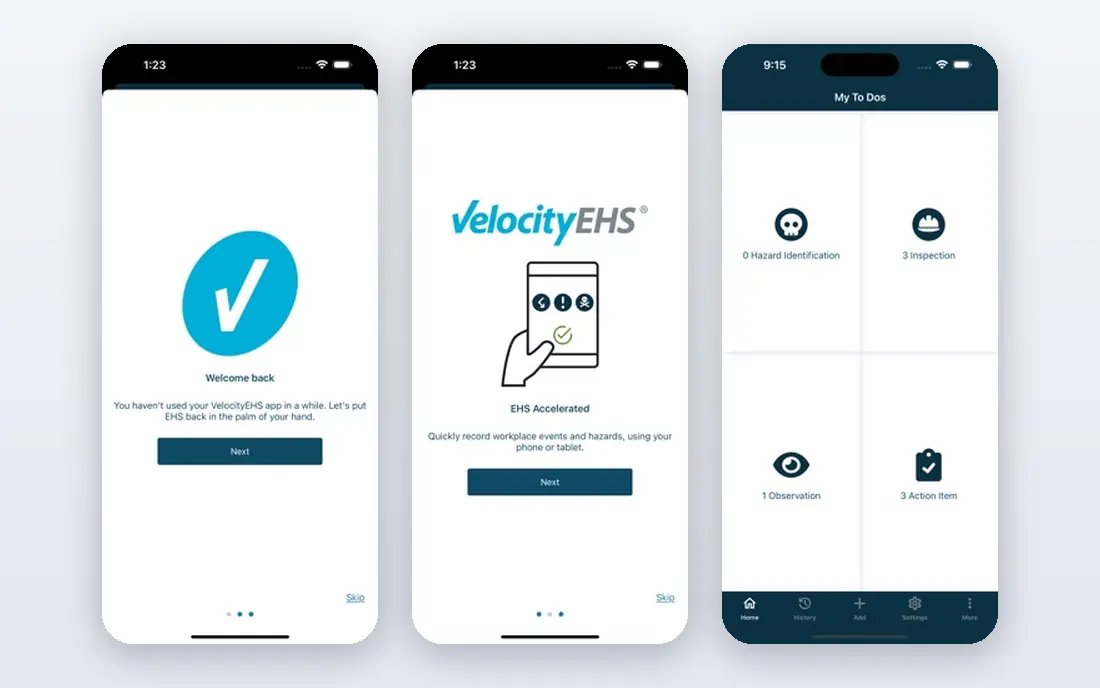
VelocityEHS grew from chemical and safety data sheet management into a wider platform covering safety, ergonomics, industrial hygiene, contractor safety and training. That history shows in its chemical management tools, which suit firms handling many substances across sites. The platform lets teams mix modules rather than buying one fixed bundle, so a firm can start with safety and chemical management and add other areas later.
The trade-off is pricing clarity. VelocityEHS does not publish a price list, so budgeting requires a sales quote based on modules and sites. Firms with very complex global programmes may also find Intelex or Cority more configurable. For a mid-size firm that wants live EHS software without a long enterprise project, VelocityEHS is a sensible first call.
- Broad module range
- Strong chemical management roots
- Approachable implementation for mid-size firms
- Quote-based pricing
- Less configurability than the largest enterprise suites
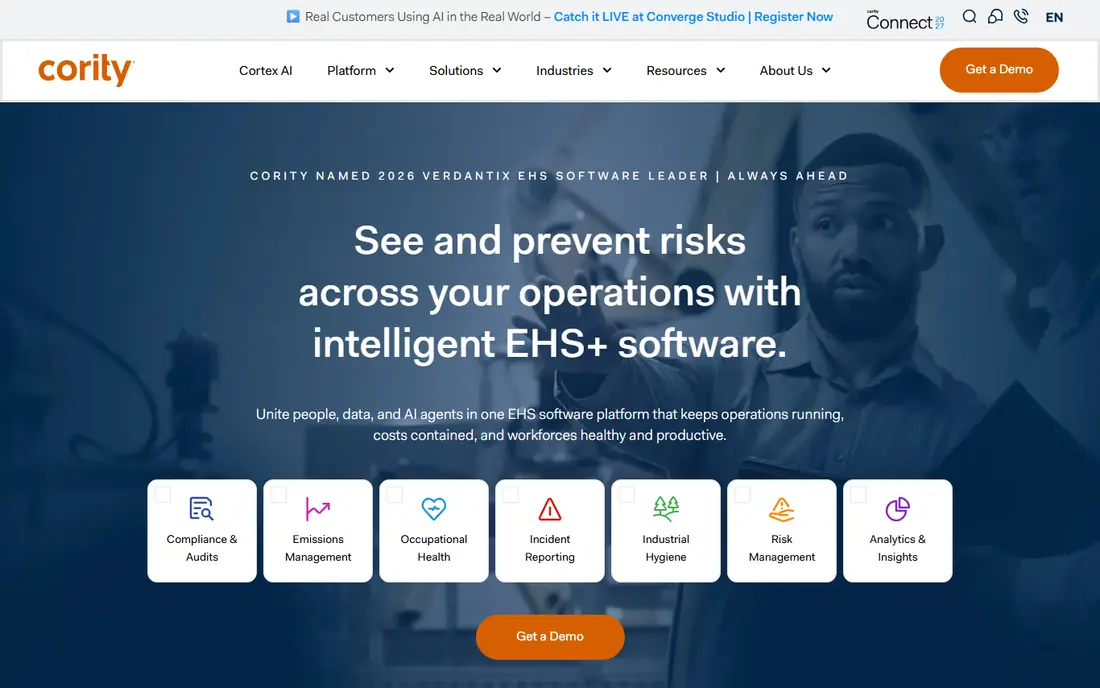
Cority is an enterprise EHSQ suite, meaning it covers environment, health, safety and quality in one system. Its occupational health, industrial hygiene and environmental compliance tools go deeper than most mid-market products, which matters for firms with clinics, exposure monitoring or complex permits. Multi-site reporting and audit trails are central to the design, not add-ons.
That depth comes with cost and effort. Pricing is by quote, and a full rollout can take months, with dedicated administrators needed to keep the system current. Smaller firms will find it more than they need. Large firms that must standardise EHSQ across countries, however, will find few products with the same breadth.
- Very broad EHSQ coverage
- Strong occupational health and industrial hygiene tools
- Built for global scale
- Quote-based pricing
- Implementation can be long and demanding
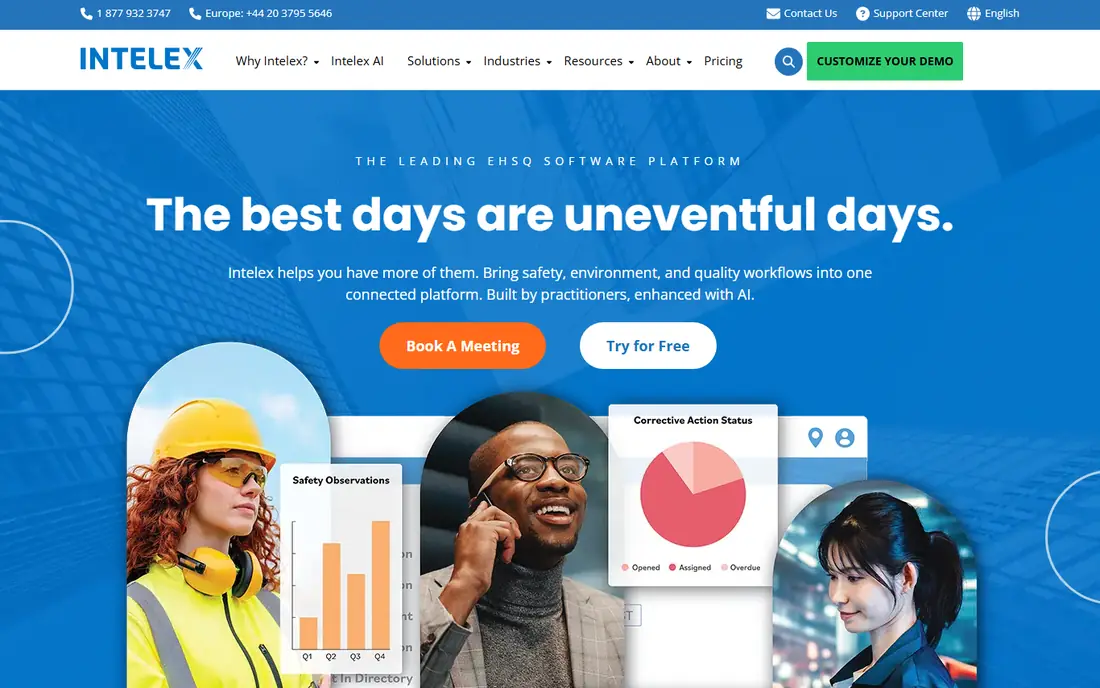
Intelex, part of Fortive, is built around configuration. Its applications for safety, environment, quality and supplier management can be shaped to match how an organisation already works, rather than forcing one template on every site. That flexibility helps multinationals with varied local rules that still need one reporting standard at head office.
Flexibility is also the catch. Configuration takes time, pricing is by quote, and the platform expects staff who own it day to day. A small safety team may find the setup burden hard to justify. Buy Intelex when your programme is too varied or too large for a simpler tool, and when you can staff the rollout properly.
- Deep configurability
- Broad EHSQ application library
- Strong for multi-site standardisation
- Quote-based pricing
- Needs dedicated administrators and a longer rollout
Benchmark Gensuite
Great for: Global firms with sustainability reporting needs
Benchmark Gensuite covers safety, environmental compliance, sustainability, product stewardship and supplier risk. Its sustainability and disclosure tools are a clear strength for firms facing carbon reporting and supply chain questions alongside core safety work. The platform is designed for global operations, with reporting that rolls up across sites and regions.
As with other enterprise suites, pricing is not published, and reviewers often note cost as a drawback. The breadth also means a firm must decide which modules matter first, or the rollout can drift. For a global firm that needs EHS and sustainability in one system, Benchmark Gensuite deserves a place on the shortlist.
- Strong sustainability and disclosure tools
- Broad EHS applications
- Supplier and product stewardship coverage
- Quote-based pricing
- Breadth needs careful configuration
EHS Insight takes a modular approach, with dozens of modules covering incidents, audits, inspections, compliance obligations, permits, waste and corrective actions. Firms can pick the modules they need and add more later, which keeps the first year focused. Its OSHA injury and illness forms, including the 300 log, 300A summary and 301 form, suit US employers that must keep those records in order.
The published $5,000 per year starting price is unusually clear for this market, but it is a starting point, not a total. Price scales with employees, contractors and module choice, so a larger firm should get a full quote for its real headcount. EHS Insight fits mid-size firms that want enterprise-style recordkeeping without an enterprise-only sales process.
- Published starting price
- Modular design with many modules
- OSHA 300, 300A and 301 forms
- Cost scales with headcount and modules
- No free plan
SafetyCulture, now operating as Mitti, started as a mobile inspection tool and remains the easiest way to move a paper checklist programme onto phones. Workers can complete inspections offline, attach photos, raise issues and close corrective actions from the field. A large template library covers many industries, and the free plan for up to 10 users lets a small team start without a purchase order.
The limits show at scale. Paid plans are priced per user, so a large workforce costs more each month, and incident management is less deep than in a dedicated EHS suite. Teams that need complex sign-off chains or detailed occupational health records may outgrow it. For consistent inspections across sites, though, few tools are as quick to deploy.
- Free plan for small teams
- Mobile-first inspections with offline capture
- Large template library
- Per-user pricing adds up at scale
- Incident management is secondary to inspections
EcoOnline focuses on chemical safety, risk assessment, incident reporting and compliance documentation. Firms that handle hazardous substances will value its safety data sheet access and chemical inventory tools, which help workers find the right information at the point of use. Incident and audit modules sit alongside, so safety reporting does not live in a separate system.
Pricing is by quote, and the exact module mix can vary by market, so a US buyer should confirm which features are included in the quoted plan. EcoOnline fits firms where chemical handling is a central risk, rather than firms that only need generic incident forms.
- Strong chemical and safety data sheet tools
- Incident and risk modules
- Built for regulated workplaces
- Quote-based pricing
- Breadth varies by region and module
Evotix, formerly SHE Software, puts worker engagement at the centre of its EHS platform. Reporting is designed to be quick for frontline staff, which helps firms that struggle with low near-miss reporting rates. Incident management, audits, risk assessments and action tracking cover the core safety workflow, with dashboards for managers to follow open actions.
The honest limit is depth in some specialist areas. Firms with heavy environmental permitting or sustainability disclosure needs may need a broader suite or a second tool. Evotix fits firms whose main problem is getting good reports from the floor and closing actions on time.
- Worker-friendly reporting tools
- Incident and audit coverage
- Emphasis on frontline participation
- Quote-based pricing
- Less known for deep environmental compliance
KPA pairs EHS software with compliance consulting and training services, which appeals to firms that want help as well as a system. Its platform covers incident reporting, audits, inspections, corrective actions and training records, with a focus on regulated sectors such as manufacturing, automotive and energy. The services side can help a small EHS team set up programmes and stay current with rule changes.
Pricing is by quote, and buyers should separate software cost from services cost when comparing quotes. Firms that already have strong in-house EHS expertise may not need the services layer. Firms that want a partner alongside the software, however, may find KPA a practical choice.
- EHS software plus compliance services
- Incident and audit tools
- Suited to regulated industries
- Quote-based pricing
- Services model may suit some buyers more than others
How we picked these
We compared official pricing pages, product documentation and public reviews, and we kept only tools that exist and work today and that cover genuine EHS tasks. We favoured a mix of enterprise suites, mid-market platforms and frontline tools, so firms of different sizes can find a fit. We did not claim hands-on testing, and we wrote "See website" where a vendor does not publish a price, rather than guessing a figure.
What to check before you buy
Start with the records you must produce, not the feature list. A US employer should confirm OSHA 300 recordkeeping, incident workflows, audit trails and training records in the quoted modules, and should ask how corrective actions are tracked to closure. Check mobile and offline access too, since frontline workers often report from areas with poor connectivity.
Next, price the whole programme. Ask for the total annual cost for your sites, users and modules, plus implementation, training and renewal terms. Quote-based vendors can differ widely once modules and headcount are added. Finally, plan ownership. Name one person who keeps templates, actions and records current, or even the best system will slowly fall back to spreadsheets.
Frequently asked questions
Which EHS management software is the best?
There is no single best tool for every firm. Cority and Intelex suit large, complex programmes, VelocityEHS and EHS Insight suit mid-size firms, and SafetyCulture suits frontline inspection work. Match the tool to your size, sites and main risk areas, then test it with your own forms and workflows.
Does EHS software make a company compliant?
No. Software alone does not make an organisation compliant. It helps by keeping records, tracking actions and reminding staff of deadlines, but compliance still depends on correct procedures, trained people, hazard controls and timely reporting. Treat the software as the record system and the reminder system, not as the safety programme itself.
How much does EHS software cost?
It ranges widely. SafetyCulture offers a free plan for small teams, with paid plans from $24 per user per month billed annually. EHS Insight starts at $5,000 per year. Enterprise suites such as Cority, Intelex, VelocityEHS and Benchmark Gensuite use quote-based pricing, often running into five or six figures per year depending on modules and scale.
How long does implementation take?
Simple frontline tools can be running in days. Mid-market platforms often take four to twelve weeks including configuration, data migration and training. Enterprise suites can take three to nine months for a full multi-module rollout. Ask every vendor for a written timeline before you sign.
What is the difference between EHS and EHSQ software?
EHS covers environment, health and safety. EHSQ adds quality management, so platforms such as Cority and Intelex include quality workflows alongside safety. If your organisation also manages quality systems, an EHSQ platform can avoid running a separate quality system.
Sources
See where you really rank - block by block
ProMapRanker scans Google Maps across a grid of your service area. Simple monthly plans from $19, white-label on every plan.
Start freeKeep reading
 zoro.to alternatives
Best Zoro.to Alternatives in 2026
We compare the best zoro.to alternatives in 2026, listing only legal licensed anime streaming services, from Crunchyroll to free options for fans today.
Read → zip alternatives
Best Zip Alternatives in 2026
We compare the best zip alternatives for buy now, pay later in 2026, covering pay-in-4 plans, fees, spending limits, and credit reporting options today.
Read → yesware alternatives
Best Yesware Alternatives in 2026
Compare the best yesware alternatives for sales email tracking, templates, and sequences, with current pricing and honest tradeoffs for small sales teams.
Read →