 ProMapRanker
Top Bulk Email Software in 2026

Key takeaways
- Free plans shrank in 2026, with Mailchimp now at 250 contacts and 500 sends, and MailerLite at 250 subscribers and 2,500 emails.
- Brevo is the most generous free plan here for a large list, with 300 emails per day and a large contact allowance, because it bills by sends, not list size.
- Mailchimp, MailerLite and Moosend suit small lists, while Brevo and SendGrid suit high volume and send based pricing.
- Constant Contact suits owners who want human support, while Kit suits creators who sell newsletters and digital products.
- The best bulk email software depends on whether you pay by contacts or by sends, so price the list you will have in a year, not today.
Quick comparison
| Pick | Great for | Pricing starts at | Free tier | |
|---|---|---|---|---|
 Mailchimp | Familiar all in one suite | Free | Yes | Visit |
 Brevo | Large lists emailed infrequently | Free | Yes | Visit |
 MailerLite | Simple newsletters on a budget | Free | Yes | Visit |
 Constant Contact | Owners who want human support | $12 per month | Free trial | Visit |
 Kit | Creators and paid newsletters | Free | Yes | Visit |
 Twilio SendGrid | High volume API sending | $19.95 per month | Free trial | Visit |
 Mailjet | Marketing plus transactional email | $9 per month | Yes | Visit |
 Moosend | Straightforward campaigns at low cost | $9 per month | Free trial | Visit |
 GetResponse | Email plus funnels and webinars | $19 per month | Yes | Visit |
 AWeber | Solo owners who want simple pricing | Free | Yes | Visit |
The best bulk email software
These tools send newsletters, announcements and campaigns to large lists, with templates, segmentation, automation and delivery tools. We compared them on pricing model, free plan, sending limits, automation and support.
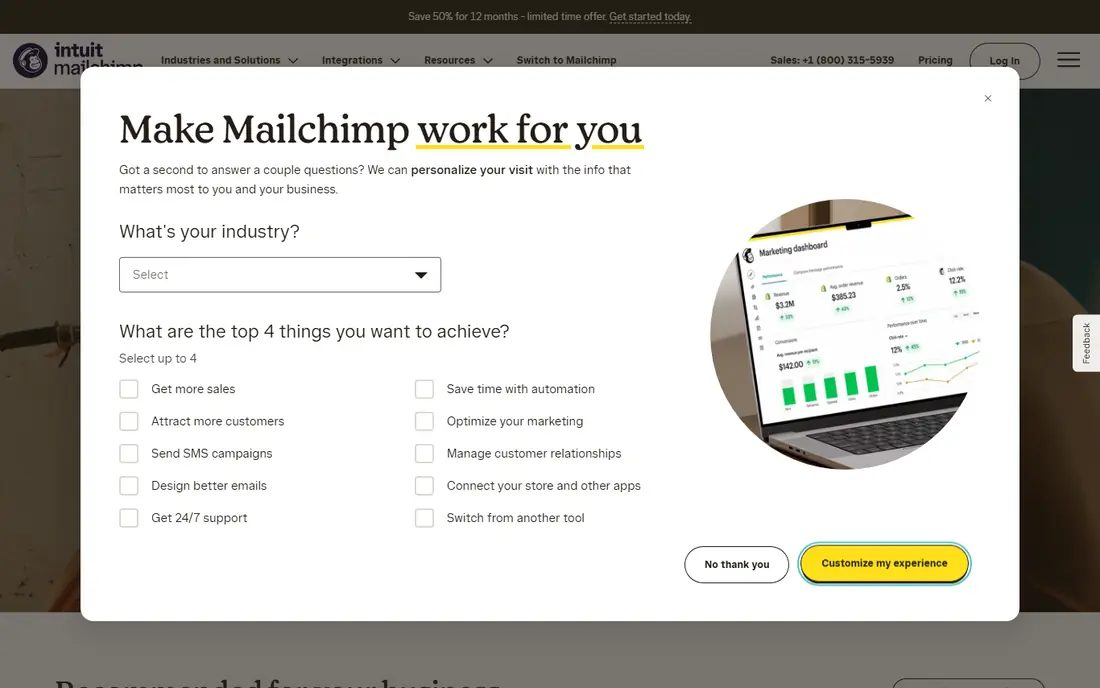
Mailchimp remains the most familiar bulk email tool for small businesses, with templates, segmentation, automation and a large integration catalog. The free plan now covers 250 contacts and 500 sends per month, while Essentials starts at $13 per month for 500 contacts on monthly billing. That familiarity helps a team that needs to launch a first campaign without learning a new system.
The drawback is price growth. Mailchimp bills by contacts, including unsubscribed contacts in some counts, so a growing list can raise the bill sharply. A team that emails a large list infrequently may save money with Brevo, while a team that emails a small list often may find MailerLite cheaper.
- Large template library
- Many integrations
- Familiar interface for small teams
- Free plan is now small at 250 contacts
- Price climbs fast with list size
- Unsubscribed contacts still count
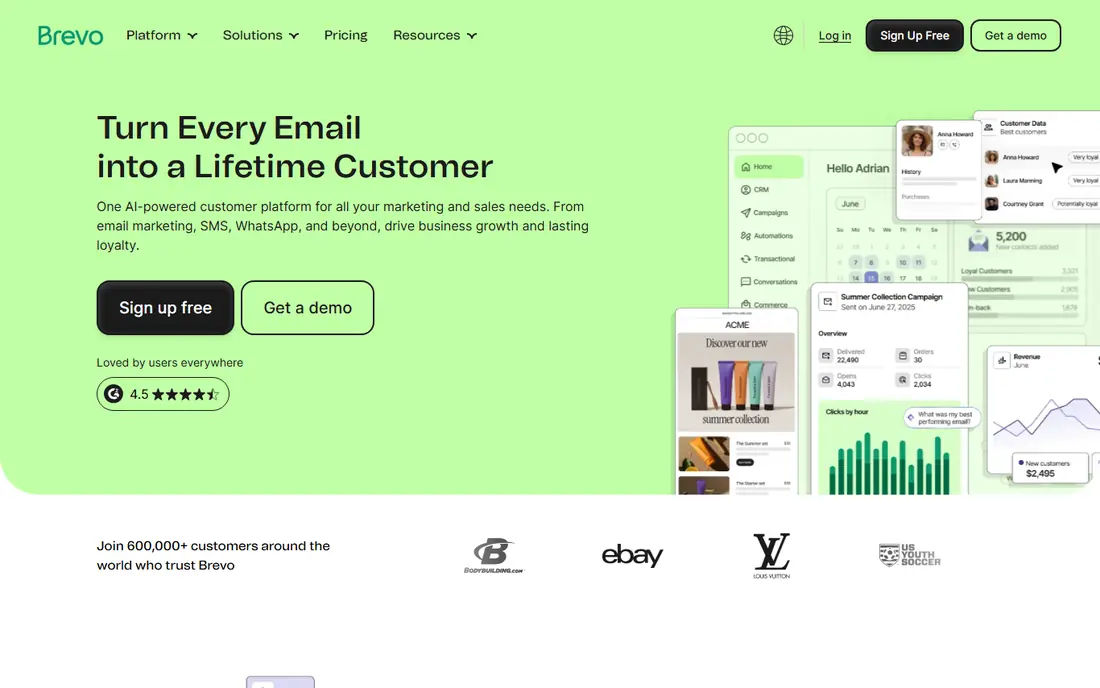
Brevo, formerly Sendinblue, is the best bulk email service here for a large list that is emailed infrequently. The free plan offers 300 emails per day with a large contact allowance, and Starter starts at $9 per month for 5,000 emails. Because Brevo bills mainly by sends, a list of 20,000 contacts that gets one email a month can cost far less than on a contact based plan.
The trade-off is automation depth. The Starter plan covers basic sending, while fuller automation needs the Standard plan from $18 per month in recent guides. Brevo also adds SMS, WhatsApp and a sales CRM, which can be a bonus or a distraction depending on what a team needs.
- Free plan with 300 emails per day
- Bills by sends, not list size
- SMS and WhatsApp in the same platform
- Real automation needs a higher plan
- Contact caps appear on some lower tiers
- Interface is busier than MailerLite
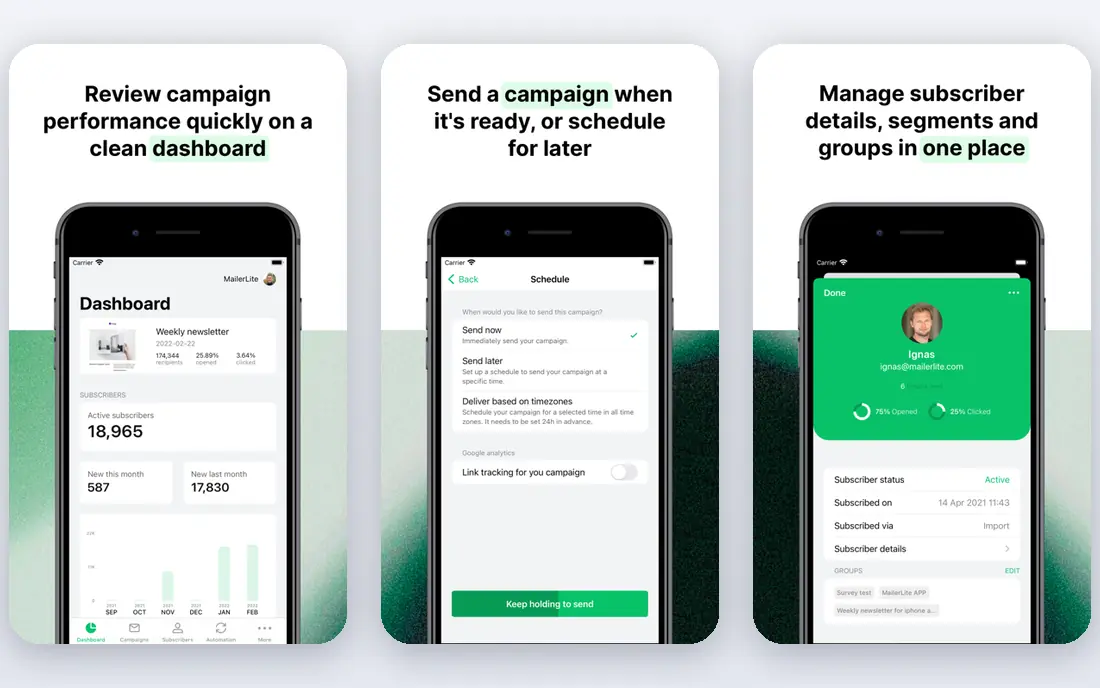
MailerLite suits a small team that wants simple newsletters done well. The editor is clean, templates are easy to use, and pricing is clear: free up to 250 subscribers and 2,500 emails per month, with paid plans from $12 per month for 500 subscribers. Segmentation, automation and landing pages cover the basics without a steep learning curve.
The limit is scale and depth. Advanced automation triggers and deeper reporting need higher tiers, and the integration catalog is smaller than Mailchimp. For a small list with a simple sending rhythm, MailerLite is one of the best value picks in this list.
- Simple editor
- Clear pricing
- Free plan with 250 subscribers and 2,500 emails
- Free plan is small
- Advanced triggers need higher plans
- Fewer integrations than Mailchimp
Constant Contact suits a small business owner who wants human help when something goes wrong. It offers templates, list management, automation, event tools and surveys, with paid plans from $12 per month for 500 contacts and a 30 day free trial instead of a permanent free plan. That support focus helps owners who do not want to troubleshoot delivery or design alone.
The drawback is that Constant Contact is not the cheapest or most advanced automation tool here. A team that needs branching automation or high volume API sending should look at Brevo, GetResponse or SendGrid instead. For a local business that values a phone call over a help article, Constant Contact earns its place.
- Human phone support
- Event and survey tools
- Easy for non technical owners
- No permanent free plan
- Price climbs with list size
- Automation is simpler than ActiveCampaign
Kit, formerly ConvertKit, is built for creators who sell newsletters, courses and digital products. The free plan covers up to 10,000 subscribers for basic sending, while Creator plans start near $33 per month for 1,000 subscribers on annual billing in recent guides, with higher prices on monthly billing. Automation, landing pages and commerce tools help a creator turn a list into paid products.
Kit is less suited to a local shop or service business that needs store integrations and event tools. It also costs more than MailerLite at small list sizes once paid automation is needed. For a creator whose main product is content, Kit is the most focused bulk email software here.
- Free plan up to 10,000 subscribers
- Creator focused automation
- Paid newsletter tools
- Built for creators, not shops
- Paid plans start higher than MailerLite
- Automation needs paid plan
Twilio SendGrid suits developers and high volume senders who need reliable API email at scale. The Email API Essentials plan is listed at $19.95 per month for 50,000 emails, with higher Pro plans adding a dedicated IP and deeper deliverability tools. That send based model fits a product that sends transactional mail, notifications and bulk campaigns through code.
SendGrid is not the easiest tool for a non technical owner who wants drag and drop campaigns. Marketing Campaigns is a separate product area, and the interface assumes some technical skill. A team that sends through an app or API will value SendGrid, while a team that sends newsletters by hand may prefer MailerLite or Brevo.
- High volume API sending
- Strong deliverability tools
- Dedicated IP on higher plans
- Less friendly for non technical owners
- Marketing features are separate
- Trial limits apply
Mailjet covers both marketing campaigns and transactional email in one platform, which suits a growing business that sends newsletters and order or account mail. The free plan offers 6,000 emails per month for up to 1,000 contacts, while paid plans start near $9 per month for 8,000 emails and 2,000 contacts in recent comparisons. Send based pricing keeps costs predictable as a list grows slowly.
The limits are contact caps on the free plan and automation depth on lower tiers. Mailjet is a solid middle choice, but a team that needs deep automation or a huge template library may prefer GetResponse or Mailchimp. For a team that needs both campaign and transactional mail, Mailjet is efficient.
- Free plan with 6,000 emails per month
- Marketing and transactional in one platform
- Send based pricing
- Free plan caps contacts at 1,000
- Higher tiers needed for automation depth
- Smaller community than Mailchimp
Moosend suits a small business that wants straightforward campaigns at a flat low price. Paid plans start at $9 per month for 500 contacts, with templates, segmentation, automation and reporting that cover the core bulk email job without a complex interface. A 30 day free trial lets a team test sending before paying.
Moosend has no permanent free plan, so a team with a tiny list and no budget should start with Brevo, MailerLite or Kit free instead. The integration catalog is also smaller than Mailchimp, which can matter for a store with many apps. For simple, low cost campaigns, Moosend is a strong value pick.
- Low entry price at $9 per month
- Simple automation
- Clear campaign tools
- No permanent free plan
- Smaller integration catalog
- Support is less broad than Constant Contact
GetResponse suits a business that wants email plus webinars, funnels and landing pages in one platform. The free plan covers 500 contacts and 2,500 emails per month, while paid plans start at $19 per month for 1,000 contacts. Automation, segmentation and webinar tools help a team run a full campaign from signup to sale without adding several apps.
The entry price is higher than MailerLite or Moosend, and the interface can feel busy because it covers so much. A team that only needs newsletters should choose a simpler tool, while a team that runs webinars and funnels will get more value from GetResponse.
- Email plus webinars, funnels and landing pages
- Free plan
- Strong automation
- Entry price is higher than MailerLite
- Interface can feel busy
- Minimum contact tier is 1,000 on paid plans
AWeber suits a solo owner who wants email without surprises. The free plan covers 500 subscribers and 3,000 emails per month, while paid plans start at $15 per month for 500 subscribers. Templates, automation and landing pages cover the basics, and human support is a real strength for owners who want help by phone or chat.
The editor feels older than MailerLite or Kit, and automation on lower plans is limited to a few flows. AWeber is not the best choice for a team that needs advanced branching automation, but it is a steady, simple pick for a solo owner with a small list.
- Free plan with 500 subscribers
- Simple editor
- Human support
- Editor feels older than MailerLite
- Automation is limited on lower plans
- Price climbs with list size
How we picked these
We compared official pricing pages, product documentation and current bulk email pricing guides, and we kept only tools that exist and work in October 2026 and truly fit bulk email sending. We looked for pricing model, free plan or trial, sending limits, automation, deliverability tools and support. Where prices varied by billing period, we used the monthly figure or the most recent guide figure and noted the basis rather than inventing a total.
How to choose bulk email software
Start with your pricing model. If you have a large list but send rarely, a send based tool such as Brevo, SendGrid or Mailjet will usually cost less. If you have a small list and send often, a contact based tool such as MailerLite, Moosend or Constant Contact may be simpler and cheaper. Price the list you expect in a year, not the list you have today.
Next, check deliverability basics before you send at scale. Set up SPF, DKIM and DMARC for your sending domain, warm up a new domain slowly, clean bounced and unengaged contacts, and use double opt-in where it fits your audience. A tool cannot fix a dirty list or a missing domain setup, no matter how good its templates are. Finally, test automation on one real campaign, and check reports for opens, clicks, bounces and unsubscribes before committing to a year of billing.
A simple sending checklist
Clean the list, confirm domain authentication, send a test to several inboxes, check mobile rendering, and review the first campaign report before the next send. Repeat that cycle monthly, and remove contacts who never engage after several campaigns.
Frequently asked questions
What is the top bulk email software?
Mailchimp, Brevo and MailerLite are the top picks for most small businesses, while SendGrid suits high volume API sending and Kit suits creators. The best free bulk email software depends on list size and sending frequency.
What is the best free bulk email software?
Brevo has the most generous free plan for a large list, with 300 emails per day, while Kit free covers up to 10,000 subscribers for basic sending. Mailchimp and MailerLite free plans are now smaller, at 250 contacts or subscribers.
What is the best bulk email service for a large list?
Brevo and SendGrid are the strongest large list picks, because they bill by sends or volume rather than by list size alone. Mailjet also uses send based pricing and covers marketing plus transactional mail.
What are the top 10 bulk email software options for beginners?
The ten tools in this list cover beginners well, with MailerLite, Moosend and Constant Contact as the easiest starting points. Start free or on a trial, send one real campaign, and upgrade only when a missing feature blocks real work.
Is bulk email the same as spam?
No. Bulk email is legal when recipients have opted in, each message includes an unsubscribe option, and the sender follows anti spam law and the tool's policies. Buying a list or mailing people who never opted in risks account closure and poor delivery.
How many emails can I send for free?
It depends on the tool. Brevo free allows 300 emails per day, Mailjet free allows 6,000 emails per month, MailerLite free allows 2,500 emails per month, and Mailchimp free allows 500 emails per month. Check the current free limits before you plan a campaign.
Sources
- https://mailchimp.com/pricing/
- https://www.brevo.com/pricing/
- https://www.mailerlite.com/pricing
- https://www.constantcontact.com/pricing
- https://kit.com/pricing
- https://sendgrid.com/en-us/pricing
- https://www.mailjet.com/pricing/
- https://moosend.com/pricing/
- https://www.getresponse.com/pricing
- https://www.aweber.com/pricing.htm
See where you really rank - block by block
ProMapRanker scans Google Maps across a grid of your service area. Simple monthly plans from $19, white-label on every plan.
Start freeKeep reading
 zscaler alternatives
Best Zscaler Alternatives in 2026
Looking for zscaler alternatives? We compare 9 SASE and zero trust platforms on architecture, data protection, pricing, and fit for your network and team.
Read → zapier alternatives free
Best Zapier Alternatives Free in 2026
Nine automation tools for zapier alternatives free in 2026, all with genuinely free tiers, plus free plan limits, starting prices and upgrade paths explained.
Read → which platform is best for online reputation
Which Platform Is Best for Online Reputation in 2026
Wondering which platform is best for online reputation? We compare 8 review, listing, and response tools for small and multi-location businesses and agencies.
Read →