 ProMapRanker
Top Best Cell Carrier Services in 2026

Key takeaways
- The three national networks, Verizon, T-Mobile, and AT&T, offer the most perks and premium data, but budget carriers use the same networks for less.
- Coverage at your home, work, and commute matters more than a national coverage map, so check the network that works at your address.
- Budget plans often deprioritise data when a tower is busy, which is the main trade-off for a lower monthly price.
- Taxes and fees change the real cost: some carriers include them, others add them, so compare the checkout total, not just the headline rate.
Quick comparison
| Pick | Great for | Pricing starts at | Free tier | |
|---|---|---|---|---|
 Verizon | Widest reliable coverage | $65 per month | No | Visit |
 T-Mobile | Premium perks and fast 5G | $25 per month | No | Visit |
 AT&T | Strong national coverage | $50 per month | No | Visit |
 Visible | Simple unlimited on Verizon | $25 per month | No | Visit |
 Mint Mobile | Cheap unlimited on T-Mobile | $30 per month | Free trial | Visit |
 US Mobile | Choice of all three networks | $10 per month | No | Visit |
 Google Fi Wireless | Flexible data and travel | $20 per month | No | Visit |
 Cricket Wireless | AT&T coverage with stores | $35 per month | No | Visit |
 Metro by T-Mobile | T-Mobile coverage with perks | $40 per month | No | Visit |
 Consumer Cellular | Simple plans and phone support | $20 per month | No | Visit |
The best cell carrier services
Cell carriers in the US fall into two groups: the three national network owners, and the smaller brands that rent space on those networks. The national carriers offer stores, perks, and premium data, while the smaller brands, often called MVNOs, offer lower prices with fewer extras. The list below covers both, so you can compare the real trade-offs.
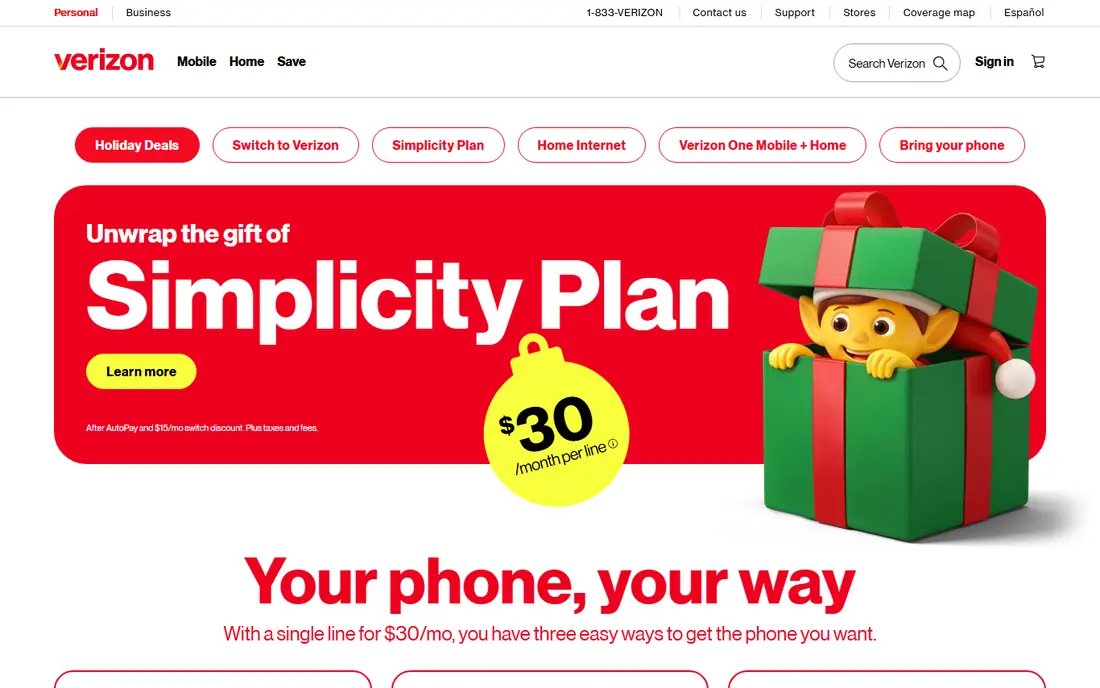
Verizon is the default pick when coverage reliability matters most, especially outside cities. Its Unlimited Welcome plan starts around $65 per month for a single line before taxes and fees, with higher tiers adding premium data, hotspot, and perks. Rural coverage and consistent service are its main strengths, and its store network makes in-person help easy.
The price is the drawback. A single line costs notably more than a budget carrier on the same network, and taxes and fees are not included in the headline rate. We would pick Verizon when you travel widely, live outside a metro area, or want premium data and in-store support without compromise.
- Strong nationwide coverage, including rural areas
- Premium unlimited plans with high-speed data
- Wide store network
- Higher single-line prices than budget carriers
- Taxes and fees are added on top
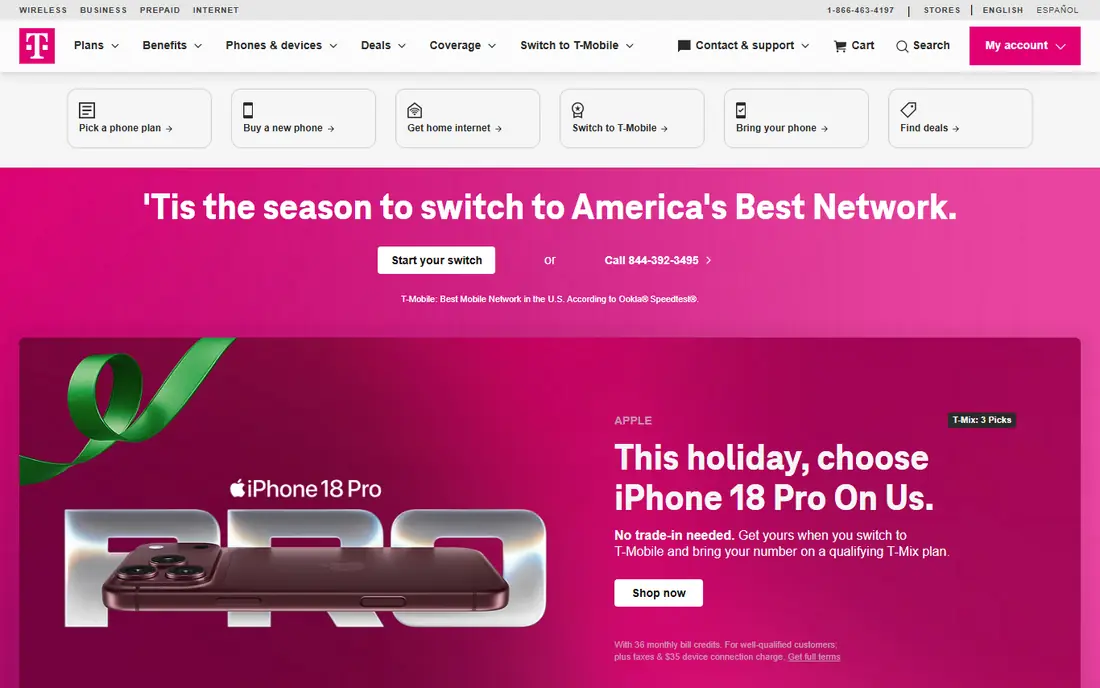
T-Mobile leads on 5G speed in many US markets and bundles streaming and travel perks into its premium plans. Its Essentials Saver plan starts around $25 per line for four lines, while single-line premium plans cost much more, so family pricing is where it shines. The network has improved rural coverage in recent years, though Verizon still leads in some remote areas.
Check the plan carefully: entry plans carry less premium data and slower hotspot speeds than premium tiers. Taxes and fees are also added on many plans. We recommend T-Mobile for families, heavy data users who want perks, and anyone in an area with strong T-Mobile 5G.
- Fast 5G in many areas
- Strong perks on premium plans
- Competitive multi-line pricing
- Single-line premium plans are costly
- Coverage can vary in very rural areas
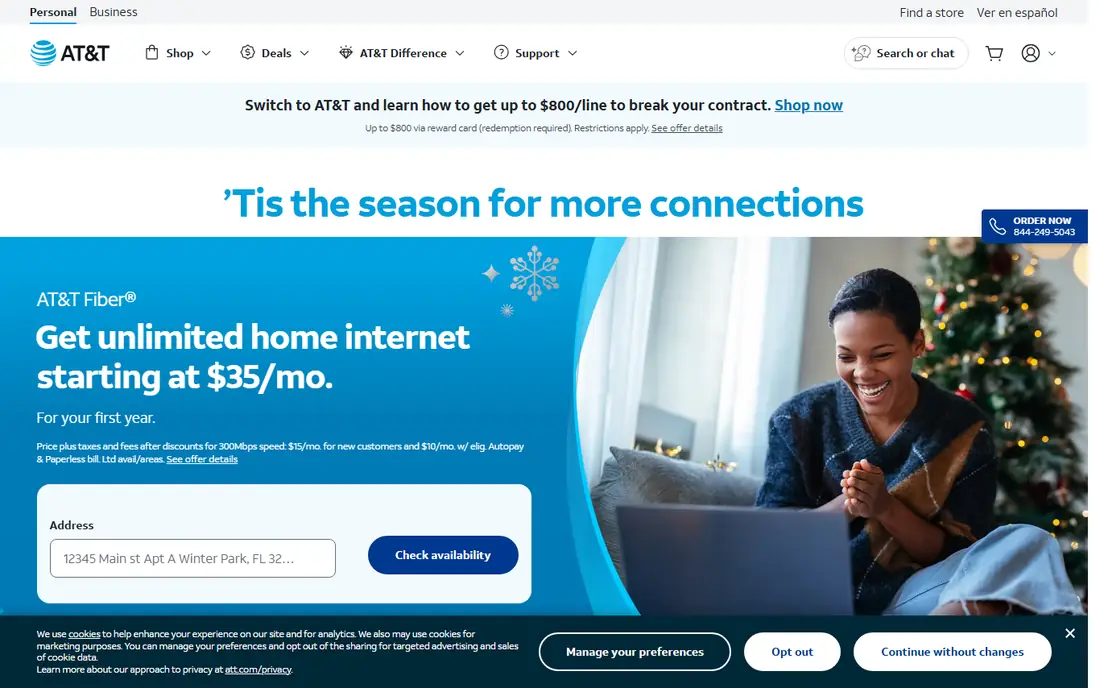
AT&T offers a strong national network with good coverage in cities and suburbs, plus a large store and device range. Its Value plan starts around $50 per month for a single line before taxes and fees, with higher tiers adding premium data and hotspot. Family plans bring the per-line cost down, and bundling with home internet can add savings for existing customers.
Single-line pricing is higher than budget carriers on the AT&T network, such as Cricket, and taxes and fees are extra. We would pick AT&T when you want a national carrier with strong coverage and you value in-store help, device financing, and family plan options.
- Strong nationwide network
- Good family plan value
- Wide device and store support
- Entry single-line price is high
- Taxes and fees are added
Visible, owned by Verizon, is the simplest way to get unlimited data on the Verizon network at a budget price. The base Visible plan costs $25 per month with taxes and fees included, which makes the checkout total easy to compare. Setup is online-only, and there are no stores, which keeps costs down.
The base plan caps hotspot speeds and can be deprioritised behind Verizon's own customers when a tower is busy. A higher Visible plan adds premium data and faster hotspot. We recommend Visible for a single line on Verizon coverage where a simple, all-in price matters more than stores or perks.
- Unlimited data on Verizon for $25 per month
- Taxes and fees included
- Simple online-only setup
- No stores
- Hotspot speeds are capped on the base plan
- Data can be deprioritised
Mint Mobile, on the T-Mobile network, offers unlimited data for $30 per month on a 12-month plan, with a lower introductory rate for new customers. That upfront payment model is how it keeps prices low, and a free trial lets you test coverage before you commit. For a single line, it is one of the cheapest unlimited options in the US.
The trade-offs are upfront payment, deprioritisation on busy towers, and online-only support with no stores. Shorter terms cost more per month. We would pick Mint when you are happy to pay upfront, your area has good T-Mobile coverage, and you want the lowest possible unlimited price.
- Low unlimited price on a 12-month plan
- Uses T-Mobile network
- Free trial to test coverage
- Best price requires paying months upfront
- Data can be deprioritised
- No stores
US Mobile stands out because it lets you choose which of the three national networks your line uses, and switch if coverage disappoints. Its Light plan starts at $10 per month for 2 GB, with taxes included, while Unlimited Premium costs $44 per month. That flexibility suits households where different members need different networks, or where coverage varies by location.
Plan features, such as hotspot allowances, vary by the network you choose, so read the details for your choice rather than assuming one set of terms. Premium unlimited is also pricier than Visible or Mint. We recommend US Mobile when network choice and flexibility matter more than the absolute lowest price.
- Choose Verizon, AT&T, or T-Mobile network
- Taxes included
- Flexible light and unlimited plans
- Plan details vary by network choice
- Premium unlimited costs more than budget rivals
Google Fi Wireless suits users whose data use varies month to month. Its Flexible plan starts at $20 per month plus $10 per GB, so light users pay less than on a fixed unlimited plan. Unlimited plans add predictable pricing, and international roaming is a clear strength for travellers, with coverage in many countries without a separate SIM.
In the US, Fi mainly uses the T-Mobile network, so coverage follows T-Mobile strengths and limits. Unlimited pricing is also higher than Visible or Mint. We would pick Google Fi for light data users, frequent travellers, and households that want flexible billing rather than a fixed unlimited plan.
- Flexible plan charges by data used
- Good international roaming
- Easy family and data-only options
- Unlimited plans cost more than budget rivals
- Best on T-Mobile network in the US
Cricket Wireless, owned by AT&T, gives you AT&T network coverage with store support and taxes included on many plans. Its entry unlimited and capped plans start around $35 per month, with multi-line discounts bringing the per-line cost down. For shoppers who want a store to visit but do not want AT&T prices, that combination is appealing.
Data can be deprioritised behind AT&T customers on busy towers, and premium data and hotspot allowances are smaller than on AT&T premium plans. We recommend Cricket for AT&T coverage with in-person help, especially for families who want simple, tax-included pricing.
- AT&T network coverage
- Taxes included on many plans
- Physical stores for help
- Data can be deprioritised
- Premium features cost more than on AT&T itself
Metro by T-Mobile is T-Mobile's prepaid brand, with stores, taxes included, and perks such as streaming benefits on higher plans. Its unlimited plans start around $40 per month, with multi-line and switcher offers that can lower the cost. That makes it a middle ground between T-Mobile itself and a purely online budget brand.
It costs more than Mint for similar T-Mobile coverage, and data can be deprioritised on busy towers. We would pick Metro when you want T-Mobile coverage with a store nearby and simple tax-included pricing, and you are willing to pay a little more than the cheapest online-only options.
- T-Mobile network
- Taxes included
- Stores plus perks on higher plans
- Entry price is higher than Mint
- Data can be deprioritised
Consumer Cellular is known for simple plans and helpful phone support, which suits older users and anyone who wants to talk to a person rather than manage everything online. Its basic plan starts at $20 per month with autopay, and it runs on the AT&T network. AARP members can get additional discounts, which is a further benefit for eligible customers.
Unlimited plans are pricier than Visible or Mint, and entry plans carry smaller data allowances, so heavy data users should check the unlimited tier. We recommend Consumer Cellular when simple billing, phone support, and a no-fuss plan matter more than the lowest unlimited price.
- Simple plans
- Strong phone support
- AT&T network coverage
- AARP member discounts
- Unlimited plans cost more than budget rivals
- Data allowances are smaller on entry plans
How we picked these
We compared official carrier pages and current plan roundups checked in October 2026, for carriers live in the US market. We favoured carriers with clear single-line pricing, national network access, and a track record of service. Prices shown are starting or headline single-line rates, and they change with autopay, multi-line discounts, and promotions, so check the checkout total for your address and line count before you switch.
What to check before you switch
Start with coverage at the places you actually use your phone: home, work, school, and your commute. A carrier map can look strong nationally while still missing your street. Use a free trial or a prepaid month to test before you port your number, especially on a budget carrier.
Next, compare the total cost: headline rate plus taxes and fees, minus multi-line or autopay discounts, plus any device financing. Finally, check data priority, hotspot allowances, and roaming terms. A cheap unlimited plan with a small hotspot allowance or heavy deprioritisation may not suit a user who tethers a laptop daily.
Deprioritisation explained
On most budget plans, your data waits behind the host carrier's own customers when a tower is busy. That usually means slower speeds at concerts, stadiums, and busy evenings, not a complete loss of service. Premium plans on national carriers include more priority data, which is one reason they cost more.
Keeping your number and phone
Most carriers support number porting, but do not cancel your old plan before the port completes, or you may lose the number. Check that your phone is compatible with the new network and that it is paid off or cleared for use elsewhere, following your current carrier's device-release policy.
Frequently asked questions
Which cell carrier has the best coverage in the US?
Verizon is generally rated strongest for nationwide and rural coverage, with AT&T and T-Mobile close behind in cities and suburbs. The best carrier for you depends on coverage at your address, so test with a trial or prepaid plan before you commit to a long-term plan.
Is a budget carrier as good as Verizon, T-Mobile, or AT&T?
For coverage, often yes, because budget carriers use the same networks. The main differences are data priority on busy towers, fewer perks, less hotspot data, and online-only support on some brands. If those trade-offs do not bother you, a budget carrier can save a large amount each month.
What does deprioritised data mean?
It means your data can slow down when a tower is busy, because the host carrier's own customers get priority. Premium plans include a set amount of priority data before deprioritisation applies. Budget plans usually have less priority data, or none, so speeds can drop at peak times.
How much does an unlimited plan cost in the US?
Single-line unlimited plans range from $25 per month on Visible to $65 or more on a national carrier before taxes and fees, with multi-line discounts lowering the per-line cost. Always compare the total with taxes and fees included, and check whether the price requires autopay or a multi-month payment.
Can I keep my phone number when I switch carriers?
Yes, in most cases you can port your number to a new carrier. Keep your old account active until the port completes, and have your account number and porting PIN ready. Do not cancel the old line first, as that can cause you to lose the number.
Do I need a contract for a cell plan?
Most carriers now offer no-contract monthly plans, including the national carriers and budget brands. Device financing is separate from the service plan and may tie you to a carrier until the phone is paid off. Check the financing terms separately from the plan terms.
Sources
See where you really rank - block by block
ProMapRanker scans Google Maps across a grid of your service area. Simple monthly plans from $19, white-label on every plan.
Start freeKeep reading
 zoro.to alternatives
Best Zoro.to Alternatives in 2026
We compare the best zoro.to alternatives in 2026, listing only legal licensed anime streaming services, from Crunchyroll to free options for fans today.
Read → zip alternatives
Best Zip Alternatives in 2026
We compare the best zip alternatives for buy now, pay later in 2026, covering pay-in-4 plans, fees, spending limits, and credit reporting options today.
Read → yesware alternatives
Best Yesware Alternatives in 2026
Compare the best yesware alternatives for sales email tracking, templates, and sequences, with current pricing and honest tradeoffs for small sales teams.
Read →