 ProMapRanker
Top Analytics Software for Small Businesses in 2026


Free traffic and marketing reports · Pricing starts at: Free
Key takeaways
- Google Analytics 4 and Microsoft Clarity give small businesses a free starting point, with GA4 for traffic and Clarity for session behavior.
- Plausible, Fathom, and Simple Analytics suit teams that want simple, privacy conscious traffic reports without a steep learning curve.
- Mixpanel, Amplitude, and PostHog suit product teams that need funnels, retention, and event based analysis rather than pageview counts.
- Matomo suits teams that need data ownership, either through self hosting or a managed cloud plan with strong privacy controls.
- The best choice depends on the question you need answered, since traffic, product use, and visitor behavior are different jobs.
Quick comparison
| Pick | Great for | Pricing starts at | Free tier | |
|---|---|---|---|---|
| Google Analytics 4 | Free traffic and marketing reports | Free | Yes | Visit |
 Mixpanel | Product funnels and retention | Free | Yes | Visit |
 Plausible | Simple privacy conscious traffic stats | $9 per month | Free trial | Visit |
 Fathom Analytics | Simple multi site traffic stats | $15 per month | Free trial | Visit |
 Matomo | Data ownership and full reports | Free self hosted | Yes | Visit |
 PostHog | Product analytics plus replay | Free | Yes | Visit |
 Amplitude | Product and growth analytics | Free | Yes | Visit |
 Microsoft Clarity | Free heatmaps and session replay | Free | Yes | Visit |
 Simple Analytics | Minimal cookieless traffic stats | See website | Yes | Visit |
The best analytics software for small businesses
Small business analytics fails most often when a team picks a powerful tool and never uses it. A simple tool that gets checked weekly beats a complex suite that sits unused. The tools below cover three jobs: website traffic, product behavior, and visitor behavior. Pick the job first, then pick the tool, and add a second tool only when the first leaves a clear gap.
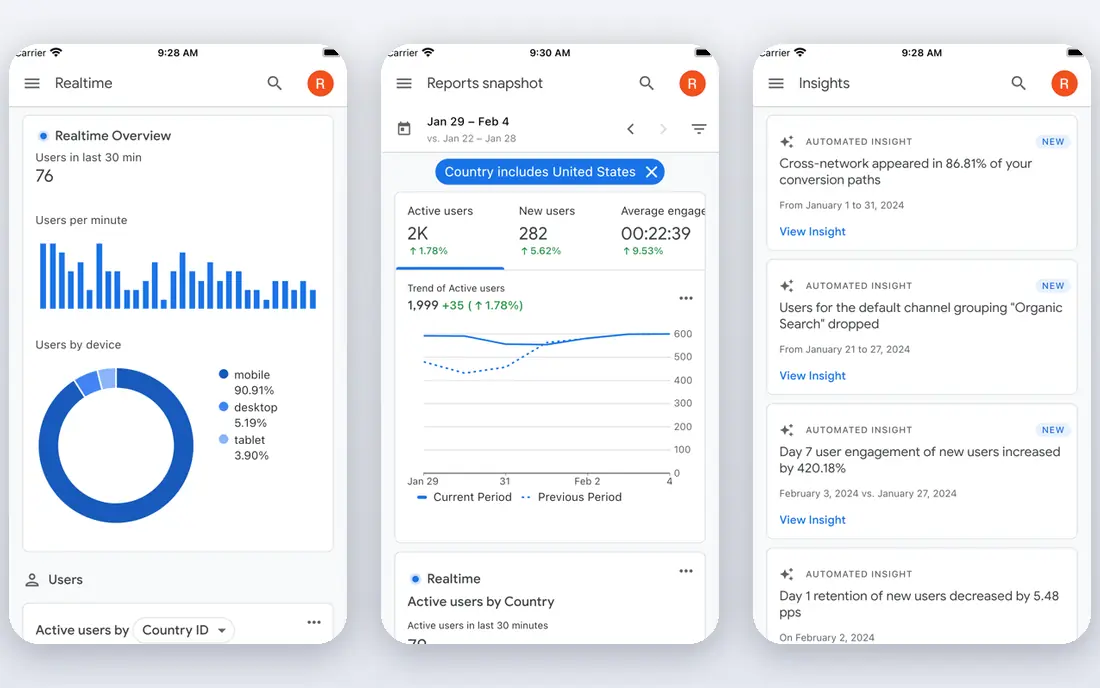
Google Analytics 4, usually called GA4, is the default free analytics tool for most small businesses, and for good reason. It reports traffic sources, pages, conversions, and audience behavior at no cost, and it links directly to Google Ads and Search Console. If you run paid search, that link alone makes GA4 hard to replace, since ad bidding can use GA4 conversion signals.
The cost is complexity. GA4 is event based, so a pageview, a click, and a purchase are all events, and building useful reports takes more setup than a simple dashboard tool. Privacy rules also matter, since GA4 uses cookies and visitors in the EU and UK will often need a consent banner. Keep GA4 if you need depth and Google integrations, and pair it with a simpler tool if your team wants a quick daily view.
- Free standard property
- Strong Google Ads and Search Console links
- Flexible event based reports and explorations
- Steep learning curve
- Cookie consent needed in many regions
- Data retention limits on standard properties
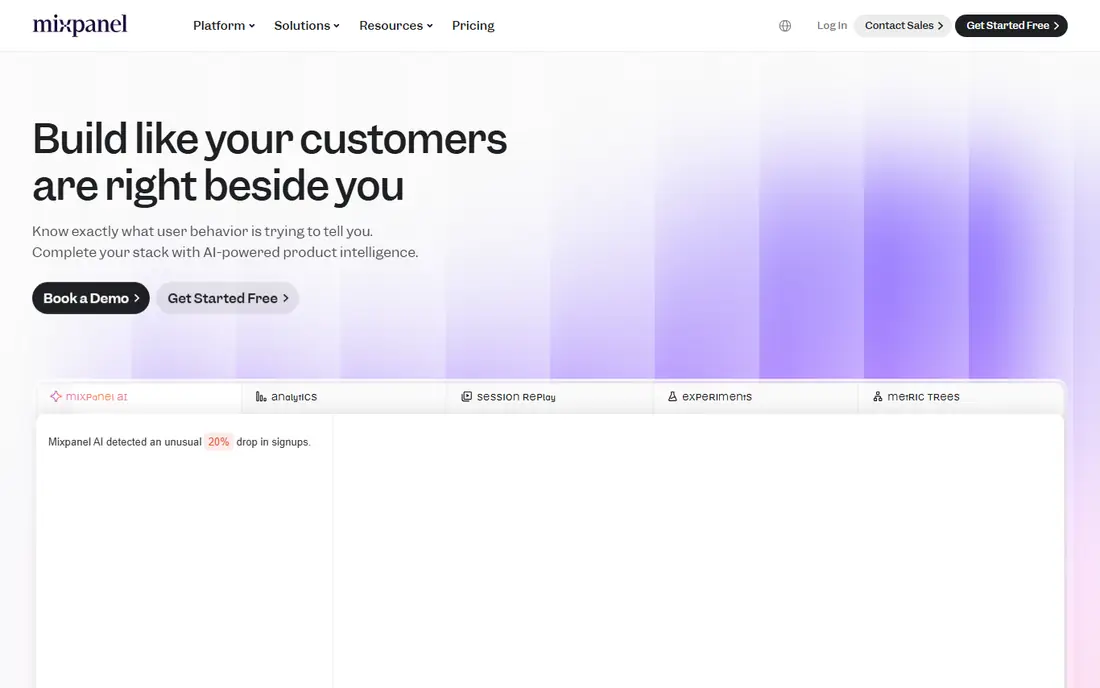
Mixpanel is built for product teams that ask how users move through a signup flow, which features keep people coming back, and where users drop out. Its funnel and retention reports answer those questions directly, and its free tier covers a large monthly event allowance for small products. That makes it a strong second tool alongside GA4, rather than a direct replacement for it.
The catch is planning. Mixpanel works best when you name events consistently, such as signup started, signup completed, and first key action, and when you avoid tracking everything by default. Without that plan, reports become noisy and hard to trust. If your main need is simple website traffic, a lighter tool will serve you better.
- Strong funnels, retention, and cohort reports
- Generous free tier for many small products
- Session replay on some plans
- Needs an event plan to work well
- Pageview reporting is not its main strength
- Paid costs rise with event volume
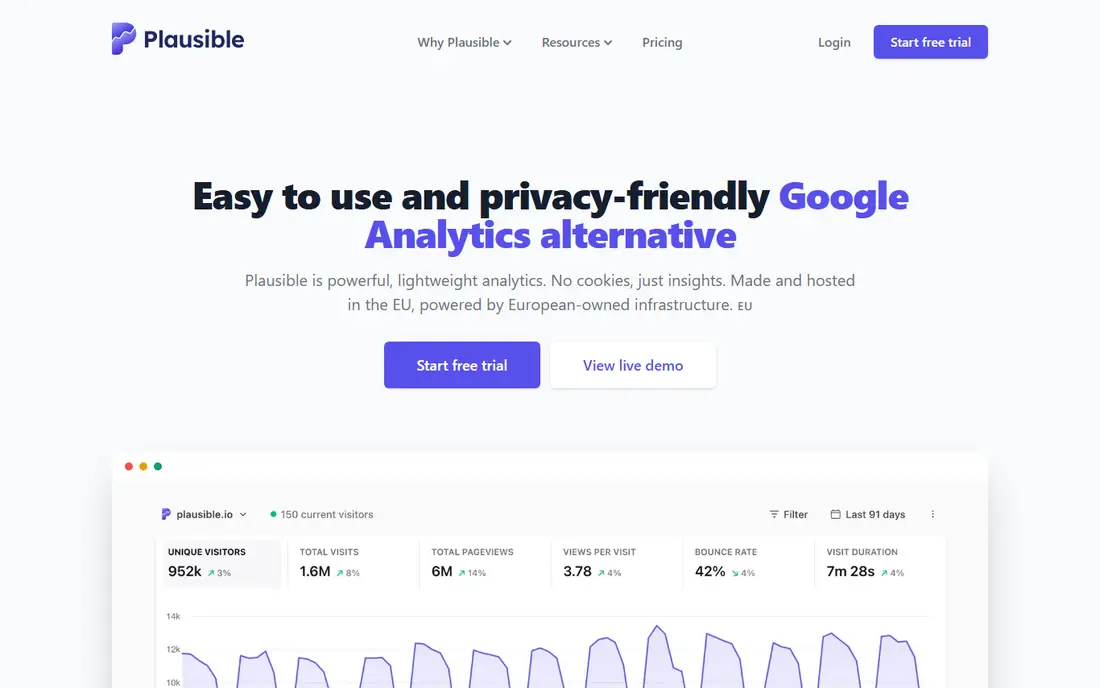
Plausible is the tool many small site owners switch to when GA4 feels like too much. The dashboard shows visitors, top pages, referrers, devices, and goals in one view, without the maze of GA4 explorations. Its script is lightweight, and its default cookieless approach reduces consent banner pressure in many privacy regimes, though you should still check your own legal duties.
The limit is depth. Plausible is excellent for traffic and goal tracking, but it does not replace product analytics or session replay. The hosted service starts at $9 per month for a starter pageview allowance, with a free trial, and a self hosted community edition exists for teams that want to run it themselves. Choose Plausible when simplicity and privacy matter more than deep segmentation.
- Lightweight script and simple dashboard
- Cookieless tracking by default
- Funnel and journey reports on higher plans
- No free hosted plan
- Less depth than GA4 for complex analysis
- Session replay is not included
Fathom suits agencies and small businesses that manage several small sites and want one simple view of each. Plans cover many sites under one account, which keeps costs predictable for a portfolio of blogs, marketing sites, and client sites. The dashboard is deliberately plain, so a non technical owner can check traffic without training.
Like Plausible, Fathom is a traffic tool, not a product analytics suite. It will not show detailed user journeys inside an app, and it does not include session replay as a core feature. If you manage one site and want the lowest price, Plausible may be cheaper at low volume, while Fathom becomes attractive when site count, not traffic, is the main factor.
- Simple dashboard across many sites
- Privacy focused tracking
- Uptime monitoring on some plans
- No free hosted plan
- Product analytics features are limited
- Price rises with pageview volume
Matomo is the closest free alternative to GA4 in report depth, with the added benefit that you can own the data. The self hosted community edition is free, which suits privacy regulated businesses and teams that must keep data on their own servers. The cloud version removes hosting work but charges by traffic, so costs need checking against your pageview volume.
Self hosting is not free in effort. Updates, backups, database care, and security fall to your team, and that work can exceed the cost of a simple hosted tool. Matomo fits regulated teams, EU focused businesses, and technical owners who value data control and are willing to maintain the install, or pay for cloud hosting to avoid that work.
- Full GA style reports with data ownership
- Self hosted community edition is free
- Heatmaps and session recording as add ons
- Self hosting needs maintenance
- Cloud pricing rises with traffic
- Setup is heavier than Plausible or Fathom
PostHog is a strong pick for a product led startup that wants analytics, session replay, feature flags, and surveys without buying four separate tools. Its free tier covers a large monthly event allowance plus replay and flags, which lets a small team test the full platform before paying. Open source self hosting is also available for teams that need data control.
Breadth is also the risk. A team that only needs website traffic may find PostHog more complex than Plausible or Fathom, and costs can rise if event tracking is left untracked and noisy. Use PostHog when product behavior is the main question, and keep event names tidy from the start so reports stay useful as the product grows.
- Product analytics, replay, feature flags, and surveys in one platform
- Generous free monthly allowances
- Self hosting option
- Breadth can overwhelm a small team
- Event volume drives paid cost
- Setup needs an event plan
Amplitude competes with Mixpanel for product analytics, with a strong focus on cohorts, retention, and growth loops. A small product team can start free, build funnels and retention charts, and learn which onboarding steps predict long term use. That insight is hard to get from pageview tools, and it directly shapes product and marketing decisions.
Amplitude is less suited to a simple marketing site, where GA4 or Plausible already answer the main questions. It also needs the same discipline as Mixpanel, since poorly named events produce confusing reports. Choose Amplitude when retention and user behavior inside a product are the questions that matter most to your business.
- Strong behavioral cohorts and retention analysis
- Free starter tier
- Good for growth and product teams
- Learning curve for advanced analysis
- Pageview style reporting is secondary
- Paid pricing is usage based
Microsoft Clarity answers a different question from GA4: not how many people visited, but what they did on the page. Heatmaps show where visitors click and scroll, and session recordings show where they hesitate, rage click, or abandon a form. That view often explains a low conversion rate faster than a traffic report, and Clarity is free, which makes it an easy add on.
Clarity should not be your only analytics tool. It lacks the traffic source, campaign, and funnel depth of GA4 or Mixpanel, and session recordings should be used with care for privacy, including masking sensitive fields. Pair Clarity with GA4 or a privacy first traffic tool, and use it to fix pages, not to replace your main reporting.
- Free heatmaps and session recordings
- No stated traffic limits on the free product
- Simple setup
- Not a full traffic analytics replacement
- No funnel depth of product tools
- Data controls need review
Simple Analytics takes the minimal approach even further than Plausible and Fathom. It tracks pageviews without cookies by default, shows a clean dashboard, and offers a free hobby tier for small use, with paid plans for larger sites. For a personal site, a small blog, or a privacy conscious marketing page, that simplicity is the whole point.
The trade off is the same as with other minimal tools. You will not get product funnels, deep segmentation, or session replay, and you may still need GA4 for ad measurement. Simple Analytics fits owners who want honest traffic numbers, a light script, and no cookie banner complexity, and who do not need advanced analysis.
- Minimal cookieless tracking
- Simple dashboard
- Free hobby tier for small use
- Limited depth for complex analysis
- Paid plans are priced by usage
- Fewer integrations than GA4
How we picked these
We compared official pricing pages, free tier terms, and product documentation, and we favored tools that are live and usable by a small business in October 2026. We kept a mix of free, privacy first, and product analytics tools, because small businesses ask different questions, and one tool rarely answers all of them. Where pricing was unclear or usage based, we wrote See website rather than guessing a figure.
What to check before you choose
Start with the decision you need to make. If the question is which marketing channel brings sales, GA4 plus a simple traffic tool is enough. If the question is why users leave during signup, a product tool such as Mixpanel, Amplitude, or PostHog is the right pick. If the question is why a page does not convert, Clarity heatmaps and recordings will help most.
Check privacy and consent early. Cookie based tools may need a banner in some regions, while cookieless tools reduce that burden but still require a clear privacy policy. Also check data retention, export options, and whether the tool can send conversion data to your ad platforms. A tool that cannot export your data is a risk, even if it is free.
Frequently asked questions
What is the best analytics software for small businesses?
There is no single winner, since traffic, product, and behavior tools answer different questions. GA4 is the best free starting point for traffic and ads, Plausible or Fathom suit simple privacy conscious reporting, and Mixpanel or PostHog suit product teams.
What is the best analytics platform for small business with a small budget?
GA4 and Microsoft Clarity are free, and PostHog, Mixpanel, and Amplitude offer free tiers. A common low cost stack is GA4 for traffic, Clarity for behavior, and one product tool only if you run an app or a signup flow.
What is the best analytics tool for small businesses that want privacy?
Plausible, Fathom, Simple Analytics, and Matomo all emphasize privacy and data control, with cookieless or self hosted options. Check each tool privacy page and your own legal duties, since privacy rules vary by region and by data type.
Do I need Google Analytics if I use Plausible or Fathom?
Not always. If you do not run Google Ads and do not need deep segmentation, a simple tool may replace GA4. If you depend on Google Ads conversion signals, keep GA4 and add a simple tool for a quick daily view.
How do product analytics tools differ from website analytics tools?
Website tools count pageviews, traffic sources, and goals. Product tools track named events inside an app, such as signup, feature use, and retention over time. Many small businesses need the first kind, while app and SaaS teams need the second kind as well.
Sources
See where you really rank - block by block
ProMapRanker scans Google Maps across a grid of your service area. Simple monthly plans from $19, white-label on every plan.
Start freeKeep reading
 zoro.to alternatives
Best Zoro.to Alternatives in 2026
We compare the best zoro.to alternatives in 2026, listing only legal licensed anime streaming services, from Crunchyroll to free options for fans today.
Read → zip alternatives
Best Zip Alternatives in 2026
We compare the best zip alternatives for buy now, pay later in 2026, covering pay-in-4 plans, fees, spending limits, and credit reporting options today.
Read → yesware alternatives
Best Yesware Alternatives in 2026
Compare the best yesware alternatives for sales email tracking, templates, and sequences, with current pricing and honest tradeoffs for small sales teams.
Read →