 ProMapRanker
Top 10 Offshore Software Development Companies in 2026


nearshore teams for North American clients · Pricing starts at: See website
Key takeaways
- BairesDev and N-iX suit teams that want large, established delivery capacity across regions.
- ScienceSoft and ELEKS suit regulated or complex enterprise work where process and domain knowledge matter.
- EPAM suits very large programs, while smaller firms may fit startups better.
- Always run a small paid pilot, check references, and agree on IP, security, and exit terms in writing.
Quick comparison
| Pick | Great for | Pricing starts at | Free tier | |
|---|---|---|---|---|
| BairesDev | nearshore teams for North American clients | See website | No | Visit |
 N-iX | large product engineering programs | See website | No | Visit |
 ELEKS | enterprise engineering and product work | See website | No | Visit |
 ScienceSoft | regulated industry and managed services | See website | No | Visit |
 Andersen | flexible team augmentation | See website | No | Visit |
 EPAM Systems | very large enterprise programs | See website | No | Visit |
 Intellias | product engineering for complex industries | See website | No | Visit |
 Innowise | broad multi-stack development | See website | No | Visit |
 Itransition | enterprise software and business systems | See website | No | Visit |
 Netguru | design-led product development | See website | No | Visit |
The best top 10 offshore software development companies
This list reflects public reputation and services, not a verified ranking, and it contains no invented scores or pay figures. Offshore partners vary widely in region, size, and delivery model, so the right fit depends on your project, budget, and how closely you want to work with the team.
If nearshore teams for North American clients is the main job, BairesDev stands out for large nearshore capacity for North American clients, with staff augmentation and dedicated teams. In our comparison of official feature pages and pricing, that combination stood out because it answers the core job without forcing a separate tool for every step.
That strength shows up in daily use, not only on a feature page. The plan limits and the way the tool handles real work matter, so check trial terms, user limits, and what happens when you outgrow the entry tier. A tool that fits the first month but blocks the sixth month is a poor buy.
The catch is that large firm processes may feel heavy for very small projects, and pricing is quoted per project. Before you commit, run a real task in the trial or free tier, check the plan limits, and confirm the tool fits the team that will use it every day. That short test usually reveals more than a feature list.
- Large nearshore capacity
- Staff augmentation and dedicated teams
- Broad technology coverage
- Large firm processes may feel heavy for very small projects
- Pricing is quoted per project
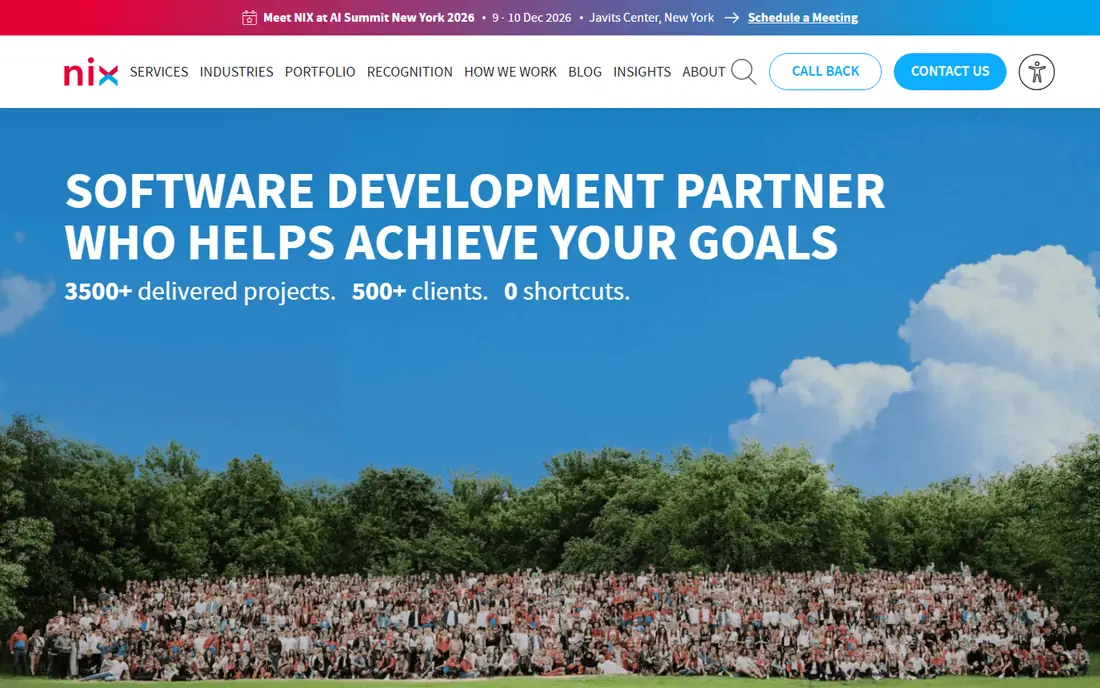
For teams focused on large product engineering programs, N-iX stands out for product engineering across cloud, data, and applications, with dedicated teams at scale. In our comparison of official feature pages and pricing, that combination stood out because it answers the core job without forcing a separate tool for every step.
Pricing and limits shape the real cost. Check what the entry plan includes, what sits on higher tiers, and whether extra users, volume, or add-ons change the bill. A clear plan page is a good sign, while vague pricing usually means a sales call and a custom quote.
The catch is that scale and process suit larger programs more than tiny one-off tasks, and pricing is quoted. Before you commit, run a real task in the trial or free tier, check the plan limits, and confirm the tool fits the team that will use it every day. That short test usually reveals more than a feature list.
- Product engineering across cloud, data, and applications
- Dedicated teams at scale
- Scale and process suit larger programs more than tiny one-off tasks
- Pricing is quoted
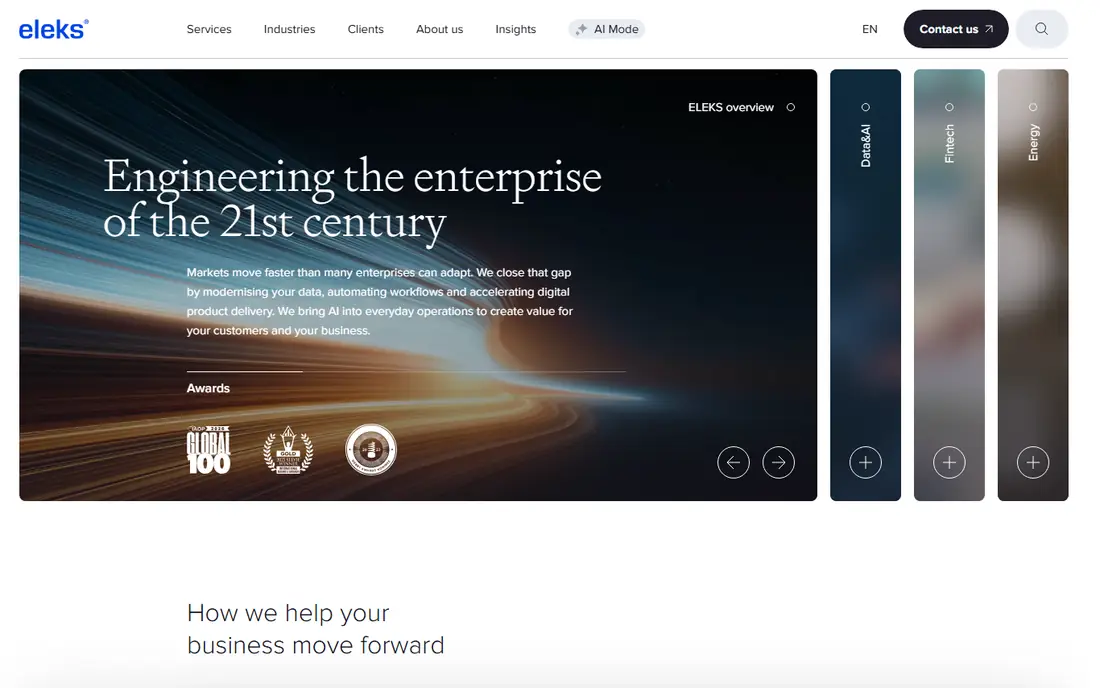
When enterprise engineering and product work matters most, ELEKS stands out for enterprise software and product work, with depth in complex and regulated domains. In our comparison of official feature pages and pricing, that combination stood out because it answers the core job without forcing a separate tool for every step.
Daily workflow is where a tool earns its place. Look at how quickly a new user can complete the core job, how clear errors and reports are, and how well the tool connects to the rest of your stack. A strong feature that is hard to find rarely gets used.
The catch is that enterprise focus may mean a higher minimum engagement than small firms, and pricing is quoted. Before you commit, run a real task in the trial or free tier, check the plan limits, and confirm the tool fits the team that will use it every day. That short test usually reveals more than a feature list.
- Enterprise software, product design, and data services
- Long track record in complex work
- Enterprise focus may mean higher minimum engagement than small firms
- Pricing is quoted
If your priority is regulated industry and managed services, ScienceSoft stands out for custom software, data, and managed services across many industries, which suits mixed estates. In our comparison of official feature pages and pricing, that combination stood out because it answers the core job without forcing a separate tool for every step.
Support and docs matter when work stalls. Check the help centre, community, and update history before you commit. A tool with clear docs and recent updates is easier to trust than one with a polished landing page and thin guidance.
The catch is that a broad range means fit depends on the exact team assigned, and pricing is quoted. Before you commit, run a real task in the trial or free tier, check the plan limits, and confirm the tool fits the team that will use it every day. That short test usually reveals more than a feature list.
- Custom software, data, and managed services across many industries
- Broad service range means fit depends on the exact team assigned
- Pricing is quoted
For buyers who need flexible team augmentation, Andersen stands out for flexible team augmentation across many stacks, which suits changing project needs. In our comparison of official feature pages and pricing, that combination stood out because it answers the core job without forcing a separate tool for every step.
That strength shows up in daily use, not only on a feature page. The plan limits and the way the tool handles real work matter, so check trial terms, user limits, and what happens when you outgrow the entry tier. A tool that fits the first month but blocks the sixth month is a poor buy.
The catch is that team quality can vary by stack and availability, and pricing is quoted per engagement. Before you commit, run a real task in the trial or free tier, check the plan limits, and confirm the tool fits the team that will use it every day. That short test usually reveals more than a feature list.
- Team augmentation across many stacks
- Flexible scaling for changing needs
- Team quality can vary by stack and availability
- Pricing is quoted per engagement
When the brief is very large enterprise programs, EPAM Systems stands out for global scale for platform engineering and transformation programs. In our comparison of official feature pages and pricing, that combination stood out because it answers the core job without forcing a separate tool for every step.
Pricing and limits shape the real cost. Check what the entry plan includes, what sits on higher tiers, and whether extra users, volume, or add-ons change the bill. A clear plan page is a good sign, while vague pricing usually means a sales call and a custom quote.
The catch is that scale and cost structure suit large programs best, and small projects may not fit. Before you commit, run a real task in the trial or free tier, check the plan limits, and confirm the tool fits the team that will use it every day. That short test usually reveals more than a feature list.
- Global scale for platform engineering, consulting, and transformation programs
- Scale and cost structure suit large programs best
- Small projects may not fit
If product engineering for complex industries tops your list, Intellias stands out for product engineering for complex industries, with cloud and data depth. In our comparison of official feature pages and pricing, that combination stood out because it answers the core job without forcing a separate tool for every step.
Daily workflow is where a tool earns its place. Look at how quickly a new user can complete the core job, how clear errors and reports are, and how well the tool connects to the rest of your stack. A strong feature that is hard to find rarely gets used.
The catch is that industry focus may limit fit for simple web projects, and pricing is quoted. Before you commit, run a real task in the trial or free tier, check the plan limits, and confirm the tool fits the team that will use it every day. That short test usually reveals more than a feature list.
- Product engineering for mobility, finance, and other complex sectors
- Industry focus may limit fit for simple web projects
- Pricing is quoted
For work centred on broad multi-stack development, Innowise stands out for broad technology coverage and rapid scaling for varied projects. In our comparison of official feature pages and pricing, that combination stood out because it answers the core job without forcing a separate tool for every step.
Support and docs matter when work stalls. Check the help centre, community, and update history before you commit. A tool with clear docs and recent updates is easier to trust than one with a polished landing page and thin guidance.
The catch is that breadth means the assigned team matters more than the brand, and pricing is quoted. Before you commit, run a real task in the trial or free tier, check the plan limits, and confirm the tool fits the team that will use it every day. That short test usually reveals more than a feature list.
- Broad technology coverage and rapid team scaling for varied projects
- Breadth means the assigned team matters more than the brand
- Pricing is quoted
When you need enterprise software and business systems most, Itransition stands out for enterprise software and business systems, with ERP, CRM, and data programs. In our comparison of official feature pages and pricing, that combination stood out because it answers the core job without forcing a separate tool for every step.
That strength shows up in daily use, not only on a feature page. The plan limits and the way the tool handles real work matter, so check trial terms, user limits, and what happens when you outgrow the entry tier. A tool that fits the first month but blocks the sixth month is a poor buy.
The catch is that enterprise focus may be heavy for small startups, and pricing is quoted. Before you commit, run a real task in the trial or free tier, check the plan limits, and confirm the tool fits the team that will use it every day. That short test usually reveals more than a feature list.
- Enterprise software, ERP and CRM work, and data programs
- Enterprise focus may be heavy for small startups
- Pricing is quoted
If the goal is design-led product development, Netguru stands out for product strategy, design, and engineering under one relationship, which suits customer-facing products. In our comparison of official feature pages and pricing, that combination stood out because it answers the core job without forcing a separate tool for every step.
Pricing and limits shape the real cost. Check what the entry plan includes, what sits on higher tiers, and whether extra users, volume, or add-ons change the bill. A clear plan page is a good sign, while vague pricing usually means a sales call and a custom quote.
The catch is that a design-led approach may cost more than pure staff augmentation, and pricing is quoted. Before you commit, run a real task in the trial or free tier, check the plan limits, and confirm the tool fits the team that will use it every day. That short test usually reveals more than a feature list.
- Product strategy, design, and engineering under one delivery relationship
- Design-led approach may cost more than pure staff augmentation
- Pricing is quoted
How we picked these
We compared public company pages, service descriptions, and regional coverage for offshore and nearshore software firms that operate in October 2026. We kept firms with a clear software delivery offer and a public client-facing presence. We did not use invented ratings, hourly figures, or rankings, because those numbers vary by project and are often quoted without context. We compared official feature pages, pricing, and app store listings where relevant, plus public reviews. We did not claim hands-on testing that did not happen, and we kept only products that exist and work today.
What to check before you buy
Define the model first
Staff augmentation adds people to your team. A dedicated team works as a unit for you. A fixed project hands delivery to the vendor. Each model needs different management, so pick the model before you shortlist firms.
Test with a small pilot
Start with a bounded piece of work, a clear acceptance test, and a fixed time frame. A pilot shows communication, code quality, and delivery habits better than a sales deck.
Agree the hard terms early
Put IP ownership, code access, security practices, data handling, and exit terms in writing. Ask how staff changes are handled, and who owns the code if the engagement ends.
Frequently asked questions
What are the best offshore software development companies?
The best choice depends on region, project size, and delivery model. BairesDev, N-iX, ELEKS, and ScienceSoft are widely known for large programs, while smaller firms suit startups. Shortlist by region and service fit, then test with a pilot.
How do offshore development companies charge?
Most charge by team, by project, or by time and materials, with rates that vary by region, seniority, and scope. This list uses See website for pricing because firms quote per project. Ask for a written quote for your exact scope.
Is offshore development safe for IP and data?
It can be, when contracts, access controls, and security reviews are handled well. Agree IP ownership in writing, limit access to what the team needs, and check security practices before sharing sensitive code or data.
What is the difference between offshore and nearshore?
Offshore usually means a large time-zone gap, while nearshore means closer time zones and easier overlap. Nearshore teams may cost more but can join daily meetings more easily. Pick the overlap your project actually needs.
How long does it take to start with an offshore team?
Timelines vary by firm, team size, and hiring needs. A small pilot can often start faster than a large dedicated team. Ask for a written start date, team profiles, and a ramp plan before signing.
Sources
See where you really rank - block by block
ProMapRanker scans Google Maps across a grid of your service area. Simple monthly plans from $19, white-label on every plan.
Start freeKeep reading
 zoho inventory alternatives
6 Alternatives to Zoho Inventory, Compared on Price and Fit
Zoho Inventory alternatives: 6 tools compared on price, free plans and fit. Katana leads the list for manufacturers. Fit and flaws are laid out for each entry.
Read → zoho crm alternatives
Best Zoho CRM Alternatives (2026)
Need Zoho CRM alternatives? We compare 7 tools on cost, free access and who each suits. Every pick gets a straight assessment. Built for quick decisions.
Read → zelle alternatives
Best Zelle Alternatives in 2026
Compare the best Zelle alternatives for sending money to friends, paying sellers and moving funds abroad, with honest notes on fees, speed and safety in 2026.
Read →