 ProMapRanker
The Best Keywords for an SEO Company in 2026

Key takeaways
- This article treats the topic as keyword research tools for SEO companies, since a keyword list alone does not help without volume, difficulty, and intent data.
- Ahrefs and Semrush give the deepest keyword and competitor data, but they cost the most each month.
- Moz Pro and SE Ranking give a simpler route into professional keyword data for smaller SEO teams.
- Google Keyword Planner and Google Search Console are free starting points that every SEO company should use beside a paid tool.
- SpyFu and Serpstat add competitor and PPC history that helps an SEO company price and pitch its work.
Quick comparison
| Pick | Great for | Pricing starts at | Free tier | |
|---|---|---|---|---|
 Ahrefs | Keyword and backlink depth | $29 per month | Yes | Visit |
 Semrush | All-in-one SEO and PPC research | $139 per month | Free trial | Visit |
 Moz Pro | Simple metrics and prioritization | $99 per month | Free trial | Visit |
 SE Ranking | Agency research and tracking | $129 per month | Free trial | Visit |
 Mangools | Simple long-tail research | $29 per month | Free trial | Visit |
 Serpstat | Research, tracking, and audit in one plan | $69 per month | Free trial | Visit |
 SpyFu | Competitor keyword and PPC history | $39 per month | Yes | Visit |
 Google Keyword Planner | Free volume data from Google | Free | Yes | Visit |
The best keywords for an SEO company
To be plain about the angle: this article covers keyword research tools for SEO companies, not a single list of keywords, because the best keywords for any client depend on that client, its market, and its search data. The tools below help an SEO company find keywords with real volume, judge how hard they are to rank for, group them by intent, and track progress over time. We compared official pricing pages, keyword databases, difficulty metrics, and export and reporting features.

Ahrefs is the tool many SEO professionals open first, and for good reason. Keywords Explorer gives volume, difficulty, traffic potential, and SERP context in one view, while the backlink index shows which links support the pages already ranking. That pairing matters for an SEO company, because a keyword is only a good target if the ranking pages can realistically be matched or beaten. Parent-topic clustering also turns long raw lists into content plans a client can understand.
The pricing reality needs care. The entry Starter plan is cheap, but serious agency work usually lands on higher tiers, and limits on projects and tracked keywords push upgrades. Ahrefs Webmaster Tools is genuinely useful for free on your own verified sites, giving site audits and Site Explorer access. For keyword depth alone, Ahrefs remains the benchmark other tools are measured against.
- Large keyword database with clickstream-adjusted volume
- Trusted difficulty scores
- Parent-topic clustering for content plans
- Full professional tiers cost far more than the entry plan
- Rank tracking updates weekly on lower plans unless upgraded
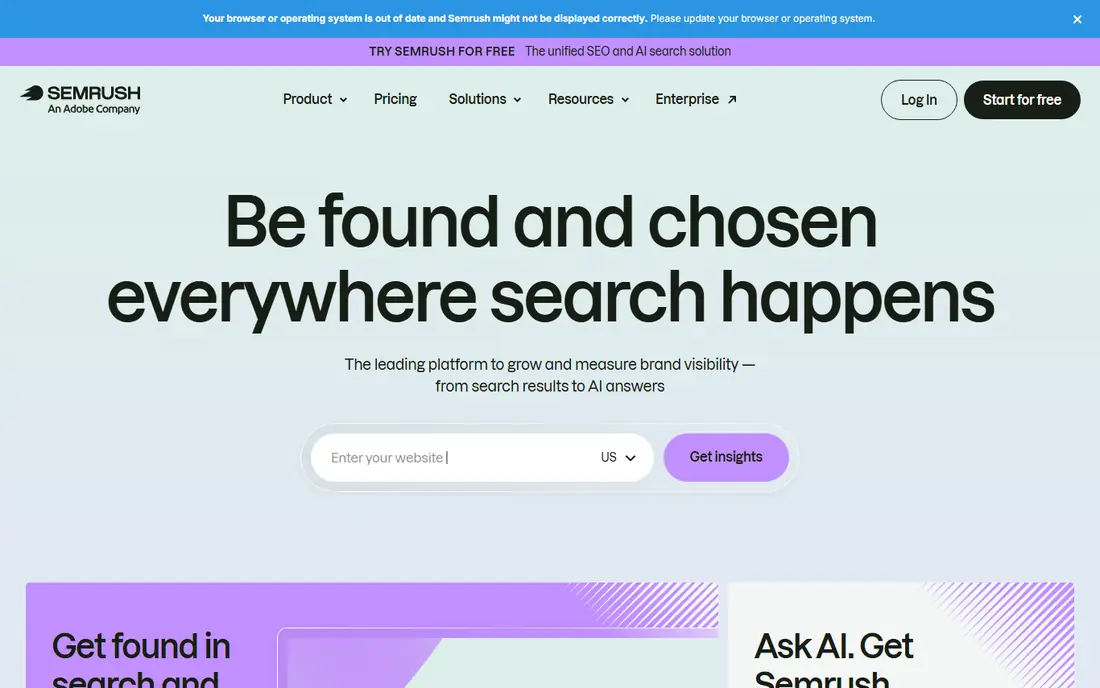
Semrush suits an SEO company that also handles content and paid search. Keyword Magic Tool groups related terms, labels intent, and shows volume and difficulty, while competitor research shows which keywords rivals buy ads for as well as rank for. That combined view helps an agency pitch work with evidence, not just a list of terms. Audits and rank tracking sit in the same account, so reporting stays in one place.
The cost is the main catch. At 139 dollars per month for the entry SEO plan, Semrush is steep for a small team with one or two clients. Some features, such as API access, sit on higher tiers or as paid add-ons. When SEO, content, and PPC are all in play, the single subscription can replace several tools. When only keyword research is needed, a cheaper specialist may do the same core job.
- Keyword Magic Tool with broad grouping and intent labels
- Competitor PPC data beside organic data
- Audits, tracking, and content tools in one login
- High monthly cost for a single client
- Project and keyword limits push larger agencies to higher tiers
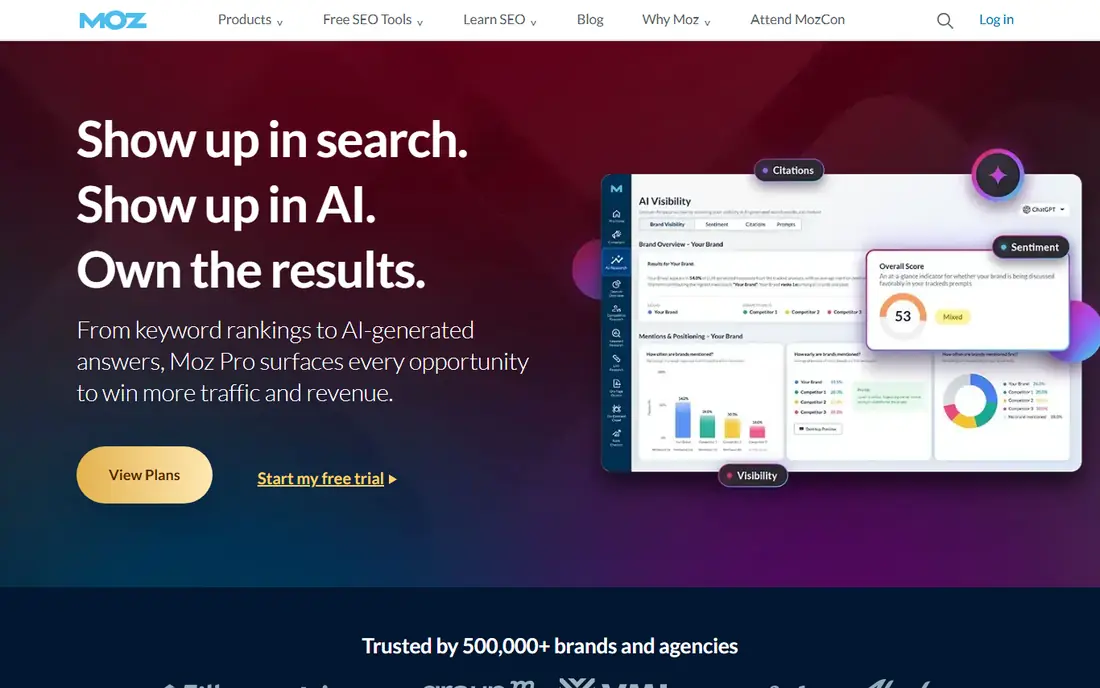
Moz Pro is the calmer option on this list. Its Keyword Explorer gives volume, difficulty, and organic click-through estimates, and its Priority Score blends those signals into one number for sorting a list. That single score helps a small SEO company explain to a client why one keyword comes before another, without a long lesson in metrics. The interface is also easier to learn than the largest suites.
The limit is depth. Moz covers fewer keywords and fewer competitor angles than Ahrefs or Semrush, so a large agency working across many markets may hit gaps. For local and small business SEO, where the keyword set is narrower and clarity matters more than sheer database size, Moz Pro is a solid, workable choice.
- Clear interface and Priority Score for ranking keyword targets
- Useful for smaller teams
- Long history in SEO metrics
- Keyword database is smaller than Ahrefs or Semrush
- Some advanced features require separate tools or higher tiers
SE Ranking works well for an agency that lives on client reports. Keyword research feeds straight into rank tracking and site audits, so a keyword chosen on Monday can be tracked and reported without moving data between tools. White-label reporting and multi-client handling are practical benefits for a growing SEO company, and the platform covers the core workflow without a maze of add-ons.
The honest weakness is database breadth in some markets. For mainstream US terms, SE Ranking is strong, but for very niche or non-English markets, Ahrefs or Semrush may return more data. Agencies should trial it on their own clients' keywords before committing, since that test tells more than any feature list.
- Keyword research, rank tracking, and audits in one platform
- Client reporting features suit agencies
- Competitive pricing for its range
- Database depth can vary by market compared with the largest tools
- Entry plan limits may push growing agencies upward
Mangools, built around KWFinder, suits a small SEO company or freelancer who wants fast answers without a steep learning curve. Enter a seed term, filter by location and language, and get volume, difficulty, and SERP results in a clean view. It is especially useful for long-tail terms, where a smaller site has a realistic chance to rank and where larger tools can bury good ideas under too much data.
The limit is scale. Mangools does not match Semrush or Ahrefs for bulk research, competitor teardown, or deep auditing. An agency running dozens of clients will likely need a larger tool beside it. For a solo operator or a small team focused on content-led SEO, Mangools gives most of the keyword value at a fraction of the price.
- Clean, easy interface for keyword research
- Strong for long-tail and low-competition terms
- Low entry price
- Less depth for large-scale agency work
- Rank tracking and audit features are lighter than full suites
Serpstat is a value pick for an SEO company that wants an all-in-one tool without paying top-tier prices. Its keyword research covers volume, difficulty, and competitor domains, and clustering helps turn a raw export into topic groups for content planning. Rank tracking and site audits are included, so a small agency can run most of its workflow from one subscription.
The trade-off is polish. Serpstat does not feel as refined as Ahrefs or Semrush, and some markets have thinner data. New users may also need more time to find features. At 69 dollars per month to start, though, it is one of the fairest prices for a tool that covers research, tracking, and audit together.
- Keyword research plus rank tracking and site audit in one lower-priced plan
- Clustering tools for grouping terms
- API access on plans
- Database and interface feel less polished than the top two suites
- Support and docs can be thinner for new users
SpyFu earns its place through competitor history. An SEO company can see which keywords a rival has ranked for and bought ads for over time, which helps when pitching a new client or finding gaps in a market. That history is harder to get from tools that focus only on current rankings. The entry price is also low, and limited free searches let a team test it before paying.
The weakness is breadth. SpyFu is a competitor tool first and a full SEO suite second, so its keyword database and site audit features do not match the leaders. Use it beside a main research tool, not instead of one, and it adds real value for sales research and competitor briefs.
- Long competitor keyword and ad history
- Useful for pitch research and PPC overlap
- Low entry price with limited free searches
- Keyword database is narrower than Ahrefs or Semrush
- Audit and tracking features are lighter
Google Keyword Planner is the free baseline every SEO company should use. It gives keyword ideas and monthly search volume ranges from Google's own ad data, plus bid estimates that help when a client also runs paid search. Because the data comes from Google, it is a useful sanity check against any paid tool's estimates.
The limits are clear. Volumes are ranges, not precise counts, and Planner gives no difficulty score, no SERP analysis, and no competitor backlink data. It also requires a Google Ads account. Used as a starting point and a cross-check, Planner is excellent. Used alone, it will not tell an SEO company which keywords are actually winnable.
- Volume data straight from Google Ads
- Keyword ideas from a term or a URL
- Free with a Google Ads account
- Volume comes as broad ranges, not exact figures
- Fewer SEO metrics such as difficulty or SERP analysis
How we picked these
We compared official pricing pages, keyword database claims, difficulty and intent features, and reporting and export options for tools that SEO companies actually use in 2026. We kept only tools with a live product and a clear keyword research function, and we mixed free starting points, budget tools, and full suites so teams at different sizes can find a fit. We did not rank tools on review scores alone, since database depth and workflow fit matter more for agency work than a single rating.
How an SEO company should pick keywords
Start with the client, not the tool. List the services the client sells, the places it serves, and the problems its customers describe in their own words. Those seed terms go into a research tool, which returns related keywords, volume, difficulty, and intent. Group the results by intent, such as learning, comparing, or buying, because a page written for a researcher will not convert a buyer, and a sales page will not satisfy someone still learning.
Next, judge winnability, not just volume. A keyword with high volume and strong ranking pages backed by many links may take a year or more to crack, while a lower-volume term with weaker pages can bring clients in weeks. Check the current top results for each target: their content depth, their authority, and whether a new page could genuinely be better. That SERP check is the step many keyword lists skip, and it is where good SEO companies earn their fee.
Then build a plan the client can follow. Assign each keyword group to a page type, such as a service page, a guide, or a local page, and set a tracking list so progress is visible. Revisit the list each quarter, because search demand shifts and competitors change. A keyword plan is a living document, not a one-time export.
A simple keyword workflow
First, gather seed terms from the client and from Search Console data for its own site. Second, expand those seeds in a paid tool and filter by volume, difficulty, and intent. Third, check the SERP for the top targets and drop any that are out of reach for now. Fourth, map the survivors to pages and track them. That four-step loop works for a local business and for a national client, with only the scale changing.
Common mistakes to avoid
Chasing only high-volume terms is the most common error, since those terms are usually the hardest and least specific. Ignoring intent is close behind, because ranking for a term that brings the wrong visitors does not help sales. Finally, exporting a huge list without grouping or assigning pages leaves a client with data, not a plan. Fewer, well-chosen keywords with clear pages beat a thousand unassigned terms.
Frequently asked questions
What are the best keywords for an SEO company to target?
The best keywords depend on the client, its services, and its market, so there is no universal list. An SEO company should target terms with real volume, clear buying or enquiry intent, and ranking pages it can realistically beat. Local terms, service terms, and problem-based terms usually convert better than broad industry terms.
Which keyword tool is best for an SEO agency?
Ahrefs and Semrush give the deepest data for agencies, while SE Ranking and Moz Pro give a simpler and often cheaper route for smaller teams. The best choice depends on client count, budget, and whether PPC and content tools are also needed. Trial each tool on real client keywords before committing.
Is Google Keyword Planner enough for SEO keyword research?
It is a good starting point, but not enough alone. Planner gives volume ranges from Google, yet it lacks difficulty scores, SERP analysis, and competitor backlink data. Pair it with a paid tool for difficulty and competition checks, and with Search Console for the queries a site already appears for.
How do SEO companies find keywords clients actually search?
They combine client interviews, Search Console query data, competitor research, and paid keyword tools. Seed terms from the client expand into related terms, questions, and long-tail phrases in a research tool. The SERP is then checked to confirm each term matches what searchers actually want.
What is keyword difficulty?
Keyword difficulty is a score that estimates how hard it is to rank for a term, usually based on the strength of the pages already ranking. Scores differ between tools, so they should be used to compare terms inside one tool, not as exact predictions. Always check the real ranking pages beside the score.
How many keywords should a small business target?
A small business should start with a focused set, such as twenty to fifty keyword groups mapped to real pages, rather than hundreds of loose terms. That focus lets content and links build around pages that can rank and convert. The list can grow once the first pages start performing.
Sources
See where you really rank - block by block
ProMapRanker scans Google Maps across a grid of your service area. Simple monthly plans from $19, white-label on every plan.
Start freeKeep reading
 zoro.to alternatives
Best Zoro.to Alternatives in 2026
We compare the best zoro.to alternatives in 2026, listing only legal licensed anime streaming services, from Crunchyroll to free options for fans today.
Read → zip alternatives
Best Zip Alternatives in 2026
We compare the best zip alternatives for buy now, pay later in 2026, covering pay-in-4 plans, fees, spending limits, and credit reporting options today.
Read → yesware alternatives
Best Yesware Alternatives in 2026
Compare the best yesware alternatives for sales email tracking, templates, and sequences, with current pricing and honest tradeoffs for small sales teams.
Read →