 ProMapRanker
Best Telegram Alternatives in 2026

Key takeaways
- Signal is the strongest privacy pick, with end-to-end encryption on by default and no ads.
- WhatsApp is the easiest switch for most people, because so many contacts already use it.
- No single app matches Telegram on every feature, so pick based on privacy, groups, or community tools.
- Discord and Slack suit communities and teams, while Element and Session suit users who want more control.
- Check group size, file limits, and backup options before you move a large group.
Quick comparison
| Pick | Great for | Pricing starts at | Free tier | |
|---|---|---|---|---|
 Signal | Private everyday messaging | Free | Yes | Visit |
 WhatsApp | Messaging people you know | Free | Yes | Visit |
 Discord | Large communities and voice | Free | Yes | Visit |
 Slack | Work teams and channels | See website | Yes | Visit |
 Element | Decentralised messaging | See website | Yes | Visit |
 Threema | Privacy without a phone number | See website | No | Visit |
 Wire | Secure team messaging | See website | Yes | Visit |
 Viber | Calls and international chats | Free | Yes | Visit |
 Session | Anonymous messaging | Free | Yes | Visit |
The best telegram alternatives
Telegram mixes private chats, huge groups, channels, bots, and cloud sync in one app, so the best replacement depends on which of those features you use most. The apps below cover private messaging, large communities, and team chat, and none of them is Telegram itself.
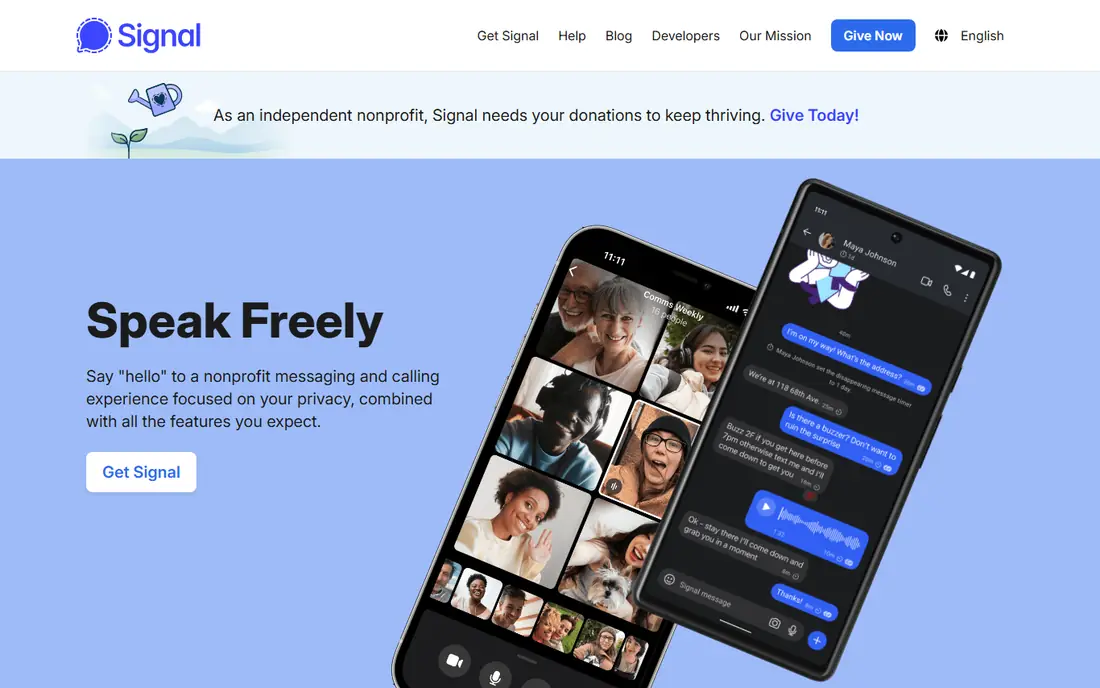
Signal is our pick for most people who leave Telegram for privacy reasons. Every message and call is end-to-end encrypted by default, not only in a special secret mode, and the nonprofit model means no ads in chats. Disappearing messages, usernames that hide your phone number from strangers, and a simple interface make it easy to use every day.
The trade-off is scale. Signal groups cap at 1,000 members, and there are no public channels or bot platforms to match Telegram. If your main need is a large broadcast audience, Signal will feel limiting. For friends, family, and small work groups, it is the cleanest replacement.
- End-to-end encryption by default
- Open-source apps and protocol
- Minimal metadata collection by design
- Group size is smaller than Telegram
- No channels or bots like Telegram
- File size limit is lower
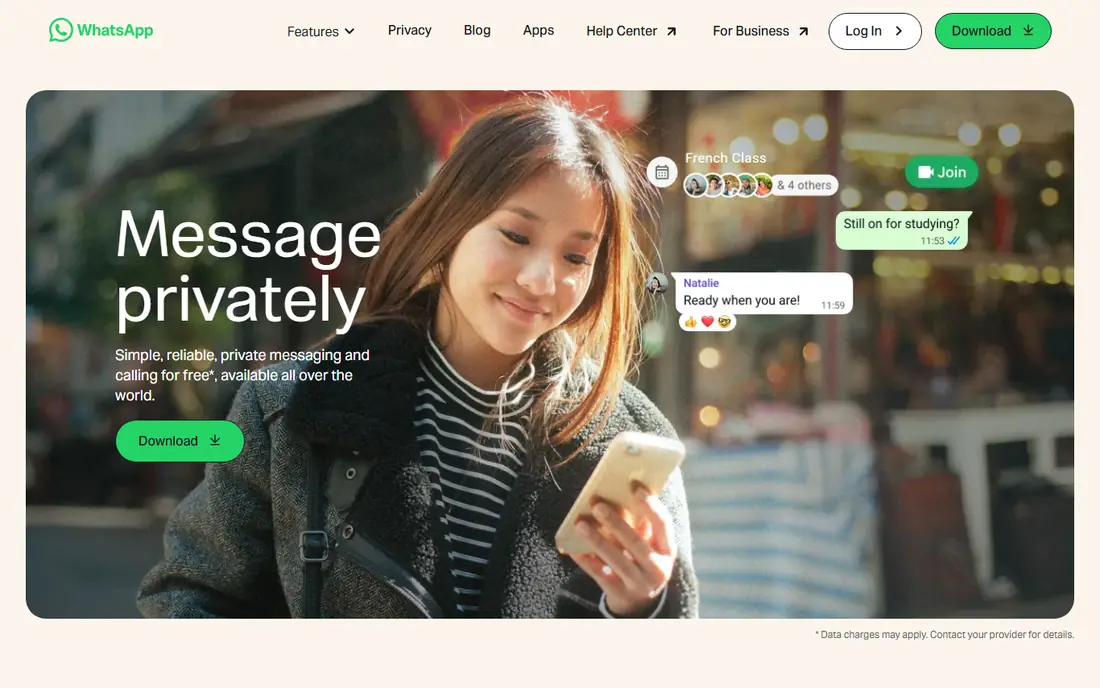
WhatsApp wins on reach. Most contacts already have it installed, so you do not need to convince a whole group to try a new app. Personal chats use end-to-end encryption by default, and it now includes channels, communities, and status updates for broader sharing.
Privacy is the honest catch. WhatsApp is owned by Meta, and while message content stays encrypted, metadata handling draws more scrutiny than Signal. It also lacks Telegram-style bots and very large groups. If ease of switching matters more than maximum privacy, WhatsApp is the practical choice.
- Huge existing user base
- End-to-end encryption for personal chats
- Voice, video, status, and channels
- Owned by Meta, with metadata sharing concerns
- Group limit is lower than Telegram
- Business features vary by region

Discord is the best fit if you used Telegram for communities rather than private chats. Servers organise people into channels, roles control who can post, and bots handle moderation, polls, and welcome messages. Voice channels let members drop in and talk without scheduling a call.
It is not a private messenger in the Signal sense. Discord messages are not end-to-end encrypted by default, so it suits public or semi-public groups better than sensitive one-to-one talks. Use Discord for your community, and keep private conversations in Signal or WhatsApp.
- Servers with channels, roles, and bots
- Low-latency voice and live video
- Strong community tools
- Messages are not end-to-end encrypted by default
- Can feel noisy for private chats
- Paid Nitro adds extras, not privacy
Slack replaces the work side of Telegram well. Channels keep projects separate, threads keep replies tidy, and integrations connect documents, calendars, and support tools. Admin controls, guest access, and compliance features suit teams that need order.
The free tier is the limit to check first, because older message history is restricted. Paid plans are priced per user, so a large casual group can get costly fast. Slack is a work tool first, so keep personal chats elsewhere.
- Channels, threads, and search built for work
- Wide app and workflow integrations
- Strong admin controls
- Free tier limits message history
- Paid pricing is per user
- Less suited to casual friends and family
Element is the choice for users who want control over where their messages live. It runs on Matrix, an open decentralised protocol, so you can pick a server, run your own, or bridge to other services. Encrypted rooms, spaces for groups, and voice and video calls cover most Telegram group needs.
That freedom comes with friction. New users must grasp servers and rooms, and the experience can differ between providers. Element suits technical teams, open-source communities, and organisations that want to avoid a single company controlling their chat.
- Built on the open Matrix protocol
- End-to-end encryption for rooms
- Choice of servers and clients
- Setup is more complex than Signal
- Experience varies by server
- Smaller mainstream user base
Threema stands out because you can register with an ID rather than a phone number. That helps users who want to keep their number private or use a messenger on a tablet without a SIM. Messages, calls, files, and polls are encrypted, and the app includes groups and distribution lists.
The barrier is adoption. Because Threema is paid, every contact must buy it, which slows a group move. It also lacks Telegram-scale public channels. For a small privacy-focused circle willing to pay once, it is a strong, calm alternative.
- No phone number needed to register
- End-to-end encryption by default
- Swiss company with clear privacy stance
- Paid app, so friends must buy it too
- Smaller user base
- Fewer bots and public channels
Wire began as a consumer messenger and now focuses more on secure team communication. It offers encrypted messaging, voice and video calls, file sharing, and guest rooms for outside collaborators. Admin tools help companies manage users and retention.
For personal use, Wire feels quieter than WhatsApp or Signal, because fewer friends use it. For a team that needs encrypted chat with admin control, it is a credible option. Check the current team pricing before rolling it out, since the free tier suits trials better than large teams.
- End-to-end encryption for messages and calls
- Business admin and compliance features
- Clear separation of personal and work accounts
- Free tier is limited for teams
- Smaller consumer community
- Paid team pricing adds up
Viber is a practical pick for international families and friends. It combines messaging, voice and video calls, groups, and channels, and Viber Out lets you call phone numbers for people who do not use the app. That mix helps when contacts live in different countries.
Viber does not match Signal on privacy by default across every feature, so check the encryption status for the chat type you use. Its US audience is smaller than WhatsApp, which can limit adoption. Where your contacts already use Viber, it is a smooth Telegram replacement.
- Free messaging and high-quality calls
- Viber Out for calling non-users
- Groups, channels, and stickers
- Encryption details vary by chat type
- Smaller US user base
- Some features are region-dependent
Session is for users who want messaging without an account tied to a phone number or email. It creates an ID on the device, routes messages through a decentralised network, and keeps the design focused on private chats and closed groups. That model appeals to journalists, activists, and privacy-minded users.
The trade-off is speed and polish. Delivery can be slower than Signal or WhatsApp, and the feature set is narrower. Session will not replace Telegram channels or bots, but for private conversations where anonymity matters, it is a distinct and honest option.
- No phone number or email needed
- Routes messages through a decentralised network
- Open-source client
- Slower message delivery at times
- Smaller user base
- Fewer features than mainstream apps
How we picked these
We compared official feature pages, privacy policies, and app store listings for messengers that are live in October 2026 and can replace at least one core Telegram use: private chats, groups, channels, or team communication. We excluded Telegram itself, and we excluded apps that are closed, region-blocked for US users, or limited to a single platform. We noted where encryption is default and where it is optional, because that distinction matters.
How to choose the right replacement
Start by listing what you actually used Telegram for. If it was private chats, choose Signal or Threema and invite your closest contacts first. If it was a large community, Discord or Element will handle channels, roles, and moderation better than a private messenger. If it was work, Slack or Wire will give you search, threads, and admin control.
Next, test the move with one group before you announce a switch. Check file limits, group caps, backup options, and if members can join without sharing a phone number. A messenger only works if your people use it, so a slightly less private app that everyone adopts often beats a perfect app that sits empty.
Frequently asked questions
What is the best telegram alternative for privacy?
Signal is the best telegram alternative for privacy for most people, because encryption is on by default and the nonprofit collects minimal metadata. Threema and Session are also strong if you want to avoid using a phone number. No app is fully private if contacts share screenshots or back up chats to an unencrypted cloud.
Are there alternatives to telegram for large groups?
Yes, Discord and Element handle large communities better than Signal, with channels, roles, and moderation tools. WhatsApp communities help for medium groups, but its group limit is far below Telegram. Check the current group cap on the official site before you move a very large audience.
What are the best telegram alternatives for business?
Slack and Wire suit business use, with admin controls, integrations, and searchable channels. WhatsApp Business suits customer messaging where clients already use WhatsApp. For sensitive internal talks, choose a tool with default encryption and clear data retention settings.
Is WhatsApp safer than Telegram?
For personal chats, WhatsApp uses end-to-end encryption by default, while Telegram only encrypts Secret Chats end-to-end by default. That makes WhatsApp safer for ordinary private messages in that specific sense. Signal remains safer than both on metadata and default encryption across all chats.
Can I use Telegram alternatives without a phone number?
Yes, Threema and Session let you register without a phone number, and Element lets you choose a server and username. Signal and WhatsApp still require a phone number to register, even though Signal usernames can hide it from other users. Check the signup flow before you promise contacts a number-free option.
Do these alternatives have channels like Telegram?
Discord servers, WhatsApp channels, Viber channels, and Element spaces offer broadcast-style options, but none matches Telegram channels exactly. Discord suits interactive communities, while WhatsApp channels suit one-way updates to followers. Test the format with a small audience before you move a large channel.
Sources
See where you really rank - block by block
ProMapRanker scans Google Maps across a grid of your service area. Simple monthly plans from $19, white-label on every plan.
Start freeKeep reading
 zoho inventory alternatives
6 Alternatives to Zoho Inventory, Compared on Price and Fit
Zoho Inventory alternatives: 6 tools compared on price, free plans and fit. Katana leads the list for manufacturers. Fit and flaws are laid out for each entry.
Read → zoho crm alternatives
Best Zoho CRM Alternatives (2026)
Need Zoho CRM alternatives? We compare 7 tools on cost, free access and who each suits. Every pick gets a straight assessment. Built for quick decisions.
Read → zelle alternatives
Best Zelle Alternatives in 2026
Compare the best Zelle alternatives for sending money to friends, paying sellers and moving funds abroad, with honest notes on fees, speed and safety in 2026.
Read →