 ProMapRanker
Best Tailscale Alternatives in 2026

Key takeaways
- NetBird and ZeroTier are the closest mesh-style matches, with direct peer connections and self-hosting options.
- Twingate and Cloudflare Zero Trust suit teams that want policy-based access to specific apps rather than a full network.
- Free tiers are real but small, so check user and device limits before you move a whole team.
- OpenVPN and Pritunl suit teams that already run their own servers and want full control over the setup.
Quick comparison
| Pick | Great for | Pricing starts at | Free tier | |
|---|---|---|---|---|
 NetBird | Self-hosted mesh networks | See website | Yes | Visit |
 ZeroTier | Virtual local networks | $18 per month | Yes | Visit |
 Twingate | App-level remote access | $5 per user per month | Yes | Visit |
 Cloudflare Zero Trust | Small teams on Cloudflare | $7 per user per month | Yes | Visit |
 OpenVPN | Self-run VPN servers | See website | Yes | Visit |
 Perimeter 81 | Policy-heavy business access | $8 per user per month | No | Visit |
 NordVPN Meshnet | Personal device linking | See website | Yes | Visit |
 Pritunl | Open source team VPN | See website | Yes | Visit |
 LogMeIn Hamachi | Small casual private networks | See website | Yes | Visit |
The best tailscale alternatives
These nine options cover mesh networking, hosted zero trust access, and classic self-run VPN servers. We focused on tools that are still maintained and that a small team can actually set up without a large IT department.
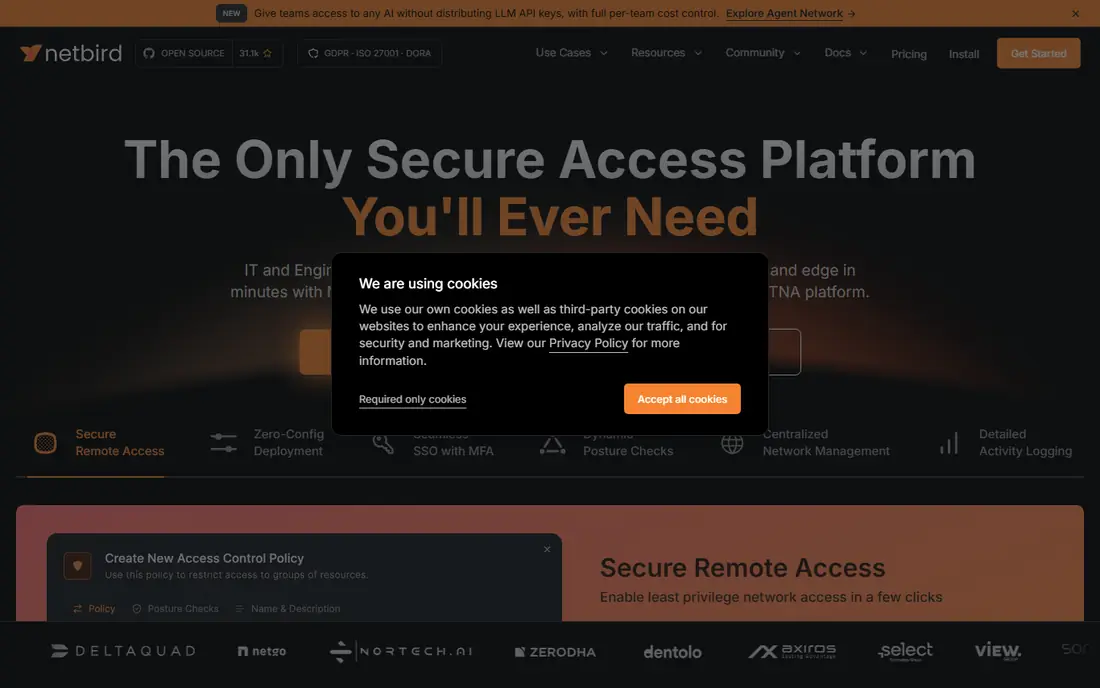
NetBird builds a private mesh between devices using WireGuard, so traffic can travel directly between peers instead of through a central server. That design keeps latency low for file transfers, remote desktops, and internal tools. The management console gives admins a single place to add users, set access rules, and see connected machines.
Our pick for teams that liked Tailscale but want a self-hosted path is NetBird. The open source core and the hosted cloud option mean you can start small and move hosting later if your needs change. The trade-off is that you still need to plan user limits and device counts, because paid plans are priced per user and extra machines can add up.
- WireGuard-based mesh networking
- Self-hosted option
- Identity provider sign-in with multi-factor authentication
- Paid tiers can get costly as users grow
- Smaller community than older VPN tools

ZeroTier creates a virtual network that makes distant devices behave as if they share a local switch. That matters when an app expects local discovery, broadcast traffic, or a flat address range. The hosted controller, called ZeroTier Central, handles network creation, device approval, routes, and policies.
We like ZeroTier for hobby networks, labs, and small offices with a modest device count. The free personal tier covers a small setup, and the paid Essential plan starts at a low monthly figure. Server-heavy teams should count devices carefully, because each extra device adds to the bill under the current pricing model.
- Virtual Layer 2 and Layer 3 networks
- Works across many platforms
- Free personal tier
- Pricing is device-based, which can surprise server-heavy teams
- Self-hosted controller setup takes more work
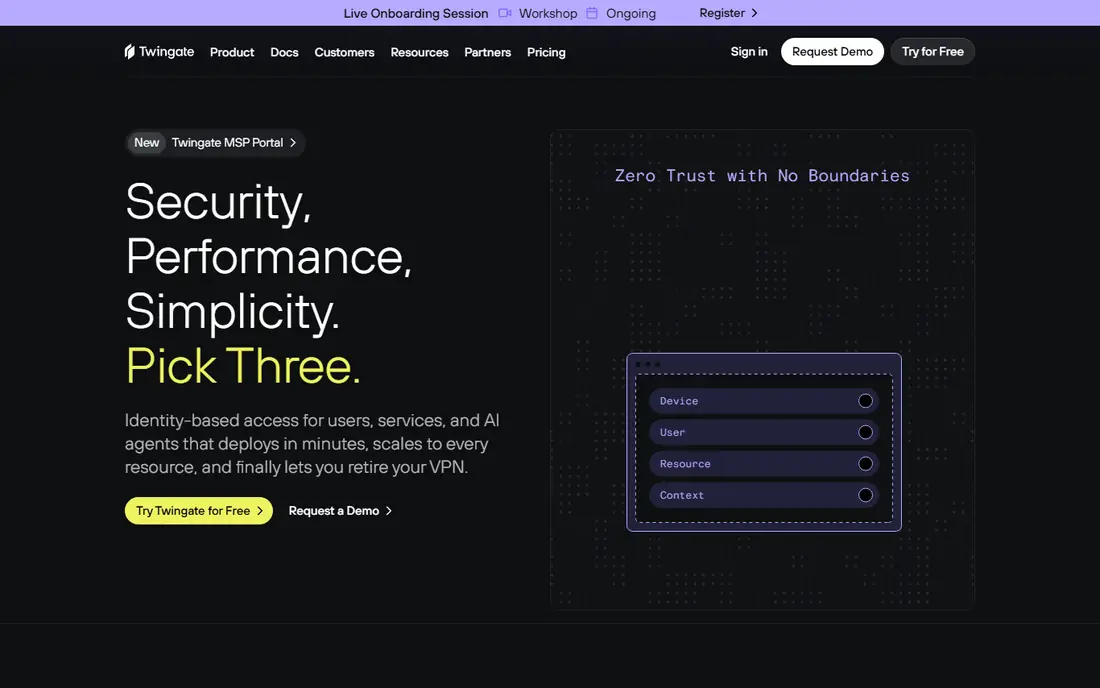
Twingate takes a different route from a mesh. Instead of joining every device to one network, it grants access to specific resources, such as an internal web app or a database, and keeps everything else closed. Connectors sit near the resource, and users connect through Twingate after signing in with their identity provider.
This model suits companies that give contractors or remote staff access to a handful of tools. It reduces the risk that one compromised laptop can reach the whole network. The catch is that teams expecting a general-purpose private network, with device-to-device traffic in every direction, may find the app-based model too narrow.
- Per-app access controls
- No open inbound ports
- Simple client for staff and contractors
- Not a full mesh network replacement
- Advanced tiers cost more per user
Cloudflare Zero Trust combines private application access, secure web browsing controls, and device posture checks under one dashboard. A small team can start on the free tier and protect internal apps without opening ports on a firewall. Traffic passes through Cloudflare edge locations, which can help performance for distributed staff.
We see this as a strong pick for teams that already use Cloudflare for websites or DNS. The learning curve is real, because access policies, tunnels, and device rules need careful setup. Teams that want a simple mesh with minimal policy work may prefer NetBird or ZeroTier instead.
- Generous free tier for small teams
- Strong identity and device checks
- Global edge network
- Paid features sit behind higher tiers
- Setup assumes comfort with DNS and access rules
OpenVPN is the classic self-hosted remote access tool. You run a server, issue client profiles, and staff connect with the OpenVPN client. Access Server adds a web admin interface, and OpenVPN Cloud offers a hosted version for teams that do not want to run servers themselves. The protocol itself is widely supported and well documented.
This is the right choice when control matters more than convenience. You own the server, the keys, and the logs policy. The downside is maintenance. Updates, certificates, user offboarding, and firewall rules are your job, and a small team without server experience can fall behind on that work.
- Long track record
- Flexible server and client options
- Wide platform support
- Setup and upkeep fall on your team
- No hosted mesh console in the classic model
Perimeter 81, now part of Check Point, blends cloud VPN access with zero trust policy controls. Admins create network segments, check device health before access, and filter DNS traffic for malware. Cloud gateways act like virtual office networks, which helps teams with staff in several regions.
We would shortlist this for mid-size companies with compliance needs and at least part-time IT support. The entry price looks modest, but gateway charges and higher tiers raise the total. Very small teams may find the minimum seats and added gateway fees hard to justify.
- Device posture checks
- Cloud gateways in many regions
- Firewall and DNS filtering options
- Five-seat minimum on entry plans
- Gateways add extra monthly cost
Meshnet is a feature inside NordVPN that links your own devices into a private network. You can reach a home computer, share files with a trusted contact, or route traffic through another linked device. It is free to use for linking devices, even though the wider NordVPN service is a paid VPN product.
This is a good fit for individuals and tiny teams who mainly need to reach their own machines. It is not a replacement for a managed business network with central policy, auditing, and team onboarding. If your need is personal remote access, Meshnet is simple and effective.
- Links personal devices into a private network
- File sharing between linked devices
- No extra server to run
- Built for personal use, not full team administration
- Requires a NordVPN account for full use
Pritunl is an open source VPN server platform with a web interface for managing users, servers, and organizations. It supports OpenVPN and WireGuard, works across cloud providers, and gives admins fine-grained control over routes and access. Teams can run it on their own infrastructure and keep data under their own control.
We like Pritunl for technical teams that want a self-hosted alternative with a cleaner admin view than a hand-built OpenVPN setup. The trade-off is still operational. You handle hosting, backups, updates, and monitoring. Teams without that capacity should look at a hosted option first.
- Open source server
- Multi-cloud and multi-server support
- Detailed user and server controls
- Interface assumes server skills
- Enterprise features are paid
Hamachi creates a small virtual private network between computers with minimal setup. Friends, small project groups, and hobby teams have used it for years to play games together or share files as if they were on one local network. There is no server to install, and clients connect through LogMeIn infrastructure.
This is not a business-grade zero trust platform, and we would not pick it for a company network with sensitive data. For a tiny, low-stakes group that wants a quick private link, it remains a simple option. Larger teams should choose a tool with central policy and proper user management.
- Very simple setup for small groups
- Works for gaming and small file sharing
- No server to configure
- Limited admin controls for business use
- Free tier covers only small networks
How we picked these
We compared official feature pages, pricing pages, and app documentation for tools that provide private device networking or controlled remote access. We kept only tools that are still offered and maintained in October 2026, and we favoured a mix of mesh networks, hosted zero trust services, and self-run servers. Where a vendor did not publish a clear starting price, we wrote See website rather than guessing.
What to check before you switch
Start by listing what Tailscale did for you. If you mainly linked personal devices, a simple tool like Meshnet or Hamachi may be enough. If you ran a team network with shared servers, a mesh tool or a hosted zero trust service will fit better. Count users and devices separately, because some vendors charge per user and others charge per device, and that difference changes the bill fast.
Access model and control
Decide if you need a full network or access to specific apps. A mesh gives devices broad reach, which is convenient but needs careful access rules. An app-based model limits each user to approved resources, which lowers risk but can feel restrictive for developers and IT staff. Check identity sign-in, multi-factor authentication, and device checks before you commit.
Hosting and upkeep
Self-hosted tools give you control and can lower licence costs, but they add server work. Hosted tools remove that work and usually add support, but you trust the vendor with your control plane. For a small team, hosted is often the safer choice. For a technical team with compliance needs, self-hosted may be worth the effort.
Cost traps to watch
Free tiers often cap users, devices, or networks. Paid plans may add gateway fees, per-device charges, or enterprise add-ons for single sign-on. Run a three-month cost estimate at your real user and device counts, not the smallest example on a pricing page. Check renewal terms and what happens when you exceed a tier limit.
Frequently asked questions
What is the best Tailscale alternative for a small team?
NetBird is our pick for most small teams, because it keeps the mesh model and offers both hosted and self-hosted options. Twingate is a better pick when you want staff to reach specific apps only, rather than a full network.
Are there free alternatives to Tailscale?
Yes. NetBird, ZeroTier, Cloudflare Zero Trust, OpenVPN, Pritunl, and Hamachi all offer free tiers or free editions, but each caps users, devices, or features. Check those caps against your real setup before you rely on a free tier for work.
What is the best alternative to Tailscale for self-hosting?
NetBird and Pritunl lead here. NetBird offers a self-hosted community edition with a mesh console, while Pritunl gives you a self-run VPN server with a web admin view. ZeroTier also allows self-hosted control, but setup takes more effort.
Is Twingate a direct replacement for Tailscale?
Not exactly. Twingate replaces the remote access part with per-app access, but it does not create the same general mesh network. Teams that need device-to-device traffic in all directions should test it carefully before switching.
Do these alternatives work on Windows, Mac, and Linux?
Most of the tools listed here support Windows, macOS, and Linux, plus mobile clients in many cases. Check the vendor download page for your exact platforms, because mobile and router support varies by product.
Sources
See where you really rank - block by block
ProMapRanker scans Google Maps across a grid of your service area. Simple monthly plans from $19, white-label on every plan.
Start freeKeep reading
 zoho inventory alternatives
6 Alternatives to Zoho Inventory, Compared on Price and Fit
Zoho Inventory alternatives: 6 tools compared on price, free plans and fit. Katana leads the list for manufacturers. Fit and flaws are laid out for each entry.
Read → zoho crm alternatives
Best Zoho CRM Alternatives (2026)
Need Zoho CRM alternatives? We compare 7 tools on cost, free access and who each suits. Every pick gets a straight assessment. Built for quick decisions.
Read → zelle alternatives
Best Zelle Alternatives in 2026
Compare the best Zelle alternatives for sending money to friends, paying sellers and moving funds abroad, with honest notes on fees, speed and safety in 2026.
Read →