 ProMapRanker
Best Sysdig Alternatives in 2026

Key takeaways
- Wiz, Orca and Cortex Cloud suit broad cloud security, with exposure graphs and posture management across AWS, Azure and Google Cloud.
- Aqua Security and Lacework FortiCNAPP suit container and Kubernetes estates that need lifecycle cover from build to runtime.
- Snyk, Trivy and Falco suit developer-led or open-source starts, with scanning and runtime detection at low or no licence cost.
- Runtime depth, agent needs and pricing model matter more than a CVE count, so test in-use context before you buy.
Quick comparison
| Pick | Great for | Pricing starts at | Free tier | |
|---|---|---|---|---|
 Wiz | Cloud exposure and risk graph | See website | Free trial | Visit |
 Aqua Security | Container lifecycle security | See website | Free trial | Visit |
 Palo Alto Cortex Cloud | Enterprise CNAPP breadth | See website | Free trial | Visit |
 Orca Security | Agentless cloud scanning | See website | Free trial | Visit |
 Snyk | Developer-led fixing | Free | Yes | Visit |
 Trivy | Free open-source scanning | Free | Yes | Visit |
 Falco | Open-source runtime detection | Free | Yes | Visit |
 Lacework FortiCNAPP | Behaviour-led cloud protection | See website | Free trial | Visit |
The best Sysdig alternatives
Sysdig is known for runtime security for containers and Kubernetes, built on Falco and extended with cloud security features. A replacement may need runtime depth, cloud posture, image scanning or all three. These eight tools cover that range, from open-source scanners to full cloud-native application protection platforms.
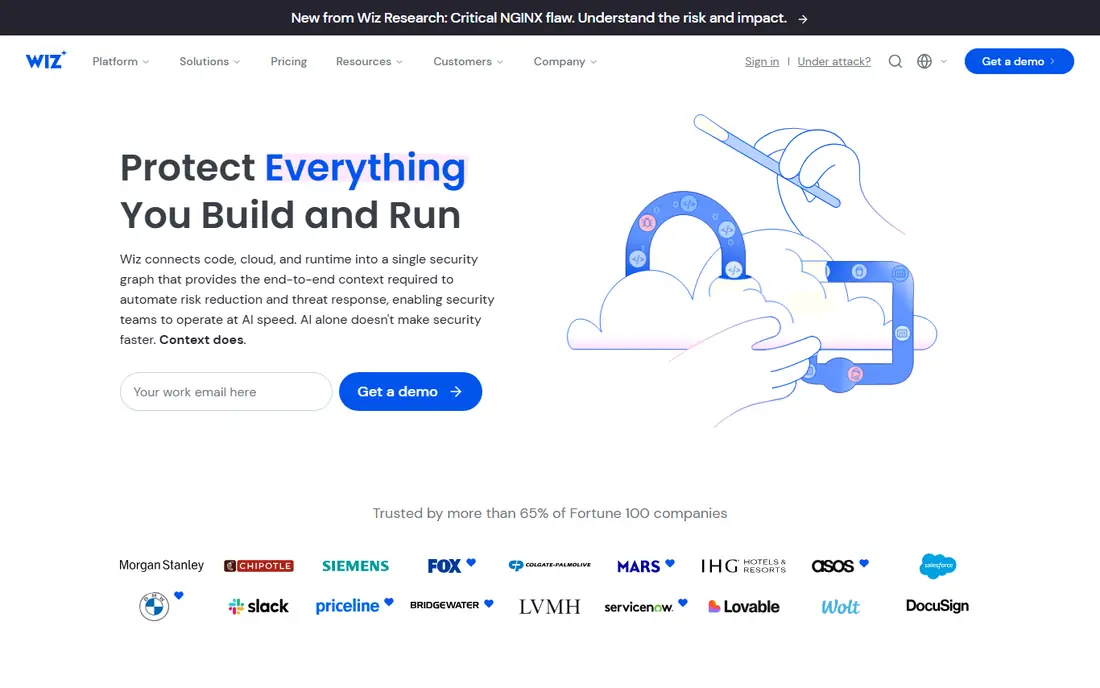
Wiz suits teams that want fast cloud visibility without deploying agents everywhere first. Its agentless scanning builds a graph of cloud resources, identities, vulnerabilities and exposures, so analysts can see which risks are actually reachable from the internet. That exposure context helps a team prioritise a short fix list instead of chasing every CVE in the estate.
Pricing is quote-based by cloud resource count, and enterprise costs can be high, so model your resource count honestly. Runtime detection has expanded, but teams that need deep Kubernetes runtime blocking should test Wiz Defend against Aqua or Sysdig-style runtime tools. For broad cloud risk clarity, Wiz is a leading alternative.
- Agentless cloud scanning
- Unified risk graph
- Fast deployment across clouds
- Quote-based pricing
- Runtime depth is growing, not yet deepest
- Cost follows resource count
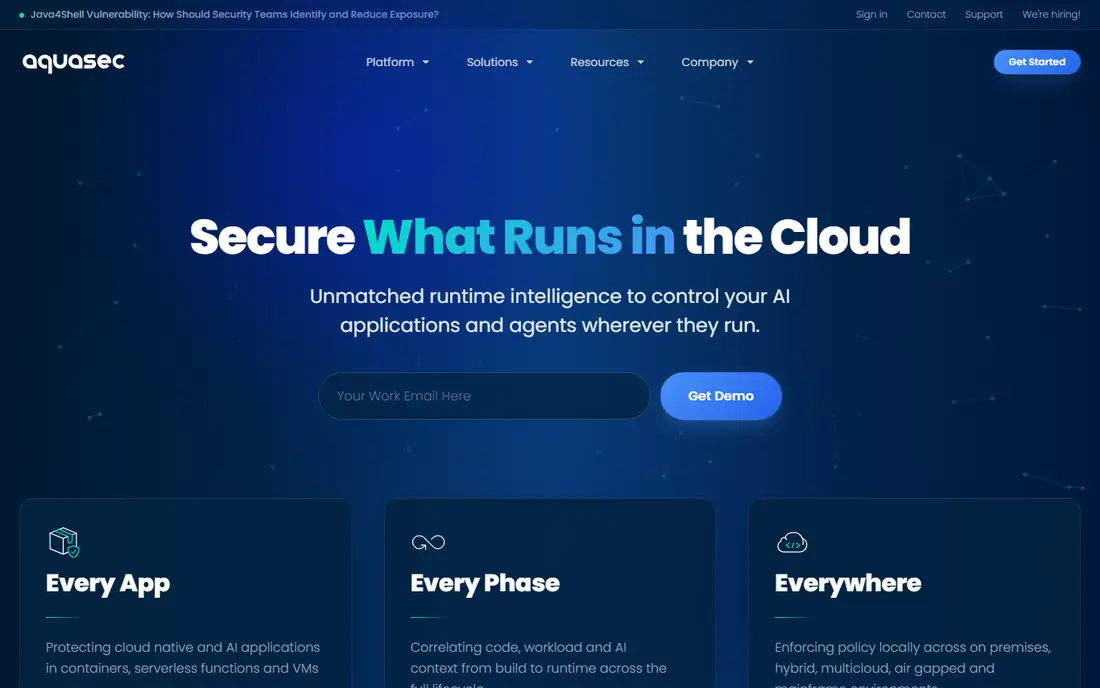
Aqua Security suits organisations whose estate is mainly containers and Kubernetes and who want security from build to runtime. It covers image scanning, CI and CD integration, admission control and runtime defence, with Trivy as its open-source scanning engine. That lifecycle view helps a team block a risky image before it runs, not just alert after deployment.
Enterprise pricing is quoted, and the platform can feel complex for a small team with a handful of clusters. Non-container workloads are also less central than in a broad CNAPP such as Wiz or Cortex Cloud. For a container-first estate, Aqua's depth across the lifecycle makes it a strong Sysdig alternative.
- Build to runtime container cover
- Trivy scanning roots
- Kubernetes and serverless support
- Quote-based enterprise pricing
- Can feel complex
- Non-container workloads are thinner
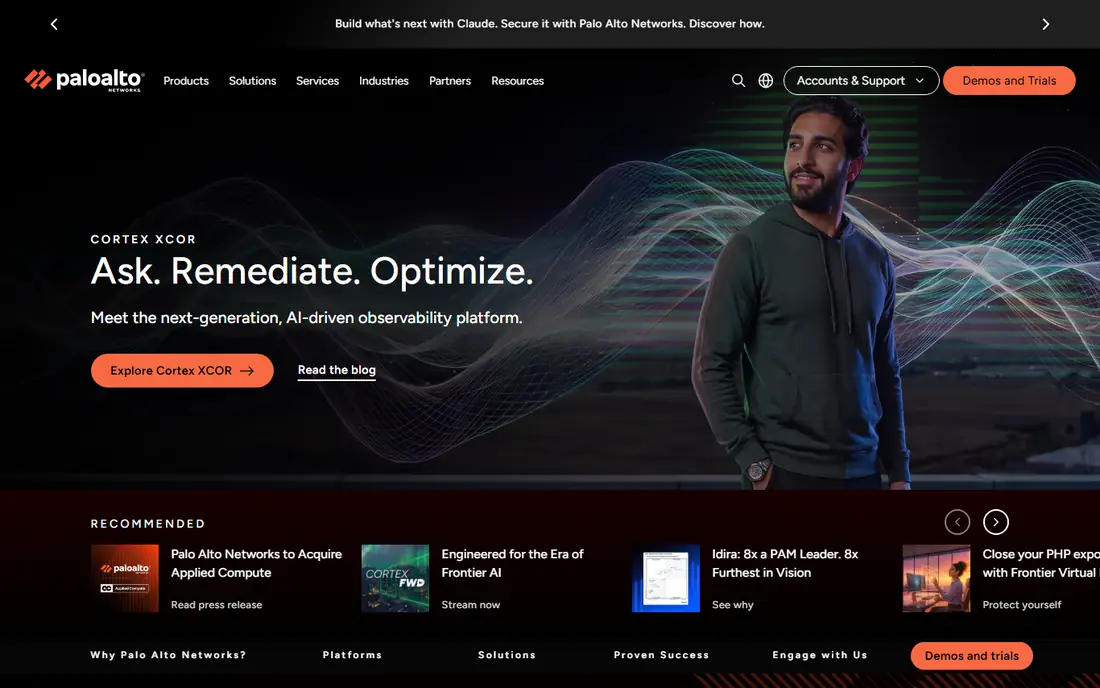
Palo Alto Cortex Cloud, formerly Prisma Cloud, suits large enterprises that need broad cloud-native application protection in one platform. It covers posture management, workload protection, runtime defence and code security, with deep Kubernetes runtime heritage from its Compute Edition roots. Compliance reporting also suits regulated teams that must prove controls across many accounts.
Credit-based pricing can be hard to model, since credits map to protected resources in different ways by module. The platform also rewards specialist skill, so a small team may find it heavy. For a Palo Alto shop or a large enterprise with strict compliance needs, Cortex Cloud offers the broadest alternative to Sysdig here.
- Broad CNAPP and runtime depth
- Strong compliance cover
- Palo Alto ecosystem fit
- Credit-based pricing complexity
- Needs specialist skill
- Large enterprise focus
Orca Security suits teams that want cloud visibility fast, without an agent rollout. Its agentless scanning reads cloud workloads, containers, Kubernetes pods and serverless functions from outside, then adds context so alerts show which risks matter most. That speed helps a team that needs a clear risk picture in days, not months.
Agentless scanning has limits for deep runtime behaviour, where agent-based options add depth, so test runtime needs separately. Pricing is quoted per compute asset or workload scanned, so model your asset count before comparing with Wiz or Cortex Cloud. For fast, agentless cloud risk clarity, Orca is a strong pick.
- Agentless-first deployment
- Fast setup
- Contextual alerts across clouds
- Quote-based pricing
- Runtime needs agent options
- Per-asset pricing varies
Snyk suits developer teams that want to find and fix vulnerabilities where they work, in code, open-source dependencies, containers and infrastructure as code. Its fix advice, including base-image upgrade guidance, helps developers close container issues without waiting for a security ticket queue. A free plan for individuals makes it easy to start on a single project.
Paid plans are metered by tests, projects or credits depending on tier, so a busy team should model test volume, not just seat count. Runtime protection is an add-on rather than the core, so a team that needs deep Kubernetes runtime blocking should pair Snyk with Falco or a runtime platform. For developer-led fixing, Snyk is a practical Sysdig complement or partial alternative.
- Developer-first workflow
- Fix advice for code and containers
- Free tier for individuals
- Per-developer and test limits on paid plans
- Runtime is an add-on
- Enterprise pricing is credit-based
Trivy is the best free starting point for container scanning. It is an open-source, single-binary tool that scans images, filesystems, repositories, infrastructure as code and Kubernetes resources, and it can produce software bills of materials. A team can add it to CI in a day and start blocking known vulnerable images without a vendor contract.
It does not provide runtime detection on its own, and it has no managed dashboard, alerting workflow or fix management without extra tooling. Triage, exception handling and reporting fall to your team. For a scanning floor, Trivy is excellent. For runtime security, pair it with Falco or a commercial runtime platform.
- Free and fast CLI scanning
- Images, filesystems, repos and SBOM support
- Single binary setup
- No runtime protection alone
- No managed dashboard by itself
- Triage is your job
Falco is the open-source runtime detection engine behind much of Sysdig's runtime approach, and it suits teams that want that detection without a commercial platform. It watches system calls and Kubernetes audit events, using rules to flag container escapes, suspicious process behaviour and policy violations. Because it is open source, a team can inspect rules and adapt them to its own workloads.
Running Falco well takes tuning, infrastructure and alert management, and a managed console must be added separately or built in-house. Alert volume can also grow fast without careful rule selection. For a team with platform engineering skill that wants runtime detection at low licence cost, Falco is the closest open-source alternative to Sysdig's runtime core.
- Open-source runtime detection
- Kubernetes threat rules
- EBPF-based visibility
- Needs tuning and operations
- No managed console alone
- Alert volume needs care
Lacework FortiCNAPP, now part of Fortinet, suits teams that want behaviour-based cloud protection across accounts, containers and Kubernetes. Its anomaly detection learns normal behaviour and flags deviations, which helps cut alert noise compared with a purely rule-based tool. Cover spans build time to runtime, with compliance and posture features for multi-cloud estates.
Pricing is metered by agent coverage and starter packs carry a significant annual minimum, so small teams should confirm entry cost early. A trial or assessment can help test signal quality before committing. For a team that wants behaviour-led detection inside the Fortinet ecosystem, Lacework FortiCNAPP is a credible Sysdig alternative.
- Behaviour-based anomaly detection
- Build to runtime cover
- Fortinet ecosystem fit
- Quote-based pricing
- Metered by agent coverage
- Trial scope needs checking
How we picked these
We compared official product pages and public 2026 container and cloud security comparisons for tools that cover Sysdig's main jobs: image scanning, runtime detection, Kubernetes security and cloud posture. We kept only tools that are live in October 2026 and that offer real scanning or runtime value, not just a dashboard. Prices are starting prices where a vendor publishes them, and we wrote See website where pricing is quoted by resources, assets or credits. We did not claim hands-on testing; our view comes from comparing public documentation and security fit.
What to check before you switch
Start with a scanning floor, then add context. Put Trivy or Grype in CI this week for free, then test which commercial tool cuts your CVE list to fixable, in-use issues. A tool that shows every CVE without runtime or exposure context will drown a small team, while a tool with in-use filtering or an exposure graph will focus the same team on reachable risk.
Test runtime behaviour on a real cluster, not just in a demo. Run a container escape attempt in a test environment, a cryptomining pattern and a policy violation, and check detection speed, blocking behaviour and alert clarity. Also confirm agent needs, data residency and pricing by resource count, since those three factors decide total cost and operational load.
Frequently asked questions
What is the best Sysdig alternative for Kubernetes runtime security?
Aqua Security, Cortex Cloud and Falco offer the strongest Kubernetes runtime depth here. Falco is free and open source, while Aqua and Cortex Cloud add managed consoles, policy enforcement and broader cloud cover.
What is the best Sysdig alternative for cloud posture?
Wiz and Orca Security lead for cloud posture and exposure clarity, with agentless scanning and risk graphs across AWS, Azure and Google Cloud. Cortex Cloud also offers broad posture cover for large enterprises.
Is there a free Sysdig alternative?
Yes. Trivy offers free container scanning and Falco offers free runtime detection, and Snyk offers a free tier for individuals. A free combination covers scanning and runtime detection, though you must run and tune the tools yourself.
Does Snyk replace Sysdig fully?
Not on its own. Snyk excels at developer-led scanning and fixing, while Sysdig's strength is runtime detection. Pair Snyk with Falco or a runtime platform if runtime blocking is a core requirement.
How much do Sysdig alternatives cost?
Trivy and Falco are free open-source tools, Snyk starts free for individuals, and enterprise platforms such as Wiz, Aqua, Cortex Cloud, Orca and Lacework FortiCNAPP are quote-based by resources, assets or credits. Model your cluster and cloud resource count before comparing prices.
Sources
See where you really rank - block by block
ProMapRanker scans Google Maps across a grid of your service area. Simple monthly plans from $19, white-label on every plan.
Start freeKeep reading
 zoro.to alternatives
Best Zoro.to Alternatives in 2026
We compare the best zoro.to alternatives in 2026, listing only legal licensed anime streaming services, from Crunchyroll to free options for fans today.
Read → zip alternatives
Best Zip Alternatives in 2026
We compare the best zip alternatives for buy now, pay later in 2026, covering pay-in-4 plans, fees, spending limits, and credit reporting options today.
Read → yesware alternatives
Best Yesware Alternatives in 2026
Compare the best yesware alternatives for sales email tracking, templates, and sequences, with current pricing and honest tradeoffs for small sales teams.
Read →