 ProMapRanker
Best Statsig Alternatives in 2026


Large teams with strict controls · Pricing starts at: See website
Key takeaways
- LaunchDarkly suits large teams that need strict controls, while GrowthBook suits teams that want flags and experiments tied to their own data warehouse.
- Flagsmith and Unleash are the strongest picks when self-hosting or open source code matters more than a hosted dashboard alone.
- PostHog is the best fit when flags, analytics, and session replay should live in one product, rather than in three separate tools.
- ConfigCat and DevCycle are good choices for smaller teams that want simple pricing and fast setup without a long sales process.
Quick comparison
| Pick | Great for | Pricing starts at | Free tier | |
|---|---|---|---|---|
| LaunchDarkly | Large teams with strict controls | See website | Yes | Visit |
 GrowthBook | Warehouse-based experiments | $40 per user per month | Yes | Visit |
 Flagsmith | Self-hosted flags and remote config | See website | Yes | Visit |
 Unleash | Self-hosted enterprise flags | See website | Yes | Visit |
 PostHog | All-in-one product analytics | See website | Yes | Visit |
 ConfigCat | Simple flags for small teams | See website | Yes | Visit |
 DevCycle | Developer-first flag workflows | See website | Yes | Visit |
 Optimizely | Rigorous experimentation at scale | See website | Yes | Visit |
 Harness FME | Flags inside delivery pipelines | See website | Yes | Visit |
The best Statsig alternatives
These tools replace the core Statsig job, which is controlled rollouts, targeted releases, and experiments, without forcing you to keep the same vendor. We compared official feature pages, pricing pages, and documentation for each tool, and we focused on what changes day to day for engineering and product teams.
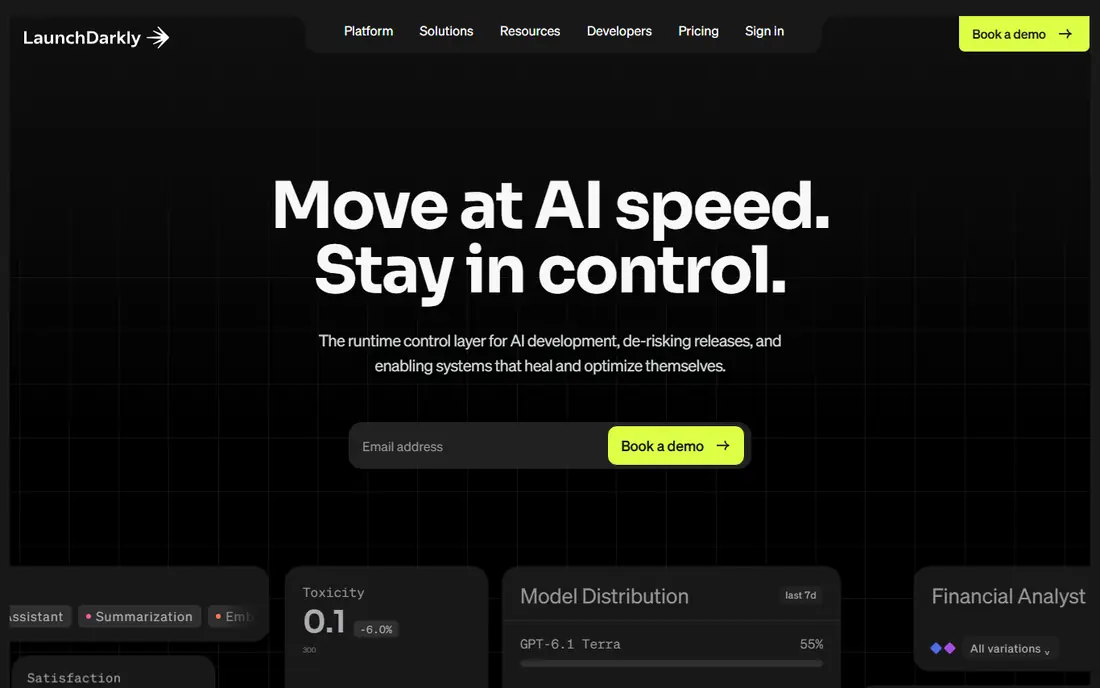
LaunchDarkly is the closest like-for-like replacement for teams that already run many flags across many services. Its targeting rules, segments, and scheduled changes let product teams hand a feature to a small group first, then widen the rollout as confidence grows. The platform also covers mobile, web, server, and edge use cases, which matters when one release touches several codebases at once.
The catch is cost and complexity. Small teams may find the admin model heavier than they need, and usage-based billing means a fast-growing product should model monthly active users before committing. For a regulated or large organization, that control is the point. For a three-person startup, it can feel like buying a control room to switch on one light.
- Broad SDK coverage
- Detailed targeting and audit controls
- Experimentation and guardrail features for risky releases
- Pricing can rise quickly with usage
- Setup and governance take real effort on small teams

GrowthBook stands out because it can analyze experiments using data already stored in your warehouse, instead of forcing all events through a vendor pipeline. That design appeals to data teams that want to keep a single source of truth and to run statistics they can inspect. The cloud version also gives small teams a low-friction way to start, with flags and experiments in the same place.
The trade-off is that the warehouse path is not instant. You need a supported warehouse, clean event data, and someone who can check metric definitions. Teams that want a fully managed analytics stack may prefer a hosted all-in-one tool. Teams that already live in their warehouse will find GrowthBook a natural and lower-cost fit.
- Open source core
- Warehouse-native experiment analysis
- Free Starter cloud plan for small teams
- Self-hosting adds operational work
- Warehouse setup takes time before first results
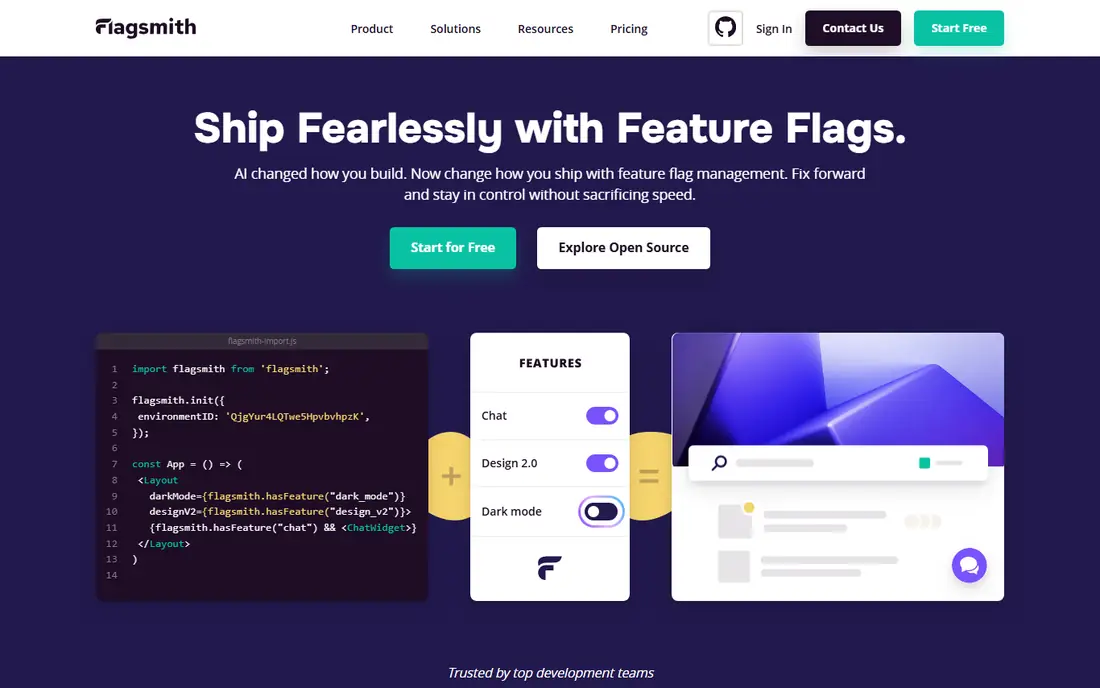
Flagsmith covers the everyday flag job well: boolean flags, percentage rollouts, user targeting, and remote configuration values that change app behavior without a new deploy. You can run it as a hosted service or in your own infrastructure, which helps teams with data residency rules or strict security reviews. Its pricing model, based on requests and seats, is also easier to forecast than some usage models.
Where it falls short is depth. If your main job is complex experiment statistics, holdouts, and layered tests, a dedicated experiment tool will give you more. For teams that mainly need safe releases, staged rollouts, and config control, Flagsmith gives a clean balance of control and price.
- Open source with hosted and self-hosted options
- Remote configuration beyond simple on and off flags
- Clear free tier for getting started
- Smaller integration ecosystem than the largest vendors
- Experimentation is less deep than dedicated experiment platforms
Unleash is built for organizations that want to own their flag infrastructure. The open source version covers core flagging, strategies, and environments, while paid tiers add governance, audit, and edge options. Its lifecycle views help teams spot flags that have been live too long, which is a common source of technical debt in older codebases.
The honest cost is operational. You are responsible for hosting, upgrades, and availability if you self-host, and that work should be counted in the total price. For teams with platform engineering capacity, that trade is worth it. For teams without that capacity, the hosted version or a simpler SaaS tool will be less work.
- Open source core with strong self-hosting
- Feature lifecycle and stale flag tools
- Enterprise governance options
- Running it well needs infrastructure time
- Some advanced features sit in paid tiers
PostHog appeals to product teams that are tired of stitching tools together. A flag can be tied directly to analytics events, an experiment, and a replay of what users actually did, without exporting data between vendors. That short loop makes it easier to answer why a rollout helped or hurt, not just whether a flag was on.
The downside is scope. If you only need a flag switch, PostHog brings a much larger product with it, and its usage-based pricing needs monitoring as traffic grows. Still, for startups and product-led teams that already want analytics, adding flags here can replace two or three separate subscriptions.
- Flags plus analytics, experiments, and session replay
- Generous free usage for flags
- Open source core
- A broad platform can feel heavy if you only need flags
- Pricing needs care as event volume grows
ConfigCat wins on clarity. Teams can create flags, target users by attribute, and roll out changes without learning a large platform. Its config delivery model suits web, mobile, and backend services, and the free tier lets a small team prove the workflow before paying. For a team that left a larger platform because it felt overbuilt, that simplicity is a real benefit.
The limit is what comes after the flag. You will still need your own analytics tool to judge experiments, and you will not get the same depth of statistical analysis as GrowthBook or Optimizely. If your goal is safe releases and remote config, ConfigCat is enough. If your goal is rigorous experiment design, pair it with an analytics tool or pick a different option.
- Clear and simple pricing model
- Fast SDKs and global delivery
- Unlimited seats on paid plans in vendor documentation
- No built-in analytics
- Experimentation features are thinner than dedicated experiment tools
DevCycle is designed around how developers already work, with code-level flag definitions and a dashboard that stays out of the way. That approach suits mobile-first teams and small product teams that want to ship behind flags without a heavy release process. Its targeting and rollout controls cover the common cases, including percentage rollouts and user segments.
The risk is scale and support depth. Very large organizations with complex compliance needs may find LaunchDarkly or Harness a safer choice, and the ecosystem of third-party guides is smaller. For a team that values a fast, developer-friendly setup over enterprise ceremony, DevCycle is a strong shortlist candidate.
- Git-based workflows for some teams
- Clean developer experience
- Mobile-friendly SDKs
- Smaller market presence than the leaders
- Enterprise governance is less proven at very large scale
Optimizely Feature Experimentation is a good match when experiments, not just flags, drive product decisions. It supports sequential and Bayesian methods, detailed targeting, and governance that large product organizations expect. The free Rollouts plan also lets teams start with basic flags and grow into paid experimentation when they are ready.
The main drawback is that simple flagging alone does not need this much platform. Pricing for larger use is often custom, so budget planning takes a sales conversation rather than a public price table. Teams that run frequent, high-stakes tests will get value from the depth. Teams that only need on and off switches should look at ConfigCat or Flagsmith first.
- Strong statistics and governance for experiments
- Free Rollouts plan for basic flags
- Broad enterprise controls
- Full pricing is quote-based for many teams
- The platform can be complex for simple flag use
Harness FME, formerly Split, fits teams that already think in pipelines. Flags live close to deployments, so a bad release can be rolled back or gated by metrics without a separate release ceremony. Its cleanup tools also help teams remove flags after a rollout, which reduces long-term maintenance work in the codebase.
The catch is fit. If you do not use Harness for delivery, you are buying a flag tool that shines brightest inside that ecosystem. Pricing is also less transparent than seat-based rivals, so larger teams should get a written quote tied to expected traffic. For Harness shops, though, the integration alone can justify the switch.
- Flags tied to continuous delivery pipelines
- Automated cleanup workflows
- Experimentation and guardrails for releases
- Best value comes with wider Harness adoption
- Pricing is often quote-based
How we picked these
We compared official feature pages, pricing pages, and documentation for each vendor, and we checked that each tool still offers feature flags and controlled rollouts in October 2026. We favored tools with a clear free tier or open source option, a current SDK set, and a distinct reason to choose them, rather than listing every flag tool with a similar feature page. We did not list Statsig itself, since this article is about alternatives to it.
What to check before you switch
Start with your pricing driver, not the feature list. Some tools charge by seats, some by monthly active users, and some by requests, and the cheapest option at 10,000 users can be the most expensive at 1,000,000. Next, check SDK coverage for every platform you ship, including mobile and edge, and check whether flags evaluate locally or need a network call on each check. Finally, plan migration in stages: run the new tool beside the old one, move low-risk flags first, and keep a written owner and removal date for every flag you create.
Frequently asked questions
What are the best Statsig alternatives?
LaunchDarkly, GrowthBook, Flagsmith, Unleash, and PostHog cover most needs. LaunchDarkly leads on enterprise controls, GrowthBook leads on warehouse-based experiments, and Flagsmith and Unleash lead on self-hosting. The right pick depends on team size, data setup, and pricing driver.
What is the best free alternative to Statsig?
GrowthBook, Flagsmith, Unleash, and PostHog all offer free tiers or open source versions. GrowthBook is a good free start for experiments, Flagsmith is a good free start for hosted flags, and Unleash is a good free start for self-hosting. Check request and seat limits before you rely on a free tier in production.
Is there an open source alternative to Statsig?
Yes. GrowthBook, Flagsmith, and Unleash all have open source cores you can self-host. Open source code gives you control over data and hosting, but it also means you own upgrades, monitoring, and availability unless you pay for a managed version.
Which alternative is best for experimentation?
GrowthBook and Optimizely are the strongest experiment-first options here. GrowthBook ties analysis to your warehouse, while Optimizely offers deep statistical methods and governance. PostHog is also strong when you want experiments tied directly to product analytics and replays.
Can I migrate flags from Statsig without downtime?
In most cases, yes, if you migrate in stages. Run both SDKs in parallel, recreate targeting rules and percentage rollouts in the new tool, and move low-risk flags first. Keep the old flags live until the new ones are verified in production, and remove the old code only after the rollout is stable.
Sources
See where you really rank - block by block
ProMapRanker scans Google Maps across a grid of your service area. Simple monthly plans from $19, white-label on every plan.
Start freeKeep reading
 zscaler alternatives
Best Zscaler Alternatives in 2026
Looking for zscaler alternatives? We compare 9 SASE and zero trust platforms on architecture, data protection, pricing, and fit for your network and team.
Read → zapier alternatives free
Best Zapier Alternatives Free in 2026
Nine automation tools for zapier alternatives free in 2026, all with genuinely free tiers, plus free plan limits, starting prices and upgrade paths explained.
Read → which platform is best for online reputation
Which Platform Is Best for Online Reputation in 2026
Wondering which platform is best for online reputation? We compare 8 review, listing, and response tools for small and multi-location businesses and agencies.
Read →