 ProMapRanker
Best Stat Alternatives in 2026

Key takeaways
- Stat here means the SEO rank tracking tool from Moz, known as Moz Stat, so every pick is a rank tracker or an SEO suite with rank tracking.
- Dedicated trackers such as AccuRanker and SE Ranking give more keywords per dollar than full suites for pure rank tracking.
- Ahrefs and Semrush suit teams that also need keyword research, audits and backlinks, not just positions.
- Google Search Console is free and useful as a baseline, but it reports average positions, not the daily tracked positions a paid tracker gives.
Quick comparison
| Pick | Great for | Pricing starts at | Free tier | |
|---|---|---|---|---|
 Ahrefs | All-in-one SEO research | $129 per month | No | Visit |
 Semrush | All-in-one marketing suite | $139 per month | No | Visit |
 AccuRanker | Fast, on-demand tracking | $224 per month | No | Visit |
 SE Ranking | Value for agencies | $129 per month | No | Visit |
 Wincher | Simple, low-cost tracking | $49 per month | No | Visit |
 Nightwatch | Local and AI visibility | €79 per month | No | Visit |
 SERPWatcher | Friendly suite tracking | $49 per month | No | Visit |
 ProRankTracker | Agency reporting | $99 per month | Yes | Visit |
 Advanced Web Ranking | Precise geo tracking | See website | No | Visit |
 Google Search Console | Free baseline data | Free | Yes | Visit |
The best stat alternatives
We compared official feature pages, pricing pages and public reviews for rank trackers live in October 2026. The list mixes full SEO suites and dedicated trackers, because Stat buyers range from enterprise teams to small businesses that only need positions.
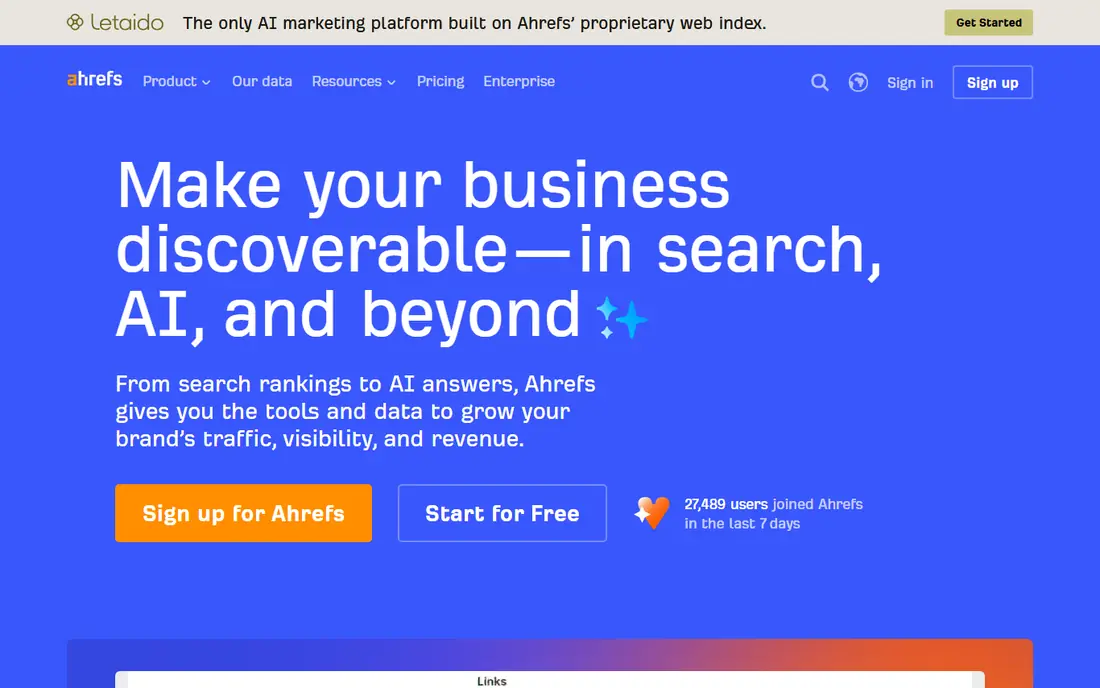
Ahrefs suits teams that already pay for SEO research and want rank tracking in the same suite. Rank Tracker sits alongside keyword research, site audits and backlink data, so a ranking change can be checked against links, content and SERP features without switching tools. That context helps explain a drop, not just report it.
Cost per keyword is the catch. Ahrefs costs more per tracked keyword than dedicated trackers such as SE Ranking or Wincher, and its entry plan covers fewer keywords. If rank tracking is your only job, a dedicated tracker will be cheaper. If research and tracking share one budget, Ahrefs is a strong suite pick.
- Rank Tracker inside a deep keyword and backlink suite
- SERP feature tracking
- Strong data for research and audits
- Higher cost per tracked keyword than dedicated trackers
- No free plan for Rank Tracker
- Weekly updates on some plans in comparisons
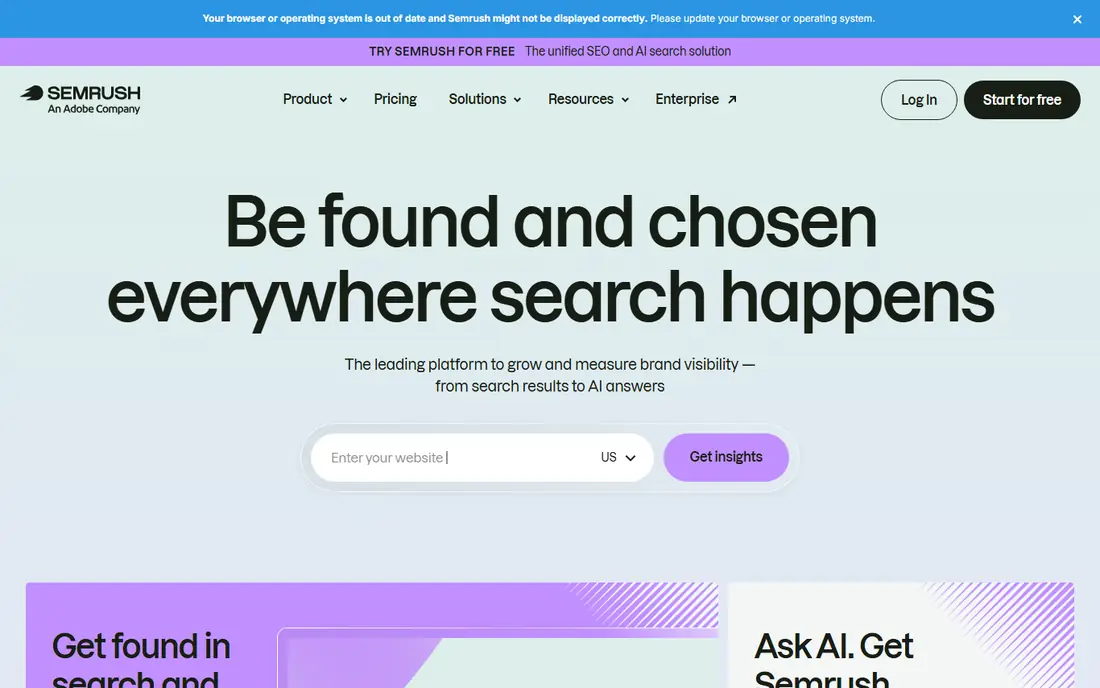
Semrush is the other major suite pick. Position Tracking covers daily positions across devices and locations, with competitor tracking, SERP feature data and reporting inside the wider Semrush platform. Teams that also use Semrush for content, paid search and social reporting get more value from one subscription.
Like Ahrefs, Semrush is expensive if you only need positions. Entry plans cover a limited number of keywords, and the full suite takes time to learn. Choose Semrush when tracking is one part of a broader marketing job, and choose a dedicated tracker when positions alone decide the purchase.
- Position Tracking inside a broad marketing suite
- Daily updates
- Local, mobile and desktop tracking with competitor data
- Suite pricing is high for tracking alone
- Keyword allowance on entry plans is limited
- Learning curve for new users
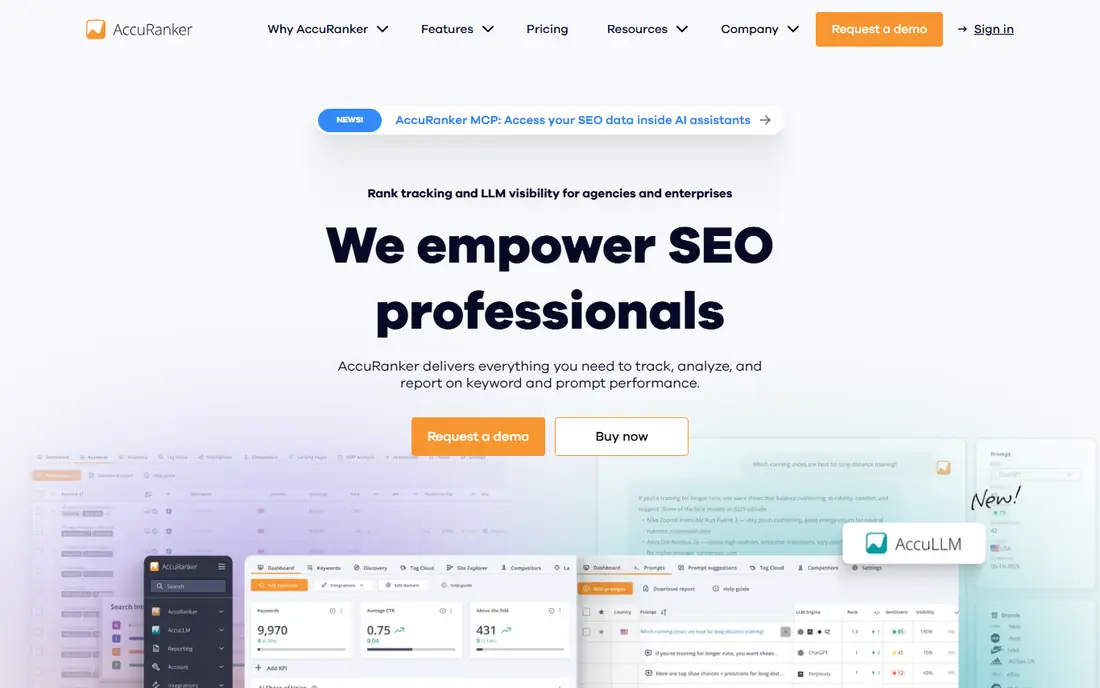
AccuRanker is built for teams that need fresh data fast. Daily updates plus on-demand refreshes let you check a keyword right after a client asks about it, rather than waiting for the next scheduled run. White-label reporting and integrations with Looker Studio and Search Console suit agencies that report under their own brand.
Price is the barrier. Entry pricing in recent comparisons sits at $224 per month for a 2,000-keyword tier, which is steep for a small site. AccuRanker fits agencies and larger teams where speed and reporting justify the cost. Small businesses should compare Wincher or SE Ranking first.
- Daily and on-demand keyword refreshes
- Fast data for client reporting
- White-label reports and integrations
- High entry price
- Keyword-based pricing rewards careful list design
- Less research depth than full suites
SE Ranking is a value pick for agencies and mid-market teams. It offers daily rank tracking down to zip-code level, white-label reports, and a wider SEO suite for audits and keyword research, at a price below Ahrefs and Semrush for many keyword volumes. That balance makes it popular with agencies that track many clients.
Check the plan details carefully. Keyword allowances, update frequency and AI visibility features vary by tier, and some AI tracking sits behind an add-on. If your keyword list fits the entry plan and you need agency reporting, SE Ranking is hard to beat on value.
- Daily tracking with zip-code level locations
- White-label reporting
- Suite tools for audits and research at a lower price than larger suites
- Entry plan keyword allowance needs checking against your list
- AI tracking features may need an add-on
- Interface takes time to learn
Wincher suits small businesses and freelancers who want positions without suite complexity. The interface is simple, daily tracking is standard, and entry pricing from $49 per month keeps the cost low for a modest keyword list. Ranking history helps you spot trends without building custom reports.
The limit is depth. Wincher does not offer the research, audit and backlink depth of Ahrefs or Semrush, and its AI search tracking is less clearly documented than rivals. If you need simple, affordable tracking and you already use other tools for research, Wincher is a good fit.
- Simple interface for daily tracking
- Low entry price
- Up to two years of ranking history on some plans
- Fewer research and audit features than suites
- AI Overview tracking is not clearly documented
- White-label options are limited
Nightwatch is a strong all-round tracker for local SEO and AI visibility. It tracks rankings down to postcode level, monitors AI search surfaces alongside traditional positions, and offers white-label reporting for agencies. That combination suits teams whose clients care about local packs and AI answers, not just classic blue links.
Pricing in euros is a minor friction for US buyers, and Nightwatch is a tracker first, not a full suite. Audit and content tools are thinner than Semrush or Ahrefs. If local and AI visibility drive your reporting, Nightwatch deserves a trial. If you need a full suite, pair it with a research tool.
- Daily tracking down to postcode level
- AI search visibility monitoring
- White-label reporting for agencies
- Priced in euros, which adds conversion for US buyers
- Site audit and content features are thin
- Entry tier keyword limits need checking
SERPWatcher, part of Mangools, is the friendly pick for freelancers and small teams. It presents rankings clearly, tracks daily or weekly depending on plan, and comes bundled with Mangools keyword research, SERP analysis and other tools. That bundle keeps the total cost low for a small SEO toolkit.
Keyword limits are the catch. Entry plans cover a modest number of keywords, and white-label reporting is limited compared with agency trackers. If you track a small set of keywords and want a pleasant suite, SERPWatcher fits. If you track thousands of keywords for clients, a dedicated tracker will scale better.
- Simple, friendly interface inside Mangools
- Daily or weekly tracking by plan
- Bundled with keyword research and other Mangools tools
- Keyword allowance on entry plans is modest
- White-label reporting is limited
- Less depth than dedicated agency trackers
ProRankTracker is the report builder's tracker. White-label reports, separate desktop, mobile and local tracking, and deep report customization have made it an agency staple. A free tier covers a small number of terms, which is genuinely useful for a tiny site or a trial.
Term math is the warning. Every location and device variant counts as a term, so a 1,000-keyword campaign can become several thousand terms quickly. The interface also feels older than newer rivals. If reporting depth matters most and you do the term math first, ProRankTracker remains a solid agency choice.
- Free tier for very small tracking needs
- Detailed white-label reports
- Separate desktop, mobile and local tracking
- Term-based pricing can inflate costs
- Interface feels dated next to newer trackers
- Every location and device variant counts as a term
Advanced Web Ranking suits large agencies that need precise geo-targeting. Tracking down to GPS coordinates helps teams that report rankings for many locations, and its reporting tools support client work at scale. It has a long track record as a dedicated tracker, which counts for agencies that need stable data.
Pricing clarity is weaker than for some rivals, so request a quote for your keyword and location volume before comparing. Setup also takes more time than a simple tracker. Choose Advanced Web Ranking when geo precision and agency reporting outweigh the appeal of a simpler interface.
- Tracking down to GPS coordinates
- Strong reporting for large agencies
- Long history in rank tracking
- Pricing is not as clearly published as some rivals
- Interface and setup take time
- Suite features are narrower than Ahrefs or Semrush
Google Search Console is not a replacement for a paid tracker, but every site owner should use it alongside one. It is free, it comes from Google, and it shows impressions, clicks and average position for queries that drove traffic. That baseline helps you verify whether a paid tracker and Google agree on trends.
The limits are clear. Search Console reports average positions over time, not a daily tracked position for a chosen keyword and location, and it offers no competitor tracking or client-ready white-label reports. Use it as a free check on paid data, not as your only rank tracker.
- Free and official Google data
- Shows impressions, clicks and average position
- Useful for verifying paid tracker data
- Reports average positions, not daily tracked positions
- No competitor tracking
- No white-label client reports
How we picked these
We compared official feature pages, pricing pages and public reviews for rank trackers live in October 2026. We kept only tools that track search positions over time, and we left out Moz Stat itself. We treated published prices as the most reliable figures and marked unclear pricing as See website, because keyword allowances and update frequency change the real cost.
How to compare rank trackers fairly
Compare cost per keyword at your volume, not headline price alone. A $49 plan with 500 keywords and a $129 plan with 2,000 keywords are very different deals once your list grows. Check update frequency, device split, location granularity and whether location and device variants count as extra keywords or terms.
Run a short trial with the same keyword list in two tools, then compare positions against Search Console average position over the same period. No vendor publishes an independent accuracy test, so your own sample check matters more than a marketing claim. Pick the tracker whose reports your clients or team actually read, because an unread tracker is wasted money.
Frequently asked questions
What is Moz Stat?
Moz Stat is Moz's enterprise SERP tracking product for large SEO teams, separate from Moz Pro rank tracking. It focuses on large-scale, daily SERP data and reporting. The tools in this list cover the same job at a range of prices, from free Search Console data to enterprise suites.
Which Stat alternative is cheapest?
Wincher and SERPWatcher are among the cheapest paid picks in this list, both from $49 per month, while Google Search Console is free. The cheapest credible tracker depends on keyword count: a small list fits Wincher, while a large list may be cheaper per keyword on SE Ranking.
Is AccuRanker worth the price?
AccuRanker is worth it for agencies and teams that need fast, on-demand refreshes and polished white-label reports. For a small site with a modest keyword list, its entry price is hard to justify against Wincher or SE Ranking. Judge it on reporting time saved, not on features alone.
Do rank trackers track AI Overviews?
Many do, in different ways. Ahrefs, Semrush, AccuRanker and Nightwatch report AI Overviews or AI search visibility, while SE Ranking offers some AI tracking as an add-on. Wincher's pages do not clearly document AI Overview tracking. Check the current feature page before you buy for AI visibility.
How many keywords should I track?
Track the keywords that drive decisions: core commercial terms, local terms and a set of supporting terms per page. Tracking thousands of low-value terms raises cost without improving decisions. Start with a focused list, review it quarterly, and expand only when a new page or market needs coverage.
Can I use Google Search Console instead of a paid tracker?
Search Console is a good free baseline, but it does not replace daily tracked positions, competitor data or client reports. Most teams use both: Search Console for official Google data, and a paid tracker for daily positions, locations and reporting. That combination catches errors in either source.
Sources
- https://ahrefs.com
- https://www.semrush.com
- https://www.accuranker.com
- https://seranking.com
- https://www.wincher.com
- https://nightwatch.io
- https://mangools.com
- https://www.proranktracker.com
- https://www.advancedwebranking.com
- https://search.google.com/search-console
- https://www.spotsaas.com/blog/best-rank-tracker-tools
- https://nightwatch.io/blog/10-best-keyword-rank-trackers/
See where you really rank - block by block
ProMapRanker scans Google Maps across a grid of your service area. Simple monthly plans from $19, white-label on every plan.
Start freeKeep reading
 zyte alternatives
Best Zyte Alternatives in 2026
These zyte alternatives cover managed scraping APIs, proxy networks and no code tools for lawful collection from your own or consented sources only in 2026.
Read → zerto alternatives
Best Zerto Alternatives in 2026
Compare the best zerto alternatives for disaster recovery and replication, with recovery targets, cloud options and honest trade-offs for teams in 2026.
Read → zerofox alternatives
Best ZeroFox Alternatives in 2026
We compared 9 zerofox alternatives for brand protection, phishing takedowns, dark web monitoring, and social impersonation, with clear coverage notes.
Read →