 ProMapRanker
Best Spark Hire Alternatives in 2026

Key takeaways
- HireVue and VidCruiter suit high-volume and regulated hiring, but both are quote-based and need a sales conversation.
- Willo and Hireflix give smaller teams affordable one-way interviews, from $59 per live role and $75 per month.
- Hirevire starts at $39 per month billed annually, making it the budget pick for multi-format async screening.
- Jobma and interviewstream cover live and one-way interviews in one tool, which Spark Hire users often want to keep.
- Get candidate consent before recording, tell candidates how video and any AI scoring will be used, and keep a human in every hiring decision.
Quick comparison
| Pick | Great for | Pricing starts at | Free tier | |
|---|---|---|---|---|
 HireVue | High-volume enterprise screening | See website | No | Visit |
 VidCruiter | Compliance-heavy structured hiring | See website | No | Visit |
 Willo | Occasional async screening by role | $59 per live role per month | Free trial | Visit |
 Hireflix | Simple one-way interviews | $75 per month | Free trial | Visit |
 Jobma | Live and one-way in one tool | See website | No | Visit |
 Hirevire | Budget multi-format screening | $39 per month | Free trial | Visit |
 Interviewer.AI | AI-scored one-way interviews | See website | Free trial | Visit |
 interviewstream | Regulated-sector video interviewing | See website | No | Visit |
 Talview | Video plus assessments and proctoring | See website | No | Visit |
The best Spark Hire alternatives
Video interviewing should save time for candidates and hiring teams without turning screening into a black box. Spark Hire itself is not listed here, because these are alternatives to it. The tools below split into one-way interview platforms, live interview tools, and combined platforms, and the right choice depends on volume, compliance needs, and whether you also need live interviews. On fair hiring, record only with clear candidate consent, explain any automated scoring, allow candidates to request human review, and do not use video tools to make final hiring decisions on their own.
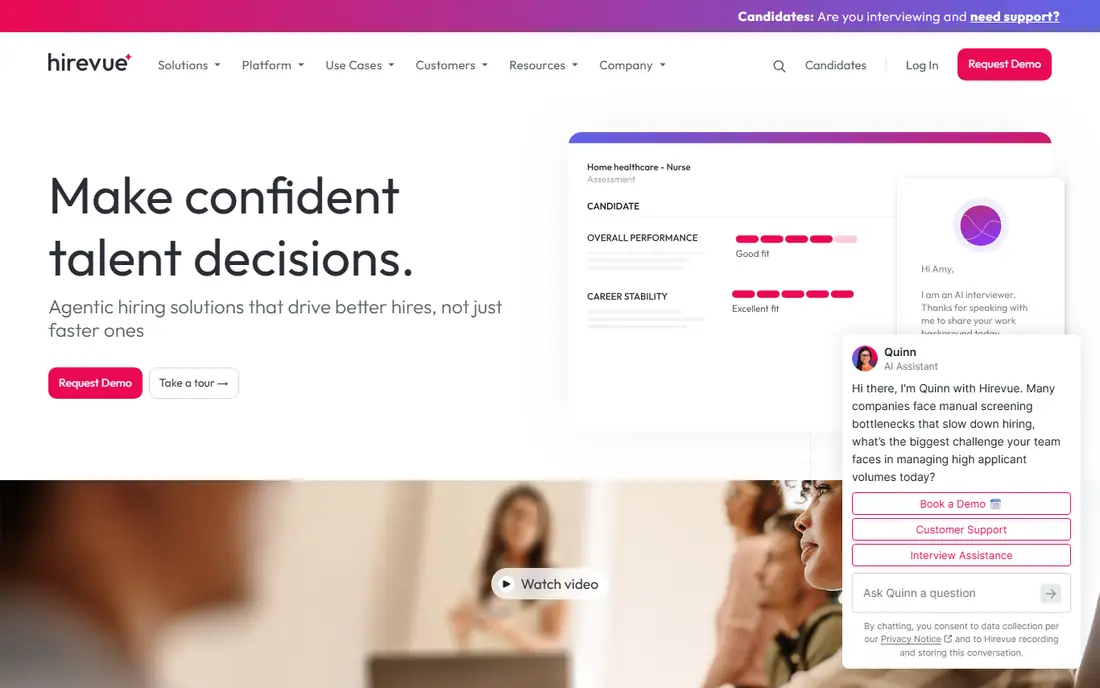
HireVue is the enterprise standard for high-volume screening, used by large employers hiring hundreds or thousands of candidates for similar roles. Structured interviews, assessments, and scheduling sit in one platform, and integrations with major applicant tracking systems keep candidate data moving without manual exports. For campus, retail, and contact center hiring at scale, that depth matters.
The cost and complexity are real barriers. Pricing is quote-based, with published comparisons citing enterprise floors well above small-team budgets, and implementation takes planning. Small and mid-sized teams should only shortlist HireVue if volume or compliance requirements genuinely demand it.
- Built for large-scale screening
- Structured hiring workflows
- Strong enterprise integrations
- Quote-based pricing with a high enterprise floor
- Complex implementation
- Overkill for small teams
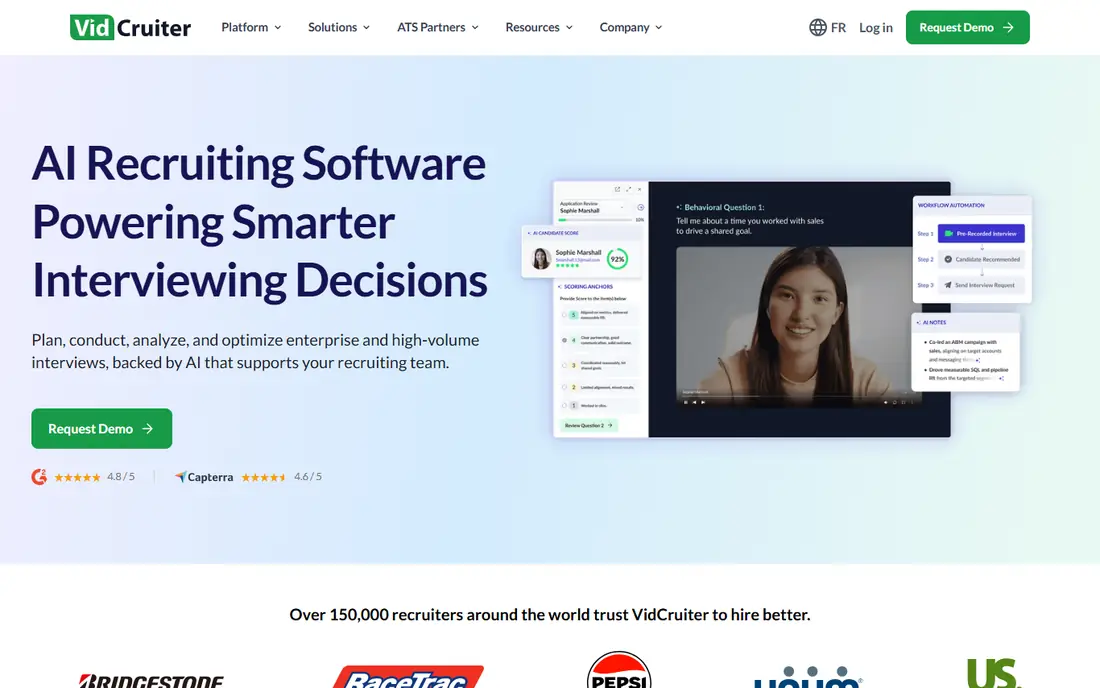
VidCruiter suits organizations where hiring must be structured, documented, and defensible. Recorded and live interviews, scorecards, panel workflows, and customizable stages help regulated employers apply the same process to every candidate. That structure also helps hiring managers compare candidates fairly instead of relying on unstructured impressions.
Setup is the trade-off. VidCruiter adapts to complex workflows, which means implementation takes longer than a simple one-way tool. Teams that need that control will find the effort worthwhile. Teams hiring a handful of roles a year will likely prefer a simpler, published-price option.
- Highly customizable structured workflows
- Live and recorded interviews
- Strong fit for regulated employers
- Quote-based pricing
- Setup takes time
- Interface can feel complex for small teams
Willo is a strong pick for teams that hire in bursts rather than continuously. Lite costs $59 per live role per month, so a company with two open roles pays far less than it would on a flat monthly plan. Candidates record answers on their own schedule, and hiring teams review with AI-assisted scoring that is meant to support, not replace, human judgment.
The main limit is live interviews. Willo does not offer them, so teams that also need live video calls must use a second tool. If your process is mostly async screening with human review, Willo's per-role model is refreshingly fair.
- Pay per live role, no long contract on Lite
- AI-assisted scoring against your own criteria
- Simple candidate experience
- No live interview support
- Higher tiers are needed for advanced features
- Per-role pricing rises with many open roles
Hireflix keeps one-way interviewing simple. Plans start at $75 per month billed annually, with unlimited positions and responses on that tier, which suits small teams with many open roles but low hiring volume per role. Setup is fast, candidates get a straightforward recording experience, and reviewers can share notes without a large platform to learn.
It does not try to be an all-in-one hiring suite. There are no live interviews and no built-in skill tests, so teams that need those features should look at Jobma or interviewstream instead. For lean teams that only need async screening done well, Hireflix is a solid value choice.
- Simple one-way interviews with unlimited positions on paid plans
- Clear entry price
- Fast setup
- No live interviews
- No native skill testing
- Higher plans needed for larger teams
Jobma covers both sides of video interviewing: recorded one-way interviews for screening, and live interviews for later stages, plus skill tests and an AI interviewer option. Multi-language support helps companies hiring across countries, and the combined platform avoids juggling two vendors for early and late-stage interviews. That breadth is why many Spark Hire users consider it first.
Pricing is quote-based, which makes early budgeting harder than with Willo or Hireflix. Ask for a quote based on interview volume, languages, and whether you need live interviews, tests, or AI features. If you need all of those in one bill, Jobma is worth the sales conversation.
- Live and recorded interviews in one platform
- Multi-language support
- Skill tests and AI interviewer options
- Quote-based pricing
- Feature depth varies by plan
- Interface takes time to learn
Hirevire is the budget pick, starting at $39 per month billed annually for small teams screening up to 100 candidates a month. Candidates can answer by video, audio, or text, which helps candidates with different devices, bandwidth, or accessibility needs. Agencies also use it for screening up to larger candidate volumes on higher plans.
It will not match HireVue or VidCruiter for enterprise workflow depth, and live interviewing is not its strength. For small teams that want async screening without a large monthly bill, Hirevire delivers the core job at a price few rivals match.
- Lowest entry price in this list
- Video, audio, and text answers
- Good for small teams and agencies
- Smaller feature set than enterprise platforms
- Live interviews are not the focus
- Support and integrations are lighter
Interviewer.AI appeals to teams that want a scored shortlist quickly. One-way video interviews come with AI scoring and an AI interviewer option, which can help recruiters prioritize which candidates to review first. Structured questions keep the process consistent across candidates, which supports fairer comparisons than free-form chats.
Treat AI scores as a sorting aid, not a hiring decision. Tell candidates that scoring is used, explain what it measures, and keep human review before any rejection or offer. Pricing also varies between monthly and annual billing in published comparisons, so confirm the current figure before budgeting.
- AI scoring on every answer
- One-way video plus AI interviewer
- Structured question sets
- Pricing varies by billing period, so confirm current plans
- AI scores need human oversight
- Not a live interview platform
interviewstream, spelled as one word in its brand name, focuses on regulated sectors where hiring records, consistency, and compliance matter as much as speed. It offers both live and recorded video interviews, with workflows designed for healthcare, finance, government, and other controlled environments. That focus shows in documentation, support, and process controls.
Pricing is quote-based and setup is enterprise-oriented, so small teams should expect a longer sales and implementation cycle. For regulated employers, that depth is the reason to choose it. For general small-business hiring, a simpler published-price tool will be faster and cheaper.
- Purpose-built for regulated industries
- Live and recorded interviews
- Strong compliance focus
- Quote-based pricing
- Enterprise-oriented setup
- Smaller teams may find it heavy
Talview combines video interviews with skills assessments and proctored testing, which suits campus hiring, technical roles, and high-volume programs where a video alone is not enough. Candidates can complete interviews and assessments in one flow, and recruiters get a fuller picture before inviting candidates to live stages. That combination reduces tool sprawl for large hiring programs.
The platform is enterprise-oriented, with quote-based pricing and a setup process to match. Teams that only need simple one-way video will find it heavier than Hireflix or Willo. Teams that need tests, proctoring, and video together should put Talview on the shortlist.
- Combines video interviews with assessments and proctoring
- Good for high-volume campus and technical hiring
- Strong enterprise support
- Quote-based pricing
- Assessment focus may be more than simple screening needs
- Implementation takes planning
How we picked these
We compared official product pages and recent video interview comparisons for platforms that offer one-way video, live video, or both as a core product. We excluded Spark Hire itself, and we excluded general applicant tracking systems whose video features are only a minor add-on. Prices are entry figures where vendors publish them, and we used See website where pricing is quote-based or varies by billing period.
What to check before you switch
Start with consent and fairness, because video hiring carries responsibilities that a simple form does not. Tell candidates in plain language that video will be recorded, how long it will be kept, who will view it, and whether any automated scoring is used. Offer an alternative route for candidates who cannot record video, and keep a human reviewer in every decision, especially rejections.
Next, test the candidate experience on a phone with a weak connection, since many candidates apply from mobile devices. Check recording limits, retake policy, caption support, and what happens if a recording fails midway. A tool that works well on a recruiter's laptop but frustrates candidates will cost you good applicants.
Finally, price by interviews completed, not by seats alone. Check candidate caps, live interview limits, storage retention, and integration costs with your applicant tracking system. Run a pilot with one real role, measure time to shortlist and candidate completion rate, and only then migrate the rest of your hiring.
Frequently asked questions
What is Spark Hire used for?
Spark Hire provides one-way and live video interviews for hiring teams, letting candidates record answers on their own schedule or join live interviews in the same platform. Recruiters review recordings, share notes, and shortlist candidates faster than with phone screening alone.
Which Spark Hire alternative is cheapest?
Hirevire starts at $39 per month billed annually, making it the lowest entry price in this list. Willo can be cheaper for occasional hiring, since Lite costs $59 per live role per month with no long contract.
Do I need live interviews as well as one-way interviews?
One-way interviews suit early screening at volume, while live interviews suit later stages where conversation and culture fit matter. If you need both, Jobma and interviewstream cover them in one tool, while Willo and Hireflix focus on one-way only.
Is AI scoring in video interviews fair?
AI scoring can help sort candidates consistently, but it must not make final hiring decisions alone. Tell candidates when scoring is used, explain what it measures, allow human review, and check for bias by monitoring outcomes across candidate groups.
Do candidates need to consent to video recording?
Yes, get clear consent before recording, and explain retention, viewers, and any automated analysis in plain language. Candidates should also have a non-video alternative route if recording is not possible for them.
How do I migrate interviews from Spark Hire?
Export candidate data and interview links where the vendor allows it, then rebuild interview templates and question sets in the new tool. Run a pilot role on the new platform before migrating live roles, and keep old recordings accessible for hiring decisions already in progress.
Sources
See where you really rank - block by block
ProMapRanker scans Google Maps across a grid of your service area. Simple monthly plans from $19, white-label on every plan.
Start freeKeep reading
 zyte alternatives
Best Zyte Alternatives in 2026
These zyte alternatives cover managed scraping APIs, proxy networks and no code tools for lawful collection from your own or consented sources only in 2026.
Read → zerto alternatives
Best Zerto Alternatives in 2026
Compare the best zerto alternatives for disaster recovery and replication, with recovery targets, cloud options and honest trade-offs for teams in 2026.
Read → zerofox alternatives
Best ZeroFox Alternatives in 2026
We compared 9 zerofox alternatives for brand protection, phishing takedowns, dark web monitoring, and social impersonation, with clear coverage notes.
Read →