 ProMapRanker
Software License Management Best Practices in 2026


Large enterprise license compliance · Pricing starts at: See website
Key takeaways
- A trusted inventory comes first, because license counts mean little when installed software is not accurately discovered.
- Renewal dates, contract terms, and assigned owners should live in one place, not in separate spreadsheets and inboxes.
- Reclaiming unused licenses often saves more than buying new ones, especially for subscription software.
- Enterprise platforms suit large estates, while smaller teams often do better with simpler inventory and contract tracking.
- Regular reconciliation between purchases, installs, and actual use is what keeps an audit from becoming a surprise.
Quick comparison
| Pick | Great for | Pricing starts at | Free tier | |
|---|---|---|---|---|
| Flexera One ITAM | Large enterprise license compliance | See website | No | Visit |
 Lansweeper | Automated discovery and inventory | See website | Yes | Visit |
 ManageEngine AssetExplorer | Mid-size IT asset and license tracking | $955 per year | Yes | Visit |
 ServiceNow ITAM | Large teams already using ServiceNow | See website | No | Visit |
 Zluri | SaaS license and spend control | See website | No | Visit |
 Snipe-IT | Small teams wanting simple license tracking | $399.99 per year | Yes | Visit |
 Ivanti Neurons for ITAM | Endpoint-heavy enterprise estates | See website | No | Visit |
 AssetSonar | Unified hardware and software tracking | See website | No | Visit |
The best software license management tools
Good practice is less about buying a tool and more about building a routine. We compared tools that help teams discover software, record entitlements, track renewals, and spot unused licenses, and we kept the focus on products that are live and maintained in October 2026.

Flexera One ITAM is the enterprise end of this list, built for organizations with many vendors, many contracts, and audit exposure. It brings discovery, entitlement records, and usage data together so teams can compare what they bought with what is installed and used. That comparison is the core of license management, and it is where large estates usually find waste or risk.
The trade-off is effort. A platform this broad needs clean data, named owners, and time to configure publisher rules. Smaller teams may find it more than they need. For a large company facing a major vendor audit, however, that depth is the point, and Flexera is a common choice in that situation.
- Broad publisher coverage
- License optimization features
- SaaS and cloud visibility in the wider Flexera One platform
- Quote-based pricing
- Implementation can be complex for smaller teams
Lansweeper starts with a question many teams cannot answer honestly: what software is actually installed, on which machines, and in which versions. Its discovery tools scan networks and pull that inventory together, which gives license work a reliable base. Without that base, entitlement records are just guesses.
We like Lansweeper as a first step for teams that suspect shadow software or incomplete records. It is less suited as the only tool for complex license optimization, where publisher-specific rules matter. Used alongside a contract process, though, it closes the biggest gap in most license programs, which is simply knowing what is there.
- Agentless and agent-based discovery
- Clear software inventory
- Useful starting point before deeper license work
- Less depth on publisher-specific entitlement reconciliation than dedicated license platforms
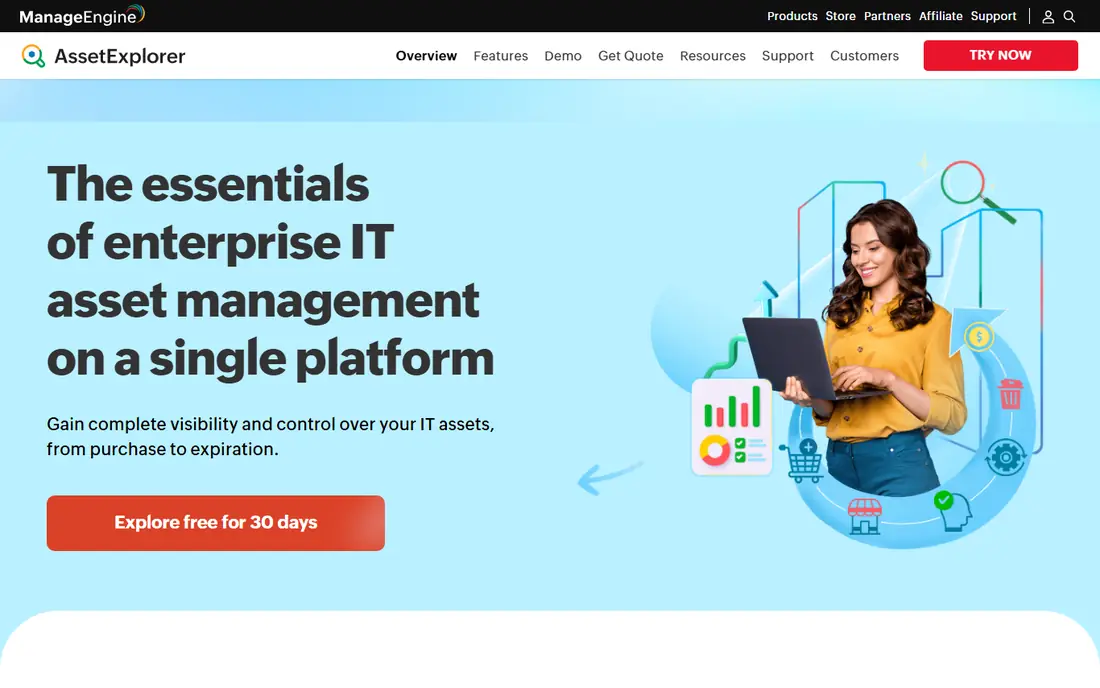
ManageEngine AssetExplorer suits mid-size IT teams that want license tracking inside a broader asset system, rather than a separate specialist product. It records hardware and software assets, links purchases and contracts, and helps teams track license expiry and allocation. That combination covers the daily work of license management without a separate platform for every task.
The free tier covers a small number of assets, which makes it a low-risk way to test the workflow. As asset counts grow, pricing rises, so teams should estimate cost at their real asset count before committing. For a team that already uses ManageEngine products, the fit is straightforward.
- Combines asset, contract, and purchase tracking
- Free tier for small asset counts
- Familiar interface for IT teams
- Paid pricing scales with asset count
- SaaS license depth is more limited than specialist SaaS tools
ServiceNow ITAM makes most sense when ServiceNow is already the system of record for IT service work. License records then sit next to incidents, changes, and procurement, which helps teams act on findings instead of filing reports that no one reads. Renewal and compliance work can follow the same approval paths as other IT work.
That integration is also the catch. Teams that do not already use ServiceNow will face a larger project than simply buying a license tracker. For a ServiceNow shop, though, adding ITAM is often cheaper in effort than running a separate system, and the shared data model is a genuine advantage.
- Ties license data to service workflows and procurement
- Strong for organizations standardized on ServiceNow
- Audit-ready reporting
- Quote-based pricing
- Implementation can take months in large estates
Zluri addresses the newer license problem, which is subscription sprawl. Many companies now pay for dozens of SaaS tools, with accounts that stay active long after people leave or stop using them. Zluri discovers those apps, maps accounts to people, and flags unused licenses for removal or downgrade.
That focus is a strength and a limit. It will not replace a traditional license manager for desktop software with complex publisher terms. For a team whose main waste is SaaS renewals, though, it targets the right costs, and its reclamation workflow turns findings into saved spend rather than another report.
- Discovers SaaS apps through sign-in and spend data
- Highlights unused accounts
- Supports reclamation workflows
- Quote-based pricing
- Focused on SaaS rather than traditional installed software licenses
Snipe-IT is the plain, practical option for small teams. It tracks licenses, seats, expiry dates, and assignments in a clear interface, and the self-hosted version is open source. For a team moving off spreadsheets, that structure alone is a major improvement, and the hosted price is modest compared with enterprise platforms.
The honest limit is automation. Snipe-IT does not do the deep discovery and publisher reconciliation that larger tools offer, so teams must keep records current themselves. If the team is small and disciplined, that trade is fine. If the estate is large and changing fast, manual upkeep will fall behind.
- Open source self-hosted option
- Simple license and asset records
- Low cost for hosted plans
- Less automation for discovery and entitlement optimization
- Needs manual upkeep
Ivanti Neurons for ITAM fits organizations that already manage endpoints with Ivanti and want license data in the same context. Endpoint inventory, lifecycle status, and license records come together, which helps teams decide whether to renew, replace, or retire software tied to aging machines.
As a standalone purchase it is harder to judge, because pricing is by quote and value depends on the rest of the Ivanti estate. Teams outside that ecosystem should compare it carefully with platform-neutral options. Inside an Ivanti estate, the shared endpoint data makes license decisions more grounded in real device facts.
- Endpoint discovery and lifecycle context
- Fits Ivanti endpoint management estates
- License optimization features
- Quote-based pricing
- Best value inside the wider Ivanti platform
AssetSonar suits teams that want one asset record for hardware, software, and related contracts, rather than separate tools for each. It tracks licenses alongside the devices they run on, which makes allocation and renewal checks easier during audits and budget reviews. Mobile and barcode features also help teams that manage physical equipment alongside software.
The main caution is pricing clarity, since plans are often quoted by volume. Teams should ask for a price at their asset count and confirm which license features sit in the chosen tier. For a mid-size team that values a single asset system, AssetSonar is a solid, practical choice.
- Combines hardware, software, and network asset tracking
- Contract and license records
- Barcode and mobile tracking
- Pricing is by quote for many plans
- License optimization is less specialized than enterprise SAM tools
How we picked these
We compared official feature pages, pricing pages, and public product descriptions for tools that are live in October 2026, and we favored tools that cover discovery, entitlement records, renewal tracking, or SaaS reclamation. We left out tools we could not verify as current products, and we did not invent prices, ratings, or user counts. Where pricing is by quote, we say so plainly instead of guessing a figure.
What good license practice looks like in daily work
Start with discovery, then match purchases to installs, then set owners and renewal alerts. A monthly check of new installs, leavers, and unused accounts catches most problems early. Keep contract terms in the same record as the license count, because a license that looks spare may still be tied to a minimum term or a bundle. Document decisions too, so an audit question has a written answer rather than a memory.
Renewal discipline matters as much as tool choice. Set alerts well before renewal dates, review usage before renewing, and reclaim seats from people who left or changed roles. For SaaS, check sign-in activity rather than assuming an account is in use. For traditional software, check installs and version use, since paying for a premium edition that no one uses is a common waste.
Small teams should keep the process light. A simple tracker, a monthly review, and a named owner will beat an enterprise platform that no one maintains. Large teams need the opposite, with publisher rules, approval workflows, and regular reconciliation. Either way, the practice is the same: know what you own, know what is used, and act before renewal or audit dates arrive.
Frequently asked questions
What are software license management best practices?
They are the routines that keep license records accurate: discover installed software, record purchases and entitlements, assign owners, track renewals, and reclaim unused seats. The goal is to pay only for what is used and to answer audit questions with records, not guesses.
What is the best practice for software license management in a small team?
Start with a simple tracker, a complete inventory, and a monthly review of installs, leavers, and renewals. A small team does not need an enterprise platform to follow good practice, but it does need one owner and a regular check.
How often should licenses be reconciled?
Monthly reconciliation works for most teams, with a deeper check before major renewals and audits. Fast-changing SaaS estates may need more frequent checks of sign-in activity and new app sign-ups.
What is the difference between license tracking and license optimization?
Tracking records what you own and where it is used. Optimization goes further, by matching editions and counts to real use and reclaiming or downgrading what is spare. Tracking is the foundation, and optimization is the saving that follows it.
Do SaaS tools need different license practices?
Yes, in part. SaaS waste usually comes from unused accounts and duplicate apps, so sign-in data and spend records matter more than install counts. Traditional software needs install and publisher-term checks as well, so many teams need both views.
How do we prepare for a software audit?
Keep purchase records, entitlement terms, install inventories, and usage evidence in one place, and reconcile them before the auditor asks. Note any gaps honestly and fix the process that caused them, since auditors tend to focus on repeat gaps.
Sources
See where you really rank - block by block
ProMapRanker scans Google Maps across a grid of your service area. Simple monthly plans from $19, white-label on every plan.
Start freeKeep reading
 zoho inventory alternatives
6 Alternatives to Zoho Inventory, Compared on Price and Fit
Zoho Inventory alternatives: 6 tools compared on price, free plans and fit. Katana leads the list for manufacturers. Fit and flaws are laid out for each entry.
Read → zoho crm alternatives
Best Zoho CRM Alternatives (2026)
Need Zoho CRM alternatives? We compare 7 tools on cost, free access and who each suits. Every pick gets a straight assessment. Built for quick decisions.
Read → zelle alternatives
Best Zelle Alternatives in 2026
Compare the best Zelle alternatives for sending money to friends, paying sellers and moving funds abroad, with honest notes on fees, speed and safety in 2026.
Read →