 ProMapRanker
Snyk Alternatives in 2026: 8 Tools Compared

Key takeaways
- SonarQube is the safest default when you want code quality and security gates in one platform.
- Semgrep suits teams that want custom rules and fast scans inside CI.
- Codacy and DeepSource suit smaller teams that want automated review with less setup.
- Checkmarx, Veracode, and GitHub Advanced Security suit regulated or enterprise teams that need audit-ready reporting.
- Trivy is the best free starting point for container and dependency scanning, especially in cloud-native stacks.
Quick comparison
| Pick | Great for | Pricing starts at | Free tier | |
|---|---|---|---|---|
 SonarQube | Quality gates plus security | $34 per month | Yes | Visit |
 Semgrep | Custom rules and fast CI scans | $30 per contributor per month | Yes | Visit |
 Codacy | Affordable quality and security | $15 per user per month | Yes | Visit |
 DeepSource | Automated review and autofixes | See website | Free trial (14 days) | Visit |
 Checkmarx | Enterprise AppSec programs | See website | No | Visit |
 Veracode | Audit-ready security programs | See website | No | Visit |
 GitHub Advanced Security | GitHub-centered teams | $49 per committer per month | No | Visit |
 Trivy | Free container and dependency scans | Free | Yes | Visit |
The best alternatives to Snyk
Snyk alternatives differ in what they scan, how they price, and where they fit in development. Some focus on code, some on dependencies and containers, and some on full application security programs. We compared official pricing pages, documentation, and public comparisons for tools that scan code, dependencies, containers, or infrastructure as part of a secure pipeline.
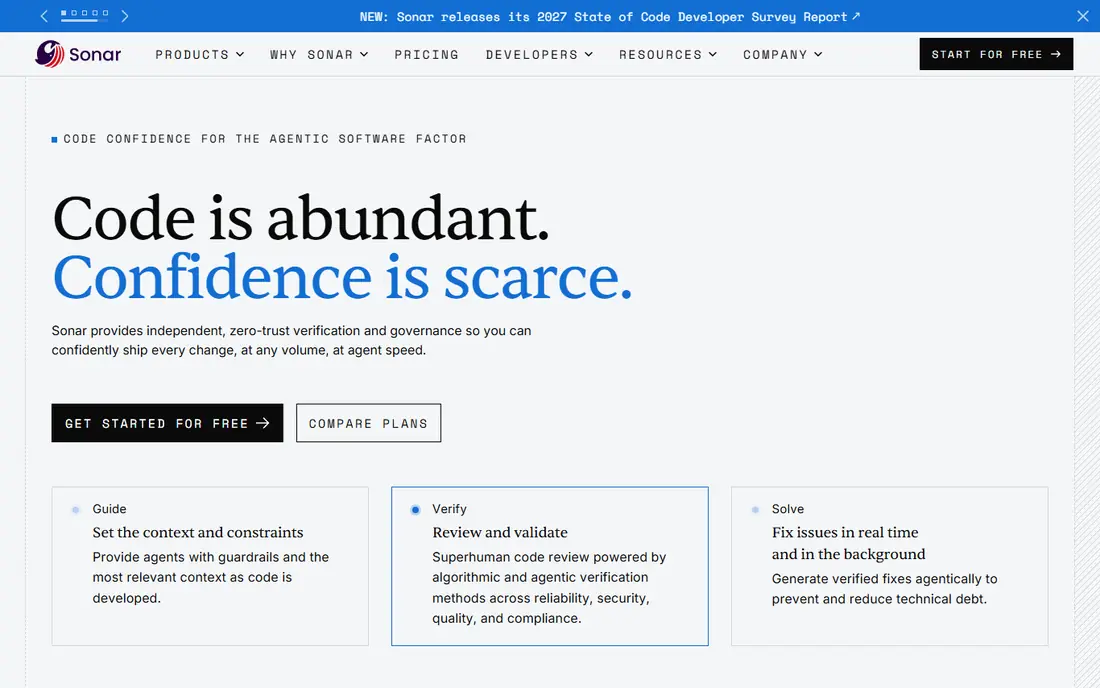
SonarQube is a strong default for teams that want one gate for code quality and security before merge. Its cloud and server options support pull request checks, quality gates, and security rules across many languages. The self-hosted Community Build gives small teams a free starting point, while paid tiers add deeper security analysis and reporting.
The pricing model needs attention. Cloud pricing scales with lines of code, so large codebases can cost more than per-developer tools. Paid security features also matter if you need software composition analysis and advanced rules. If your team already cares about code quality, SonarQube adds security without a separate workflow.
- Combines quality and security gates
- Self-hosted community build
- Broad language support
- Pricing scales with lines of code
- Full security features sit on paid tiers
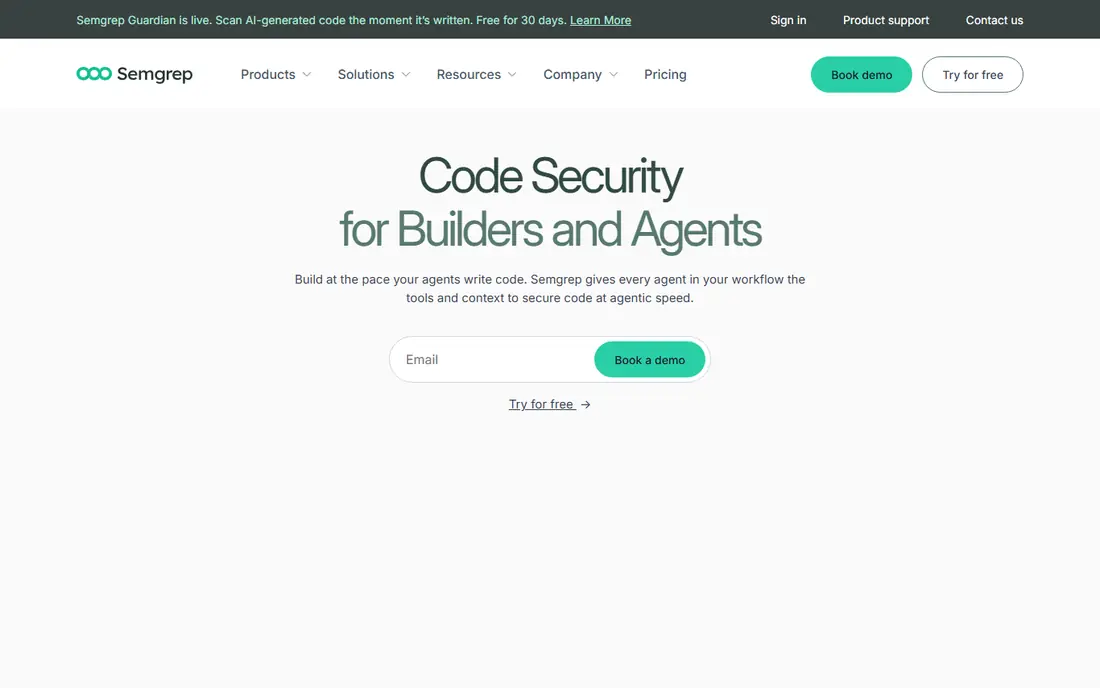
Semgrep appeals to security-minded developers because its open source engine and rule system let teams write checks for their own risks. It scans code quickly in CI, supports many languages, and can block pull requests on new findings. That speed makes it easier to keep security checks in every pull request rather than running them only before release.
Custom rules are both the strength and the cost. Writing good rules takes security knowledge, and maintaining them takes time. Teams that want a managed rule set with minimal tuning may prefer SonarQube or Codacy. For teams with specific frameworks, internal APIs, or compliance patterns, Semgrep offers control few rivals match.
- Open source engine
- Custom rules
- Fast scans in CI
- Rule writing takes skill
- Enterprise features need paid tiers
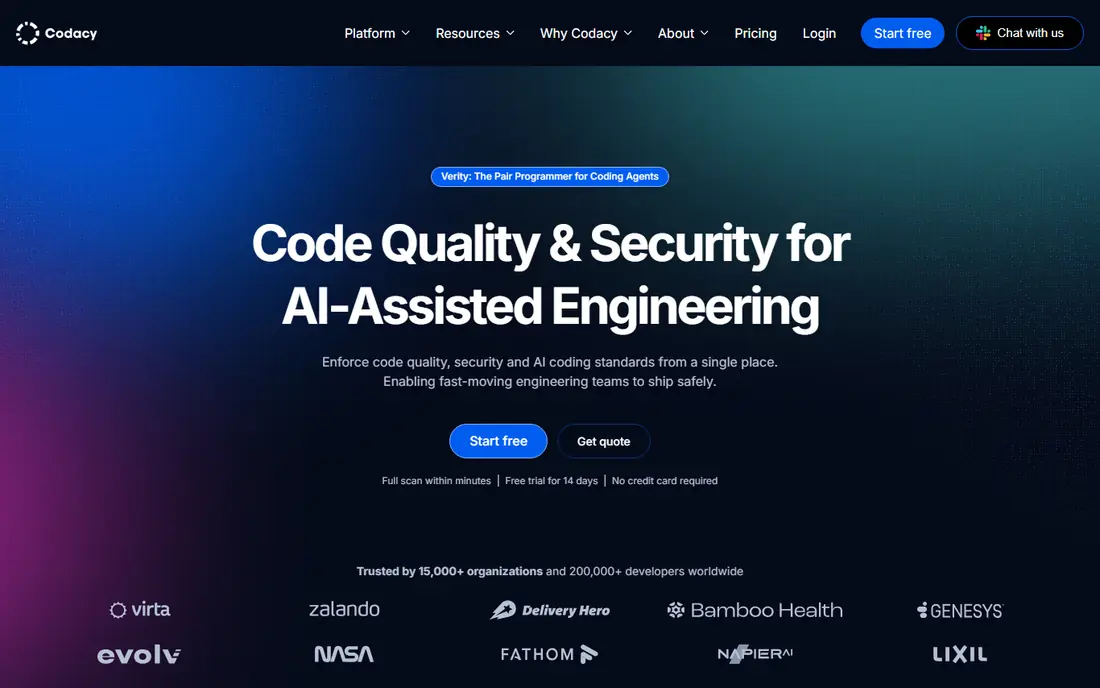
Codacy suits small and mid-size teams that want automated code review without a large security budget. It checks code quality, duplication, coverage, and security issues, and it comments on pull requests so developers can fix problems before merge. The per-user price is lower than several rivals, which helps when many developers need access.
It is not an enterprise compliance platform. Teams with strict audit, attestation, or complex policy needs will likely need Checkmarx, Veracode, or GitHub Advanced Security alongside it. For a team that wants a practical, affordable review and security gate, Codacy is a good starting point.
- Low per-user price
- Automated review
- Pull request integration
- Depth varies by language
- Enterprise controls are lighter than Checkmarx or Veracode
DeepSource focuses on reducing review work by finding issues and suggesting or applying fixes automatically. That helps teams that spend too much time on style, performance, and common security patterns in review. Its pull request integration keeps feedback close to the code, and its analyzers cover many common languages and frameworks.
Automated fixes are helpful but not a substitute for judgment. Security fixes, in particular, should be reviewed before merge, since a plausible fix can change behavior. Pricing also varies, so confirm the plan that includes your languages and team size. If your bottleneck is review time rather than audit depth, DeepSource is worth a trial.
- Automated fixes for common issues
- Clean pull request workflow
- Broad language support
- Pricing varies by plan
- Autofixes still need human review
Checkmarx is built for enterprise application security programs that need depth, policy control, and compliance evidence. It covers static analysis, software composition, API security, and related AppSec areas, with reporting that suits regulated industries. Large teams can set policies, track risk across applications, and produce audit-ready views.
That depth comes with cost and setup time. Pricing is quote-based, and a full program can be a significant annual investment. Smaller teams will find the sales process and rollout heavy for a simple scanning need. If your organization needs enterprise governance and compliance reporting, Checkmarx is a serious alternative to Snyk at scale.
- Deep SAST and broad AppSec coverage
- Strong compliance reporting
- Enterprise integrations
- Quote-based pricing
- Longer rollout and higher total cost
Veracode suits organizations that need to prove security to customers, auditors, or regulators. It combines static, dynamic, and software composition analysis with policy enforcement and attestation reporting. That makes it a common choice for finance, healthcare, and other regulated sectors where evidence matters as much as findings.
Veracode is less developer-first than newer tools. Setup, policy design, and reporting take more effort, and pricing is quote-based. Teams that want fast, lightweight pull request scanning may prefer Semgrep or SonarQube. Teams that need a defensible security program with audit trails should put Veracode on the shortlist.
- Broad SAST, DAST, and SCA coverage
- Attestation and compliance focus
- Mature reporting
- Quote-based pricing
- Less developer-first than Semgrep or SonarQube
GitHub Advanced Security makes sense when your code, CI, and reviews already live in GitHub. Code scanning, secret scanning, dependency alerts, and Dependabot updates work inside pull requests and security overviews, so developers do not need to learn a separate system. That native fit can improve fix rates compared with a bolt-on tool.
Price is the main drawback. At $49 per committer per month, it costs more than several rivals for large teams, and value drops if you use GitLab, Bitbucket, or another host. Dependabot and basic alerts are available more broadly, so check what Advanced Security adds for your plan. For GitHub-first teams with security budgets, it is a coherent choice.
- Native GitHub integration
- Code scanning, secret scanning, and Dependabot
- Strong CI fit
- High per-committer price
- Best value only inside GitHub
Trivy, maintained as part of Aqua Security, is the best free tool for scanning containers, dependencies, filesystems, and infrastructure code. It runs quickly in CI, produces SBOM output, and covers vulnerabilities, misconfigurations, and secrets in common formats. For cloud-native teams, it is often the first scanner added to a pipeline.
Trivy does not replace a full code security platform. It does not provide the same code quality gates, custom SAST rules, or enterprise policy reporting as SonarQube, Checkmarx, or Veracode. Use it as a strong, free layer for containers and dependencies, then add a code scanner that fits your team. For many small teams, Trivy plus Semgrep or SonarQube covers the core risks at low cost.
- Free and open source
- Strong container and dependency scanning
- Easy CI integration
- Narrower than full AppSec platforms
- Needs other tools for code quality and policy
How we picked these
We compared official pricing pages, documentation, and public comparisons for tools that scan code, dependencies, containers, or infrastructure and integrate with CI and pull requests. We included open source, developer-first, and enterprise options so teams of different sizes can compare real fits. We did not claim hands-on testing. Where pricing is quote-based or varies by lines of code, contributors, or committers, we used the vendor figure or wrote See website rather than presenting an estimate as a published price.
Choosing a Snyk alternative
Start with what Snyk was doing for you. If it mainly scanned dependencies, a dependency and container scanner may be enough. If it gated code, you need a SAST or quality platform. If it supported compliance, you need reporting and policy tools. Replacing Snyk with a tool that scans a different layer will leave gaps, even if the new tool is excellent.
Gate on new findings, not the whole backlog
A new scanner will find many old issues in a large codebase. Gating every pull request on the full backlog will block work and frustrate developers. Gate on new findings first, triage the backlog by severity and exploitability, and fix the highest-risk items in planned work. That approach keeps security in the pipeline without stopping delivery.
Check language, CI, and fix workflow
Confirm the tool supports your languages, frameworks, and CI system, and that it comments clearly on pull requests. Check whether it offers fix suggestions, automated pull requests, or just findings, since fix workflow decides whether developers actually resolve issues. A tool with slightly fewer findings but a better fix workflow often improves security more than a noisier tool.
Plan for secrets, dependencies, and containers together
Code scanning alone does not cover leaked secrets, vulnerable dependencies, or misconfigured containers. Map each layer to a tool, and avoid paying twice for the same scan. Trivy can cover containers and dependencies, while SonarQube, Semgrep, or Codacy can cover code. Enterprise teams may prefer one platform for reporting, but small teams can combine focused tools well.
Frequently asked questions
What are the best alternatives to Snyk?
SonarQube, Semgrep, Codacy, and DeepSource are strong developer-focused alternatives, while Checkmarx and Veracode suit enterprise programs. The best alternatives to Snyk depend on whether you need code scanning, dependency scanning, container scanning, or full compliance reporting.
Is there a free alternative to Snyk?
Yes. Trivy is free and open source for container and dependency scanning, Semgrep offers an open source engine, and SonarQube offers a free self-hosted Community Build. Free tiers usually cover core scanning, while paid plans add deeper rules, reporting, and support.
What is the best alternative to Snyk for small teams?
Codacy and Semgrep are good small-team picks, often combined with Trivy for containers and dependencies. Codacy is simpler to adopt, while Semgrep offers more custom rule control. Both keep costs lower than enterprise platforms.
Does GitHub Advanced Security replace Snyk?
It can replace much of Snyk for GitHub-centered teams, including code scanning, secret scanning, and dependency alerts. It costs more per committer than some rivals, and it fits best inside GitHub. Teams outside GitHub should compare SonarQube, Semgrep, or Checkmarx instead.
How do I migrate from Snyk without missing vulnerabilities?
Run the new tool in parallel with Snyk for a short period, compare findings by severity, and gate on new issues first. Export or record Snyk findings you still need to fix, then retire Snyk only after the new tool covers code, dependencies, and containers for your main repositories.
Sources
See where you really rank - block by block
ProMapRanker scans Google Maps across a grid of your service area. Simple monthly plans from $19, white-label on every plan.
Start freeKeep reading
 who has the best home internet service
Who Has the Best Home Internet Service in 2026
Who has the best home internet service in 2026? Compare fiber, cable, and 5G providers on speed, price, data caps, and availability at your address today.
Read → visio alternatives
Best Visio Alternatives in 2026
Compare 9 Visio alternatives for flowcharts, org charts, and network diagrams, with free plans, pricing, and the best pick for teams and solo users in 2026.
Read → top 10 logistics software
Top 10 Logistics Software in 2026
We compared the top 10 logistics software tools for transport, warehousing, visibility and shipping, for shippers, carriers and 3PL teams in 2026 today.
Read →