 ProMapRanker
Best Snowflake Alternatives in 2026

Serverless Google Cloud analytics · Pricing starts at: Free
Key takeaways
- Google BigQuery is the easiest serverless choice for teams already on Google Cloud.
- Amazon Redshift suits AWS heavy teams that want steady, predictable warehouse costs.
- Databricks is the best lakehouse pick when machine learning and data engineering share one platform.
- ClickHouse, DuckDB based MotherDuck, and Firebolt suit fast analytical queries at lower cost.
- Dremio and Starburst help teams query data where it sits, without moving everything into one warehouse first.
Quick comparison
| Pick | Great for | Pricing starts at | Free tier | |
|---|---|---|---|---|
| Google BigQuery | Serverless Google Cloud analytics | Free | Yes | Visit |
 Amazon Redshift | AWS native warehousing | See website | Free trial | Visit |
 Databricks | Lakehouse and machine learning | See website | Free trial | Visit |
 ClickHouse | Fast real time analytics | Free | Yes | Visit |
 Dremio | Lakehouse queries on open formats | See website | Free trial | Visit |
 Firebolt | Customer facing fast queries | See website | Free trial | Visit |
 MotherDuck | Small team DuckDB analytics | Free | Yes | Visit |
 Azure Synapse Analytics | Microsoft and Power BI teams | See website | Free trial | Visit |
 Starburst | Querying data across sources | See website | Free trial | Visit |
The best snowflake alternatives
Snowflake is known for separating storage and compute, multi cloud support, and strong data sharing. Teams look for alternatives to cut costs, to stay inside one cloud, to run faster analytical queries, or to combine engineering and machine learning in one system. The nine platforms below cover those reasons, from serverless warehouses to open source engines.
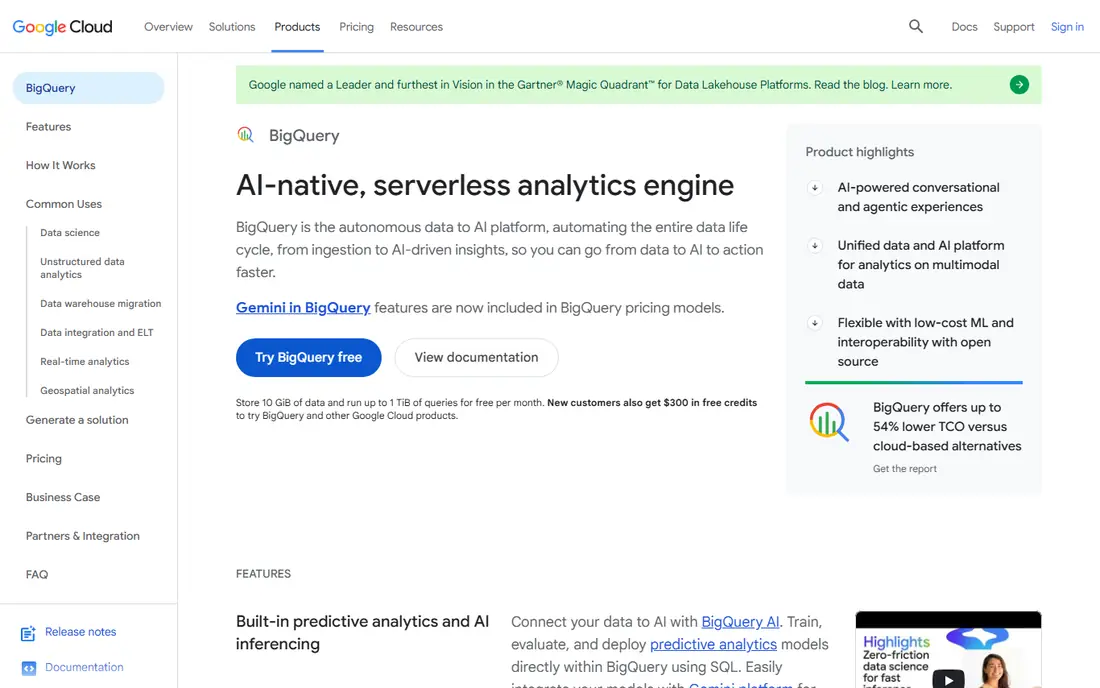
BigQuery is the most direct serverless alternative to Snowflake. You run SQL queries without provisioning clusters, and you pay mainly for data scanned or for capacity, depending on the model you choose. A free tier covers small monthly use, which makes it easy to test.
The main risk is query cost. Unpartitioned tables and broad scans can push bills up quickly, so teams need good table design and cost controls. For a Google Cloud team that wants analytics without server work, BigQuery is a strong first choice.
- No servers to manage
- Free monthly query and storage tier
- Strong Google Cloud integration
- Costs can rise on broad scans
- Pricing model needs care with large queries
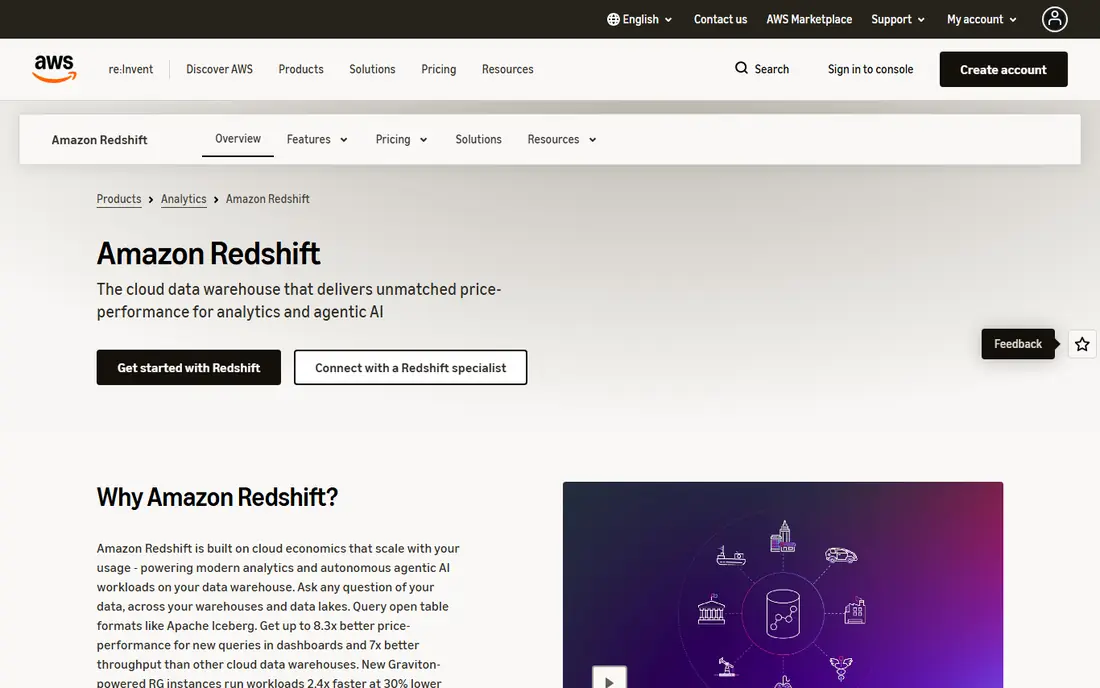
Redshift suits teams that already store data in AWS. It links well to S3, Glue, and other AWS services, and its serverless option removes much cluster management for variable work. For steady workloads, provisioned clusters with reserved pricing can be cost effective.
Redshift is less attractive outside AWS, and provisioned setups still need sizing and maintenance. If your stack is AWS first, Redshift gives you a mature warehouse without a second cloud bill.
- Deep AWS integration
- Serverless and provisioned options
- Predictable costs for steady work
- Best value needs AWS commitment
- Tuning work remains on provisioned clusters

Databricks is a lakehouse platform, which means it combines warehouse style SQL with data engineering and machine learning in one system. Its SQL product suits analysts, while notebooks and pipelines suit engineers and data scientists. Open formats such as Delta Lake and Iceberg help avoid lock in.
The downside is cost control. Pricing uses Databricks units plus cloud infrastructure in many setups, and idle clusters can waste money. Teams need clear ownership of clusters and budgets. If machine learning and analytics share your roadmap, Databricks is the most complete alternative here.
- One platform for SQL, engineering, and machine learning
- Open formats
- Strong governance tools
- Pricing is complex
- Costs can grow with idle clusters and large teams
ClickHouse is an open source columnar database built for fast analytical queries on large event and log data. It handles high throughput ingestion and low latency dashboards well, which suits product analytics, observability, and real time reporting. Self hosting is free, and ClickHouse Cloud offers a managed path.
ClickHouse is not a general purpose transactional database, and getting the best speed needs attention to table design and ingestion. For teams that need fast reads at low cost, it is one of the best value options in this list.
- Very fast columnar queries
- Free open source version
- Cloud trial with credits
- Needs tuning for best results
- Less suited to heavy transactional work
Dremio lets teams query data in open lakehouse formats without first loading everything into a single warehouse. Its semantic layer helps define metrics once and reuse them across dashboards, which reduces conflicting numbers. That approach suits companies with data spread across lakes and warehouses.
Dremio needs a data team to set up well, and its pricing for larger deployments is not a simple public tier. If open formats and avoiding data movement matter to you, Dremio is worth a close look.
- Queries Iceberg and other open formats directly
- Semantic layer for consistent metrics
- No forced data move
- Setup needs data engineering skill
- Pricing is quote based for larger use
Firebolt is built for user facing analytics, where many customers run queries at once and expect answers in well under a second. Its engine based model lets you scale compute for specific workloads, which helps product teams that embed analytics in an app. That focus makes it fast for its target use.
Firebolt is less of a general warehouse for every internal report. If your main need is internal business reporting, a broader platform may fit better. For customer facing dashboards, Firebolt is a strong specialist pick.
- Very low latency queries
- Pay for engines in use
- Built for high concurrency
- Narrower focus than a full warehouse
- Ecosystem is smaller than BigQuery or Redshift
MotherDuck brings the DuckDB analytical engine to the cloud, with a simple setup that analysts can use quickly. It suits small teams, startups, and analysts who need fast SQL on moderate data without a large warehouse bill. Its free tier makes it easy to start.
MotherDuck is not built to replace Snowflake for very large enterprise concurrency or complex governance needs. For a small team that wants speed and low cost, it is a practical and friendly alternative.
- Free tier for small use
- Fast DuckDB engine
- Simple setup for analysts
- Less suited to huge enterprise concurrency
- Feature set is smaller than Snowflake
Azure Synapse Analytics, now part of the wider Microsoft Fabric story for many teams, offers warehouse and big data analytics inside Azure. It pairs well with Power BI, Azure Data Lake, and Microsoft security controls. Serverless queries suit ad hoc work, while dedicated pools suit steady enterprise loads.
The platform can feel complex, since capacity, storage, and Power BI licensing interact. Teams already on Azure and Power BI will get the most value, while teams on other clouds should weigh that integration advantage carefully.
- Strong Power BI and Microsoft 365 links
- Serverless and dedicated options
- Enterprise controls
- Pricing and capacity choices can be confusing
- Best value stays inside Azure
Starburst is built on Trino, an open source distributed SQL engine, and it lets teams query data across warehouses, lakes, and databases without centralising everything first. That federated approach suits companies with data in many systems and a need for one query layer.
Performance depends on the underlying sources, and complex federated queries need tuning. If data movement and duplication are your main problems, Starburst offers a different path from a single warehouse.
- Queries many sources without moving data
- Trino based engine
- Useful for federated analytics
- Performance depends on source systems
- Setup needs engineering skill
How we picked these
We compared official pricing pages, product documentation, and public feature descriptions for each platform. We kept only platforms that are still operating in October 2026, support SQL analytics at scale, and publish clear product details. We left out tools that only did data ingestion, tools that had closed, and tools with no clear analytical engine. We weighed cost model, speed, cloud fit, governance, machine learning support, and ease of setup.
How to choose the right Snowflake replacement
Start with your cloud. A Google team should test BigQuery first, an AWS team should test Redshift, and a Microsoft team should test Synapse. Staying in one cloud usually cuts integration work and data transfer costs.
Next, define your workload. Internal reporting suits BigQuery, Redshift, or Synapse. Machine learning plus analytics suits Databricks. Fast customer facing queries suit Firebolt or ClickHouse. Small team analysis suits MotherDuck. Federated queries suit Dremio or Starburst.
Finally, model total cost, not just headline rates. Include storage, compute, data transfer, and the staff time needed to run the platform. Run the same five real queries in each finalist, with your real data size, and track both time and cost. Set budget alerts from day one, since usage based pricing rewards teams that watch it closely.
Cost traps to watch
Broad scans, unpartitioned tables, idle clusters, and oversized warehouses are the usual cost traps. Use partitions, clustering, and query limits where your platform supports them. Review the largest queries each week during the first month, and fix the top few before they become a habit.
Frequently asked questions
What is the cheapest Snowflake alternative?
ClickHouse self hosted and MotherDuck with a free tier are among the cheapest starting points, while BigQuery offers a free monthly tier for small use. The cheapest option for you depends on data size and query volume, so test with real workloads before you decide.
Is BigQuery better than Snowflake?
BigQuery is better for serverless Google Cloud analytics with no cluster management, while Snowflake offers multi cloud support and strong data sharing. The better choice depends on your cloud, your team skills, and your cost model.
What is the best Snowflake alternative for machine learning?
Databricks is the best pick when machine learning and analytics share one platform, because it combines SQL, notebooks, pipelines, and model work in one system. Snowflake also supports machine learning features, but Databricks has a deeper engineering focus.
Can I replace Snowflake with an open source tool?
Yes, for many workloads. ClickHouse and DuckDB based MotherDuck cover fast analytics, while Trino based Starburst covers federated queries. Open source tools save licence fees but need more engineering time for hosting and tuning.
Do Snowflake alternatives support data sharing?
Some do, in different ways. BigQuery, Redshift, and Databricks all offer sharing features, though the exact model varies by platform. Check how sharing works with partners outside your cloud before you commit.
How do I migrate from Snowflake safely?
Start by listing your tables, views, and queries, then test the most complex queries in the new platform first. Move one workload at a time, run old and new systems in parallel for a short period, and compare row counts and totals before you switch users over.
Sources
- https://cloud.google.com/bigquery/pricing
- https://aws.amazon.com/redshift/pricing
- https://www.databricks.com/pricing
- https://clickhouse.com/pricing
- https://www.dremio.com/pricing
- https://www.firebolt.io/pricing
- https://motherduck.com/pricing
- https://azure.microsoft.com/en-us/pricing/details/synapse-analytics
- https://www.starburst.io/pricing
See where you really rank - block by block
ProMapRanker scans Google Maps across a grid of your service area. Simple monthly plans from $19, white-label on every plan.
Start freeKeep reading
 zscaler alternatives
Best Zscaler Alternatives in 2026
Looking for zscaler alternatives? We compare 9 SASE and zero trust platforms on architecture, data protection, pricing, and fit for your network and team.
Read → zapier alternatives free
Best Zapier Alternatives Free in 2026
Nine automation tools for zapier alternatives free in 2026, all with genuinely free tiers, plus free plan limits, starting prices and upgrade paths explained.
Read → which platform is best for online reputation
Which Platform Is Best for Online Reputation in 2026
Wondering which platform is best for online reputation? We compare 8 review, listing, and response tools for small and multi-location businesses and agencies.
Read →