 ProMapRanker
Best ShipHero Alternatives in 2026

Key takeaways
- ShipBob and ShipMonk suit brands that want a third party to store, pick, pack, and ship orders, while ShipStation and Shippo suit brands that keep shipping in house.
- Published pricing is uneven in this market, so a written quote for your exact order mix matters more than a headline plan price.
- Small stores should start with a low cost shipping tool, and move to a 3PL only when packing and carrier trips take real time from selling.
- Warehouse software such as Deposco and Logiwa fits teams that run their own warehouse and need tighter control over stock and orders.
- Check storage, pick, returns, and receiving fees side by side, since those four lines often decide the total bill.
Quick comparison
| Pick | Great for | Pricing starts at | Free tier | |
|---|---|---|---|---|
 ShipBob | Brands ready to outsource fulfillment | See website | No | Visit |
 ShipMonk | Brands that need careful pick and pack work | See website | No | Visit |
 ShipStation | Teams shipping from their own warehouse | $14.99 per month | Free trial | Visit |
 Shippo | Small stores that want cheap labels fast | Free | Yes | Visit |
 Ordoro | Sellers who need inventory and shipping together | See website | Free trial | Visit |
 EasyPost | Developers building shipping into software | See website | Yes | Visit |
 Deposco | Larger warehouse operations | See website | No | Visit |
 Logiwa | Growing brands running their own warehouse | See website | No | Visit |
 Easyship | Stores shipping across borders | See website | Yes | Visit |
The best shiphero alternatives
We compared outsourced fulfillment providers, shipping tools, and warehouse software, so you can match the tool to how you actually ship today.
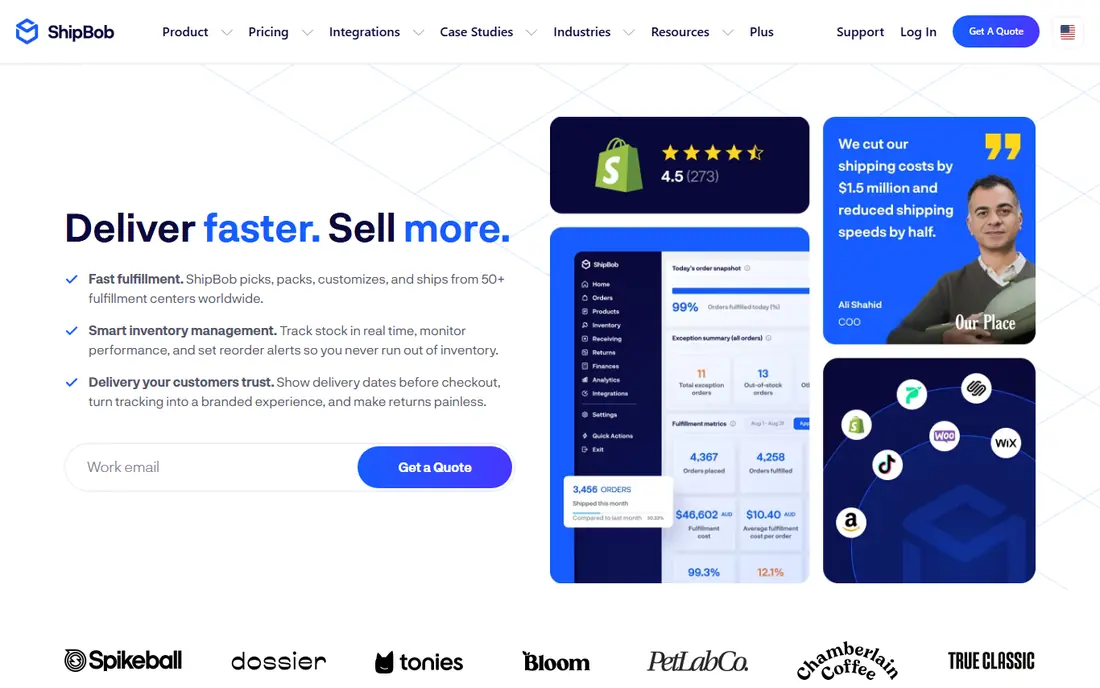
ShipBob takes over storage, picking, packing, and shipping for direct to consumer brands, which makes it a close fit if ShipHero felt too hands on for your team. Its network lets brands place stock closer to buyers, and that can cut transit time on domestic orders. The dashboard gives visibility into inventory and orders without a separate warehouse system.
The catch is cost clarity. Fulfillment pricing depends on weight, size, destination, and service level, so two brands rarely pay the same rate. Ask for receiving, storage, pick, returns, and special project fees in writing before you send stock. ShipBob suits brands with steady volume who want to stop running a warehouse, not a brand shipping a handful of orders a month.
- Large fulfillment network
- Free dashboard software for customers
- Discounted carrier rates
- Pricing is quote based
- Minimums may exclude very small brands
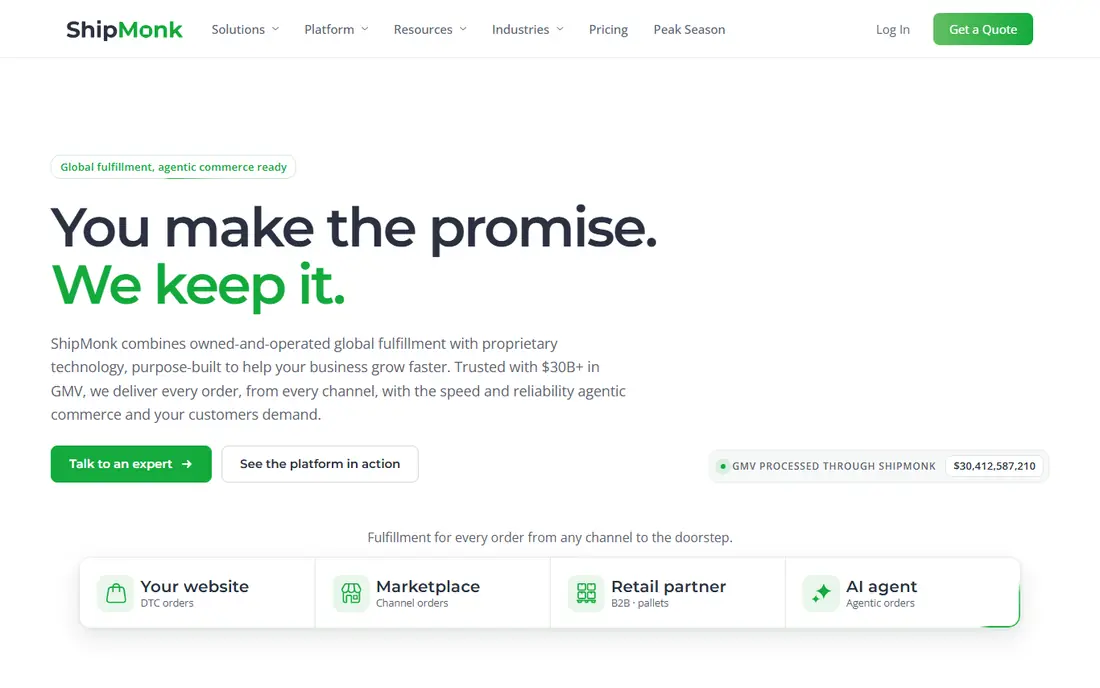
ShipMonk is another full 3PL option, and it stands out for brands with bundles, kits, or subscription boxes that need more than a simple pick and ship. Its centers in the United States and abroad give growing brands a path into new markets without opening their own sites. Integrations with major store platforms keep order flow automatic once stock is in place.
The trade off is the same as with most 3PLs: control moves to the provider, and fee details live in the quote. Ask how picks are counted, what packaging costs, and how returns are handled. ShipMonk fits brands whose order mix is getting complex, and who value a provider that can handle assembly work in house at the warehouse.
- Multiple fulfillment centers
- Kitting and assembly support
- Broad store integrations
- Pricing is quote based
- Contract terms need close reading
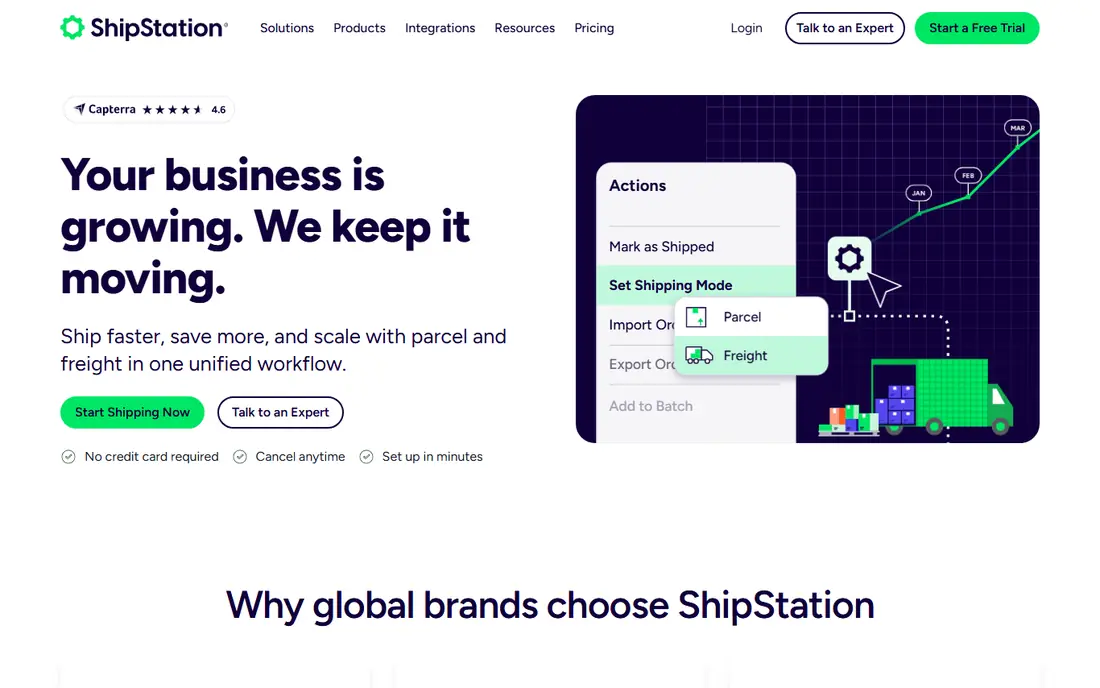
ShipStation is the pick if you want to keep packing in house but want faster labels, rate shopping, and order handling. It pulls orders from many sales channels into one screen, so a small team can print batches, apply rules, and track shipments without switching tools. Automation can pick a carrier or service based on rules you set, which saves time on repeat orders.
The limit is that ShipStation does not store or pack your goods for you. You still need space, staff, and packaging. Higher plans add users, automation depth, and inventory tools, so check which tier your shipment count and team size actually need. For many small to mid sized sellers, it is the lowest friction step away from manual shipping.
- Wide carrier and store coverage
- Automation rules
- Batch label printing
- No free plan
- Price rises with shipment volume
Shippo suits a store that ships in house and wants discounted rates without a monthly fee at the start. The free tier covers a limited number of labels each month, and paid plans raise that limit and add branded tracking and packing slips. Its API also lets developers build shipping into a platform, which is a plus if you run a marketplace or app.
Shippo does not replace a warehouse system, and it does not handle physical fulfillment. If your volume grows past the free tier, compare the paid plan against ShipStation on labels per month, not on feature lists alone. For a lean store, though, Shippo is often the cheapest way to get professional labels and tracking from day one.
- Free starter tier
- Discounted carrier rates
- Unlimited store connections on plans
- Label limits set the tier
- Branded tracking needs a paid plan
Ordoro combines inventory, order management, and shipping, which helps sellers who lose track of stock across channels. It can sync inventory, route orders, and create labels in one workflow, so you spend less time reconciling spreadsheets. Supplier and purchase order tools add value for brands that reorder stock often.
The drawback is that pricing and plan limits should be confirmed on a demo, since published detail is limited. Ordoro fits sellers who have outgrown a label only tool but are not ready for a full warehouse system or a 3PL. If your main pain is stock accuracy across stores, put it high on the shortlist.
- Inventory tracking with shipping
- Multichannel order handling
- Supplier tools
- Pricing is not fully published
- Best value needs a paid plan
EasyPost is an API first shipping platform, so it fits software teams and marketplaces more than a solo seller printing labels by hand. It offers rate shopping, label purchase, tracking, address checks, and customs support through code, with a large carrier network. That breadth matters when you serve sellers in many regions or need custom checkout rates.
The catch is that you need developer time to get value from it. Non technical teams may prefer ShipStation or Shippo, where the interface does the work. EasyPost is the right alternative if shipping is a feature of your product, not just a task your team does each day.
- Broad carrier API
- Address validation
- Tracking webhooks
- Developer setup needed
- Per label fees vary by volume
Deposco is closer to ShipHero on the software side, since it helps teams run their own warehouses and 3PL operations. It covers receiving, picking, packing, shipping, and order management, with reporting that helps managers spot slow moving stock and order problems. Retail, wholesale, and direct orders can sit in one system, which reduces manual handoffs.
This is not a small store tool. Pricing is quoted, and setup takes planning and training. Deposco fits brands and 3PLs that have outgrown basic inventory tools and need a system that can handle higher volume and more complex warehouse work without losing accuracy.
- Warehouse and order management in one platform
- Strong reporting
- Retail and 3PL support
- Enterprise pricing
- Implementation takes time
Logiwa gives growing brands warehouse software without forcing them into a 3PL. It helps with receiving, putaway, picking, packing, and shipping, and it syncs orders and stock with store platforms. Barcode scanning and mobile workflows can cut picking errors, which matters as order counts rise and manual checks start to fail.
The honest limit is implementation. A warehouse system only works if your team follows the same receiving and picking steps every day, so budget time for training. Logiwa suits brands that want to keep control of their warehouse, but need more structure than spreadsheets or a basic inventory app can give.
- Cloud warehouse management
- Order and inventory sync
- Barcode scanning support
- Quote based pricing
- Setup needs warehouse process work
Easyship helps stores that sell abroad, where duties, taxes, and courier choice can turn a simple order into a support ticket. It compares couriers, shows landed costs, and helps with labels and tracking for international orders. That focus makes it a useful add on if ShipHero felt too US centered for your sales mix.
Easyship does not run a warehouse for you, and it does not replace a 3PL for domestic volume. Use it when cross border sales are a real share of revenue, and check how duties are shown at checkout for your main markets. For a store going global, it can save more in avoided returns and surprise fees than it costs.
- Many couriers
- Duty and tax tools at checkout
- Discounted rates
- Cross border rules still need checking
- Paid tiers for fuller features
How we picked these
We compared official feature pages, pricing pages, and public product documentation, and we kept only tools that exist and work in October 2026 and truly fit fulfillment, shipping, or warehouse work. We left out tools that only handle one narrow task, such as a label printer with no order flow, and we avoided repeating ShipHero itself in this list. Where pricing was quote based, we wrote See website rather than guessing a rate.
What to check before you switch
Start with your order profile, not the sales page. Count orders per month, items per order, average weight, return rate, and how many sales channels you use. A 3PL quote will change with those numbers, and a shipping tool tier will change with label count, so bring the same profile to every vendor. Ask each provider to show receiving, storage, pick, packaging, shipping, and returns as separate lines.
Next, test the daily workflow. For a 3PL, ask how stock is received, how errors are reported, and how fast support responds when an order goes wrong. For software, run a real batch of orders through the trial, from import to label to tracking update. A tool that looks strong in a demo can still slow your team down if its order screen needs too many clicks. Finally, check exit terms, contract length, and how you get stock back if you leave, since those terms matter most when a partnership ends.
Questions to ask every vendor
Ask about minimums, fee changes, and service levels in writing. Ask who pays for a mispick, a lost parcel, or a damaged return, and how claims are filed. Ask how integrations handle refunds, partial shipments, and backorders. Clear answers here will tell you more than a feature list, and they will make quotes easier to compare.
Frequently asked questions
What is the best alternative to ShipHero?
There is no single best pick, since ShipHero covers both warehouse software and fulfillment. ShipBob and ShipMonk fit brands that want a 3PL, ShipStation and Shippo fit brands shipping in house, and Deposco and Logiwa fit teams running their own warehouse. Match the tool to your model first, then compare price.
Are there free ShipHero alternatives?
Yes, for shipping only. Shippo and Easyship offer free tiers, and EasyPost offers free access for developers. Full 3PL fulfillment and full warehouse software are paid services, since they involve labor, space, or implementation work.
Is ShipStation a direct ShipHero alternative?
It is a partial alternative. ShipStation handles multichannel shipping, labels, and automation well, but it does not store or pack goods for you. It fits if your gap is shipping speed, not warehouse space or labor.
Should a small brand use a 3PL?
Only when volume or packing time starts to hurt sales or service. A small brand can often ship in house with Shippo or ShipStation at lower cost. Move to a 3PL when orders are steady, packing takes staff time each day, or you need stock in more than one region.
How do 3PL quotes differ from published prices?
Quotes vary by weight, size, order mix, storage needs, and service level, so a published rate card rarely shows your total. Ask for a full fee breakdown on your own order profile, and compare the same profile across providers before you sign.
Sources
See where you really rank - block by block
ProMapRanker scans Google Maps across a grid of your service area. Simple monthly plans from $19, white-label on every plan.
Start freeKeep reading
 zscaler alternatives
Best Zscaler Alternatives in 2026
Looking for zscaler alternatives? We compare 9 SASE and zero trust platforms on architecture, data protection, pricing, and fit for your network and team.
Read → zapier alternatives free
Best Zapier Alternatives Free in 2026
Nine automation tools for zapier alternatives free in 2026, all with genuinely free tiers, plus free plan limits, starting prices and upgrade paths explained.
Read → which platform is best for online reputation
Which Platform Is Best for Online Reputation in 2026
Wondering which platform is best for online reputation? We compare 8 review, listing, and response tools for small and multi-location businesses and agencies.
Read →