 ProMapRanker
SEO Tools Page Rank: A Complete Guide
As the founder of ProMapRanker, I often hear questions about "Page Rank" and what SEO tools can do to measure it. While Google's original PageRank algorithm was a foundational element for assessing a webpage's authority based on its backlink profile, its public-facing score was retired in 2016. Today, when SEO tools refer to "page rank," they are typically estimating a page's overall authority, relevance, and potential to rank using a combination of proprietary metrics. These metrics analyze factors like backlink quality and quantity, content depth, technical SEO health, and user experience signals to provide a comprehensive score or rating that serves as a proxy for a page's strength in the eyes of search engines.
Understanding these modern "page rank" proxies is crucial for any SEO strategy, as they directly correlate with a page's ability to compete for top positions in search results. By leveraging advanced SEO tools, businesses can gain actionable insights into their pages' strengths and weaknesses, identify opportunities for improvement, and benchmark their performance against competitors. This guide will walk you through the evolution of PageRank, how current SEO tools interpret and measure page authority, and how you can use these insights to boost your own website's ranking potential.
What is Google PageRank and How Has It Evolved?
Google PageRank was an algorithm developed by Larry Page and Sergey Brin to measure the relative importance or authority of a webpage based on the quantity and quality of links pointing to it. Initially, it was a public metric (Toolbar PageRank) that provided a score from 0 to 10, but Google officially deprecated public PageRank updates in 2014 and removed the Toolbar PageRank in 2016, though a form of PageRank remains an internal Google ranking signal.
The original PageRank formula treated links as "votes" of confidence from one page to another. A link from a highly authoritative page carried more weight than a link from a less authoritative one. While the public-facing Toolbar PageRank is long gone, Google continues to use sophisticated versions of link analysis as a core component of its ranking algorithms. As Google Search Central documents, links are still a primary way for Google's crawlers to discover new pages and understand their relationships across the web. Modern SEO tools have developed their own proprietary metrics, like Domain Authority and URL Rating, to emulate this concept of link equity and page strength.
Why Can't I Check My Google PageRank Directly Anymore?
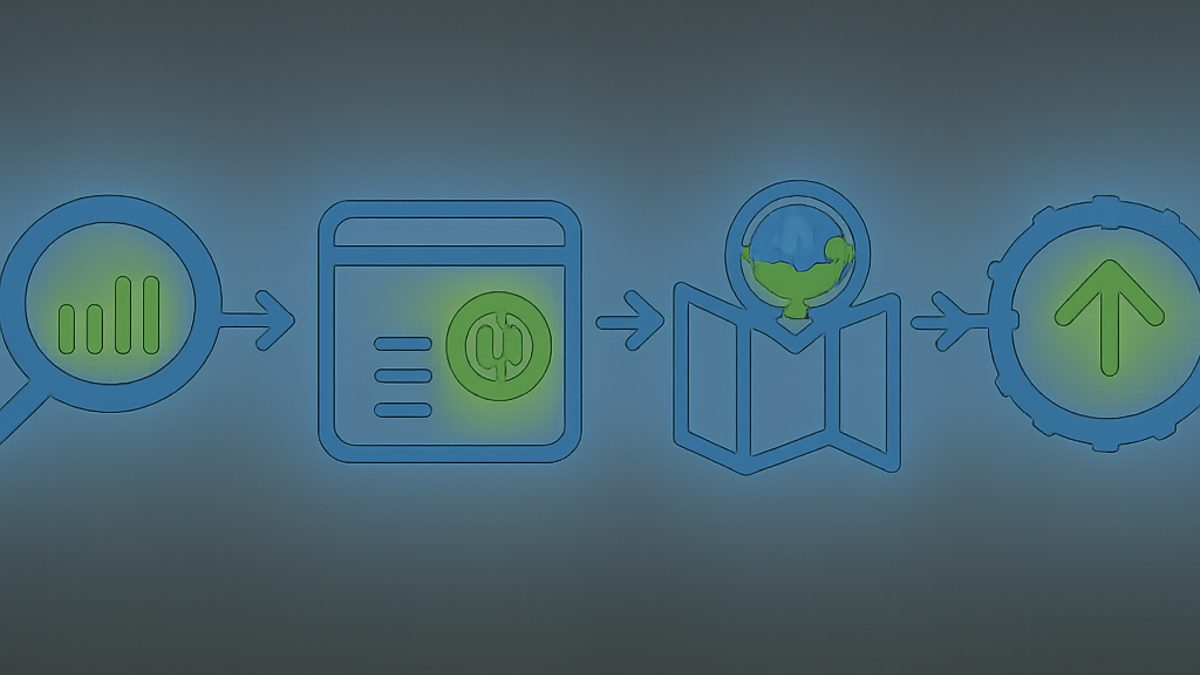
You cannot check your Google PageRank directly anymore because Google stopped updating and displaying the public Toolbar PageRank in 2016, citing its potential for manipulation and the desire for webmasters to focus on creating high-quality content rather than chasing a specific numerical score. Google recognized that the public metric was often misunderstood and led to spammy link-building practices.
The decision to remove public PageRank was a strategic move by Google to encourage a more holistic approach to SEO. Instead of a single, easily manipulated number, Google wanted webmasters and SEO professionals to concentrate on a broader range of quality signals, including user experience, content relevance, site speed, and a natural, healthy backlink profile. While Google's internal systems still utilize sophisticated link analysis, the specific PageRank score is no longer exposed to the public, preventing misuse and promoting a focus on overall website quality.
How Do SEO Tools Estimate a Page's "Rank" or Authority?
SEO tools estimate a page's "rank" or authority by analyzing various proprietary metrics that serve as proxies for Google's internal link analysis and overall page strength. These metrics typically evaluate the quantity and quality of backlinks, the trust and relevance of linking domains, and other factors like content quality and technical SEO health. They provide a standardized score that allows for comparison between pages and websites.
These proprietary metrics are designed to give SEOs an actionable understanding of a page's potential to rank. Here's a look at some of the most common ones:
- Domain Authority (DA) & Page Authority (PA) by Moz: DA predicts how well a website will rank on search engine result pages, while PA measures the ranking strength of a single page. Both are scored on a 1-100 logarithmic scale, meaning it's easier to improve from 20 to 30 than from 70 to 80. They consider linking root domains, the number of total links, and other factors.
- Domain Rating (DR) & URL Rating (UR) by Ahrefs: DR shows the strength of a website's overall backlink profile compared to others, also on a 0-100 scale. UR reflects the strength of a specific URL's backlink profile, again on a 0-100 scale. Ahrefs' metrics focus heavily on the quantity and quality of unique linking domains.
- Trust Flow (TF) & Citation Flow (CF) by Majestic: Trust Flow measures the quality of backlinks, indicating how close a site is to a trusted set of seed sites. Citation Flow measures the quantity of links. Both are scored out of 100. A healthy profile typically has a higher Trust Flow relative to Citation Flow.
Here's a quick comparison of these popular metrics:
| Metric | Provider | Focus | Scale |
|---|---|---|---|
| Domain Authority (DA) | Moz | Overall website ranking prediction | 1-100 (logarithmic) |
| Page Authority (PA) | Moz | Single page ranking prediction | 1-100 (logarithmic) |
| Domain Rating (DR) | Ahrefs | Strength of website's backlink profile | 0-100 |
| URL Rating (UR) | Ahrefs | Strength of URL's backlink profile | 0-100 |
| Trust Flow (TF) | Majestic | Quality of backlinks | 0-100 |
| Citation Flow (CF) | Majestic | Quantity of backlinks | 0-100 |
What Are the Key Factors SEO Tools Analyze to Gauge Page Strength?
SEO tools analyze a multitude of factors to gauge a page's strength, extending far beyond just backlinks to include content quality, technical SEO health, and user experience signals. These factors collectively contribute to a page's overall authority and its likelihood of ranking prominently in search results for relevant queries.
A truly comprehensive understanding of page strength requires evaluating these interconnected elements:
- Link Profile: This remains a cornerstone. Tools assess not just the number of backlinks, but their quality (are they from authoritative, relevant sites?), anchor text diversity, and how they point to your page. Internal links are also crucial, distributing authority throughout your site.
- Content Quality & Relevance: SEO tools look for signals of comprehensive, original, and valuable content. This includes keyword targeting (is the page optimized for its primary keywords?), readability, depth of information, and adherence to E-E-A-T (Expertise, Experience, Authoritativeness, Trustworthiness) principles. Tools might analyze keyword density, semantic relevance, and content uniqueness.
- Technical SEO: A page can't rank if search engines can't crawl or understand it. Tools check for issues like Core Web Vitals (ensuring a good user experience, with metrics like INP under 200ms, LCP under 2.5s, and CLS under 0.1), mobile-friendliness, HTTPS security, crawlability, indexability, and the presence of structured data. Google's Core Web Vitals are critical for user experience and increasingly important for ranking.
- User Experience (UX) Signals: While Google states it doesn't use metrics like bounce rate directly for ranking, factors that indicate positive user engagement (e.g., longer dwell time, lower bounce rate, higher click-through rates from SERPs) are often outcomes of good UX and content. Tools indirectly infer this by analyzing overall site performance and user interaction data.
- Local SEO Factors: For local businesses, tools like ProMapRanker assess unique factors such as proximity of the searcher to the business, the business's prominence (reviews, citations, local link building), and its relevance to the search query. Our platform provides insights into how your Google Business Profile optimization impacts your local visibility and tracks performance across geo-grids to understand hyper-local ranking variations. You can learn more about local pack ranking factors on our blog.
How Can SEO Tools Help You Improve Your Page's Ranking Potential?
SEO tools provide the data and insights necessary to diagnose weaknesses and identify opportunities for improving your page's ranking potential across various aspects of SEO. By offering detailed analyses of backlinks, content, technical performance, and competitive landscapes, these tools empower you to make informed decisions that directly impact your search visibility.
Here's how specific functionalities can assist:
- Auditing Backlinks: Tools allow you to analyze your backlink profile, identifying high-quality links, toxic or spammy links that might harm your SEO, and potential link-building opportunities. You can also monitor competitor backlinks to uncover new sources.
- Content Gap Analysis: By comparing your content to top-ranking competitors, tools can reveal topics, keywords, and content formats you're missing. This helps you create more comprehensive and authoritative content that fully addresses user intent.
- Technical SEO Audits: These tools scan your website for critical technical issues like broken links, crawl errors, slow page loading times, mobile usability problems, and missing structured data. Addressing these issues can significantly improve your site's crawlability, indexability, and user experience.
- Competitive Analysis: Understanding your competitors' strategies is vital. SEO tools let you analyze their keyword rankings, backlink profiles, and top-performing content, providing benchmarks and inspiration for your own efforts.
- Local Rank Tracking (ProMapRanker): For businesses with a physical location, tools like ProMapRanker offer specialized insights. Our geo-grid scans reveal your exact ranking performance across specific geographic areas (e.g., a 5x5 grid at 5 miles around your business), showing how visibility changes from block to block. This helps local businesses understand true local "page rank" on Google Maps and the Local Pack. Our free GBP geo-grid audit can help you get started immediately. Discover how our geo-grid rank tracker can revolutionize your local SEO strategy.
A Step-by-Step Guide to Boosting Your Page's Ranking Potential
Boosting your page's ranking potential requires a systematic approach that addresses all critical SEO pillars: technical health, content quality, and off-page authority. Following a structured guide ensures you cover all bases and implement effective strategies that contribute to higher search engine visibility.
Here’s a practical step-by-step guide:
- Conduct a Comprehensive SEO Audit: Start by using an SEO tool to perform a full audit of your website. This should cover technical issues (crawl errors, broken links, site speed), on-page optimization (keyword usage, meta tags), and backlink profile health. Prioritize critical issues that hinder crawlability or user experience.
- Optimize Core Web Vitals: Focus on improving your page's loading speed, interactivity, and visual stability. Aim for an Interaction to Next Paint (INP) under 200ms, Largest Contentful Paint (LCP) under 2.5 seconds, and Cumulative Layout Shift (CLS) under 0.1. These metrics are crucial for user experience and are confirmed Google ranking factors.
- Build High-Quality Backlinks: Actively pursue backlinks from authoritative, relevant websites within your niche. Strategies include guest posting on reputable blogs, creating link-worthy content that others naturally want to cite, broken link building, and submitting to relevant industry directories. Focus on relevance and domain authority over sheer quantity. This is a critical factor for how Google ranks local businesses and overall page authority.
- Enhance Content E-E-A-T: Ensure your content demonstrates Expertise, Experience, Authoritativeness, and Trustworthiness. Provide well-researched, original information, cite credible sources, include author bios with credentials, and keep content updated. Make your content comprehensive, answering all potential user questions on a topic.
- Improve Internal Linking Structure: Strategically link related pages within your own website using descriptive anchor text. This helps distribute "link equity" (or "page rank") throughout your site, guides users and search engine crawlers, and reinforces topical relevance.
- Leverage Structured Data (Schema Markup): Implement appropriate Schema.org markup (e.g., for articles, products, local businesses, reviews) to help search engines better understand your content. This can lead to rich snippets in search results, improving visibility and click-through rates.
- Monitor Local Performance with Geo-Grids: For local businesses, use a specialized tool like ProMapRanker to track your rankings across a geo-grid (e.g., a 5x5 grid at 5 miles around your business). This reveals precise ranking fluctuations based on searcher proximity, allowing you to identify underserved areas and optimize your Google Business Profile (GBP) accordingly. Understanding these hyper-local dynamics is essential for improving your local "page rank" and visibility in Google Maps, and our local rank tracker for agencies can provide the granular data needed.
Choosing the Right SEO Tools for Page Rank Analysis
Choosing the right SEO tools for "page rank" analysis depends on your specific needs, budget, and the scale of your SEO efforts. While many comprehensive suites exist, specialized tools often provide deeper insights into particular areas like local search, which is crucial for businesses with a physical presence.
General SEO suites like Ahrefs, Semrush, and Moz offer broad capabilities for backlink analysis, keyword research, site audits, and competitive intelligence. They provide their own proprietary metrics (DR/UR, DA/PA) that serve as excellent proxies for understanding a page's overall authority and link equity. These tools are invaluable for a holistic view of your website's performance and for identifying opportunities to build authority and relevance.
However, for businesses heavily reliant on local visibility, these general tools often lack the granular, hyper-local data needed to truly understand "page rank" in a geographical context. This is where ProMapRanker excels. Our platform is specifically designed to track local rank variations using geo-grid technology, which scans your Google Business Profile performance from multiple points around your business. This allows you to see exactly how your visibility changes across a specific service area, for example, within a 5x5 mile grid. ProMapRanker provides insights into your Share of Local Voice (SoLV) and Average Rank Position (ARP) across these grids, offering a true understanding of your local "page rank" in Google Maps and the Local Pack.
If you're a local business or an agency managing local clients, integrating a specialized local rank tracker like ProMapRanker alongside your general SEO tools is essential. It provides the precise, location-specific data needed to optimize for local search, filling a critical gap that traditional "page rank" tools don't address. Sign up for ProMapRanker today and gain unparalleled insights into your local search performance. You can also get a free GBP audit to see your current local standing.
Frequently Asked Questions
Is Google PageRank still a ranking factor?
Yes, Google's underlying PageRank algorithm, or a more evolved version of it, remains an internal ranking factor. While the public Toolbar PageRank score was retired in 2016, Google still uses link analysis to understand the authority and relevance of web pages. SEO tools use proprietary metrics as proxies to estimate this internal "page rank" signal.
What is a good PageRank score?
Since Google's public PageRank score is no longer available, there's no "good" PageRank score to aim for directly. Instead, focus on improving proprietary metrics like Moz's Page Authority (PA) or Ahrefs' URL Rating (UR). A good score for these metrics is relative to your competitors and industry, but generally, higher scores (e.g., above 30-40 for PA/UR) indicate stronger page authority.
Can I check my website's Page Authority or Domain Authority for free?
Yes, many SEO tools offer free versions or trials that allow you to check your website's Page Authority (PA) or Domain Authority (DA), as well as other link metrics. Moz offers a free Link Explorer tool for basic checks, and similar functionalities are often available in free browser extensions from providers like Ahrefs or Semrush, or through limited-use free trials of their full platforms.
How long does it take to improve my page's ranking potential?
Improving a page's ranking potential is an ongoing process with no fixed timeline. Significant improvements in technical SEO, content quality, and link acquisition can start showing results within a few weeks to several months. Factors like your industry's competitiveness, your current website authority, and the consistency of your efforts all influence the speed of progress.
What's the difference between PageRank and Domain Authority?
PageRank was Google's original algorithm to measure a page's authority based on links, and its public score is now defunct. Domain Authority (DA) is a proprietary metric developed by Moz that predicts how well an entire domain will rank in search results, based on its overall link profile and other factors. DA is an estimation and proxy, not a direct Google metric.
How does local SEO affect a page's "rank"?
Local SEO significantly affects a business's "rank" by influencing its visibility in local search results, like Google Maps and the Local Pack. Factors such as Google Business Profile optimization, customer reviews, local citations, and proximity to the searcher are crucial. Tools like ProMapRanker use geo-grids to show precise local ranking variations, helping businesses optimize for hyper-local "page rank" and ensure they appear for nearby customers.
See where you really rank - block by block
ProMapRanker scans Google Maps across a grid of your service area. Simple monthly plans from $19, white-label on every plan.
Start freeKeep reading
 philippines best loan apps
Philippines Best Loan Apps in 2026
The Philippines best loan apps for 2026, compared on SEC or BSP registration, loan limits, monthly rates and fees, from GCash GLoan and Maya to Tala and BillEase.
Read → best secret management tools enterprise devsecops
Best Secret Management Tools for Enterprise DevSecOps in 2026
The best secret management tools for enterprise DevSecOps in 2026, compared on pricing, free tiers, rotation, dynamic secrets and self-hosting, from Vault to Infisical.
Read → best png to svg free tool
Best PNG to SVG Free Tool in 2026
Looking for the best PNG to SVG free tool? We compared 7 free converters in 2026, from Inkscape and SVGcode to Adobe Express, on tracing quality, limits and privacy.
Read →