 ProMapRanker
Local Falcon Pricing: A Complete Guide

As the founder of ProMapRanker, Md Shihab Mia, I understand the critical role geo-grid rank tracking plays in local SEO strategy. Many businesses and agencies turn to tools like Local Falcon to monitor their Google Business Profile (GBP) performance across specific geographic areas. Understanding Local Falcon's pricing structure is essential for budgeting and evaluating its return on investment.
Local Falcon operates on a credit-based system, meaning you purchase credits which are then consumed by each geo-grid scan. The cost per credit decreases significantly when purchased in larger bundles. For instance, single credits can cost around $0.20 to $0.25 each, but buying 10,000 credits might reduce the per-credit cost to approximately $0.05. A typical 5x5 geo-grid scan, which covers a 5-mile radius with 25 data points, uses 25 credits. Therefore, a single 5x5 scan could range from $1.25 (with bulk credits) to $6.25 (with individual credits), making larger credit packages more economical for frequent or extensive tracking.
What is Local Falcon and Why is Geo-Grid Tracking Essential?
Local Falcon is a prominent geo-grid rank tracker designed to visualize a business's Google Business Profile ranking performance across a localized map. It provides a visual representation of how a business ranks for specific keywords from various points within a defined radius. This granular data is crucial because Google's local search results are highly proximity-dependent, meaning a business's ranking can differ significantly even a few blocks away.
Geo-grid tracking helps local businesses and SEO agencies understand their true local search visibility. Unlike traditional rank trackers that provide a single, often less accurate, ranking for an entire city, geo-grids reveal precise strengths and weaknesses across neighborhoods. This insight allows for targeted optimization efforts, such as adjusting GBP categories, refining service areas, or acquiring local citations, to improve visibility where it matters most. For a deeper dive into this technology, read our guide on how geo-grid rank trackers work.
How Does Local Falcon's Credit System Work?
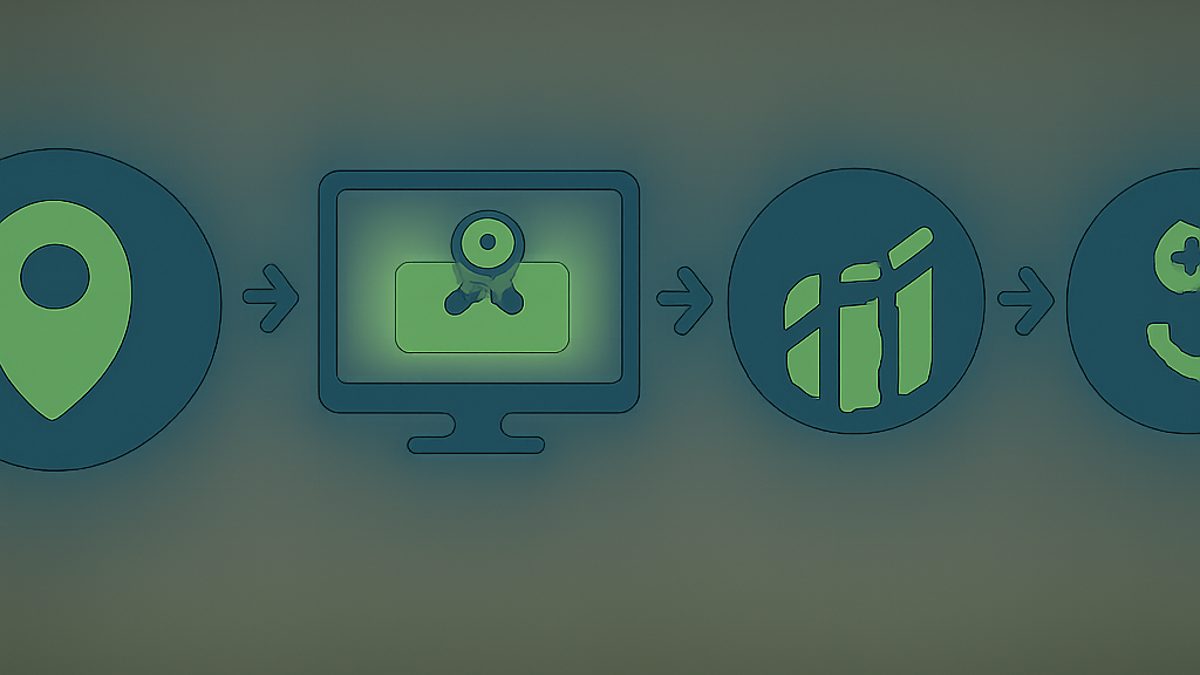
Local Falcon's core functionality revolves around a straightforward credit system. When you initiate a geo-grid scan, Local Falcon deducts a specific number of credits based on the scan's size and complexity. Each point on the geo-grid represents a search query made from that specific location, and each query consumes one credit.
For example, a standard 5x5 grid means 5 points across and 5 points down, totaling 25 distinct search queries or "scan points." This grid size would consume 25 credits. Larger grids, like a 7x7 (49 points) or a 9x9 (81 points), would consume 49 and 81 credits respectively. The flexibility of this system allows users to tailor their tracking to specific needs, whether it's a small local business needing a few scans or an agency managing hundreds of client locations.
What is a Local Falcon Credit?
A Local Falcon credit is a unit of currency within their platform, directly corresponding to a single search query at a specific point on a geo-grid. When you set up a scan for a particular keyword and location, the system calculates the number of points in your chosen grid size, and that total number of points equates to the number of credits used. These credits are purchased in advance and stored in your account for on-demand use, enabling flexible budgeting for local SEO monitoring.
A Detailed Look at Local Falcon Credit Pricing
Local Falcon's pricing is designed to reward bulk purchases, making it more cost-effective for agencies and businesses with extensive tracking needs. While specific pricing can fluctuate, the general structure involves tiers where the per-credit cost decreases as you buy more credits. It's important to analyze your projected usage to determine the most economical package.
Here's an illustrative breakdown of typical Local Falcon credit pricing tiers:
| Credit Package Size | Approximate Total Cost | Approximate Cost Per Credit | Equivalent 5x5 Scans (25 credits each) |
|---|---|---|---|
| 100 Credits | $20.00 - $25.00 | $0.20 - $0.25 | 4 scans |
| 500 Credits | $75.00 - $100.00 | $0.15 - $0.20 | 20 scans |
| 1,000 Credits | $120.00 - $150.00 | $0.12 - $0.15 | 40 scans |
| 5,000 Credits | $400.00 - $500.00 | $0.08 - $0.10 | 200 scans |
| 10,000 Credits | $500.00 - $600.00 | $0.05 - $0.06 | 400 scans |
| 25,000 Credits | $1,000.00 - $1,250.00 | $0.04 - $0.05 | 1,000 scans |
Note: These prices are illustrative and can vary. Always check the official Local Falcon website for the most current pricing.
How to Calculate Your Local Falcon Scan Costs
To accurately estimate your costs, consider the following:
- Grid Size: A 5x5 grid (25 points) is standard for local businesses. Larger areas or competitive niches might require 7x7 (49 points) or 9x9 (81 points) grids.
- Scan Frequency: How often do you need to run scans? Weekly tracking provides more timely data than monthly. Daily scans are rarely necessary for most local businesses.
- Number of Keywords: Each keyword you track for a specific location and grid consumes credits.
- Number of Locations: Agencies managing multiple clients will multiply the above factors by the number of GBP listings.
Example Calculation: You manage one client, want to track 3 keywords on a 5x5 grid weekly.
- Credits per scan: 25 (for 5x5 grid)
- Total keywords: 3
- Scans per week: 3 keywords * 1 scan/keyword = 3 scans
- Credits per week: 3 scans * 25 credits/scan = 75 credits
- Credits per month (approx.): 75 credits/week * 4 weeks/month = 300 credits
Based on the table, buying 500 credits at approximately $0.15-$0.20 per credit would be a cost-effective choice for this scenario, costing around $75-$100 for enough credits to last nearly two months. For agencies managing multiple clients, these costs can quickly add up, making bulk credit purchases highly advantageous.
Understanding Local Falcon's On-Demand API Costs
For developers, large agencies, or businesses needing to integrate geo-grid data directly into their own systems or dashboards, Local Falcon offers an on-demand API. The API allows for programmatic access to their rank tracking capabilities, enabling custom workflows and automated reporting. This is particularly useful for white-label solutions or in-house tools.
The API pricing for Local Falcon primarily mirrors its standard credit system. Each API call that requests a geo-grid scan consumes credits in the same way a manual scan does through the user interface. For example, if your API call requests a 5x5 grid scan for a specific keyword and location, it will deduct 25 credits from your account. The benefit of the API is the automation and scalability it provides, allowing you to run hundreds or thousands of scans without manual intervention, but the underlying cost per scan point remains consistent with your purchased credit tier.
Agencies utilizing the API need a substantial credit balance to support frequent or large-scale data pulls. This often means purchasing credits in the 10,000 or 25,000+ tiers to achieve the lowest per-credit cost and ensure uninterrupted service for their automated systems. For agencies considering white-label solutions, integrating such data can be a powerful differentiator. You can learn more about white-label local SEO reporting to see how this fits into a broader strategy.
Beyond Credits: What Other Considerations Are There?
While credits are the primary cost, Local Falcon also offers premium features and subscription plans that may influence your overall investment. These can include:
- Automated Scanning: Setting up recurring scans to automatically track keywords on a weekly or monthly basis. This ensures consistent data collection without manual intervention, consuming credits on a scheduled basis.
- Competitive Tracking: The ability to track competitor rankings on the same geo-grid, offering crucial insights into your local market position. This feature typically consumes additional credits for each competitor tracked.
- Reporting and Analytics: Advanced dashboards, downloadable reports, and white-label reporting options are often part of higher-tier plans or require specific credit usage for report generation.
- User Management: For agencies, managing multiple team members with different access levels can be a feature of certain plans.
It's important to consider these additional functionalities when evaluating the total value and cost of Local Falcon for your specific needs. For instance, if you require detailed competitor analysis, factor in the extra credit usage for tracking multiple businesses alongside your own.
Is Local Falcon Worth the Investment?
For many local businesses and SEO agencies, Local Falcon is absolutely worth the investment, particularly if precise geo-grid data is critical for their strategy. Its value lies in providing granular, visual insights into local search performance that traditional rank trackers simply cannot match. This data empowers informed decisions, helping businesses optimize their Google Business Profile effectively.
The worth of Local Falcon, however, largely depends on your specific needs and budget. For a small business with limited locations and keywords, a smaller credit package might suffice. For agencies managing a portfolio of clients, the bulk credit pricing offers significant savings per scan, making it a powerful tool for proving ROI to clients. The ability to identify precise areas of strength and weakness allows for highly targeted optimization, which can lead to tangible improvements in local search visibility and customer acquisition.
A Practical Guide to Estimating Your Geo-Grid Rank Tracking Usage
Accurately estimating your geo-grid tracking needs is crucial for budgeting and maximizing your investment. Follow these steps to determine your potential credit consumption:
- Identify Your Target Locations: List all Google Business Profiles you need to track. For multi-location businesses, this means each individual storefront.
- Determine Key Keywords: For each location, identify the 3-5 most important keywords customers use to find your services (e.g., "plumber near me," "best pizza downtown").
-
Select Grid Size and Radius:
- For small, hyper-local businesses (e.g., a single salon), a 3x3 or 5x5 grid with a 1-3 mile radius might suffice.
- For businesses serving a wider area (e.g., HVAC company), a 5x5 or 7x7 grid with a 5-10 mile radius is often appropriate.
- Highly competitive areas might warrant larger grids for more granular data.
-
Choose Scan Frequency:
- Weekly: Ideal for active campaigns, new GBP listings, or highly competitive niches where quick adjustments are needed. Provides up-to-date performance insights.
- Bi-Weekly/Monthly: Suitable for established businesses with stable rankings or for long-term trend monitoring.
- Factor in Competitor Tracking: If you plan to track 1-3 competitors per location, multiply your credit usage by the number of competitors + 1 (for your own business).
-
Calculate Total Credits:
(Points per grid) x (Number of keywords) x (Number of locations) x (Scans per month) x (Number of businesses tracked [yours + competitors]) = Total Monthly CreditsExample: 1 client, 3 keywords, 5x5 grid (25 points), weekly scans, tracking 1 competitor (2 businesses total):
25 points x 3 keywords x 1 location x 4 scans/month x 2 businesses = 600 total monthly credits - Select Credit Package: Based on your calculated monthly or annual credit needs, choose the credit package that offers the lowest per-credit cost. Always factor in a buffer for unexpected needs or additional keyword tracking.
This systematic approach helps you avoid overspending while ensuring you have enough data to make informed local SEO decisions. For comprehensive local SEO management, consider integrating these insights with a robust local rank tracker that offers geo-grid capabilities.
Local Falcon Alternatives: How ProMapRanker Offers a Smarter Solution
While Local Falcon is a strong contender, ProMapRanker (a product of rankite.com) provides a comprehensive and often more cost-effective alternative for geo-grid local rank tracking and Google Business Profile auditing. As the founder, I designed ProMapRanker to address key agency and business needs, offering advanced features without the complex credit system or high per-scan costs.
ProMapRanker distinguishes itself with:
- Simplified Pricing: Instead of a credit system, ProMapRanker typically offers subscription-based plans that include a set number of geo-grid scans, making budgeting predictable and easier to manage. This often translates to a lower effective geo-grid rank tracking cost per client.
- Advanced AI-Powered Insights: We go beyond raw rankings with metrics like Share of Local Voice (SoLV) and Audience Reach Potential (ARP). SoLV measures your visibility against competitors for specific keywords, while ARP quantifies the potential audience you're reaching based on your grid rankings. This provides a more holistic view of your actual market presence, moving beyond just numerical rank. Learn more about what SoLV is and why it matters.
- Comprehensive GBP Audits: ProMapRanker includes powerful Google Business Profile audit tools that analyze critical ranking factors, identify optimization opportunities, and provide actionable recommendations. This helps ensure your GBP is fully optimized, which is crucial for improving geo-grid rankings. You can even try our free GBP audit.
- Competitive Tracking and Reporting: Track multiple competitors on the same geo-grid, generate white-label reports, and demonstrate clear ROI to your clients. Our intuitive interface simplifies data interpretation and client communication.
- Focus on Actionable Intelligence: ProMapRanker is built to not just show you where you rank, but to tell you *why* and *what to do next*. This includes insights into local search ranking factors and how to optimize for them. For a deeper dive, explore our guide on local search ranking factors.
For agencies and businesses seeking a robust, user-friendly, and cost-efficient local SEO intelligence platform, ProMapRanker offers a compelling alternative. Our tools empower you to make data-driven decisions that genuinely impact local search visibility and client success. Consider exploring ProMapRanker's features and register for a free trial to see the difference.
Maximizing Your Local SEO ROI with Geo-Grid Tracking
Simply running geo-grid scans isn't enough; the real value comes from interpreting the data and taking informed action. To maximize your local SEO ROI:
- Identify Ranking Gaps: Look for "red zones" on your geo-grid where your business ranks poorly. These are immediate opportunities for improvement.
- Analyze Competitor Performance: Understand where your competitors are outperforming you. This can reveal successful strategies they employ, such as specific GBP categories or review acquisition tactics.
- Optimize Your Google Business Profile: Use the insights from your geo-grid data to refine your GBP. This includes optimizing your business description, services, categories, and ensuring NAP consistency across all listings.
- Target Content and Campaigns: If you identify specific neighborhoods where you're weak, consider localized content marketing or even local ad campaigns targeting those areas.
- Track Progress Consistently: Regular geo-grid scans allow you to monitor the impact of your SEO efforts over time. A consistent improvement in your geo-grid "green zones" directly translates to increased local search visibility.
- Prove Value to Clients: Use clear, visual geo-grid reports to show clients exactly how their local search visibility is improving, directly linking your efforts to their business growth. This is key to proving SEO ROI to local clients.
By integrating geo-grid tracking into a holistic local SEO strategy, you gain a powerful advantage, ensuring your business is visible to potential customers exactly where and when they are searching.
Frequently Asked Questions
Is Local Falcon free?
No, Local Falcon is not free. It operates on a credit-based system where users purchase credits to perform geo-grid scans. While they might offer a limited free trial or a small number of complimentary credits upon sign-up, sustained use requires purchasing credit packages, with costs varying based on the volume of credits bought.
Is Local Falcon worth it?
Local Falcon is generally considered worth the investment for businesses and agencies that require precise, granular geo-grid rank tracking data. Its visual mapping helps identify hyper-local ranking strengths and weaknesses, enabling targeted local SEO optimization. The value increases significantly for those managing multiple locations or highly competitive local markets, where the insights provided can directly lead to improved local search visibility and client ROI.
How accurate are Local Falcon scans?
Local Falcon scans are highly accurate because they simulate a Google search from precise geographic coordinates within your chosen grid. This reflects how Google's local search algorithm prioritizes proximity, providing a realistic view of how a business ranks from various points. The accuracy allows businesses to understand their true local search footprint and make data-driven decisions.
Can I track multiple locations with Local Falcon?
Yes, Local Falcon is designed to track multiple locations. Agencies and multi-location businesses can add numerous Google Business Profiles to their account and run geo-grid scans for each. Each scan, regardless of the GBP it tracks, consumes credits based on its grid size and keywords, making bulk credit purchases more economical for managing many locations.
What is the difference between Local Falcon and ProMapRanker?
While both Local Falcon and ProMapRanker offer geo-grid rank tracking, ProMapRanker provides a more comprehensive local SEO platform. ProMapRanker often uses a simplified subscription model instead of a credit system, includes advanced AI-powered metrics like Share of Local Voice (SoLV) and Audience Reach Potential (ARP), and integrates robust Google Business Profile audit tools for holistic optimization, aiming to offer greater value and a clearer path to actionable insights.
See where you really rank - block by block
ProMapRanker scans Google Maps across a grid of your service area. Simple monthly plans from $19, white-label on every plan.
Start free