 ProMapRanker
Best SentinelOne Alternatives in 2026


Cloud-native EDR and XDR · Pricing starts at: See website
Key takeaways
- CrowdStrike Falcon is the closest like-for-like alternative for teams that want a cloud-native EDR and XDR platform.
- Microsoft Defender for Endpoint is the natural pick for organisations already deep in Microsoft 365, since integration reduces extra tooling.
- Sophos, Bitdefender, and ESET suit smaller teams and budgets, with managed options that reduce the need for in-house security staff.
- Endpoint tools differ sharply on agent impact, managed services, and pricing model, so trial them on real devices before signing.
Quick comparison
| Pick | Great for | Pricing starts at | Free tier | |
|---|---|---|---|---|
| CrowdStrike Falcon | Cloud-native EDR and XDR | See website | Free trial | Visit |
 Microsoft Defender for Endpoint | Microsoft 365 environments | See website | Free trial | Visit |
 Sophos Intercept X | Managed endpoint security | See website | Free trial | Visit |
 Bitdefender GravityZone | Value for small business | See website | Free trial | Visit |
 ESET PROTECT | Lightweight prevention | See website | Free trial | Visit |
 Cynet | All-in-one security platform | See website | No | Visit |
 Check Point Harmony Endpoint | Threat prevention depth | See website | Free trial | Visit |
 FortiEDR | Fortinet-integrated protection | See website | No | Visit |
 ThreatLocker | Zero trust application control | See website | Free trial | Visit |
The best sentinelone alternatives
SentinelOne Singularity is known for autonomous endpoint detection and response with ransomware rollback, so the tools below cover endpoint protection, detection, and response in different ways. We compared official product and pricing pages and public reviews, without claiming hands-on testing we did not do. Most enterprise endpoint pricing depends on device count and modules, so we write See website where a single starting figure would mislead.
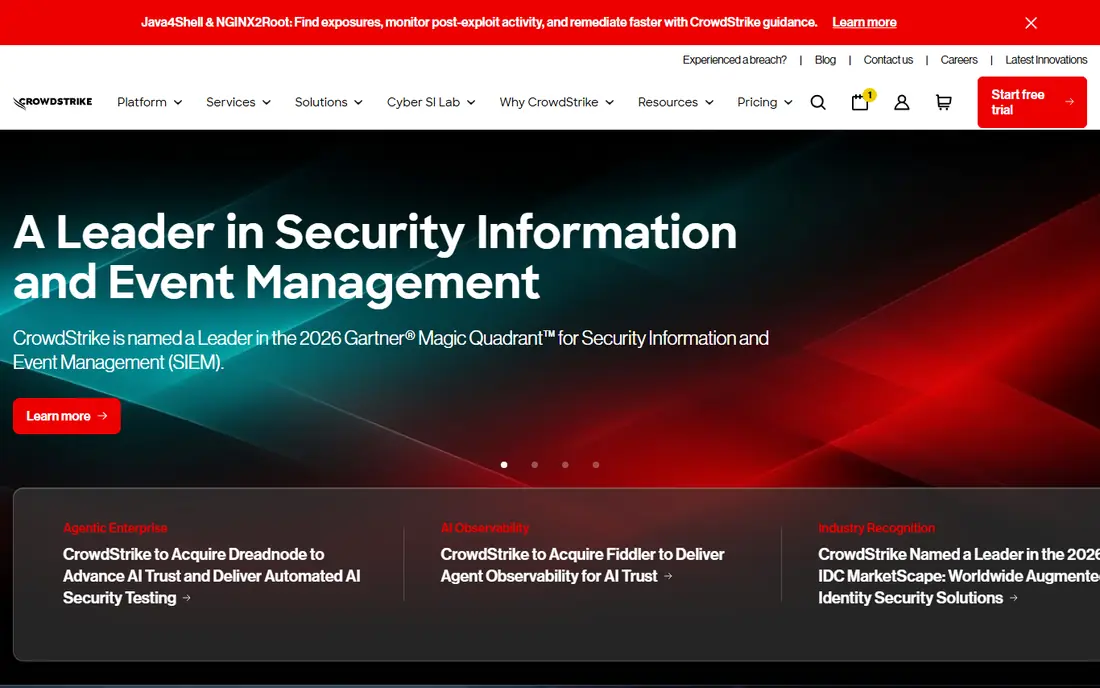
CrowdStrike Falcon is the most direct rival to SentinelOne for teams that want a cloud-native endpoint platform. Its agent is known for light system impact, its detection and investigation tools are well regarded, and its threat intelligence feeds the platform with current attack context. For security teams that live in detection, hunting, and response work, Falcon is a familiar, capable home.
Price and complexity are the watch points. Falcon modules add cost, and getting full value from the platform benefits from staff who can tune detections and work investigations. If detection quality is the top priority and the budget allows for a premium platform, Falcon is a strong first alternative to evaluate.
- Strong threat detection and telemetry
- Cloud-native architecture
- Broad XDR modules and threat intelligence
- Cost rises with added modules
- Smaller teams may need help to use the full platform well
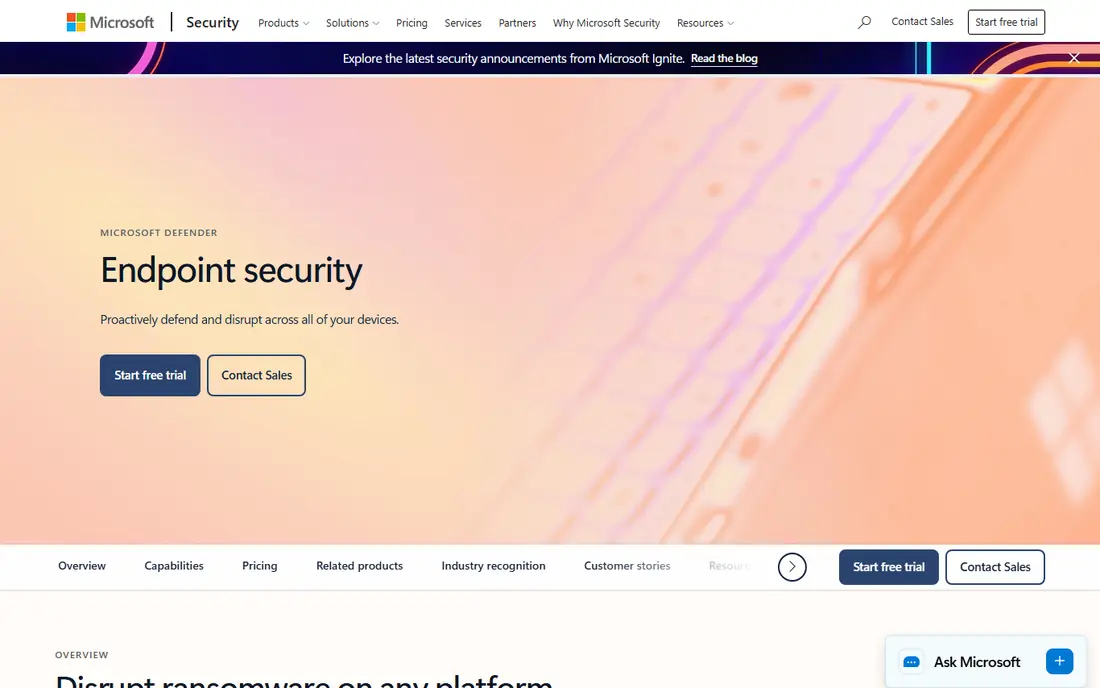
Microsoft Defender for Endpoint makes the most sense when the estate is already Microsoft-based. Identity, email, cloud apps, and endpoint signals connect in one view, and automated investigation can contain many incidents without manual steps. For Windows-heavy teams, deployment is often simpler than adding a separate vendor agent everywhere.
Outside that ecosystem, the advantage fades. Mac and Linux coverage exists, but the integration story is strongest inside Microsoft 365, and some advanced capabilities require higher-tier Microsoft licensing. If your organisation already pays for those licences, Defender is often the most cost-effective serious alternative.
- Deep Microsoft 365 and identity integration
- Automated investigation and response
- No extra agent for Windows in many cases
- Value drops outside a Microsoft-heavy environment
- Advanced features need higher Microsoft licences
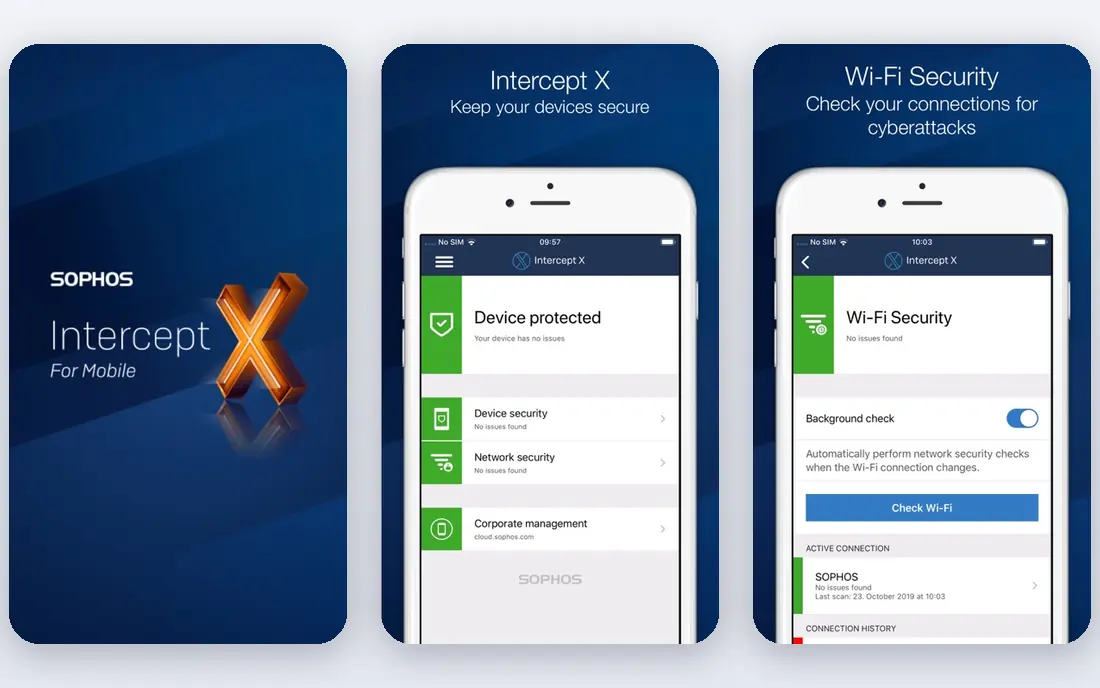
Sophos suits teams that want strong protection without running a full security operations centre themselves. Intercept X combines prevention, detection, and ransomware protection, and Sophos Managed Detection and Response can watch alerts around the clock for teams without night-shift analysts. The central console keeps endpoint, firewall, and other Sophos products in one place where those are in use.
Sophos is less of a deep hunting platform than Falcon, so large security teams that build custom detections may want more room. For small and mid-size businesses that need reliable protection plus a managed safety net, Sophos is a practical, well-supported choice.
- AI prevention and ransomware protection
- Managed detection and response options
- Central Sophos Central console
- Deep customisation is less than CrowdStrike or SentinelOne
- Managed service adds ongoing cost
Bitdefender GravityZone is a value leader for small and mid-size businesses that need solid endpoint protection without enterprise pricing. Prevention, device control, and central management cover the daily job well, and higher tiers add EDR for teams that need detection and investigation. Published per-device pricing in some regions makes budgeting clearer than quote-only rivals.
The trade is depth at the top end. GravityZone is not positioned as a full XDR platform in the same way as Falcon, so very large security teams may find its investigation tools lighter. For a business that wants dependable protection at a fair price, it is an excellent alternative.
- Strong prevention at a competitive price
- Clear business tiers
- EDR available on higher tiers
- Advanced EDR and XDR features need higher tiers
- Console depth is less than premium XDR platforms
ESET PROTECT appeals to teams that value a light agent and steady prevention. It is known for efficient resource use, which matters on older laptops and servers, and its alerting is focused rather than noisy. The PROTECT platform scales from a single console for small teams to larger deployments with EDR options.
Detection and response depth is not its main selling point compared with premium EDR platforms, so teams that hunt threats daily may want a stronger investigation tool. For prevention-first teams, schools, clinics, and small businesses with modest security staff, ESET is a reliable, low-friction pick.
- Light system footprint
- Low false positives in public testing
- Clear per-device tiers
- EDR depth is narrower than Falcon or SentinelOne
- Interface feels utilitarian
Cynet tries to give mid-size teams an all-in-one platform without stitching together several vendors. Endpoint protection, detection, user behaviour analytics, network analytics, and deception sit in one console, and the vendor's round-the-clock support is part of the appeal for teams without a large security staff. That consolidation can reduce both tool sprawl and alert fatigue.
The ecosystem is smaller than the largest rivals, and some integrations and third-party tooling are narrower. For a mid-size team that wants one platform and human backup, rather than a best-of-breed stack it must run itself, Cynet is a strong alternative to consider.
- EPP, EDR, network analytics, and deception in one platform
- 24/7 expert support included in the model
- Simpler management
- Smaller ecosystem than CrowdStrike or Microsoft
- Pricing needs a quote for most buyers
Check Point Harmony Endpoint focuses on stopping threats before they run, with anti-ransomware, zero-day protection, and behavioural analysis in the agent. Central management keeps policies consistent across laptops and servers, and the agent is designed to stay light. Teams already using Check Point network security will find the integration story familiar.
Standalone buyers should check how much of the value depends on the wider Check Point platform, since the best experience often comes with that ecosystem. As a prevention-strong endpoint tool with a respected security vendor behind it, Harmony Endpoint deserves a place on the shortlist.
- Comprehensive threat prevention including anti-ransomware
- Central management
- Lightweight agent
- Full platform value benefits from other Check Point products
- Pricing is quote-based for many buyers
FortiEDR suits organisations that already run Fortinet firewalls and network security. Endpoint detections can share context with network controls, and automated response can isolate a device quickly when behaviour looks malicious. That fabric integration is the main reason to choose FortiEDR over a standalone endpoint vendor.
For a small team with no Fortinet estate, the case is weaker, and pricing may feel high for the endpoint piece alone. If Fortinet already protects the network, adding FortiEDR gives a coherent, centrally managed endpoint layer that fits the existing security design.
- Real-time detection and automated response
- Strong fit with Fortinet Security Fabric
- Behaviour-based protection
- Cost-benefit is weaker for very small teams
- Best value comes inside a Fortinet estate
ThreatLocker takes a different approach: instead of only detecting bad software, it controls what software is allowed to run at all. Application allowlisting, ringfencing, and storage control give administrators tight control over endpoints, which suits regulated environments and teams tired of chasing new malware variants. Support is frequently praised in public reviews.
That control needs work. Allowlisting requires an initial learning period, exceptions for legitimate tools, and ongoing tuning as software changes, or users will hit blocks. For teams willing to run a zero trust model, ThreatLocker is a powerful complement or alternative to classic EDR, but it should be trialled with real user workflows first.
- Application allowlisting and ringfencing
- Granular control over what can run
- Strong support reputation
- Allowlisting needs careful setup and ongoing tuning
- Different model from classic EDR, so staff need training
How we picked these
We compared official product and pricing pages and public reviews, and we kept only tools that protect endpoints with detection or prevention as a core job. We excluded pure cloud security posture tools and consumer-only antivirus products, since they do not replace an endpoint platform for a business. Where pricing depends on devices, modules, or a quote, we wrote See website rather than printing a figure that would not match your estate.
What to check before you choose an endpoint platform
Start with a trial on your actual devices, including older laptops and any servers in scope. Measure agent impact on boot, on common apps, and on battery where relevant, and test how the console handles a simulated incident from alert to containment. Vendor demos on clean machines rarely show the friction that appears on a real, messy estate.
Next, check managed service needs honestly. If no one watches alerts at night or at weekends, a managed detection and response option may matter more than an extra detection feature. Ask who responds, how fast, and what the vendor can do without waiting for your team, and get that in writing.
Finally, check exit and data questions: how long telemetry is kept, how alerts export to your ticketing system, and what happens to agents if you leave. Endpoint security is a long commitment, so a platform that fits your staff, your existing tools, and your budget will serve you better than the most featured tool your team cannot run well.
Frequently asked questions
Is CrowdStrike better than SentinelOne?
Neither is better for every team. CrowdStrike is often favoured for threat intelligence and XDR breadth, while SentinelOne is often favoured for autonomous response and ransomware rollback. Trial both on your devices and compare detection, agent impact, and console workflow for your staff.
Can a small business use these endpoint tools?
Yes. Bitdefender, ESET, and Sophos offer small-business tiers and managed options, while CrowdStrike and Microsoft also offer small-team entry points. Start with device count, managed service needs, and budget, then shortlist two tools for a trial.
Do I still need antivirus if I have EDR?
Modern EDR platforms include prevention, so a separate consumer antivirus is usually unnecessary and can conflict with the agent. Check the vendor guidance before running two endpoint agents on the same device.
What is the difference between EDR and XDR?
EDR focuses on endpoints such as laptops and servers, while XDR extends detection across endpoints, email, cloud, identity, and network data in one view. XDR suits larger teams with several data sources, while EDR is enough for many small and mid-size estates.
How much does endpoint protection cost?
Pricing depends on device count, modules, and whether managed detection is included, so most enterprise vendors quote rather than publish a single price. Budget for the agent, the console, and any managed service together, not just the licence line.
Sources
- https://www.crowdstrike.com
- https://www.microsoft.com/en-us/security/business/endpoint-security/microsoft-defender-endpoint
- https://www.sophos.com
- https://www.bitdefender.com/business/
- https://www.eset.com/business/
- https://www.cynet.com
- https://www.checkpoint.com
- https://www.fortinet.com
- https://www.threatlocker.com
See where you really rank - block by block
ProMapRanker scans Google Maps across a grid of your service area. Simple monthly plans from $19, white-label on every plan.
Start freeKeep reading
 zoro.to alternatives
Best Zoro.to Alternatives in 2026
We compare the best zoro.to alternatives in 2026, listing only legal licensed anime streaming services, from Crunchyroll to free options for fans today.
Read → zip alternatives
Best Zip Alternatives in 2026
We compare the best zip alternatives for buy now, pay later in 2026, covering pay-in-4 plans, fees, spending limits, and credit reporting options today.
Read → yesware alternatives
Best Yesware Alternatives in 2026
Compare the best yesware alternatives for sales email tracking, templates, and sequences, with current pricing and honest tradeoffs for small sales teams.
Read →