 ProMapRanker
Selenium Alternatives in 2026

Key takeaways
- Playwright is the strongest default for new web projects, with auto-waiting and three browser engines.
- Cypress offers the best developer experience for JavaScript front-end teams.
- WebdriverIO and Nightwatch keep WebDriver and Grid compatibility for teams that cannot drop it.
- Katalon, mabl, and testRigor reduce coding, with different trade-offs in price and control.
- Puppeteer and TestCafe suit focused, low-setup jobs where a full framework is overkill.
Quick comparison
| Pick | Great for | Pricing starts at | Free tier | |
|---|---|---|---|---|
 Playwright | modern web apps and fast, stable tests | Free | Yes | Visit |
 Cypress | JavaScript teams testing modern front ends | Free | Yes | Visit |
 Puppeteer | Chrome-focused automation and scraping | Free | Yes | Visit |
 WebdriverIO | teams that want to keep WebDriver | Free | Yes | Visit |
 TestCafe | no-plugin browser testing for teams | Free | Yes | Visit |
 Katalon Studio | mixed-skill teams needing codeless and coded tests | See website | Yes | Visit |
 mabl | low-code tests with AI-assisted maintenance | See website | Free trial | Visit |
 testRigor | tests written in plain English | See website | Free trial | Visit |
 Nightwatch | Node.js teams that want a test runner | Free | Yes | Visit |
The best selenium alternatives
Selenium remains a standard for enterprise web automation, but flaky waits, setup effort, and maintenance push many teams to newer tools. The alternatives below split into code frameworks, WebDriver-compatible options, and low-code tools that reduce hand-written tests.
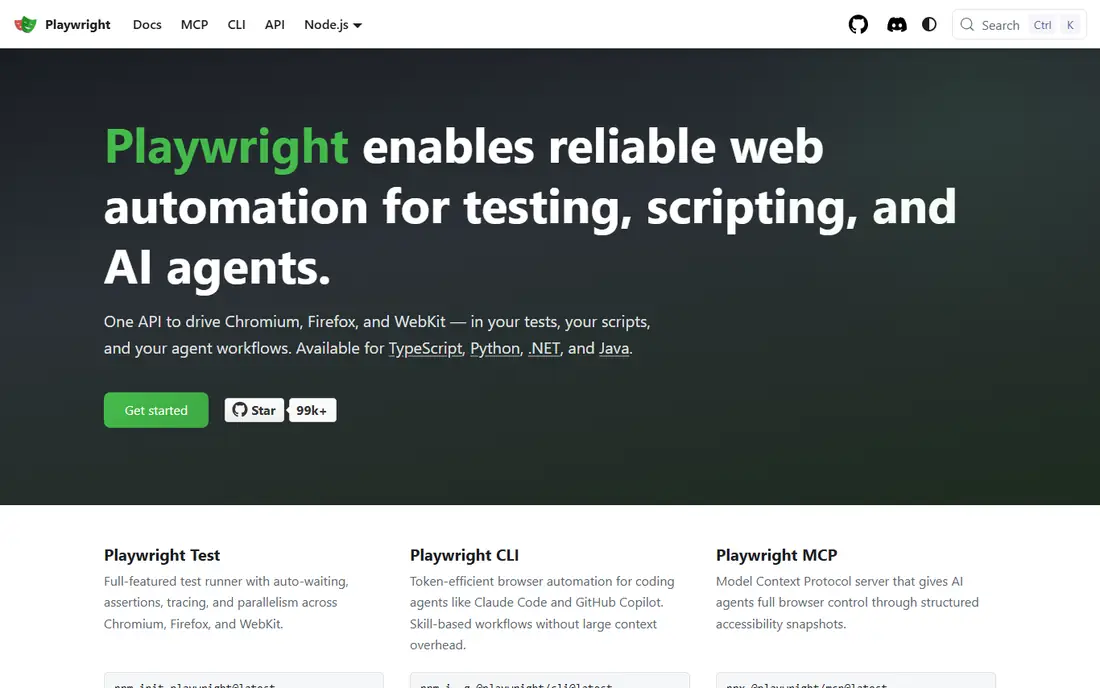
For many readers, this is the first option worth a close look. Playwright, from Microsoft, has become the default choice for many new web test projects. It automates Chromium, Firefox, and WebKit through one API, with auto-waiting locators that reduce the flaky waits that frustrate Selenium teams. Its trace viewer and debugging tools make it easier to see why a test failed, not just that it failed.
The main cost is migration. Playwright does not use WebDriver in the Selenium sense, so an existing Selenium suite needs rewriting, not just re-pointing. Teams also need code skills in JavaScript, Python, Java, or .NET. For new projects, that cost is worth paying. For large legacy suites, plan the move in stages.
- Auto-waiting locators
- Chromium, Firefox, and WebKit in one API
- Strong trace viewer
- Needs code skills
- API differs from WebDriver, so migration takes work
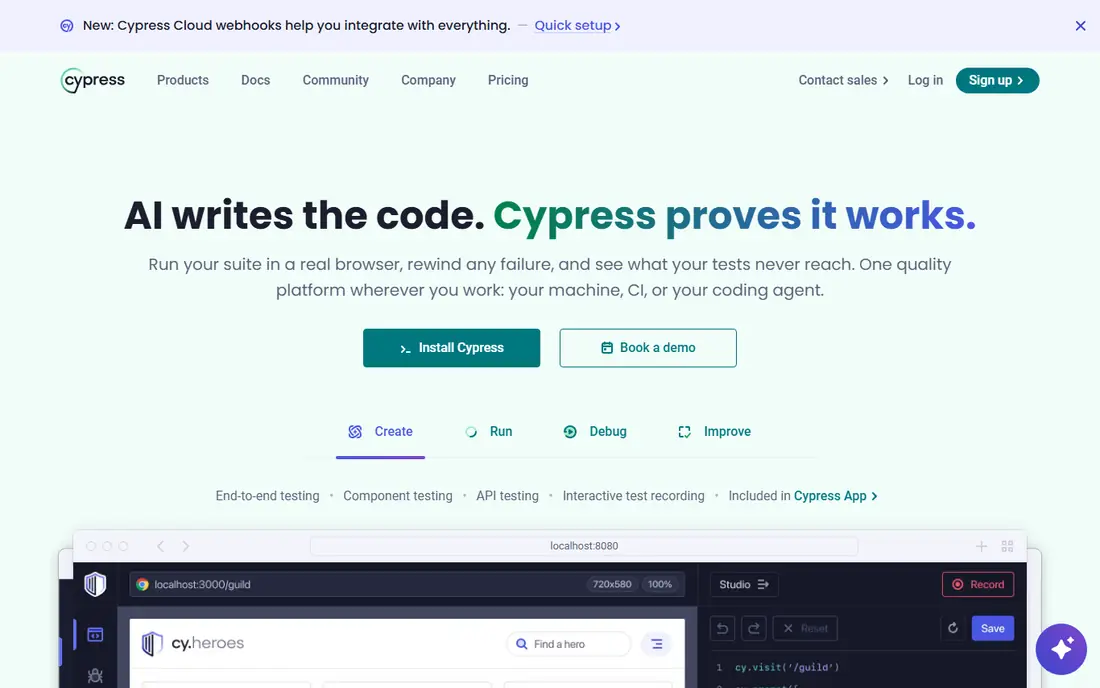
A different kind of fit shows up here. Cypress is loved by JavaScript and front-end teams because it runs tests inside the browser, giving fast feedback and time-travel debugging. You can watch a test step by step, see the app state at each point, and reload quickly while developing. Local use is free and open-source, which makes it easy to start.
The limits matter for some teams. Multi-browser coverage and multi-tab flows are narrower than Playwright or Selenium, and parallel runs and deeper reporting sit in Cypress Cloud, which is paid. If your app is a modern single-page app and your team writes JavaScript, Cypress offers one of the best developer experiences here.
- Runs in the browser for fast feedback
- Time-travel debugging
- Easy setup for JS teams
- Multi-browser and multi-tab support is narrower
- Cloud features cost extra
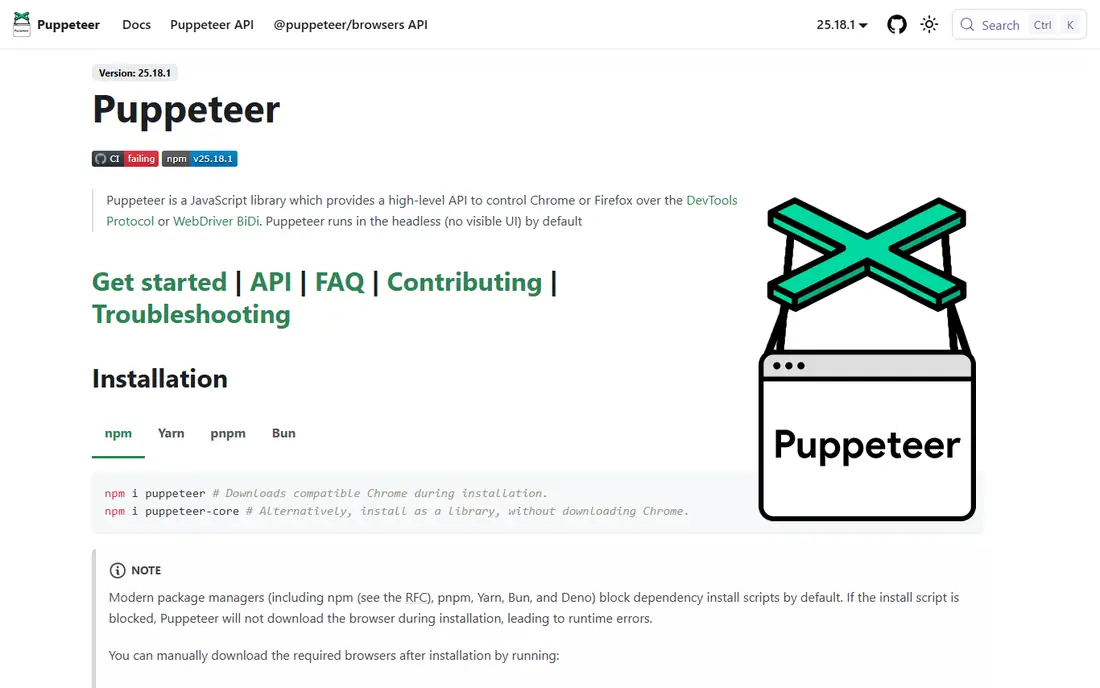
This one earns its place for a clear reason. Puppeteer, from Google, controls Chrome and Chromium with a direct protocol, which makes it fast for headless tasks. It suits screenshots, PDF generation, performance monitoring, and scraping, as well as focused browser automation. Setup is light for Node.js teams, and the API is straightforward for single-browser jobs.
It is not a full multi-browser test framework in the way Playwright or Selenium are. Firefox support exists but is secondary, and test running, reporting, and parallel features need to be added by the team. Use Puppeteer when Chrome is enough and speed matters. Use Playwright when you need several browsers and a test runner.
- Fast headless Chrome control
- Good for screenshots, PDFs, and monitoring
- Google maintained
- Chrome-focused by design
- Not a full multi-browser test framework
If the options above feel too narrow, consider this one. WebdriverIO is a good middle path for teams that do not want to abandon WebDriver. It speaks the W3C WebDriver protocol, works with Selenium Grid, and offers runners and plugins for common test setups. That means existing WebDriver knowledge and infrastructure can carry over, which lowers migration risk.
Setup is more involved than Playwright or Cypress, and the docs assume some testing experience. Teams that want the simplest possible start may prefer Cypress or Playwright. Teams that must keep Grid, or that have WebDriver-based device labs, will value WebdriverIO most.
- Speaks W3C WebDriver
- Works with Selenium Grid
- Many plugins and runners
- Setup is more involved than newer tools
- Docs assume some test experience
Here is a pick that suits a smaller, specific audience. TestCafe stands out because it needs no browser plugins and no WebDriver setup. You install it, write tests, and run them across browsers, with concurrency available through a simple flag. That low setup cost suits teams that want to test without maintaining a Grid or plugin layer.
The community is smaller than Playwright or Cypress, so examples and third-party integrations are fewer. That matters when you hit an edge case or need a niche integration. For straightforward web testing with minimal infrastructure, TestCafe is a clean, open-source pick.
- No browser plugins or WebDriver setup
- Concurrent runs with one flag
- Open-source
- Smaller community than Playwright or Cypress
- Fewer cloud integrations
This entry stands out for how it handles the basics. Katalon Studio suits teams with mixed skills, where some testers record tests and others write code. It offers record and playback, scripting in Java and Groovy, and coverage across web, API, mobile, and desktop. It can also import Selenium IDE projects, which eases the move from simple recorded Selenium tests.
The free version covers a lot, but advanced features and higher limits sit in paid plans, and pricing can rise for larger teams. The install is also heavier than a code-only framework. For teams that need both codeless and coded paths in one tool, Katalon is a practical Selenium replacement.
- Record and playback plus scripting
- Imports Selenium IDE projects
- Covers web, API, and mobile
- Paid tiers rise in price
- Heavier install than a code-only framework
Another strong choice, with a trade-off worth naming. mabl is aimed at teams that want fewer tests written by hand. It offers low-code test creation, cloud runs, and auto-healing that adapts when page elements change, which can cut maintenance work. It can also convert existing Selenium runs into mabl tests, which helps teams that want to move without starting from zero.
Full use is paid, and teams that need deep code control for complex cases may find a framework more flexible. Pricing needs a quote, so budgeting takes a sales conversation. For product teams that want stable, low-maintenance UI tests without a large automation team, mabl is worth a trial.
- Low-code test creation
- Auto-healing for changed elements
- Cloud runs and reporting
- Paid only for full use
- Less control than a code framework for complex cases
For readers who want a simpler route, this one helps. testRigor lets testers write steps in plain English, such as clicking a button or checking a text value, instead of writing locator code. That opens test creation to product managers and manual testers, and it covers web and mobile flows. For teams where coding is the bottleneck, that shift can increase coverage quickly.
Plain-English tests still need review, and complex logic can be harder to express than in code. Pricing is not fully public for all plans, so teams should get a quote early. If your bottleneck is who can write tests, testRigor is a strong alternative. If your bottleneck is complex test logic, a code framework may fit better.
- Plain-English test steps
- Low-code creation
- Web and mobile coverage
- Paid pricing is not fully public
- Plain-English tests still need review and care
The last pick in this list fills a gap the others leave open. Nightwatch is a Node.js test framework with a built-in runner and WebDriver support, so it fits teams that already work in JavaScript and want a structured test setup. It works with Selenium Grid, supports page objects, and covers web testing with a clear, code-first approach. For Node teams that want more structure than a raw library, Nightwatch is a solid pick.
The ecosystem is smaller than Playwright or Cypress, so community examples and plugins are fewer. Setup also assumes Node.js knowledge, which is fine for JS teams but less so for others. If your team is JavaScript-first and wants WebDriver compatibility with a runner included, Nightwatch deserves a look.
- Built-in test runner
- WebDriver support
- Works with Selenium Grid
- Smaller ecosystem than Playwright
- Setup needs Node.js knowledge
How we picked these
We compared official documentation, pricing pages, and license terms for each tool, and we noted where pricing is quoted rather than listed. We favored tools that exist and work in October 2026, that automate real browser testing, and that offer a clear migration path or a clear reason to switch from Selenium. We did not claim hands-on testing we did not do, and we treated cloud pricing as separate from free local use.
How to pick a Selenium alternative without a painful migration
Start with your team, not the tool list. If your team writes JavaScript and tests a modern front end, trial Cypress and Playwright side by side on the same five flows. If your team must keep Grid or WebDriver, trial WebdriverIO and Nightwatch first. If coding is the bottleneck, trial Katalon, mabl, or testRigor with a non-developer on the team. Measure flakiness over at least a week of runs, not a single demo day, and count how long a broken test takes to fix. Also check browser coverage, parallel run costs, and CI integration before you commit. A tool that is fast in a demo but flaky in CI will cost more than a slower, steadier one.
Frequently asked questions
What are the best selenium testing alternatives?
Playwright, Cypress, WebdriverIO, TestCafe, and Katalon are the most common picks, with Playwright best for new projects, Cypress best for JavaScript teams, and WebdriverIO best for keeping WebDriver compatibility.
Is Playwright better than Selenium?
For most new web projects, yes, because Playwright offers auto-waiting locators, three browser engines in one API, and strong debugging tools. Selenium still fits legacy systems and teams that need its broad language and Grid ecosystem.
Which Selenium alternative is free?
Playwright, Cypress local use, Puppeteer, WebdriverIO, TestCafe, and Nightwatch are free and open-source, while Katalon offers a free version and mabl and testRigor offer trials. Cloud runs, parallel execution, and reporting often cost extra.
What is the best low-code Selenium alternative?
Katalon Studio offers record and playback plus scripting, mabl offers low-code creation with auto-healing, and testRigor offers plain-English steps. Katalon suits mixed-skill teams, mabl suits low-maintenance UI tests, and testRigor suits teams where coding is the bottleneck.
Sources
See where you really rank - block by block
ProMapRanker scans Google Maps across a grid of your service area. Simple monthly plans from $19, white-label on every plan.
Start freeKeep reading
 zscaler alternatives
Best Zscaler Alternatives in 2026
Looking for zscaler alternatives? We compare 9 SASE and zero trust platforms on architecture, data protection, pricing, and fit for your network and team.
Read → zapier alternatives free
Best Zapier Alternatives Free in 2026
Nine automation tools for zapier alternatives free in 2026, all with genuinely free tiers, plus free plan limits, starting prices and upgrade paths explained.
Read → which platform is best for online reputation
Which Platform Is Best for Online Reputation in 2026
Wondering which platform is best for online reputation? We compare 8 review, listing, and response tools for small and multi-location businesses and agencies.
Read →