 ProMapRanker
Best Segment Alternatives in 2026

Key takeaways
- RudderStack and Jitsu give small teams a real free starting point, while most enterprise platforms in this list are priced by quote.
- Hightouch and Census suit teams that already trust a cloud data warehouse and want to send clean audiences back to everyday tools.
- Tealium and Treasure AI fit larger teams that need consent controls, identity work, and many destinations in one governed setup.
- mParticle, Lytics, and BlueConic put more weight on mobile data, profiles, and marketer-led audience building than on raw pipelines alone.
- Before you switch, list your sources, destinations, and monthly volume, because those three facts drive the quote more than any feature list.
Quick comparison
| Pick | Great for | Pricing starts at | Free tier | |
|---|---|---|---|---|
 RudderStack | Warehouse-first customer data teams | Free | Yes | Visit |
 mParticle | Mobile-first consumer brands | See website | No | Visit |
 Tealium | Enterprise tag and consent management | See website | No | Visit |
 Treasure AI | Enterprise customer profiles with AI help | See website | Free trial | Visit |
 Lytics | Marketer-led audience building | See website | No | Visit |
 BlueConic | First-party customer profiles | See website | No | Visit |
 Hightouch | Activating warehouse data | Free | Yes | Visit |
 Census | Warehouse syncs for operations teams | See website | No | Visit |
 Jitsu | Open source event pipelines | Free | Yes | Visit |
The best segment alternatives
These tools collect customer events, build profiles, and send data to analytics, advertising, and messaging tools. We compared them on deployment choice, identity handling, destination range, and how clear the entry price is.
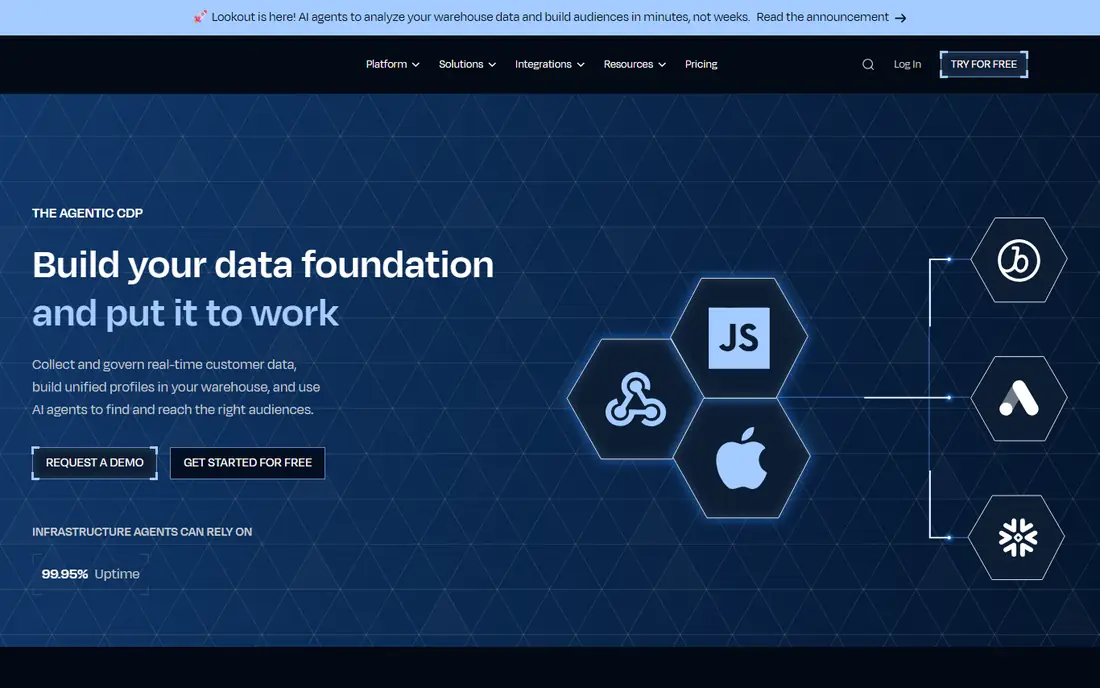
RudderStack fits teams that want customer events to land in their own warehouse first. It collects data from websites, apps, and servers, then routes that data to a warehouse and to downstream tools. That order matters, because the warehouse becomes the record you can query, audit, and reuse, rather than a copy locked inside one vendor.
The trade-off is effort. Small teams can start free and learn the event model, but larger volumes and governance features move into paid plans. If your team has data help, RudderStack is a strong, flexible pick. If you need a marketer-only setup with no code, ask for a guided trial before you commit.
- Free tier for smaller volumes
- Warehouse destinations
- Open source core for self-hosting
- Paid tiers need a sales conversation for larger use
- Setup still needs data engineering time
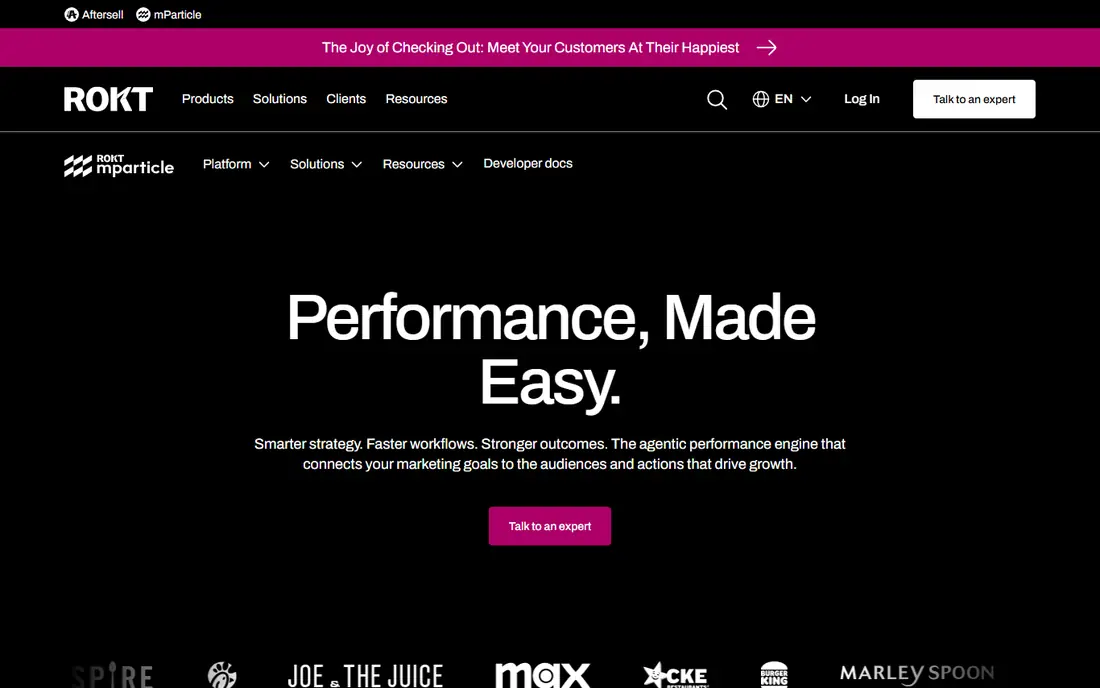
mParticle is built for brands where the app is the main customer touchpoint. It standardizes events, cleans common data problems, and forwards audiences to advertising and messaging partners. For teams with iOS and Android apps plus a website, that mobile focus can save a lot of manual mapping work.
The catch is scale and cost. This is an enterprise-grade platform, and pricing is not published as a simple monthly rate. Expect a sales process, a scoping call, and a plan tied to volume and features. It suits mid-size and large consumer brands better than a solo founder with one website.
- Strong mobile SDK coverage
- Data quality and governance controls
- Wide partner integrations
- Pricing is quote-based
- Implementation can be heavy for small teams
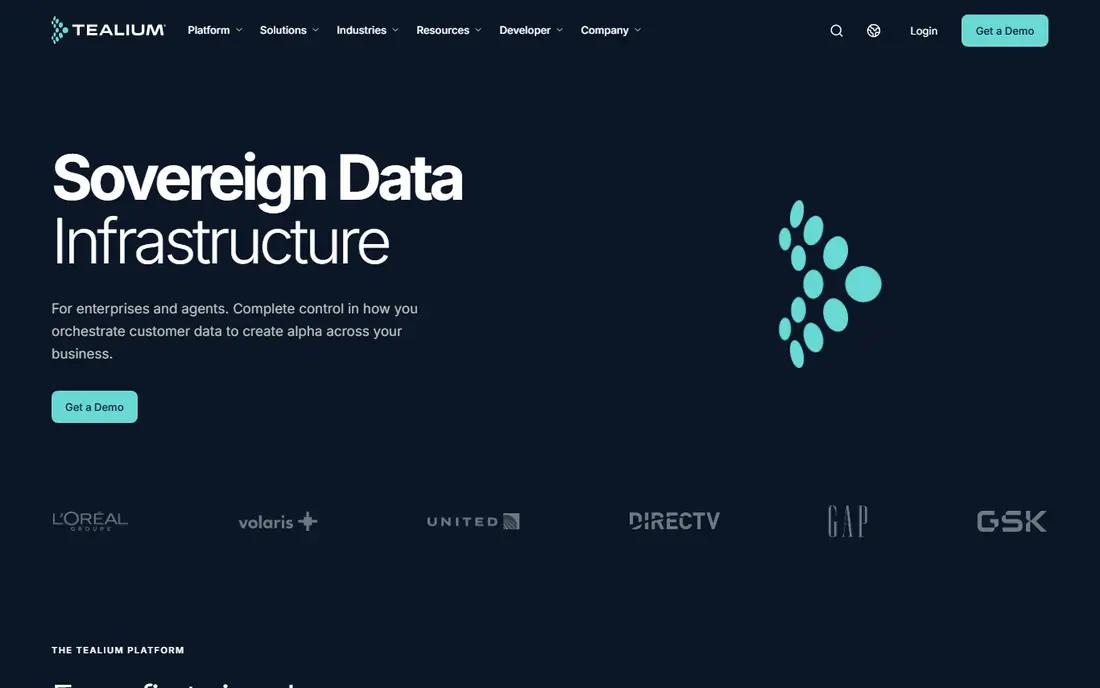
Tealium starts from a different strength than most tools here: control over tags and data collection itself. Its tag manager, event stream, and audience platform can work together, which helps teams that must manage consent, vendor tags, and data quality across many sites and apps. That control is useful in regulated industries and in large, multi-brand groups.
The downside is price clarity. Tealium does not publish a simple entry price for the full platform, so budgeting needs a quote based on volume, modules, and support. Teams that only need basic event routing will find it more than they need. Teams that need governance will find the structure worth the extra process.
- Tag management plus event streaming and profiles
- Consent tools for regulated teams
- Real-time audience options
- Quote-based pricing
- Modules can make the total hard to compare at first
Treasure AI, formerly Treasure Data, is aimed at enterprise marketing and data teams that need unified profiles across brands or business units. It offers a complete option with managed storage and profile unification, plus a composable option that works with an existing cloud warehouse. AI-assisted audience tools can help teams build segments and journeys without starting from a blank query each time.
That breadth comes with enterprise pricing and packaging. Plans are custom annual subscriptions based on profiles and behavioral data, and some AI suites carry separate licenses or usage credits. Ask exactly which activation features are included in the base plan, because the answer changes the real cost.
- Managed profile storage
- Composable warehouse option
- AI-assisted audience building
- Quote-based annual pricing
- AI add-ons can add separate costs
Lytics gives marketers a clearer path from data to audience than a pure pipeline tool. It builds customer profiles, supports identity work, and lets teams define segments for email, advertising, and on-site personalization. For a marketing team that wants to move faster without waiting for a data ticket for every audience, that focus is the main appeal.
The limit is transparency on price. Lytics does not publish a simple entry rate, so small teams should request a quote early and check what is included for data sources and destinations. It is best for teams that already collect decent first-party data and need to use it better, not for teams still fixing basic tracking.
- Audience builder for marketers
- Identity and profile tools
- Content and campaign activation
- Pricing is quote-based
- Smaller teams may find setup support limited
BlueConic centers the work on a single customer profile built from first-party data. It helps teams collect consented data, stitch identities, and build segments that can be sent to marketing tools. That profile-first view suits publishers, retailers, and other businesses that depend on direct customer relationships.
As with other enterprise tools here, pricing is quoted rather than listed, and the platform is sized for teams with real volume and governance needs. A small business with one channel may not need this depth. A team managing several channels and consent rules will get more value from the profile and privacy controls.
- Profile-first design
- Consent and privacy controls
- Marketer-friendly segmentation
- Enterprise pricing by quote
- May be more than a small site needs
Hightouch works in the opposite direction from a classic collector: it starts with data already in your warehouse and sends audiences and models back to tools your team uses every day. Its free Basic reverse ETL plan includes a limited number of active syncs, with unlimited destinations and seats, which makes it easy to test a real sync before paying.
The main question is volume. Self-serve tiers raise the sync limit but keep hourly frequency, and larger business plans are sized by usage. If your warehouse is already clean and trusted, Hightouch can be the fastest route to activation. If your warehouse is messy, fix the data model first, because activation will only repeat the same errors faster.
- Free reverse ETL tier
- Unlimited destinations and seats on the free tier
- Audience and journey tools
- Paid pricing is usage-based and quoted for larger plans
- Hourly sync limits apply on self-serve tiers
Census is a close cousin of Hightouch: it treats the warehouse as the source of truth and syncs trusted records to sales, marketing, and support tools. That approach helps operations teams avoid building one-off scripts for each destination. It also keeps definitions in one place, so a sales audience and a marketing audience can share the same customer logic.
The catch is the same as the benefit. Census is only as good as the warehouse behind it, and pricing is quoted based on volume and connectors. Teams without a warehouse, or with a warehouse that changes often, should sort that foundation first. Teams with a strong warehouse will find Census a practical, focused activation layer.
- Syncs warehouse models to business tools
- Audience and entity support
- Governance and observability features
- Pricing is quote-based
- Needs a solid warehouse to deliver value
Jitsu is an open source customer data platform for teams that want a pipeline they can inspect and run themselves. Its free tier includes a set number of active events per month, unlimited connectors, and unlimited destinations, with cloud, private cloud, and on-premises deployment options. That flexibility appeals to engineering-led teams and to teams with strict hosting rules.
The Business tier starts at $99 per month and adds higher event volume and more frequent syncs, while Enterprise is custom. Jitsu is less of a marketer dashboard and more of a data pipeline, so teams should expect some technical setup. For a team that values control and open code, that trade is often worth it.
- Free cloud tier with generous event allowance
- Open source deployment options
- Unlimited connectors on the free tier
- Business tier starts at $99 per month
- Advanced sync frequency needs paid plans
How we picked these
We compared official product pages, pricing pages, and public documentation for customer data platforms that collect events, build profiles, or activate warehouse data. We kept tools that are live in October 2026, that serve more than one destination, and that offer a clear alternative to a single-vendor data model. We left out tools that only do analytics, only do messaging, or that have retired.
What to check before you switch
Start with a simple inventory. List every source that sends events today, every destination that receives them, and the monthly event or user volume for each. That list will settle most pricing questions and will show which tools can replace your current setup without losing a key destination.
Next, test identity handling with real examples. Pick a customer who uses two devices, an email change, and a guest checkout, and ask how each tool links those records. Good identity work is quiet and boring until it fails, and then it affects reporting, suppression, and personalization at once.
Then check consent and data control. Confirm how the tool handles opt-outs, data deletion requests, and regional rules that apply to your customers. Ask how long raw events are kept, who can export profiles, and what happens to data if you cancel. A clear answer here is worth more than a long feature list.
Finally, run a small pilot on one destination. Send a test audience to one ad platform or one email tool, check the counts against your warehouse, and confirm that suppression and updates behave as expected. A pilot that proves counts and timing will tell you more than a demo ever will.
Frequently asked questions
What are the best segment alternatives?
For most teams, RudderStack is the closest open and warehouse-friendly match, Hightouch and Census are the best warehouse activation options, and Tealium or Treasure AI suit larger governed teams. The right pick depends on your warehouse, your mobile mix, and your budget for implementation.
Is there a free segment alternative?
Yes. RudderStack, Hightouch, and Jitsu all offer free tiers, though each limits events, syncs, or features. They are good for testing and for small products, but larger volumes move into paid plans, so check the limits against your real monthly traffic.
Which segment alternative is best for a data warehouse?
Hightouch and Census are built for that job, because they sync warehouse models to business tools. RudderStack also fits, because it can send events to a warehouse first and then activate from there. Pick Hightouch or Census if the warehouse already holds your trusted customer records.
Do segment alternatives support mobile apps?
Yes, most do, and mParticle is the strongest mobile-first option in this list. RudderStack, Tealium, and Jitsu also offer mobile SDKs. Check SDK support for your exact platforms, including iOS, Android, and any cross-platform framework you use.
How much do segment alternatives cost?
Entry costs range from free to quote-based enterprise contracts. RudderStack starts free with a paid tier from $500 per month in public listings, Jitsu starts free with Business at $99 per month, and Hightouch starts free. The other enterprise tools here are priced by quote, so request a price based on your volume.
Is switching from Segment hard?
It depends on how much custom tracking you have. A clean event plan with named events and consistent properties makes migration faster. A messy plan with ad hoc events will need cleanup first, no matter which tool you choose. Run old and new tracking side by side for a short period and compare counts before you cut over.
Sources
See where you really rank - block by block
ProMapRanker scans Google Maps across a grid of your service area. Simple monthly plans from $19, white-label on every plan.
Start freeKeep reading
 zoro.to alternatives
Best Zoro.to Alternatives in 2026
We compare the best zoro.to alternatives in 2026, listing only legal licensed anime streaming services, from Crunchyroll to free options for fans today.
Read → zip alternatives
Best Zip Alternatives in 2026
We compare the best zip alternatives for buy now, pay later in 2026, covering pay-in-4 plans, fees, spending limits, and credit reporting options today.
Read → yesware alternatives
Best Yesware Alternatives in 2026
Compare the best yesware alternatives for sales email tracking, templates, and sequences, with current pricing and honest tradeoffs for small sales teams.
Read →