 ProMapRanker
Best SecOps Solution Alternatives in 2026


Microsoft and Azure estates · Pricing starts at: See website
Key takeaways
- SecOps here means the platforms a security operations center uses to collect logs, detect threats, investigate alerts, and respond.
- Microsoft Sentinel and Google SecOps suit cloud-first teams, while Splunk and Elastic suit teams that want deep search and custom detections.
- CrowdStrike and Palo Alto Cortex XSIAM suit teams that want endpoint, SIEM, and automation in fewer consoles.
- Most enterprise SecOps pricing is by quote or by data volume, so model costs with your real log volume before you sign.
- Wazuh is the open source option, and it suits teams with the skills to run and tune it themselves.
Quick comparison
| Pick | Great for | Pricing starts at | Free tier | |
|---|---|---|---|---|
| Microsoft Sentinel | Microsoft and Azure estates | See website | No | Visit |
 Google SecOps | Fast search at scale | See website | No | Visit |
 Splunk Enterprise Security | Deep analysis and SPL | See website | Free trial | Visit |
 CrowdStrike Falcon Next-Gen SIEM | Falcon endpoint estates | See website | No | Visit |
 Elastic Security | Search-led engineering teams | See website | Free trial | Visit |
 IBM QRadar SIEM | Regulated on-prem estates | See website | No | Visit |
 Palo Alto Cortex XSIAM | Consolidated SOC platform | See website | No | Visit |
 Rapid7 InsightIDR | Mid-size guided SOC | See website | Free trial | Visit |
 Wazuh | Open source detection | Free | Yes | Visit |
The best secops solution alternatives
Security operations work covers detection, triage, investigation, and response, and the platforms below approach that work from different starting points: cloud SIEM, endpoint-led XDR, or open source detection. We compared official product and pricing pages and public comparisons, and we did not claim hands-on testing. Enterprise prices are often quoted, so we wrote See website where no reliable public starting price exists.
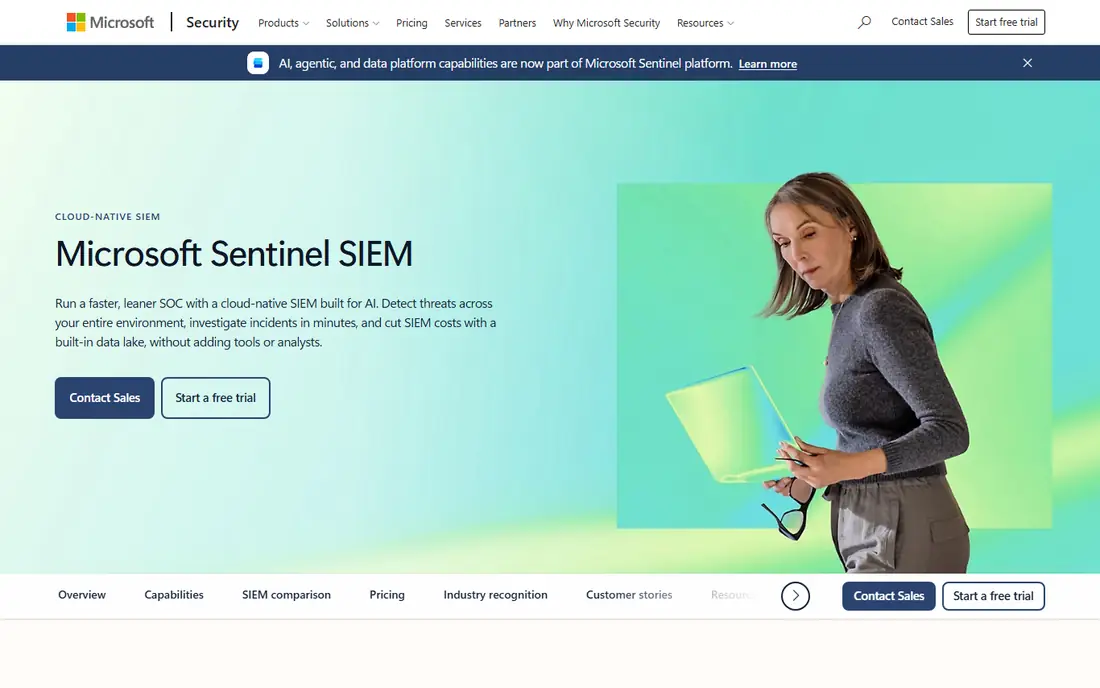
Microsoft Sentinel suits organizations already standardized on Microsoft 365, Entra ID, and Azure, since data from those services flows in with less integration work. Built-in analytics rules, workbooks, and automation playbooks help analysts move from alert to investigation without leaving the Azure portal. User and entity behavior analytics add context about risky accounts, which helps prioritize the alerts that matter.
The pricing model needs care. Ingestion-based billing means a noisy log source or a retention increase can raise the bill fast, so teams should model thirty days of real volume before committing. Sentinel also rewards Microsoft skills, including KQL for queries, which is a hiring and training point for mixed estates. For a Microsoft-centered SOC, it is a natural first candidate.
- Cloud-native SIEM with built-in automation and UEBA
- Strong fit for Microsoft 365 and Azure data
- Security Copilot integration
- Costs follow data ingestion closely
- Teams outside Microsoft estates gain less from the fit
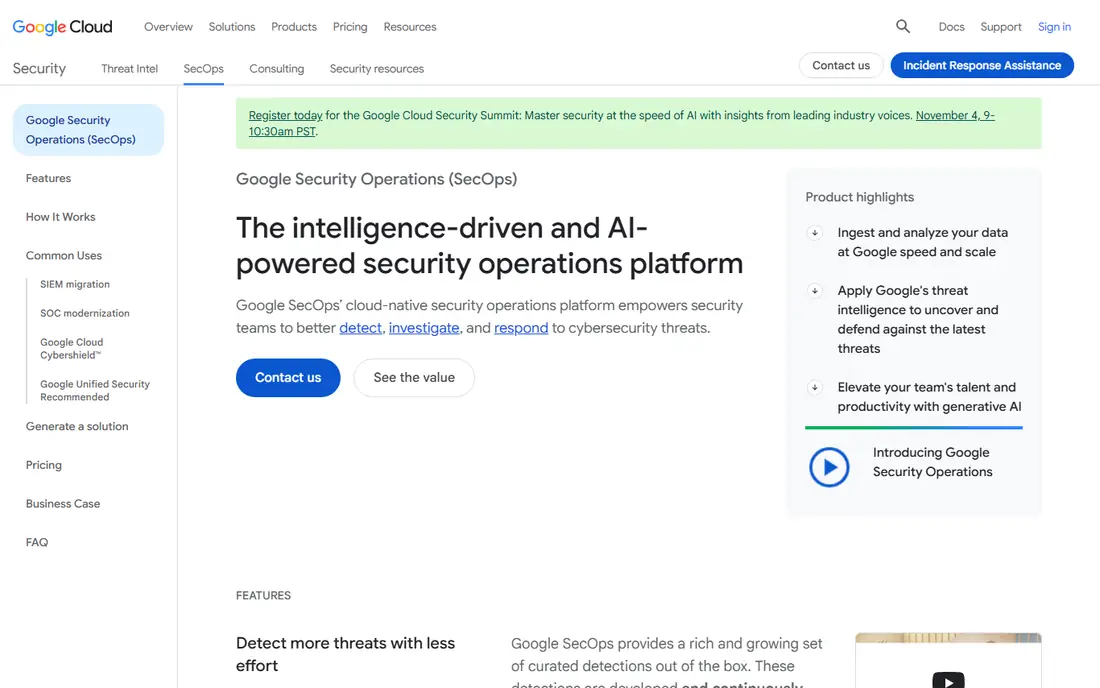
Google SecOps, formerly Chronicle, is built for teams that hunt through huge amounts of log data and need answers in seconds rather than minutes. Its search speed over a year of hot data helps analysts and threat hunters test ideas quickly, and built-in SOAR tools automate routine response steps. Gemini summaries can speed up the first pass of an investigation, though analysts still need to verify findings.
Pricing by quote makes early budgeting harder, and smaller teams may not use the scale that justifies the platform. The value shows most clearly for hunt-heavy teams, cloud estates, and organizations with strict retention needs. If your SOC spends more time waiting on searches than acting on them, Google SecOps deserves a proof of concept with your real data.
- Very fast search over large log volumes and long retention
- SOAR automation included
- Gemini-assisted summaries for investigations
- Quote-based pricing
- Best value for teams with high volumes and hunt-heavy work
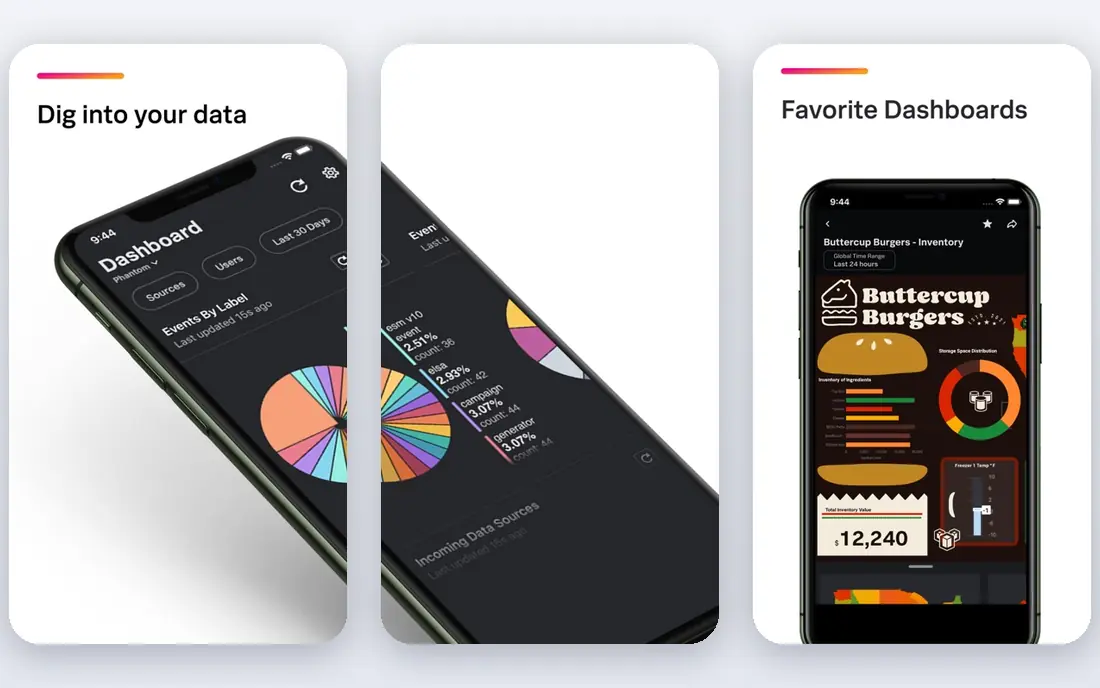
Splunk Enterprise Security remains the depth pick for mature SOCs that write their own detections and need flexible analysis. The Splunk Processing Language lets detection engineers express complex logic, correlate across sources, and build custom dashboards that match their workflow. A large library of apps and content packs covers common log sources, which shortens setup for standard estates.
Cost and staffing are the honest catches. Ingest and workload pricing can produce very large bills at high volumes, and the platform rewards teams with dedicated Splunk skills for tuning, parsing, and upkeep. Smaller teams may find the total cost of ownership hard to justify. For a large SOC with skilled staff and complex analysis needs, Splunk still sets a high bar.
- Powerful search language and analytics
- Huge content and integration library
- Mature enterprise deployment options
- Ingest-based costs can grow very large
- Needs skilled staff to run well
CrowdStrike Falcon Next-Gen SIEM suits organizations already running Falcon for endpoint protection, since endpoint telemetry flows into the SIEM without a separate agent project. Analysts can pivot from a SIEM alert to endpoint detail in one console, which shortens investigations that start on a device. Charlotte AI features aim to speed triage and response, though teams should test them on their own alerts.
Teams without Falcon gain less, since the platform advantage centers on that endpoint data. Third-party log ingestion carries its own charge, so model total volume, not only Falcon data, before budgeting. For a Falcon estate that wants fewer consoles and faster endpoint-led investigations, this is a strong consolidation option.
- SIEM built on the Falcon endpoint platform
- Fast search on Falcon data
- Charlotte AI assistance for triage
- Best value requires existing Falcon use
- Third-party data ingestion is charged separately
Elastic Security appeals to engineering-led teams that already run Elasticsearch or want full control over detections. Rules can live in code, go through review, and be versioned like software, which fits teams that treat detection engineering as a discipline. Kibana dashboards offer flexible visualization, and deployment choices range from self-managed clusters to managed cloud.
The catch is effort. Without tuning, alert quality can lag behind more opinionated SIEMs, and teams without Elastic skills often spend more time on platform upkeep than on investigations. Cost follows resources and deployment mode, so compare self-managed infrastructure against managed pricing honestly. For a technical SOC that values control over turnkey content, Elastic is a compelling choice.
- Open rules-as-code approach
- Flexible Kibana dashboards
- Self-managed, hosted, or serverless deployment
- Out-of-box alert quality needs tuning
- Needs Elastic expertise to run well
IBM QRadar SIEM has served large and regulated organizations for years, and its offense model groups related events into a single investigation item, which helps analysts see an incident rather than a flood of alerts. On-prem deployment suits estates that cannot move logs to the cloud, and EPS-based licensing can suit teams whose log volume is steady but whose event rates are predictable.
Newer cloud-native platforms feel more modern, and teams should ask IBM directly about roadmap direction during evaluation, since the SIEM market has seen ownership and packaging changes. Tuning still takes skilled staff, as with any mature SIEM. For a regulated, on-prem estate that values offense correlation and EPS licensing, QRadar remains a serious candidate.
- Offense correlation that groups related events
- On-prem and managed deployment options
- EPS-based licensing avoids per-gigabyte penalties
- Interface feels dated next to cloud-native rivals
- Needs skilled tuning and care with roadmap planning
Cortex XSIAM aims to replace several SOC tools with one cloud-delivered platform covering SIEM, extended detection and response, and automation. That consolidation can reduce console switching and help automation act across endpoint, network, and cloud data in one workflow. Palo Alto cites a large library of machine learning models for detection, which suits teams that want automation to carry more of the triage load.
The main barrier is transparency, since Palo Alto does not publish XSIAM pricing, so budgeting needs a sales conversation and a proof of concept. Teams outside Palo Alto estates also gain less from the integration story. For a large enterprise ready to consolidate around one vendor, XSIAM is worth a structured evaluation against Sentinel and Splunk.
- SIEM, XDR, and SOAR in one cloud platform
- Large library of machine learning models
- Automation across the SOC workflow
- No published pricing
- Consolidation works best inside Palo Alto estates
Rapid7 InsightIDR suits mid-size teams that need a capable SOC platform without a large dedicated SIEM staff. Guided investigation workflows walk analysts through next steps, and built-in behavior analytics help surface risky users and lateral movement. Setup and daily use feel more approachable than Splunk or Elastic, which matters when one team covers many duties.
Very large teams with deep custom detection programs may find InsightIDR less flexible than Splunk or Elastic, and pricing varies with the size of the estate. For a mid-size organization that wants strong detection, clear priorities, and a guided workflow, InsightIDR balances power and manageability well.
- Guided investigations and prioritized alerts
- User behavior analytics built in
- Manageable setup for mid-size teams
- Less depth for very large custom detection programs
- Pricing depends on assets and users
Wazuh is the open source option for teams with the skills to run their own detection platform. It combines host intrusion detection, log analysis, file integrity monitoring, and vulnerability detection in one free package, and it works on servers, endpoints, and cloud workloads. Small teams and budget-conscious organizations can build a real SOC capability without SIEM license fees.
The cost moves from licenses to labor. Someone must install, update, tune, and monitor Wazuh, and that work never stops, since detection content and rules need care as threats change. Paid support exists for teams that want help, but it adds cost. For a skilled team that values open code and low license cost, Wazuh is the most accessible entry point in this list.
- Free open source platform
- Host intrusion detection, log analysis, and vulnerability detection
- Active community
- Needs self-hosting, tuning, and upkeep
- Enterprise support costs extra
How we picked these
We compared official product and pricing pages and public SIEM comparisons, and we kept only platforms that are live and actively sold or maintained in October 2026. We covered cloud SIEM, endpoint-led SIEM, consolidated SOC platforms, and one open source option, so different SOC sizes and estates are represented. We did not claim hands-on testing, and we avoided invented price figures by writing See website for quote-based and volume-based enterprise pricing.
What to check before you buy
Start with your log volume and retention needs, since they drive cost more than any other factor. Measure thirty days of real volume by source, note growth, and check mandated retention, then model each candidate on the same numbers. A platform that looks cheap at 10 gigabytes a day can become expensive at 100, and a quote that ignores retention will mislead you.
Next, test the analyst workflow, not the demo. Bring a real past incident and your two noisiest alert types into a proof of concept, and time how long a mid-level analyst takes to reach a clear verdict. Test detection creation in the platform language, check how automation handles a routine response, and ask who maintains parsers and rules after go-live. Budget for tuning hours, since every SIEM needs them.
Finally, check fit with your estate and team. A Microsoft shop, a Google Cloud shop, and a Falcon shop will each get different value from the same platform, and a team without dedicated SIEM engineers needs a more opinionated product. Confirm data residency, deployment options, and support hours, and get pricing for growth, not only for day one.
Frequently asked questions
What does SecOps mean?
SecOps, short for security operations, covers the people, processes, and platforms that detect, investigate, and respond to security threats. A SecOps platform usually combines log collection, detection rules, investigation tools, and automation. This article angles the generic phrase as SecOps and SOC platforms, since that is how buyers use these tools.
Is a SIEM the same as a SecOps platform?
A SIEM is a core part of most SecOps platforms, since it collects and analyzes logs, but a full SecOps platform may also include endpoint detection, automation, threat intelligence, and case management. Some vendors sell SIEM alone, while others bundle it with XDR and SOAR. Check which pieces each product actually includes.
How much does a SecOps platform cost?
Most enterprise platforms price by quote, by data volume, or by events per second, so there is no single starting price. Small open source setups can cost only infrastructure and labor, while large enterprise SIEM bills can reach six figures a year. Model your real log volume and retention before you compare quotes.
Which platform is best for a small security team?
Rapid7 InsightIDR and Wazuh suit smaller teams for different reasons: InsightIDR offers guided workflows with less tuning, while Wazuh offers free software for skilled teams. Microsoft Sentinel can also suit a small Microsoft-centered team. Pick based on staff skills and estate, not on feature count alone.
Do I need a SIEM if I already have endpoint protection?
Endpoint protection covers devices, but a SIEM adds logs from cloud services, identity, network, and applications, which reveals attacks that never touch an endpoint alert. Many incidents become visible only when those sources are correlated. A SIEM is most valuable when you need that wider view and a record for investigation.
How long does a SecOps platform take to set up?
A cloud SIEM trial can start in days, but a production deployment with tuned detections, automation, and trained analysts usually takes weeks to months. Log onboarding, parser work, and alert tuning drive most of that time. Plan a phased rollout, starting with critical log sources and high-value detections.
Sources
- https://www.microsoft.com/security/business/siem-and-xdr/microsoft-sentinel
- https://cloud.google.com/security/products/security-operations
- https://www.splunk.com
- https://www.crowdstrike.com
- https://www.elastic.co/security
- https://www.ibm.com/qradar
- https://www.paloaltonetworks.com/cortex/xsiam
- https://www.rapid7.com/products/insightidr/
- https://www.wazuh.com
See where you really rank - block by block
ProMapRanker scans Google Maps across a grid of your service area. Simple monthly plans from $19, white-label on every plan.
Start freeKeep reading
 zoro.to alternatives
Best Zoro.to Alternatives in 2026
We compare the best zoro.to alternatives in 2026, listing only legal licensed anime streaming services, from Crunchyroll to free options for fans today.
Read → zip alternatives
Best Zip Alternatives in 2026
We compare the best zip alternatives for buy now, pay later in 2026, covering pay-in-4 plans, fees, spending limits, and credit reporting options today.
Read → yesware alternatives
Best Yesware Alternatives in 2026
Compare the best yesware alternatives for sales email tracking, templates, and sequences, with current pricing and honest tradeoffs for small sales teams.
Read →