 ProMapRanker
Search Engines Alternatives in 2026

Key takeaways
- The best search engines alternatives split into private engines, independent-index engines, and paid ad-free engines.
- Bing is the closest drop-in replacement for Google, while Brave and Mojeek run their own indexes.
- DuckDuckGo and Startpage protect your identity, but they still draw on Bing or Google results underneath.
- Kagi is the only paid pick here, and it only makes sense if ad-free, tunable search matters enough to pay for.
Quick comparison
| Pick | Great for | Pricing starts at | Free tier | |
|---|---|---|---|---|
 Bing | Closest drop-in Google replacement | Free | Yes | Visit |
 DuckDuckGo | Private everyday search | Free | Yes | Visit |
 Brave Search | Private search with its own index | Free | Yes | Visit |
 Ecosia | Search that funds climate projects | Free | Yes | Visit |
 Startpage | Google results without Google tracking | Free | Yes | Visit |
 Mojeek | Fully independent search results | Free | Yes | Visit |
 Kagi | Ad-free paid search | $5 per month | Free trial | Visit |
 Qwant | European private search | Free | Yes | Visit |
The best search engines alternatives
Google still leads on index size and local results, but the engines below cover privacy, independence, and ad-free search in different ways. We compared official product pages and public privacy descriptions to separate engines that protect your identity from engines that also run their own index.
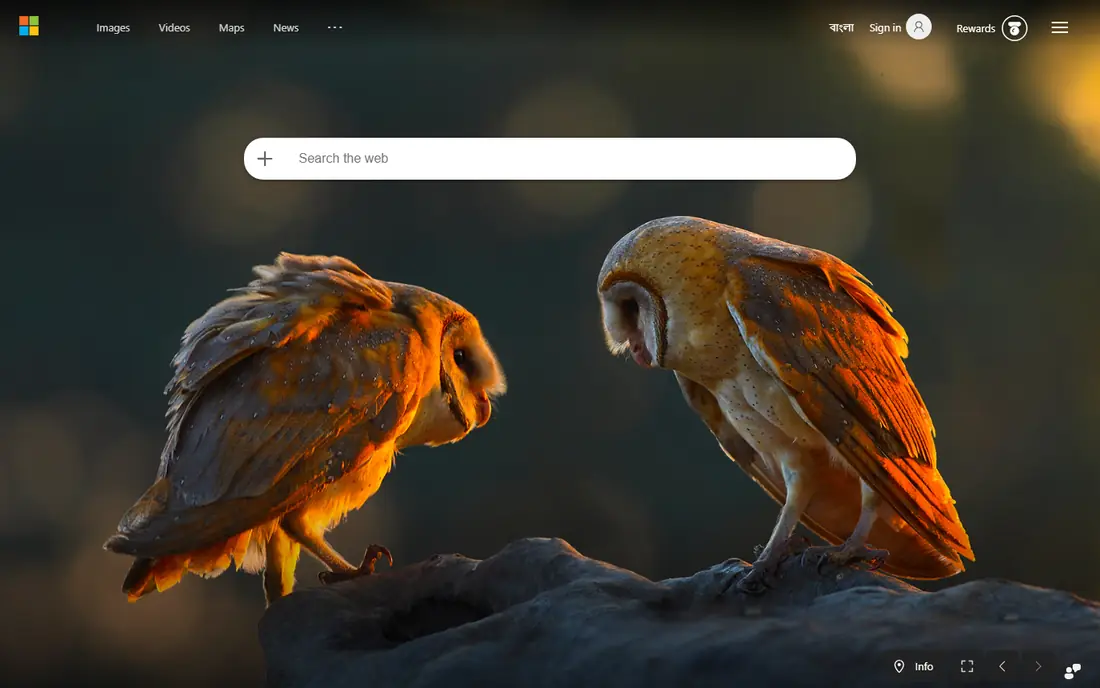
Bing is the easiest switch for most users, because it is a full mainstream engine with its own index, maps, images, and news. It also powers Copilot search features for users who want AI answers alongside classic results. If you want Google-like depth without Google, Bing is the first engine to try.
The trade-off is privacy posture. Bing is a mainstream, ad-supported engine, so check privacy settings and ad personalization controls after you switch. For users whose main goal is privacy rather than depth, DuckDuckGo or Brave may be a better fit.
- Own large index
- Strong images, video, and maps
- Copilot search features
- Microsoft account and personalization defaults need checking
- Ads in results
DuckDuckGo is the simplest private default. It does not build personal search profiles, it offers a browser and mobile apps, and it adds AI-assisted search features for quick answers. For everyday queries, it feels close to a mainstream engine without the tracking layer.
The limit is index independence. DuckDuckGo draws heavily on Bing for traditional results, plus its own crawler, so it does not fully replace the underlying result source. If your goal is to avoid Bing results as well as tracking, Brave or Mojeek is a stronger pick.
- No personal search profiles
- Simple private default
- Browser and app options
- Traditional results rely heavily on Bing
- Local results can be thinner than Google
Brave Search combines the two promises many users want at once: privacy, and an index it crawls itself. That independence matters if you want results that do not come from Google or Bing. It also offers an AI answer feature for direct questions, without requiring an account for basic search.
Brave is still smaller than Google or Bing, so local business results and very niche queries can be thinner. For general web search, news, and research, it is a strong free all-round pick. Keep Google or Bing as a backup for local queries if you need that depth.
- Independent index
- No account needed
- AI answer feature for direct questions
- Local and niche results can be thinner
- Ad-free premium sits inside the Brave browser
Ecosia is a free search engine that uses search revenue to fund tree planting and climate projects. For users who want their everyday searches to support an environmental cause, it turns a routine habit into a small contribution. Switching is free and takes a minute in most browsers.
Ecosia is not a fully independent index, and it draws on Bing and other partners for results. That is fine if your goal is cause plus privacy basics, but not if you want a fully independent result set. Check its current privacy policy for data retention details before you make it your default.
- Free search
- Profits fund tree planting and climate projects
- Simple switch
- Results draw on Bing and partners
- Privacy claims need checking against its policy
Startpage is for users who like Google results but do not want Google tracking. It fetches Google results through an anonymizing proxy, so your identity is not passed to Google with the query. Anonymous View also lets you open a result page without revealing your identity to that site.
The honest limit is that Startpage protects your identity, not the result source. If you want to leave Google results behind, Brave or Mojeek is a better fit. If you want Google quality with a privacy layer, Startpage is the clearest option.
- Google-derived results through an anonymizing proxy
- Anonymous View for pages
- No personal profiles
- Still Google results underneath
- Fewer AI features than assistant tools
Mojeek runs its own index, built by its own crawler, and it states that it does not track users or build profiles. That makes it one of the clearest choices for independence, alongside Brave. It has no AI answer layer by design, which suits users who want classic ranked links rather than synthesized summaries.
The trade-off is scale. A smaller index means some niche, local, or breaking-news queries return fewer or older results than Google. Use Mojeek as a daily default if independence matters most, and keep a larger engine for local or urgent queries.
- Own independent index
- No tracking profiles
- No AI answer layer by design
- Smaller index than Google or Bing
- Local and fresh news results can be thinner
Kagi is the paid pick in this list, and its pitch is simple: pay for search, get no ads, and tune ranking to your taste. The Starter plan is listed at $5 per month for 300 searches, with Professional at $10 per month for unlimited searches in recent pricing checks. A free trial of 100 searches lets you test the difference before paying.
Kagi only makes sense if ads and sponsored results bother you enough to pay, or if you value ranking controls that free engines do not offer. If you already use a free private engine happily, Kagi may not add enough to justify a second cost.
- No ads
- Tunable ranking, lenses, and controls
- AI assistant on higher plans
- Paid search is hard to justify if free search already works
- Trial needs an account
Qwant is a European search engine with a privacy focus and its own indexing work, including a shared European index effort with Ecosia. It states that it does not build personal profiles from searches, which suits users who prefer a European jurisdiction and privacy stance. It is free and easy to try as a browser default.
Qwant is less established for US local search than Google or Bing, so US users may find local results thinner. For general web search with a European privacy angle, it is a solid free alternative, especially for users already based in Europe.
- European privacy focus
- No personal profiling
- Own indexing plus partner results
- Smaller US presence
- Local US results can be thinner than Google or Bing
How we picked these
We compared official product pages and public privacy descriptions for search engines that are live in October 2026 and that work as real alternatives to Google. We kept engines that cover mainstream depth, privacy, independent indexing, or paid ad-free search, and we left out AI answer engines already covered in the Perplexity alternatives article, except where they overlap with search. We marked pricing as See website only where a vendor does not publish a simple starting price, which does not apply to most free engines here.
What to check before you switch
Start with what you want to change. If you want privacy, pick DuckDuckGo, Brave, Startpage, or Mojeek. If you want independence from Google and Bing results, pick Brave or Mojeek. If you want Google results with a privacy layer, pick Startpage. If you want ad-free search, try Kagi.
Next, test your own queries. Run the same ten searches you do most, from local businesses to news to technical topics, across two shortlisted engines. Note which engine handles local results, fresh news, and niche topics best for you. A search engine is a daily tool, so a ten-minute test beats a feature list.
Finally, check the privacy policy and settings. Confirm whether the engine stores queries, builds profiles, or shares data with partners, and turn off personalization where you do not want it. Privacy is a policy plus a setting, not just a brand name.
Frequently asked questions
What are the best search alternatives to Google?
Bing is the closest mainstream replacement, DuckDuckGo and Brave are the strongest private picks, and Kagi is the best paid ad-free pick. The best search alternative to Google depends on whether you value depth, privacy, independence, or ad-free results most.
Which search engine is the most private?
DuckDuckGo, Brave Search, Startpage, and Mojeek all state that they do not build personal search profiles. Brave and Mojeek add independent indexes, while Startpage protects identity while still returning Google-derived results.
Do other search engines just use Google results?
Many do, in part. Startpage uses Google through a proxy, DuckDuckGo and Ecosia draw heavily on Bing, while Bing, Brave, and Mojeek run their own indexes. Check the result source, not just the brand, if independence matters to you.
Is Kagi worth paying for?
Kagi is worth it if ads, sponsored results, or ranking noise bother you enough to pay $5 to $10 per month, or if you value its ranking controls. If free search already works for you, a paid engine may not add enough value.
Can I use more than one search engine?
Yes, and many users do. Set one engine as your default, and keep a second for local search, fresh news, or a second opinion on a tricky query. Switching is free and easy to undo, so testing two engines costs little.
What is the best alternative search engine for families?
Startpage, DuckDuckGo, and Brave all offer private defaults without personal profiles, and family filtering depends on browser and device settings as well. Check safe-search settings on the engine and on the browser you use with children.
Sources
See where you really rank - block by block
ProMapRanker scans Google Maps across a grid of your service area. Simple monthly plans from $19, white-label on every plan.
Start freeKeep reading
 zoho inventory alternatives
6 Alternatives to Zoho Inventory, Compared on Price and Fit
Zoho Inventory alternatives: 6 tools compared on price, free plans and fit. Katana leads the list for manufacturers. Fit and flaws are laid out for each entry.
Read → zoho crm alternatives
Best Zoho CRM Alternatives (2026)
Need Zoho CRM alternatives? We compare 7 tools on cost, free access and who each suits. Every pick gets a straight assessment. Built for quick decisions.
Read → zelle alternatives
Best Zelle Alternatives in 2026
Compare the best Zelle alternatives for sending money to friends, paying sellers and moving funds abroad, with honest notes on fees, speed and safety in 2026.
Read →