 ProMapRanker
Scale AI Alternatives in 2026

Key takeaways
- The best replacement depends on whether you need a platform, a managed workforce, or both, so we split this list by that choice.
- Labelbox, SuperAnnotate and Encord suit teams that want to run annotation in-house with strong tooling and review steps.
- Appen, Sama, iMerit and Dataloop suit teams that want a managed service to handle large or specialist datasets.
- Label Studio and Snorkel AI suit technical teams that want control, open tooling or programmatic labelling.
- Our pick for most teams starting a replacement search is Labelbox, because it covers platform, workforce options and evaluation in one place.
Quick comparison
| Pick | Great for | Pricing starts at | Free tier | |
|---|---|---|---|---|
 Labelbox | All-round annotation platform | See website | Free trial | Visit |
 SuperAnnotate | Computer vision annotation | See website | Free trial | Visit |
 Encord | Vision data curation | See website | Free trial | Visit |
 Appen | Large-scale managed labelling | See website | No | Visit |
 Sama | Managed computer vision work | See website | No | Visit |
 iMerit | Regulated and specialist data | See website | No | Visit |
 Dataloop | Data pipelines and annotation | See website | Free trial | Visit |
 Label Studio | Open source self-hosted labelling | Free | Yes | Visit |
 Snorkel AI | Programmatic data labelling | See website | Free trial | Visit |
The best Scale AI alternatives
Teams search for Scale AI alternatives for many reasons, including data independence, pricing, specialist coverage and control over who touches their data. No single vendor matches every part of that offer, so the useful question is which part you actually need to replace. We compared official product pages, documentation and pricing pages, and we focused on platforms and services that work today for image, text, audio, video and evaluation work.
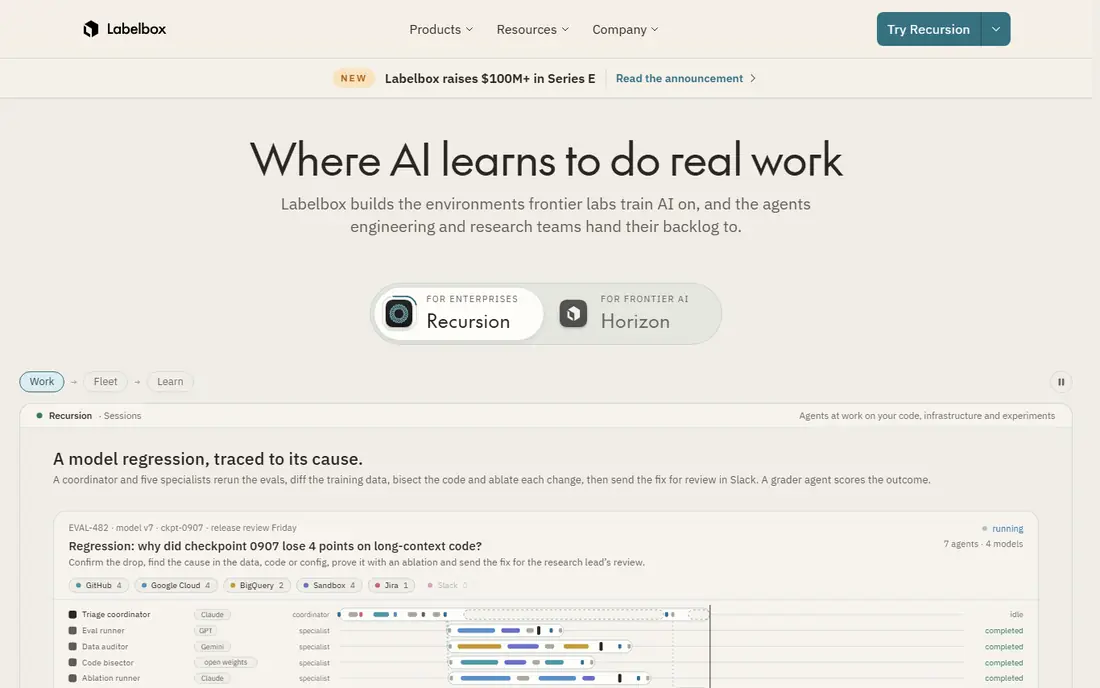
Labelbox is the closest all-round platform replacement for teams that used Scale for annotation plus evaluation. It covers image, video, text and document work, with AI-assisted labelling, quality review and tools to test models against labelled data. That combination helps teams move from raw data to a checked dataset without stitching several tools together.
The main drawback is that pricing for enterprise use is not published as a simple rate, so you will need a sales conversation for a large program. Smaller teams can start with a trial and test the editor on their own data first. If you want one platform your engineers and annotators can share, Labelbox is a strong starting point for the shortlist.
- Multimodal annotation tools
- Model evaluation features
- Workforce and review workflows
- Pricing is quote based for larger use
- Full setup takes planning for small projects
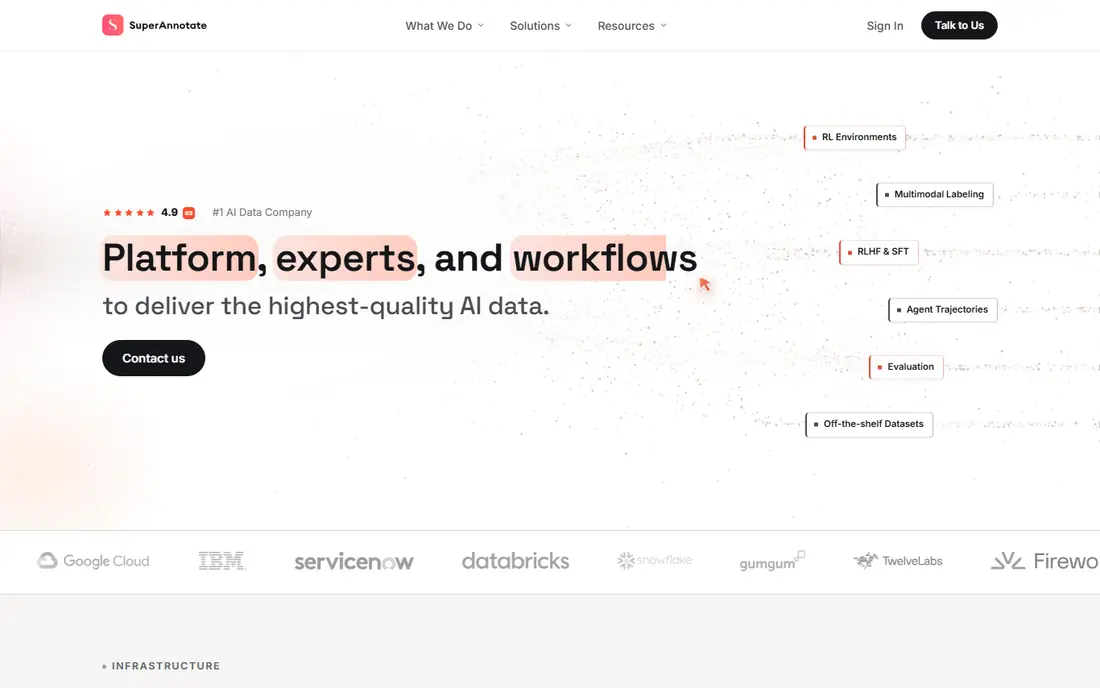
SuperAnnotate focuses on computer vision, with tools for images, video and point cloud data, plus automation that speeds up repetitive labelling. Teams can run it as a platform with their own annotators, or use its managed service and marketplace when they need extra capacity. That flexibility helps when a project grows faster than an in-house team can handle.
Vision teams will get the most from this choice, while text-heavy or audio-heavy projects may find a more general platform a better fit. Pricing is custom at scale, so run a pilot on a real sample before you judge cost. For camera, driving and retail vision work, SuperAnnotate deserves a close look.
- Strong image and video tools
- Automation and quality controls
- Managed service option
- Deepest strengths are in vision work
- Pricing is custom for larger teams

Encord helps teams curate data, not just label it. You can find weak slices in a dataset, label the examples that matter most, and check model performance on those slices. That workflow suits teams that already have large raw datasets and need to improve quality rather than label everything from scratch.
The platform is strongest for vision, including video, and teams with mainly text or speech work may prefer Labelbox or Appen. Encord offers a trial, which is worth using with a real, messy sample rather than a clean demo set. If your problem is dataset quality rather than raw volume, this is a useful alternative.
- Data curation and active learning tools
- Strong video annotation
- Model evaluation features
- Vision-first focus
- Smaller text and audio coverage than generalist vendors
Appen is a managed-service alternative for teams that need volume, languages or audio at a scale an in-house team cannot reach. Its crowd workforce covers many languages and regions, and it has handled speech, search relevance and large text projects for years. That breadth is helpful when a dataset spans markets rather than one locale.
Managed work still needs careful instructions, examples and review steps from your side, or quality will vary. Appen does not publish simple per-task pricing, so expect a scoped quote. For large, multilingual programs where you want a vendor to run the workforce, Appen is one of the most proven options.
- Very large global crowd workforce
- Multilingual and audio coverage
- Long track record at scale
- Quality control needs clear guidelines
- Pricing and project setup are custom
Sama provides managed annotation, with trained teams and quality assurance steps, rather than a tool you run alone. Its work covers computer vision use cases such as automotive, retail and agriculture, where consistent labelling matters more than raw speed. Teams that want to hand over a dataset and receive checked labels back will find this model appealing.
If you want to keep annotation in-house and only need software, a platform such as Labelbox or SuperAnnotate fits better. Sama also requires a scoped engagement, so small one-off tasks may be slower to start. For ongoing vision programs with strict quality needs, it is a credible managed alternative.
- Managed annotation with quality checks
- Computer vision focus
- Emphasis on trained annotators
- Less of a self-serve platform choice
- Project pricing is custom
iMerit suits teams working in regulated or specialist areas, including medical imaging, geospatial data and other fields where annotators need domain training. Its delivery model pairs expert teams with quality review, which matters when a labelling error has real consequences. Security and compliance documentation is also a core part of its pitch for enterprise buyers.
The trade-off is that iMerit is not built for quick, low-cost experiments. Expect a discovery phase, a scoped quote and a managed timeline. For healthcare, mapping and other specialist programs, that care is the point, and a general crowd workforce is a poor substitute.
- Specialist teams for healthcare and geospatial work
- Strong quality and security focus
- Managed delivery
- Specialist focus means higher scoping effort
- Not a cheap self-serve tool
Dataloop combines annotation with pipeline automation, so teams can move data from ingestion through labelling, review and model training in one system. It supports image, video and text work, and it offers automation rules that route difficult cases to human reviewers. That structure helps teams that iterate often and need a repeatable flow, not a one-off labelling job.
Smaller teams may find the pipeline features more than they need at first, and setup benefits from engineering input. A trial on a real workflow, rather than a single dataset, gives the fairest test. If your bottleneck is the whole data flow, not just the editor, Dataloop is worth shortlisting.
- Pipeline automation plus annotation
- Supports images, video and text
- Cloud and on-prem options
- Pipeline setup needs engineering time
- Pricing is custom at scale
Label Studio is the control-first alternative. It is open source, you can host it yourself, and you keep your data inside your own systems. That matters for teams with strict data rules, or for teams that want to build custom labelling interfaces without paying per seat for a platform they could run themselves.
The cost is effort. You handle hosting, security, upgrades and annotator management, and the free tool does not include a managed workforce. Paid enterprise options add support and extra features, so check those terms if you need them. For technical teams with in-house engineers, Label Studio gives the most independence on this list.
- Open source and self-hostable
- Flexible labelling interfaces
- No vendor lock-in for the tool itself
- You run hosting, upgrades and workforce yourself
- Enterprise features are paid
Snorkel AI takes a different route to the same goal. Instead of labelling every example by hand, teams write labelling functions, rules and weak supervision signals, then use those signals to train models on large datasets. That approach can cut hand-labelling time sharply for text, documents and structured data where rules capture real patterns.
It is not a drop-in editor for every team. You need data science skills to design good labelling functions and to check where they fail. For image-heavy work, a vision platform will fit better. For text and document programs at scale, Snorkel AI can change the economics of dataset creation, which is why it earns a place here.
- Programmatic labelling reduces hand labelling
- Strong for text and document data
- Enterprise data controls
- Needs data science skills to get full value
- Less suited to pure image labelling teams
How we picked these
We compared official product pages, documentation and pricing information for platforms and services that cover annotation, managed labelling, evaluation or programmatic labelling, and that work today. We favoured vendors with distinct strengths, rather than listing near-identical tools, and we noted where pricing is custom instead of inventing a rate. We did not claim hands-on testing, and we excluded tools that have reached end of life.
How to choose a replacement
Start by naming the job you are replacing. If you need an editor and review workflow, shortlist Labelbox, SuperAnnotate and Encord first. If you need people to do the work, shortlist Appen, Sama and iMerit, and judge them on a pilot sample with your own quality checks. If control and data residency matter most, test Label Studio on your own infrastructure.
Run the same pilot everywhere
Give each shortlisted vendor the same sample, the same guidelines and the same quality rubric, then compare error rates and turnaround time. A vendor demo on clean data tells you little, while a messy real sample reveals guideline gaps and review habits. Agree who owns quality, how disagreements are resolved and how your data is stored before you sign.
Check ownership and data handling
Ask where data is stored, who can access it, how long it is kept and whether it is used to train other models. Get those answers in writing, especially for proprietary or regulated data. A clear data agreement matters more than a low headline price, because a dataset problem is hard to undo after training.
Frequently asked questions
What are the best alternatives to Scale AI?
The best alternatives to Scale AI include Labelbox, SuperAnnotate, Encord, Appen, Sama, iMerit, Dataloop, Label Studio and Snorkel AI. The right choice depends on whether you need a platform, a managed workforce, programmatic labelling or specialist coverage. Most teams shortlist two or three and run the same pilot with each.
Are there free alternatives to Scale AI?
Yes, Label Studio is open source and free to self-host, while several platforms offer a free trial. Free trials usually limit users, data volume or features, so check those limits. Managed services generally do not offer a free tier, since you are paying for annotator time.
Which alternative is best for computer vision?
SuperAnnotate, Encord and Sama are strong for computer vision, with Labelbox also covering vision well. SuperAnnotate and Encord suit teams that want platform tooling, while Sama suits teams that want managed delivery. Choose based on whether your team will label in-house or hand the work over.
Which alternative is best for text and language data?
Appen, Labelbox and Snorkel AI suit text and language work, with Appen strongest for multilingual volume and Snorkel AI strongest for programmatic labelling. Label Studio also handles text well for self-hosted teams. Test each on your own document types before deciding.
Do these alternatives offer model evaluation?
Yes, several do, including Labelbox and Encord, which include tools to test models against labelled data and find weak slices. That feature matters when you move past labelling into iteration. Ask each vendor to show evaluation on your own model outputs during a trial.
How do I switch from Scale AI without losing quality?
Export your guidelines, label definitions and quality rubrics first, then run a pilot with the new vendor on the same data. Compare results side by side and fix guideline gaps before migrating a full dataset. Keep your old labels for comparison until the new workflow passes your quality bar.
Sources
See where you really rank - block by block
ProMapRanker scans Google Maps across a grid of your service area. Simple monthly plans from $19, white-label on every plan.
Start freeKeep reading
 zscaler alternatives
Best Zscaler Alternatives in 2026
Looking for zscaler alternatives? We compare 9 SASE and zero trust platforms on architecture, data protection, pricing, and fit for your network and team.
Read → zapier alternatives free
Best Zapier Alternatives Free in 2026
Nine automation tools for zapier alternatives free in 2026, all with genuinely free tiers, plus free plan limits, starting prices and upgrade paths explained.
Read → which platform is best for online reputation
Which Platform Is Best for Online Reputation in 2026
Wondering which platform is best for online reputation? We compare 8 review, listing, and response tools for small and multi-location businesses and agencies.
Read →