 ProMapRanker
SAP Alternatives in 2026

Key takeaways
- Oracle NetSuite is the most direct cloud ERP alternative for mid market to large companies that want finance, inventory, and CRM in one system.
- Microsoft Dynamics 365 Business Central fits companies already using Microsoft 365, with published per user pricing.
- Odoo is the lowest cost entry point for small companies, with a free one app tier and a paid all apps tier.
- Infor, Epicor, and Acumatica suit manufacturing and distribution companies with industry specific needs.
- ERP total cost goes far beyond license fees, so budget for implementation, migration, training, and support before you choose.
Quick comparison
| Pick | Great for | Pricing starts at | Free tier | |
|---|---|---|---|---|
 Oracle NetSuite | Mid market cloud ERP | See website | No | Visit |
 Microsoft Dynamics 365 | Microsoft ecosystem companies | $80 per user per month | Free trial | Visit |
 Odoo | Small company ERP | Free | Yes | Visit |
 Infor CloudSuite | Industry specific manufacturing | See website | No | Visit |
 Workday | Finance and HR at scale | See website | No | Visit |
 Sage Intacct | Finance led mid market companies | See website | No | Visit |
 Acumatica | Flexible consumption pricing | See website | No | Visit |
 Epicor Kinetic | Discrete and process manufacturing | See website | No | Visit |
The best SAP alternatives
SAP is a large enterprise ERP system, so its alternatives are other ERP systems that handle finance, inventory, procurement, manufacturing, and human resources in one place. The options below are never SAP itself, and they range from low cost small business systems to large enterprise platforms. We compared them on scope, pricing transparency, industry fit, and implementation effort.
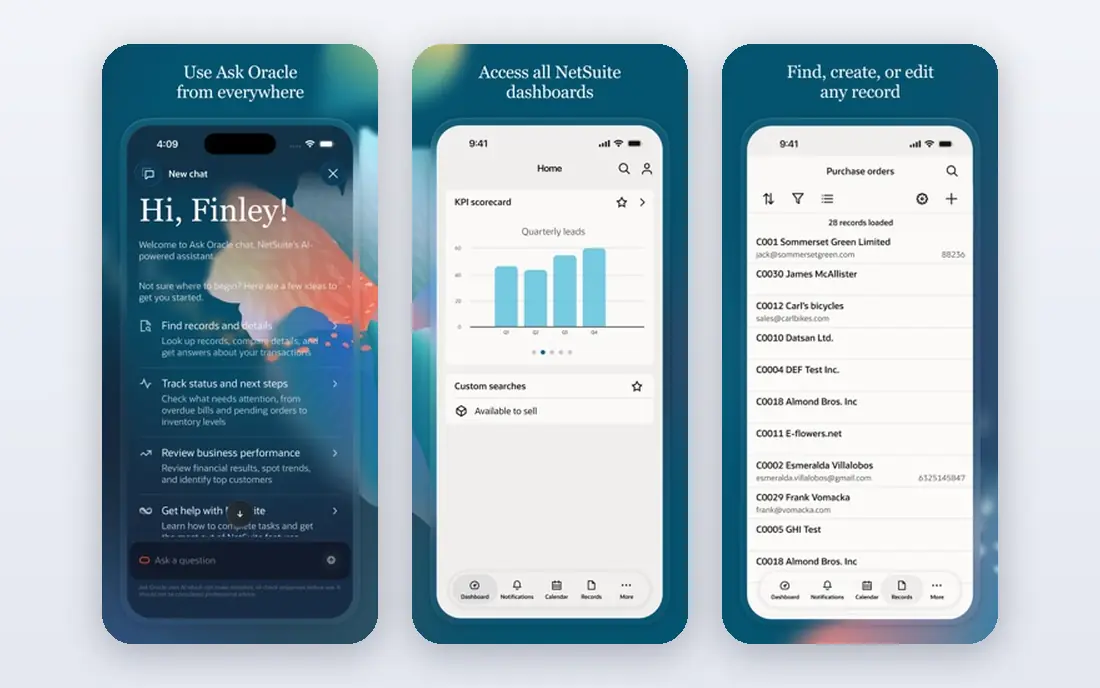
Oracle NetSuite is a cloud ERP that covers financials, inventory, order management, procurement, and CRM in one system. It suits growing companies that have outgrown separate accounting and inventory tools but do not want the scale or complexity of a large SAP rollout. Its partner network also helps with implementation in many regions.
The main drawback is cost transparency. NetSuite does not publish a simple starting price, and total cost depends on modules, users, and implementation scope. Companies should get a written quote that separates license, implementation, and support costs before they compare NetSuite with a published price rival such as Odoo or Dynamics 365.
- Broad cloud ERP scope
- Strong financials and inventory
- Large partner network
- Pricing is quote based
- Implementation can be a major project
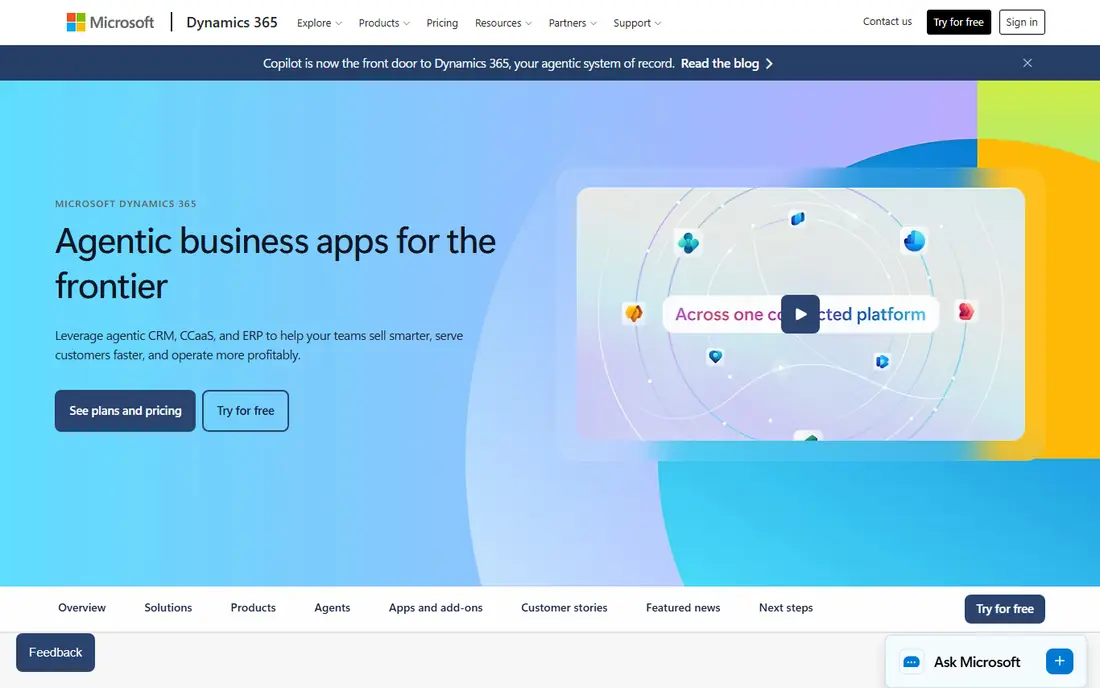
Microsoft Dynamics 365 includes Business Central for smaller companies and Finance and Supply Chain Management for larger ones. Business Central Essentials is published at $80 per user per month on annual billing, which makes early budgeting easier than with quote only rivals. Companies already using Outlook, Teams, and Excel will find the integration familiar.
Licensing complexity is the main caution. Different apps, user types, and add ons can change the total quickly, so a company should map which users need full access and which need limited team member access. With that mapping done, Dynamics 365 is a strong SAP alternative for Microsoft centered companies.
- Published per user pricing
- Deep Microsoft 365 integration
- Modular apps
- Licensing can get complex across apps
- Implementation still needs planning
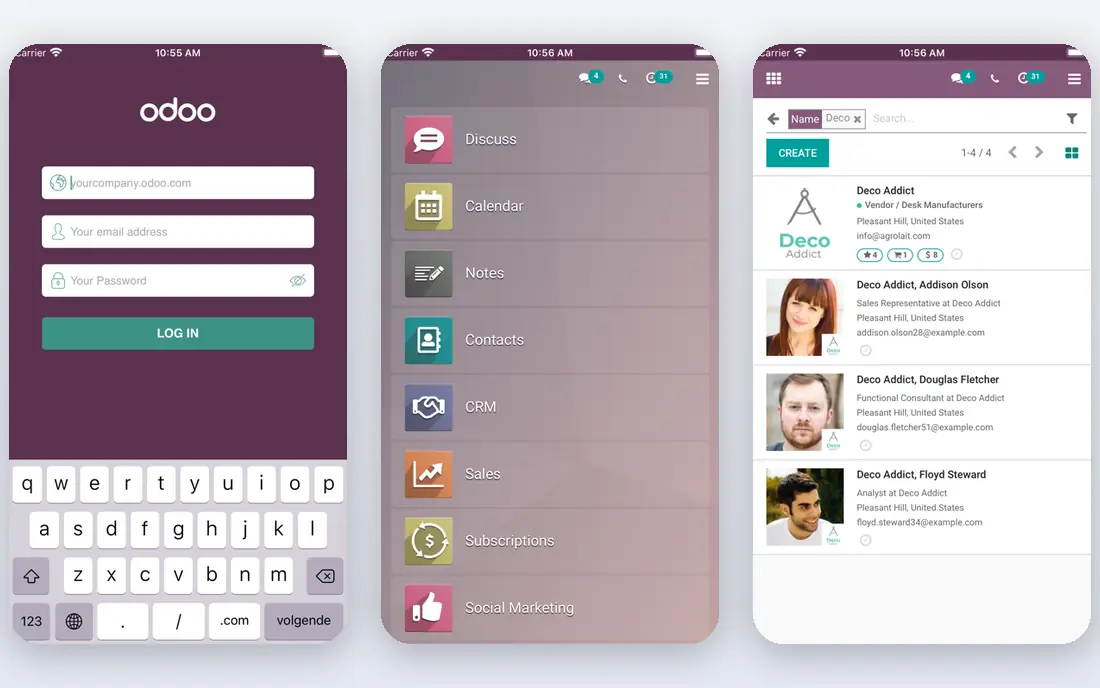
Odoo offers a free tier for a single app and paid tiers that include all apps, with Standard published at $24.90 per user per month on annual billing. That low entry price makes Odoo a popular first ERP for startups and small companies that need CRM, invoicing, inventory, and a website in one place. The open source Community edition also suits teams with technical skills.
The risk is scope creep. Adding many apps and custom workflows can turn a simple Odoo setup into a complex project, and partner quality varies. Small companies should start with a narrow set of apps, prove the core workflows, and expand only after the first phase works well.
- Free one app tier
- Low cost paid tiers
- Wide app range from CRM to manufacturing
- Customization can add cost and complexity
- Support quality varies by partner
Infor CloudSuite offers industry specific editions for manufacturing, distribution, healthcare, and other sectors. That focus suits companies with complex production, supply chain, or regulatory needs that a general ERP may not cover well out of the box. Its cloud delivery also removes the need to run ERP servers in house.
Pricing is quote based, and the right edition depends heavily on industry, so a shortlist should start with the edition that matches your sector. Companies outside Infor core industries may find a more general ERP such as NetSuite or Dynamics 365 easier to evaluate.
- Industry specific editions
- Strong manufacturing and supply chain tools
- Cloud delivery
- Quote based pricing
- Industry fit matters more than general features
Workday is best known for finance and human resources at scale, with tools for planning, payroll, talent, and reporting. It suits large companies and public sector organizations that need a single system for finance and people data, with regular cloud updates and strong reporting. Its interface is also generally well regarded by finance and HR teams.
Workday is less focused on factory floor manufacturing than SAP, Infor, or Epicor, so manufacturers should check production and supply chain coverage carefully. Pricing is enterprise and quote based, so it fits larger budgets rather than small company ERP needs.
- Strong finance and human capital tools
- Regular cloud updates
- Large enterprise scale
- Less manufacturing depth than SAP or Epicor
- Quote based enterprise pricing
Sage Intacct is a cloud financial management system that suits mid market companies with complex accounting needs, such as multi entity reporting, project accounting, and subscription billing. Finance teams often praise its reporting, dimensions, and audit tools, which go deeper than a basic accounting package.
It is more finance led than a full manufacturing ERP, so companies that need deep production planning may need to pair it with other tools or choose a broader ERP. If finance is the main reason for leaving SAP, or for choosing an alternative in the first place, Sage Intacct is a focused option.
- Strong multi entity accounting
- Good reporting and dashboards
- Cloud native design
- More finance focused than full manufacturing ERP
- Pricing is quote based
Acumatica uses consumption based pricing rather than a strict per user fee, which can suit companies with many occasional users, such as warehouse staff, field teams, or seasonal workers. Its scope covers financials, distribution, manufacturing, project accounting, and CRM, so it competes as a full ERP rather than a single function tool.
The pricing model needs careful modeling, because consumption depends on transactions and resources used, not just headcount. Companies should ask for a pricing example based on their own transaction volumes before comparing Acumatica with per user rivals.
- Consumption based pricing
- Unlimited user access model
- Broad ERP scope
- Pricing model takes time to model
- Partner led implementation
Epicor Kinetic, formerly Epicor ERP, is built for discrete and process manufacturers, with tools for production planning, scheduling, quality, and supply chain management. It suits manufacturers with make to order, engineer to order, or mixed mode production, where generic ERP tools often fall short.
Implementation is a serious project, and pricing is quote based, so Epicor fits mid market and larger manufacturers better than small companies with simple needs. For that audience, its manufacturing depth is a real advantage over a general purpose ERP.
- Deep manufacturing tools
- Good for make to order and mixed mode production
- Industry focus
- Quote based pricing
- Implementation is a major project for smaller firms
How we picked these
We compared official vendor pages, published pricing where available, and industry documentation to check that each system is still sold and supported in October 2026. We favored systems that cover multiple ERP functions, not just accounting or CRM alone, because SAP buyers usually need that breadth. Where a vendor does not publish a price, we wrote See website rather than repeating a third party estimate as fact.
Choosing the right ERP alternative
Start with the processes that hurt most today. If finance close, multi entity reporting, or audit control is the pain, a finance led system such as Sage Intacct or Workday may fit. If inventory, production, or distribution is the pain, a manufacturing focused system such as Infor, Epicor, or Acumatica may fit better.
Budget for total cost, not just licenses
License fees are only part of ERP cost. Implementation, data migration, integrations, training, and ongoing support often exceed the first year license fee, especially for larger systems. Ask each vendor for a total cost estimate that separates those items, and check what happens to pricing at renewal.
Run a pilot on real data
Ask shortlisted vendors to run a pilot using your own chart of accounts, a sample order, and a sample production or service workflow. A pilot reveals gaps in reporting, permissions, and integrations that a sales demo may hide. It also shows how much change management your team will need before go live.
Frequently asked questions
What is the cheapest SAP alternative?
Odoo is usually cheapest to start, with a free one app tier and a paid Standard tier at $24.90 per user per month on annual billing. Total cost still depends on implementation and apps used, so small companies should start narrow.
Is Oracle NetSuite a direct SAP alternative?
Yes, for many mid market companies NetSuite is the most direct cloud ERP alternative, covering finance, inventory, order management, and CRM. Larger global manufacturers may still need SAP or a specialized manufacturing ERP.
Which alternative is best for small businesses?
Odoo and Microsoft Dynamics 365 Business Central are the usual small business picks. Odoo is cheaper to start, while Business Central fits companies already using Microsoft 365.
How long does an ERP switch take?
Timelines vary widely, from a few months for a small Odoo or Business Central rollout to a year or more for a large NetSuite, Infor, or Epicor project. Scope, data quality, and training are the main drivers.
Should I switch from SAP or keep it?
Staying on SAP can make sense for very large, complex global operations with deep SAP customization. Switching makes more sense when SAP cost, complexity, or maintenance outweigh its benefits for your company size and industry.
Sources
See where you really rank - block by block
ProMapRanker scans Google Maps across a grid of your service area. Simple monthly plans from $19, white-label on every plan.
Start freeKeep reading
 zoho inventory alternatives
6 Alternatives to Zoho Inventory, Compared on Price and Fit
Zoho Inventory alternatives: 6 tools compared on price, free plans and fit. Katana leads the list for manufacturers. Fit and flaws are laid out for each entry.
Read → zoho crm alternatives
Best Zoho CRM Alternatives (2026)
Need Zoho CRM alternatives? We compare 7 tools on cost, free access and who each suits. Every pick gets a straight assessment. Built for quick decisions.
Read → zelle alternatives
Best Zelle Alternatives in 2026
Compare the best Zelle alternatives for sending money to friends, paying sellers and moving funds abroad, with honest notes on fees, speed and safety in 2026.
Read →