 ProMapRanker
Sage Accounting Alternatives in 2026


Broadest small business accounting · Pricing starts at: See website
Key takeaways
- QuickBooks Online and Xero suit most small businesses leaving Sage, with broad accounting, invoicing, and reporting features.
- FreshBooks suits freelancers and service businesses that bill by time or project and want polished client invoicing.
- Wave and Zoho Books suit cost-conscious businesses, with free tiers that cover core invoicing and accounting.
- FreeAgent, ZipBooks, GnuCash, Kashoo, and Puzzle suit niche needs, from UK freelancers to offline desktop bookkeeping.
- Sage Accounting itself does not appear in the list below, which contains alternatives only.
- This is general information, not financial advice. Check tax and payroll rules for your country and business type before switching.
Quick comparison
| Pick | Great for | Pricing starts at | Free tier | |
|---|---|---|---|---|
| QuickBooks Online | Broadest small business accounting | See website | Free trial | Visit |
 Xero | Growing multi-user teams | See website | Free trial | Visit |
 FreshBooks | Freelancers and service billing | $19 per month | Free trial | Visit |
 Wave | Free invoicing and accounting | Free | Yes | Visit |
 Zoho Books | Low-cost full accounting | Free | Yes | Visit |
 FreeAgent | UK freelancers and small firms | See website | Free trial | Visit |
 ZipBooks | Simple low-cost bookkeeping | See website | Yes | Visit |
 GnuCash | Free offline desktop accounting | Free | Yes | Visit |
 Kashoo | Simple small business bookkeeping | See website | Free trial | Visit |
 Puzzle | Startups tracking cash and runway | See website | Yes | Visit |
The best Sage accounting alternatives
We compared tools on invoicing, expenses, bank reconciliation, payroll links, inventory, multi-user access, and price. Sage Accounting is the baseline for comparison only, and no Sage product appears in the list.

QuickBooks Online is the most direct replacement for a Sage user who wants full accounting depth. It covers invoicing, expenses, bank reconciliation, payroll links, inventory on higher tiers, and reporting, and most accountants already know it, which eases year-end work. That familiarity is a real advantage when switching, since your accountant may already use it daily.
Pricing is the caution. Intuit has changed QuickBooks pricing more than once in the past year in roundups, and recent lists quote different starting rates, so check the current Intuit pricing page for your tier and user count. For a business that needs depth and accountant support, QuickBooks remains the default, but a smaller business may find Xero or Zoho Books cheaper for the same core work.
- Broadest feature set and accountant familiarity
- Strong payroll, inventory, and reporting options
- Large app marketplace
- Pricing has changed often and can be high at higher tiers
- Interface can feel busy for a very small business
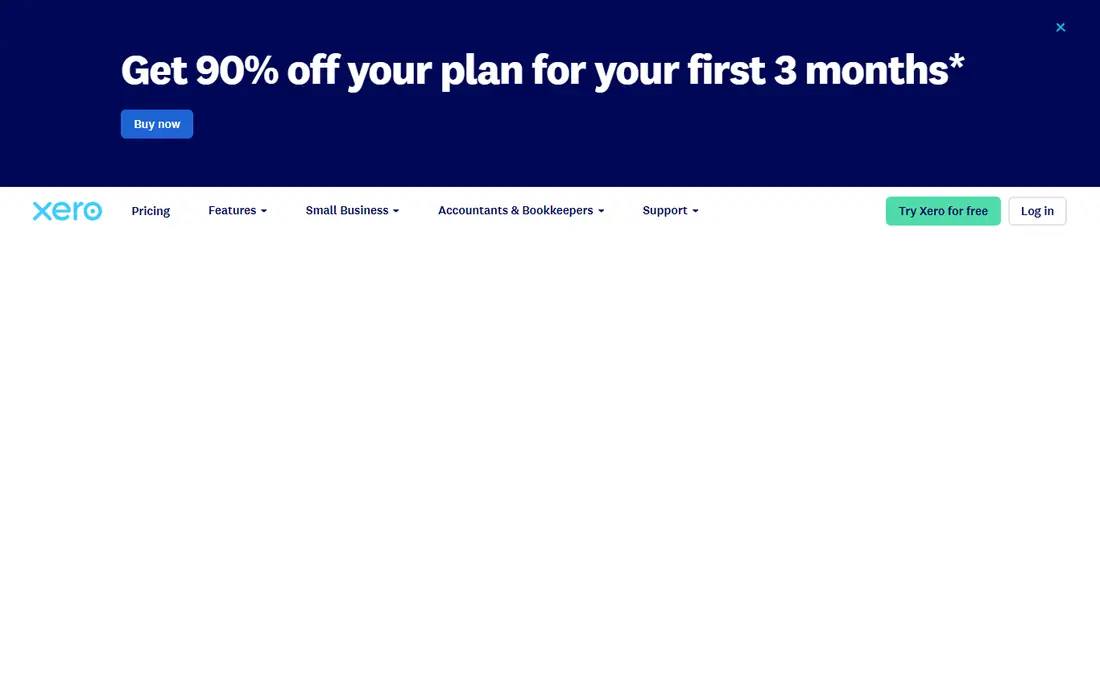
Xero suits a growing business that adds people to the books. Every plan includes unlimited users, which removes the per-seat maths that QuickBooks and FreshBooks impose, and multi-currency handling is strong for businesses that invoice abroad. Invoicing, bank reconciliation, bill pay, and reporting cover the core Sage replacement job well.
Payroll is the detail to check, since coverage varies by country and plan, and project tracking features sit on higher tiers. Pricing has also moved in recent roundups, so confirm the current Starter, Standard, and Premium rates on the Xero site. For a multi-user team that values clean reconciliation and easy collaboration, Xero is often the best Sage alternative overall.
- Unlimited users on every plan
- Strong multi-currency handling
- Large app marketplace
- Clean bank reconciliation
- Payroll features vary by country
- Project tracking sits on higher tiers
- Pricing has risen in recent roundups
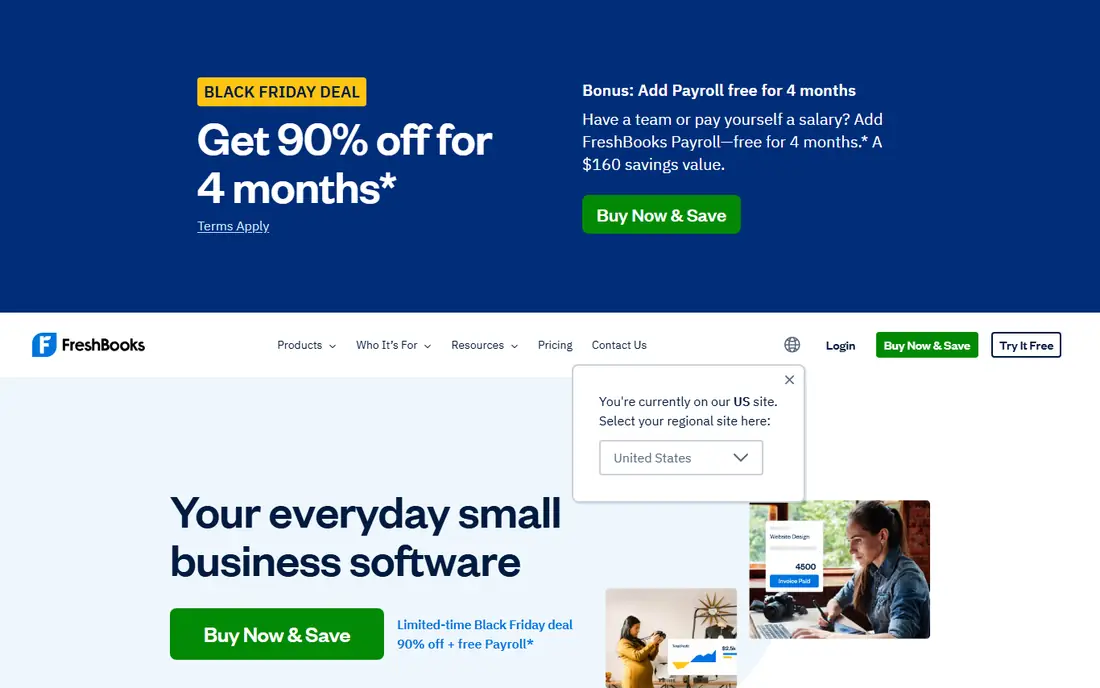
FreshBooks suits freelancers, agencies, and service firms whose work revolves around clients, projects, and billable time. Invoices look polished, time tracking feeds billing directly, and the client portal makes payment and communication simple. Plans start at $19 per month for Lite in recent roundups, with Plus and Premium higher.
It is a weaker fit for product businesses that carry inventory, since stock handling is limited, and extra team seats add cost. For a service business leaving Sage because invoicing felt clunky, FreshBooks gives a faster daily workflow, even if an accountant still needs to handle complex year-end work elsewhere. Test the invoicing and time flow with a real client before switching.
- Polished invoicing and client portal
- Time tracking and project billing
- Easy expense capture
- Inventory handling is weak
- Extra seats cost more
- Less full accounting depth than QuickBooks or Xero
Wave suits a sole trader or micro-business that wants core accounting free. Invoicing and accounting cost nothing on the Starter tier, payment processing is built in, and setup takes little time. That makes it the best free Sage alternative for a very small operation that mainly invoices services and tracks expenses.
Limits appear as the business grows. Payroll coverage is limited, reporting is lighter than full accounting suites, and support on free plans is more restricted. Transaction fees apply to payments, so a high-volume business should compare total payment costs, not just the free software price. For a tiny business, Wave removes the monthly fee barrier entirely.
- Free invoicing and accounting
- Native payment processing
- Simple setup for very small businesses
- Payroll is limited and varies by region
- Advanced reporting is lighter than QuickBooks or Xero
- Support options are limited on free plans
Zoho Books suits a cost-conscious business that still wants full accounting, not a stripped-down invoicing tool. The free tier covers double-entry accounting, invoicing, and bank reconciliation for businesses under a revenue threshold in recent roundups, with paid tiers from around $20 per organisation per month. Automation, workflows, and vendor portals add value as the business grows.
The free revenue limit matters, so check current Zoho Books terms for your annual revenue before relying on it long term. The interface can also feel dense until workflows are set up. For a Zoho user, or a business that wants full features at a low price, Zoho Books is one of the strongest Sage alternatives.
- Full double-entry accounting on the free tier for smaller businesses
- Automation and workflows
- Strong Zoho ecosystem links
- Free tier has a revenue limit
- Higher tiers and user counts add cost
- Interface can feel dense at first
FreeAgent suits UK-based freelancers, contractors, and small firms. It covers invoicing, expenses, bank feeds, and tax timelines in a simple interface, with features shaped around UK self-assessment and company filing. That local focus helps a UK user more than a generic global tool.
US businesses should look elsewhere, since payroll and tax workflows are UK-centred, and pricing varies by region and by accountant partner offers. Check the current FreeAgent pricing page for your country and business type. For a UK freelancer leaving Sage, FreeAgent gives a simpler, locally tuned alternative.
- Built for UK freelancers and small businesses
- Tax timelines and filing help
- Simple invoicing and expenses
- Less suited to US payroll and tax workflows
- Pricing varies by region and partner offers
ZipBooks suits a small agency or service business that wants straightforward bookkeeping without a large platform. The free starter tier covers basic invoicing and accounting, time tracking helps service billing, and paid tiers add features at a low cost in recent roundups. That simplicity helps a team that found Sage heavier than needed.
The ecosystem is smaller, so integrations and accountant familiarity will not match QuickBooks or Xero. Advanced inventory, payroll, and reporting needs may also outgrow it. For a small team with simple books, ZipBooks gives a low-cost, low-friction Sage alternative, and the free tier lets a business test it on real invoices first.
- Free starter tier
- Simple invoicing and bookkeeping
- Time tracking for service businesses
- Smaller ecosystem than QuickBooks or Xero
- Advanced inventory and payroll features are limited
GnuCash suits a business owner who wants free, offline, double-entry accounting without a subscription or cloud account. It runs on desktop systems, covers accounts, transactions, invoicing, and reports, and it keeps data local. That control appeals to users who dislike cloud lock-in or monthly fees.
Collaboration is the limit. There is no built-in multi-user cloud workflow, the interface looks dated, and payroll and invoicing features are basic next to cloud tools. For a single-user business with simple books, or for personal and small business accounting on a desktop, GnuCash is a capable free alternative. Teams that need shared cloud access should choose Xero, QuickBooks, or Zoho Books instead.
- Free and open source
- Double-entry accounting
- Offline desktop use
- No subscription
- Interface feels dated
- No built-in cloud collaboration
- Payroll and invoicing are basic
Kashoo suits a small business owner who is not an accountant and wants simple books. Invoicing, expenses, bank feeds, and reports sit in a clean interface, with a free trial to test the workflow. That simplicity helps owners who do their own books and want to spend less time learning accounting software.
Advanced needs, such as deep inventory, complex payroll, or a large integration marketplace, will push a business toward QuickBooks or Xero. Kashoo earns its place for straightforward bookkeeping, especially for service and retail businesses with simple transactions. Confirm current pricing on the vendor site, since tiers have changed over time.
- Simple invoicing and bookkeeping
- Clean interface for non-accountants
- Bank feeds and reporting
- Smaller app ecosystem
- Advanced features are lighter than larger suites
- Check current pricing tiers
Puzzle suits startups that want accounting tied to runway and cash metrics. It highlights burn rate, cash balance, and runway alongside core bookkeeping, which helps founders and investors see financial health at a glance. A free tier for early startups lowers the barrier, with paid plans from around $50 per month in recent roundups.
Traditional small businesses with payroll, inventory, and complex tax needs may find QuickBooks or Xero a better fit, and accountant familiarity with Puzzle is lower than with the largest tools. For a venture-backed or early-stage startup leaving Sage, Puzzle gives a modern, founder-friendly alternative that speaks the language of startup finance.
- Startup-focused metrics such as burn, cash, and runway
- Modern accounting workflow
- Free tier for early startups
- Less suited to traditional small business payroll and inventory needs
- Newer vendor, so check accountant familiarity
How we picked these
We compared official pricing pages, accounting features, invoicing, payroll links, multi-user access, and recent roundups of Sage and QuickBooks alternatives. We kept only tools that still offer accounting in October 2026 and cover a distinct business size or need. We used See website where pricing changed recently across roundups or could not be pinned to a single current figure, and we excluded all Sage products from the list.
How to choose the right alternative
Start with business type. Choose QuickBooks or Xero for broad accounting, FreshBooks for service billing, Wave or Zoho Books for low cost, and FreeAgent for UK freelancers. Check payroll coverage for your country, inventory needs, and how many users need access, since those three factors narrow the list fast.
Then test migration before you cancel Sage. Export your chart of accounts, customers, vendors, and opening balances, and import a test set into the new tool. Run one month of invoicing and reconciliation in parallel, and ask your accountant to review the test books. A clean parallel month prevents year-end surprises and confirms the new tool fits your real workflow.
Frequently asked questions
What is the best Sage accounting alternative for a small business?
QuickBooks Online suits most small businesses for depth and accountant familiarity, while Xero suits growing multi-user teams. Wave and Zoho Books suit smaller businesses that want to keep costs low.
Is there a free Sage accounting alternative?
Yes, Wave offers free invoicing and accounting, Zoho Books offers a free tier for smaller businesses, and GnuCash offers free offline accounting. Check revenue limits and payment fees, since free software is not always free in total cost.
Can I migrate from Sage to QuickBooks or Xero?
Yes, both tools support imports of customers, vendors, and balances, but migration quality depends on clean Sage data. Run a parallel month, check opening balances, and ask your accountant to review the imported books before fully switching.
Does FreshBooks replace full accounting software?
FreshBooks replaces invoicing and service billing well, but it is lighter on inventory and complex accounting than QuickBooks or Xero. Service businesses often pair it with accountant support at year-end.
Which alternative is best for freelancers?
FreshBooks suits freelancers who bill by time or project, Wave suits freelancers who want free invoicing, and FreeAgent suits UK freelancers who need local tax timelines. Choose by billing style and country, not by feature count alone.
Sources
See where you really rank - block by block
ProMapRanker scans Google Maps across a grid of your service area. Simple monthly plans from $19, white-label on every plan.
Start freeKeep reading
 zscaler alternatives
Best Zscaler Alternatives in 2026
Looking for zscaler alternatives? We compare 9 SASE and zero trust platforms on architecture, data protection, pricing, and fit for your network and team.
Read → zapier alternatives free
Best Zapier Alternatives Free in 2026
Nine automation tools for zapier alternatives free in 2026, all with genuinely free tiers, plus free plan limits, starting prices and upgrade paths explained.
Read → which platform is best for online reputation
Which Platform Is Best for Online Reputation in 2026
Wondering which platform is best for online reputation? We compare 8 review, listing, and response tools for small and multi-location businesses and agencies.
Read →