 ProMapRanker
Best RunPod Alternatives in 2026

Key takeaways
- Vast.ai and Spheron suit budget focused training, with marketplace and spot pricing that undercuts fixed rate clouds.
- Lambda Labs and CoreWeave suit larger, managed training work, with strong infrastructure and cluster support.
- Modal and Paperspace suit developers who want simple deployment, notebooks, and serverless inference.
- Hyperstack and Nebius suit teams that want fixed rate, enterprise style GPU access in specific regions.
- DigitalOcean suits teams already on that platform who want GPU droplets alongside their other services.
Quick comparison
| Pick | Great for | Pricing starts at | Free tier | |
|---|---|---|---|---|
 Vast.ai | Lowest cost marketplace GPUs | See website | Free trial | Visit |
 Lambda Labs | Managed training clusters | See website | Free trial | Visit |
 Paperspace | Developer friendly GPU cloud | See website | Free trial | Visit |
 Modal | Serverless Python inference | See website | Free trial | Visit |
 CoreWeave | Large scale managed clusters | See website | Free trial | Visit |
 Hyperstack | Fixed rate enterprise GPUs | See website | Free trial | Visit |
 Spheron | Low cost spot and on demand GPUs | See website | Free trial | Visit |
 Nebius | Managed AI cloud in Europe | See website | Free trial | Visit |
 DigitalOcean | GPU droplets for existing users | See website | Free trial | Visit |
The best runpod alternatives
RunPod offers community and secure GPU clouds, serverless endpoints, and per second billing, which appeals to developers and AI teams. The alternatives below differ mainly in pricing shape: marketplace, fixed rate, spot, serverless, and managed cluster models all suit different workloads. Check storage, egress, and minimum billing alongside the hourly GPU rate.

Vast.ai is a marketplace where independent hosts rent out GPUs, which keeps prices low for experiments, fine tuning, and learning. Users can filter by GPU model, price, location, and reliability, and rent by the hour with flexible terms. For a solo developer or small team on a tight budget, it is often the cheapest way to get a modern GPU.
The trade off is variability. Host quality differs, prices move with demand, and support is lighter than on a managed cloud. Jobs that can checkpoint and resume suit Vast.ai best. Production inference that needs guaranteed uptime should use a managed or serverless option instead.
- Very competitive marketplace prices
- Wide GPU choice
- Flexible rental terms
- Host reliability varies
- Prices move with supply
- Support is lighter than managed clouds
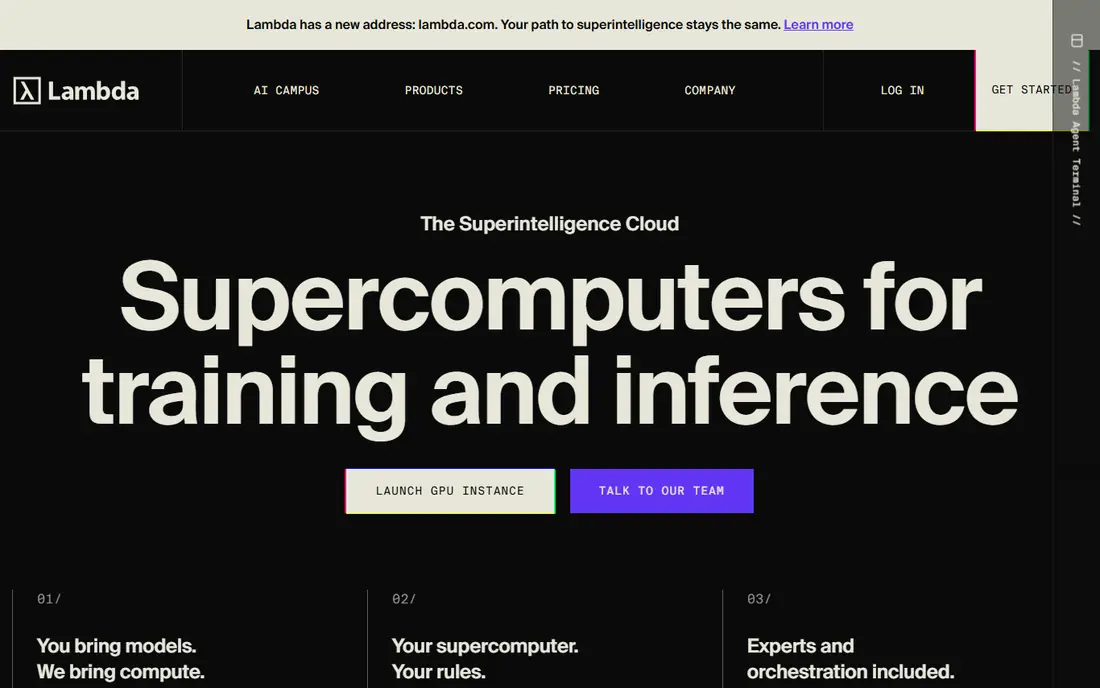
Lambda Labs, also called Lambda, offers on demand GPU cloud instances and managed clusters for training and inference. Its infrastructure suits research labs and AI teams running larger jobs, with support for common frameworks and multi node training. On demand pricing and reserved options give teams a choice between flexibility and lower long term cost.
Some high end GPUs are sold in multi GPU nodes, which raises the minimum cost for a single user who only needs one card. Capacity can also tighten at peak times. For teams running serious training work, Lambda is a strong, well supported alternative to RunPod.
- Strong GPU infrastructure
- Managed clusters
- Good for research and training
- Some GPUs sold in multi GPU nodes
- Capacity can be limited at peak times
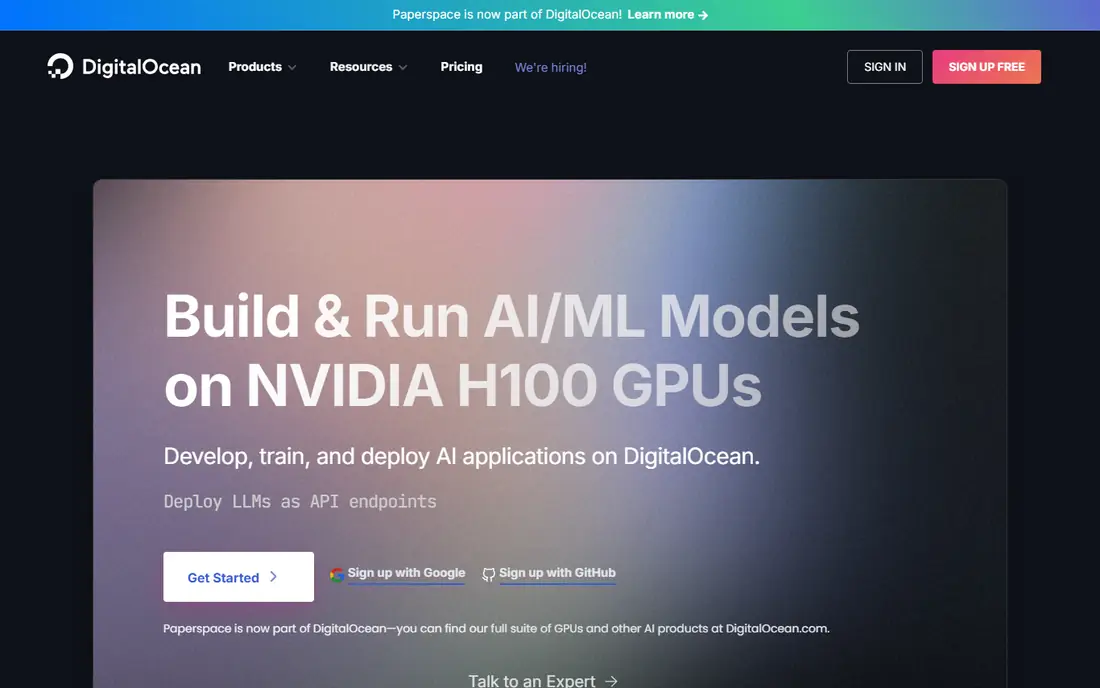
Paperspace, part of DigitalOcean, offers GPU machines and notebooks with a developer friendly workflow. Solo developers and startups use it for rapid prototyping, model experiments, and small scale training, without managing a full cluster. The interface is simpler than enterprise clouds, which speeds up first use.
The GPU range is narrower than Lambda or CoreWeave, and enterprise cluster features are lighter. Teams that need very large clusters or the newest cards on day one should check availability first. For prototyping and everyday AI development, Paperspace is a practical and approachable choice.
- Simple notebooks and machines
- Good for prototyping
- Clear developer workflow
- GPU range is narrower than the biggest clouds
- Enterprise features are lighter
Modal lets Python developers run functions, jobs, and inference endpoints on GPUs without managing servers. Workloads scale up when needed and scale to zero when idle, with per second billing, which suits inference APIs and batch jobs with uneven traffic. For teams building on Python, the workflow feels natural and fast.
It is Python focused, so teams on other stacks will find less support. Costs also depend on usage patterns, so a busy endpoint needs monitoring. For serverless AI work in Python, Modal is one of the cleanest RunPod alternatives, especially for inference rather than long training runs.
- Serverless scaling to zero
- Python first workflow
- Per second billing
- Python focused
- Less suited to non Python stacks
- Costs vary with usage
CoreWeave offers managed GPU infrastructure for large training and inference workloads, with high performance networking for multi node jobs. Enterprise teams use it for large model training, where cluster reliability and support matter more than the lowest hourly rate. Its infrastructure is built for scale, not for a single developer experiment.
Pricing sits in the enterprise bracket, and many offerings focus on multi GPU nodes, which makes small jobs costly. Solo users should look at Vast.ai or Paperspace instead. For large teams that need a managed cluster with strong support, CoreWeave is a top tier option.
- Large managed clusters
- High performance networking
- Enterprise support
- Enterprise scale pricing
- Multi GPU node focus
- Less suited to small jobs
Hyperstack offers GPU cloud access with fixed published rates across modern NVIDIA cards, including H100, H200, and A100 models. That fixed pricing helps teams budget, since marketplace prices can move, and enterprise grade deployments suit production inference and training. Regions in Europe and elsewhere also help teams with data location needs.
Rates vary by GPU model and configuration, so the headline range does not cover every setup. The community is also smaller than on the largest clouds. For teams that want predictable pricing and modern hardware without marketplace variability, Hyperstack is a solid choice.
- Fixed published rates
- Modern NVIDIA GPUs
- Enterprise grade deployments
- Pricing varies by GPU and region
- Smaller community than the biggest clouds
Spheron offers GPU cloud rentals with on demand and spot pricing, including H100, H200, and newer Blackwell cards. Spot pricing can cut costs sharply for fault tolerant work, while on demand pricing suits jobs that cannot be interrupted. Per minute billing also helps for short experiments and tests.
Spot capacity can be reclaimed without notice, so production jobs need on demand capacity or checkpointing. Spheron is also newer than Lambda or CoreWeave, so enterprise buyers should check support and compliance coverage. For cost conscious teams with checkpointed workloads, Spheron is a strong RunPod alternative.
- Competitive H100 and B200 pricing
- Spot options
- Per minute billing
- Spot capacity can be reclaimed
- Newer platform than the biggest clouds
Nebius offers a managed AI cloud with GPU clusters, inference services, and a full stack for training and deployment. European data residency options appeal to teams with regional requirements, and its H100 pricing has been competitive in 2026 comparisons. The managed stack suits teams that want cluster tooling without building it themselves.
Nebius is a newer brand in some markets than AWS or CoreWeave, so buyers should check region availability and support coverage for their location. Pricing also varies by GPU and configuration. For European teams and managed AI workloads, Nebius is a credible and growing alternative.
- Managed cluster stack
- European data residency options
- Competitive H100 pricing
- Newer brand in some markets
- Pricing varies by configuration
DigitalOcean offers GPU droplets that fit its simple cloud model, letting existing users add GPU capacity alongside web servers, databases, and storage. Per second billing with a short minimum suits development and small scale inference, and the interface is familiar to DigitalOcean users. Paperspace integration also strengthens its AI offering.
The GPU range is narrower than specialist AI clouds, and users should check billing rules for stopped machines and storage. Large training clusters are better served by Lambda or CoreWeave. For teams already on DigitalOcean who need occasional GPU work, adding a droplet is the simplest path.
- Simple droplet model
- Fits existing DigitalOcean workflows
- Per second billing
- GPU range is narrower than specialist clouds
- Stopped machines may still bill for some resources
How we picked these
We compared official pricing pages, GPU ranges, and billing models for GPU clouds that are live in October 2026 and cover RunPod's core jobs: on demand GPU rental, training, and serverless inference. We included marketplace, fixed rate, spot, serverless, and managed cluster options, since hourly rates alone do not tell the full story. Where pricing varied by GPU, region, or tier, we wrote See website rather than publishing a single rate that would mislead.
How to compare GPU prices fairly
Do not compare hourly rates alone. Check whether the rate is per GPU or per node, whether storage and egress are included, and what the minimum billing increment is. Next, test with a real workload: run the same training or inference job on two providers and compare wall clock time, not just the listed rate, since hardware and networking differ. Finally, check interruption rules for spot capacity, and confirm that your framework, container setup, and data location needs are supported before you move a production workload.
Frequently asked questions
What are alternatives to RunPod?
Vast.ai, Lambda Labs, Paperspace, Modal, CoreWeave, Hyperstack, Spheron, Nebius, and DigitalOcean are the strongest alternatives. Vast.ai and Spheron suit budget training, Lambda and CoreWeave suit large clusters, Modal suits serverless Python inference, and DigitalOcean suits existing users. The best pick depends on workload, budget, and scale.
What is the cheapest RunPod alternative?
Vast.ai usually offers the lowest marketplace prices, especially for spot style rentals, while Spheron offers competitive spot and on demand rates. Cheapest depends on GPU model, timing, and whether the job can handle interruption. For production work, compare on demand rates and total costs, including storage and egress, not just the lowest spot price.
Which alternative is best for serverless inference?
Modal suits Python based serverless inference, with scaling to zero and per second billing. Paperspace and Spheron also support inference workloads, while managed clouds suit larger, always on endpoints. Pick based on your language stack, traffic pattern, and latency needs, and test with real traffic before launch.
Can I train large models on these platforms?
Yes, on Lambda Labs, CoreWeave, Nebius, and Hyperstack, which offer managed clusters and high performance networking for multi node training. Smaller clouds suit fine tuning and single GPU work, but large pretraining needs cluster support and reliable networking. Check node sizes, networking, and support before starting a large run.
Do GPU prices include storage and data transfer?
Not always. Some providers include free egress or flat storage, while others charge per gigabyte for storage and data transfer. Those extras can exceed the GPU cost for large datasets and checkpoints. Read the pricing page for storage, egress, IP addresses, and minimum billing before you compare hourly rates.
Sources
See where you really rank - block by block
ProMapRanker scans Google Maps across a grid of your service area. Simple monthly plans from $19, white-label on every plan.
Start freeKeep reading
 zscaler alternatives
Best Zscaler Alternatives in 2026
Looking for zscaler alternatives? We compare 9 SASE and zero trust platforms on architecture, data protection, pricing, and fit for your network and team.
Read → zapier alternatives free
Best Zapier Alternatives Free in 2026
Nine automation tools for zapier alternatives free in 2026, all with genuinely free tiers, plus free plan limits, starting prices and upgrade paths explained.
Read → which platform is best for online reputation
Which Platform Is Best for Online Reputation in 2026
Wondering which platform is best for online reputation? We compare 8 review, listing, and response tools for small and multi-location businesses and agencies.
Read →