 ProMapRanker
Best RudderStack Alternatives in 2026

Key takeaways
- Segment is our pick for most teams that need event collection and routing, thanks to its large destination ecosystem and self-serve pricing.
- mParticle suits mobile-first apps at scale, while Tealium suits large enterprises that need governance and tag management.
- Hightouch and Census suit warehouse-led teams that want activation without a separate event pipeline.
- Jitsu, PostHog, and Snowplow offer open or product-led paths for teams that want more control or lower starting costs.
Quick comparison
| Pick | Great for | Pricing starts at | Free tier | |
|---|---|---|---|---|
 Segment | Event collection and routing | Free | Yes | Visit |
 mParticle | Mobile-first customer data | See website | No | Visit |
 Tealium | Enterprise governance and tags | See website | No | Visit |
 Treasure Data | Enterprise CDP at scale | See website | No | Visit |
 Hightouch | Warehouse activation | See website | Yes | Visit |
 Census | Reverse ETL from the warehouse | See website | Free trial | Visit |
 Jitsu | Open-source event collection | See website | Yes | Visit |
 PostHog | Product analytics and CDP features | See website | Yes | Visit |
 Snowplow | First-party behavioral data | See website | Free trial | Visit |
 Lytics | Behavioral segmentation for B2C | See website | Free trial | Visit |
The best RudderStack alternatives
RudderStack is an event streaming and customer data platform with a warehouse-first angle, so the best alternatives cover event collection, customer profiles, and warehouse activation in different mixes. Some are full CDPs, while others are reverse ETL tools that only make sense if you already have a warehouse. We compared official pricing pages, destination counts, and core CDP features for each tool.
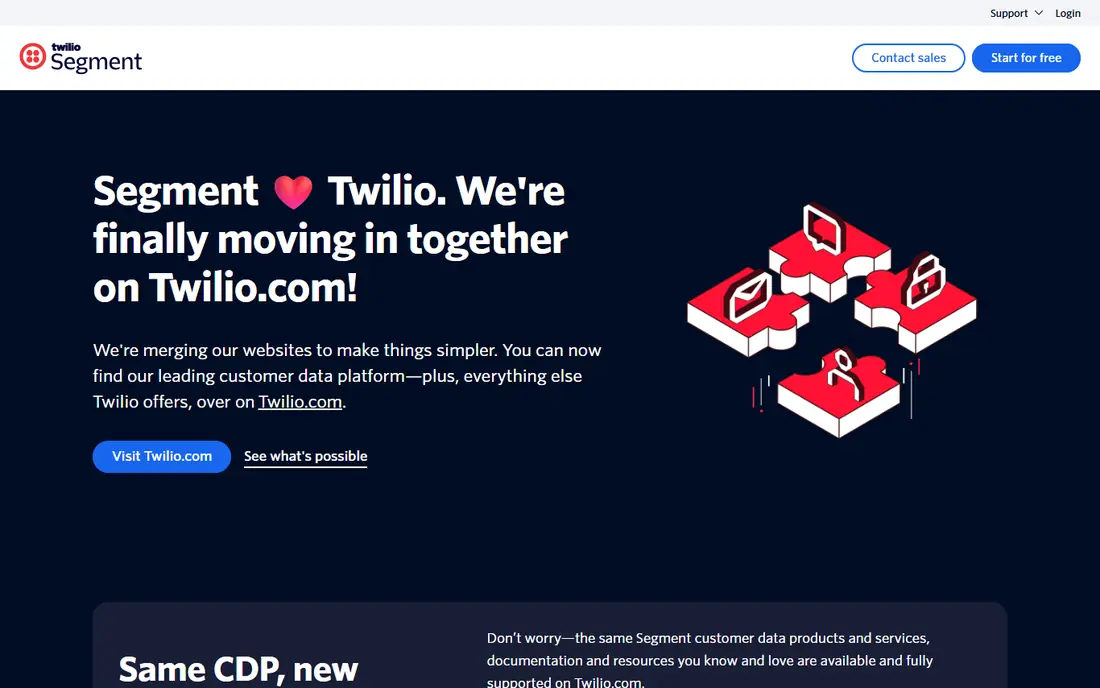
Segment, now part of Twilio, is the default CDP for many product-led teams. You collect events once through its SDKs, then route them to analytics, marketing, and warehouse destinations without rebuilding integrations for each tool. A free tier for up to 1,000 monthly tracked users lets small teams test the core pipeline.
Costs rise with tracked users, so a fast-growing app can see a sharp bill increase. Advanced features such as customer profiles and warehouse connections also sit on higher plans. For most teams that need a standard event pipeline with a large ecosystem, Segment is our pick.
- Large destination ecosystem
- Self-serve free tier
- Familiar to many data and marketing hires
- Costs scale with tracked users
- Advanced profiles and warehouse features cost more
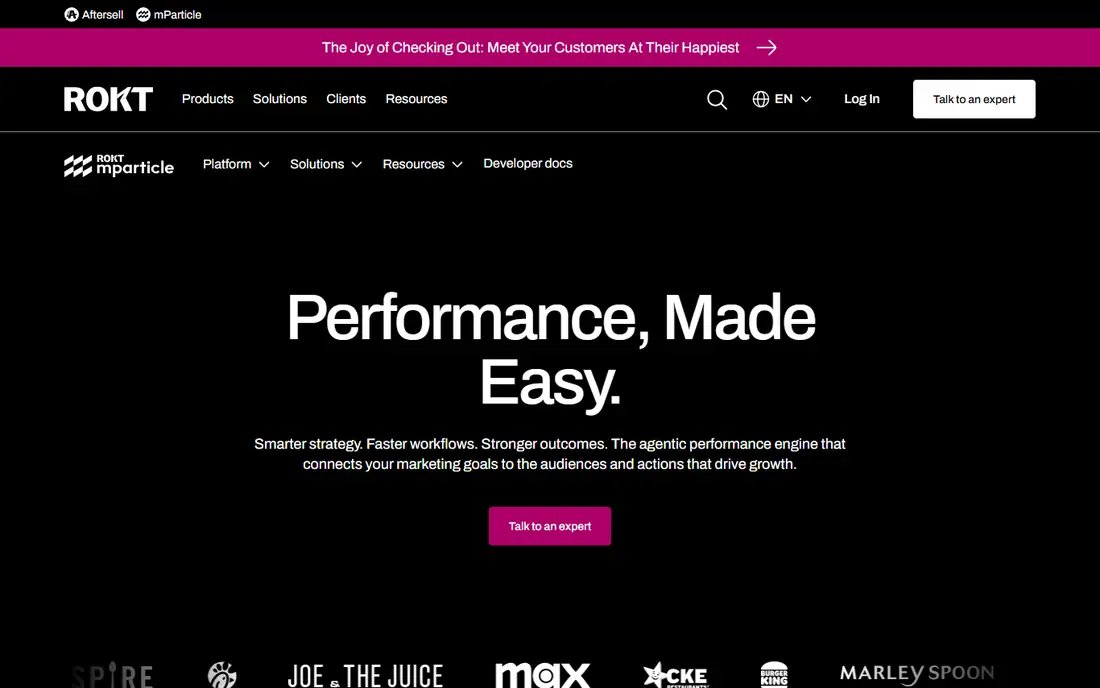
mParticle is built for mobile-first and consumer-scale apps, with SDKs, real-time event processing, and profiles that support personalization. It also handles offline and retail data, which suits brands with apps plus physical stores. Predictive features for churn and lifetime value add value for large consumer teams.
There is no published entry price, and deployments are typically enterprise contracts that need data maturity and developer time. Smaller teams will find it costly and heavy. mParticle is best for large mobile and consumer brands that need real-time profiles at scale.
- Strong mobile SDKs
- Real-time profiles and predictions
- Good for apps and retail data
- No published entry price
- Implementation suits larger, data-mature teams
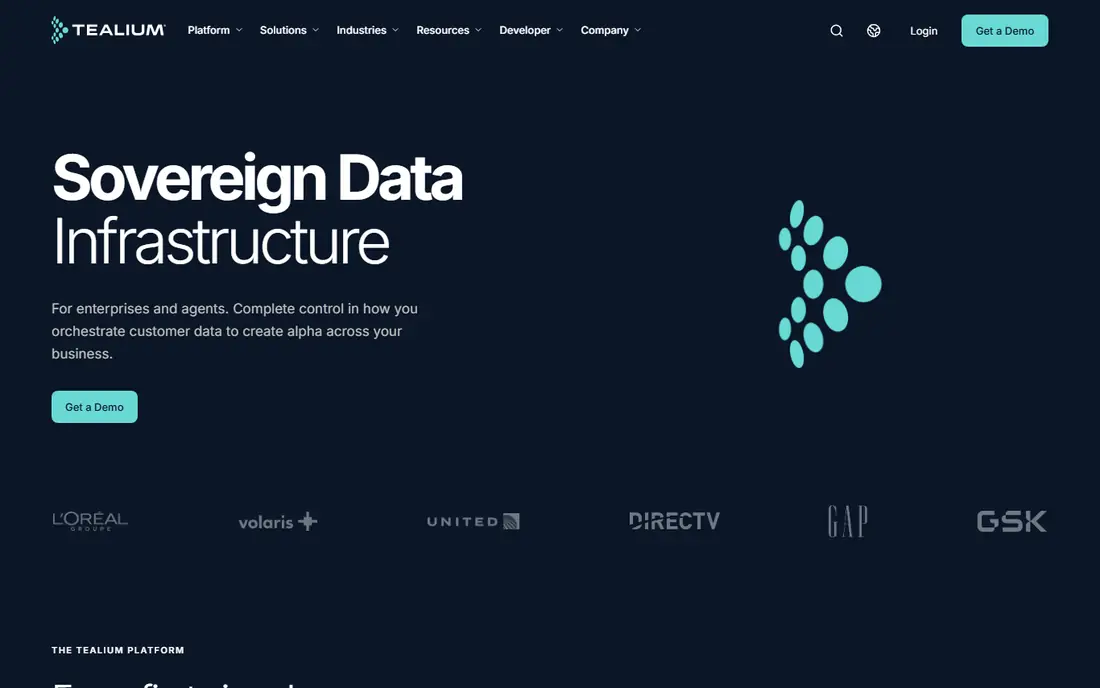
Tealium combines tag management, event streaming, and audience building in one enterprise platform. Its integration ecosystem is very large, and governance, consent, and data quality controls suit regulated and multi-brand companies. That breadth makes it a safe enterprise choice when compliance matters as much as marketing speed.
Implementation can take months, and pricing is enterprise and quoted, which puts it out of reach for many mid-size teams. Tealium is best for large companies that need tag management and CDP governance together, with the budget and timeline to implement properly.
- Tag management plus CDP
- Large integration ecosystem
- Strong governance and consent controls
- Enterprise pricing and longer implementation
- Heavy for mid-size teams
Treasure Data is an enterprise CDP built for large brands that unify customer data across many sources and regions. It offers profiles, segmentation, journeys, and activation, with the scale and governance that global companies require. That makes it a credible alternative for teams that outgrow a mid-market CDP.
Pricing and implementation are enterprise grade, so small and mid-size teams should not start here. Treasure Data suits companies with complex data, multiple brands, and a dedicated data team. Ask for a scoped demo with your actual sources before comparing it with Segment or mParticle.
- Enterprise CDP with large-scale data handling
- Journey and segmentation tools
- Strong for global brands
- Enterprise pricing and implementation
- Overkill for small teams
Hightouch is a reverse ETL tool, which means it syncs modeled data from a warehouse such as Snowflake or BigQuery into marketing and sales tools. That approach keeps the warehouse as the source of truth and avoids a separate event pipeline. A free tier for small row volumes lets teams test activation before paying.
It does not collect events itself, so a team without a warehouse or clean models will need to build that foundation first. Hightouch is best for warehouse-led teams that want to activate data they already model, rather than collect a new event stream from scratch.
- Activates warehouse data without a separate CDP
- Free tier for small volumes
- Large destination range
- Needs a clean warehouse first
- Does not collect events itself
Census, like Hightouch, syncs data from the warehouse into business tools, with audience building that lets marketers use warehouse models without writing SQL for every sync. That warehouse-native design suits data teams that already trust their warehouse as the single source of truth. It also reduces duplicate customer data across tools.
Without a warehouse and modeled data, Census has little to sync, so it is not a starter CDP for a team with no data infrastructure. Pricing also depends on volume and plan. Choose Census when warehouse activation, not event collection, is the main need.
- Warehouse-native sync to SaaS tools
- Audience building from warehouse models
- Good for data teams
- Needs an existing warehouse
- Less useful without modeled customer data
Jitsu is an open-source event collection tool that routes events to warehouses and other destinations, which makes it the closest open-source cousin to RudderStack on this list. Self-hosting gives control over data and costs, and the warehouse-first design suits engineering-led teams. A cloud option exists for teams that do not want to run it themselves.
The destination ecosystem is smaller than Segment, and self-hosting adds operational work for upgrades, monitoring, and scaling. Jitsu suits engineering teams that value open source and data ownership over a large managed ecosystem. Test destination coverage for your exact stack before committing.
- Open-source event collection
- Warehouse-first routing
- Self-hosting option
- Smaller ecosystem than Segment
- Self-hosting needs ops effort
PostHog started as product analytics and has grown into a broader platform with event pipelines, customer data features, session replay, and experiments. That breadth suits product teams that want analytics and data routing in one place, with a free tier to start. An open-source option also appeals to teams that want self-hosting.
It is not a pure enterprise CDP, so a large team with complex governance or tag management needs may still prefer Tealium or Segment. PostHog is best for product-led teams that want analytics first, with CDP features close at hand. Check destination coverage for your marketing stack during a trial.
- Product analytics, session replay, and CDP features in one platform
- Free tier
- Open-source option
- CDP features are part of a broader product suite
- Enterprise data needs may exceed its core focus
Snowplow collects first-party behavioral data with a focus on data quality and warehouse delivery. Teams get rich, structured event data in their own warehouse, which they can then model and activate. That control suits companies that treat behavioral data as a core asset and want to own the pipeline end to end.
It needs engineering effort to model, govern, and activate the data, so it is not a plug-and-play marketing tool. Snowplow suits data-mature teams that want first-party control over behavioral collection. Marketing-led teams without data engineering support should shortlist Segment instead.
- First-party behavioral data collection
- Warehouse-first design
- Strong data quality controls
- Needs engineering effort to model and use data
- Less of a plug-and-play marketing CDP
Lytics focuses on behavioral segmentation and customer profiles for B2C brands, media, and e-commerce teams. It helps marketers build audiences from behavior, then activate them in content, email, and advertising tools. That marketer-friendly angle suits teams that want segmentation without a heavy engineering project.
B2B teams that need account-based features may find it less complete, and the ecosystem is smaller than Segment. Lytics is best for B2C teams that lead with segmentation and activation, rather than with raw event plumbing. Pilot with a real audience segment before rolling it out.
- Behavioral segmentation and profiles
- Good for B2C marketing and media
- Content and ad activation
- Less suited to B2B account-based use
- Smaller ecosystem than Segment
How we picked these
We compared official pricing pages, destination coverage, and core features for customer data platforms and warehouse activation tools that are live in October 2026, and we kept a mix of full CDPs, reverse ETL tools, and open-source options. We excluded RudderStack itself, so every entry is a genuine alternative. We did not claim hands-on testing, and we used See website where vendors use quoted or volume-based pricing.
How to choose a RudderStack replacement
Decide if you need collection, activation, or both
If you need to collect events from apps and websites, shortlist Segment, mParticle, Jitsu, or PostHog. If you already have a clean warehouse and only need activation, shortlist Hightouch or Census. Buying a full CDP when you only need activation wastes money, while buying reverse ETL without a warehouse leaves you with nothing to sync.
Count destinations and data volume early
List every destination you must feed, then check coverage for each finalist, since a missing destination can force custom work. Estimate monthly tracked users, events, or synced rows, because CDP pricing scales with volume. A tool that looks cheap at a small volume can become costly at scale.
Plan for privacy and consent
Confirm how each tool handles consent, data residency, deletion requests, and access controls, especially for EU and California users. A CDP centralizes personal data, so governance is not an afterthought. This article is not legal advice, so confirm compliance needs with your legal team before implementation.
Frequently asked questions
What is the best RudderStack alternative overall?
Segment is our pick for most teams, because it offers a large destination ecosystem, a self-serve free tier, and a familiar setup for data and marketing hires. Warehouse-led teams should test Hightouch first, and engineering-led teams that want open source should test Jitsu. The right pick depends on your warehouse and team shape.
Do I need a CDP if I already have a warehouse?
Not always. If your warehouse is clean and modeled, a reverse ETL tool such as Hightouch or Census may be enough to activate data. If you still need to collect events from apps and websites, a CDP such as Segment or Jitsu fills that gap. Many teams use both, with a CDP for collection and reverse ETL for activation.
Is Segment free?
Segment offers a free tier for up to 1,000 monthly tracked users, which suits testing and very small products. Paid plans start at a monthly base price plus overages as tracked users grow, so costs scale with volume. Check the current pricing page for your expected user count before budgeting.
What is reverse ETL?
Reverse ETL syncs modeled data from a data warehouse into business tools such as CRMs, ad platforms, and email tools. It is the opposite of traditional ETL, which moves data into a warehouse. Hightouch and Census are reverse ETL tools, and they only work well when the warehouse already holds clean, modeled customer data.
How long does a CDP implementation take?
It varies from days for a basic Segment setup to months for an enterprise Tealium or Treasure Data deployment. Time depends on SDK work, data modeling, destination setup, and governance approvals. Start with one source and a few destinations, prove value, then expand to the full stack.
Sources
See where you really rank - block by block
ProMapRanker scans Google Maps across a grid of your service area. Simple monthly plans from $19, white-label on every plan.
Start freeKeep reading
 zoro.to alternatives
Best Zoro.to Alternatives in 2026
We compare the best zoro.to alternatives in 2026, listing only legal licensed anime streaming services, from Crunchyroll to free options for fans today.
Read → zip alternatives
Best Zip Alternatives in 2026
We compare the best zip alternatives for buy now, pay later in 2026, covering pay-in-4 plans, fees, spending limits, and credit reporting options today.
Read → yesware alternatives
Best Yesware Alternatives in 2026
Compare the best yesware alternatives for sales email tracking, templates, and sequences, with current pricing and honest tradeoffs for small sales teams.
Read →