 ProMapRanker
Best RollWorks Alternatives in 2026

Key takeaways
- Demandbase and 6sense suit enterprise teams with dedicated operations, while HubSpot suits teams already running on HubSpot.
- Terminus, now part of DemandScience, covers multi-channel account plays, but buyers should confirm the current product name and packaging.
- ZoomInfo Marketing is the data-led pick, since its contact and intent data can feed campaigns run elsewhere.
- Most ABM pricing is quoted, so a shortlist is only useful once you know your target account count and ad budget.
Quick comparison
| Pick | Great for | Pricing starts at | Free tier | |
|---|---|---|---|---|
 Demandbase | Enterprise ABM | See website | Free trial | Visit |
 6sense | Intent-led ABM | See website | Yes | Visit |
 Terminus | Multi-channel ABM plays | See website | No | Visit |
 ZoomInfo Marketing | Data-led ABM | See website | Free trial | Visit |
 Madison Logic | Content and ABM ads | See website | No | Visit |
 HubSpot Marketing Hub | HubSpot-native ABM | See website | Yes | Visit |
 LinkedIn Sales Navigator | Sales-led prospecting | See website | Free trial | Visit |
 Mutiny | Website personalisation | See website | Free trial | Visit |
 Influ2 | Person-based ads | See website | Free trial | Visit |
The best rollworks alternatives
RollWorks, now sold as part of AdRoll ABM, is known for account-based advertising aimed at mid-market teams. The alternatives below cover the same job in different ways, from full enterprise platforms to sales-led prospecting and website personalisation. We compared official feature and pricing pages, and we did not claim hands-on testing that did not happen. RollWorks itself is not listed.
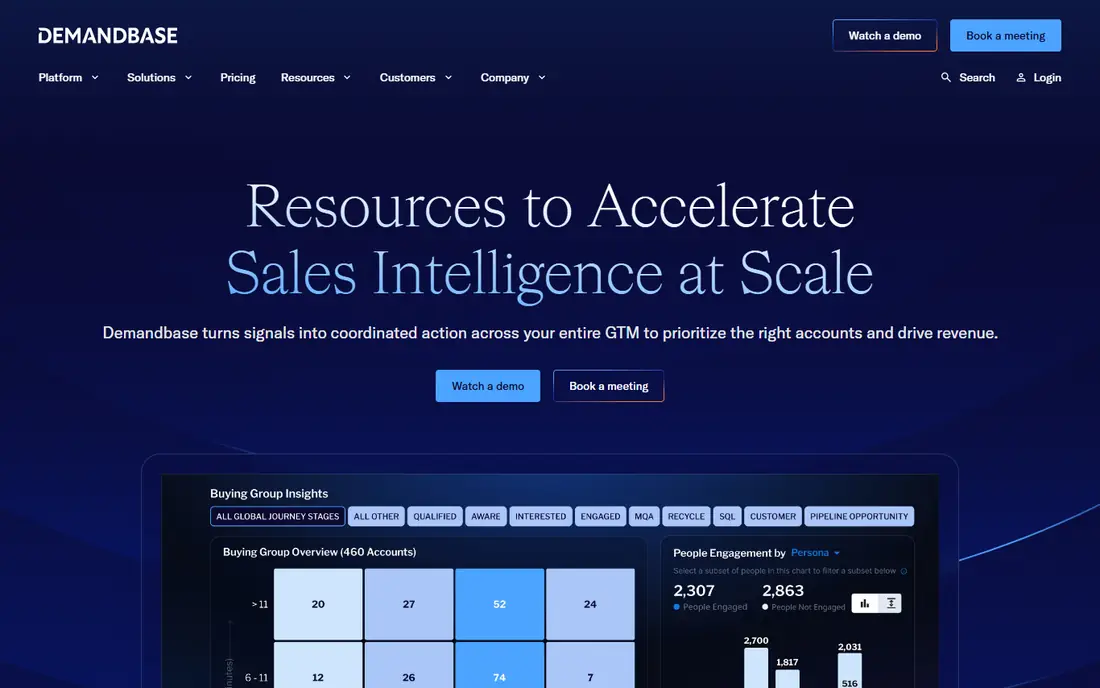
Demandbase is a full-stack account-based platform for larger B2B teams, combining account intelligence, intent signals, advertising and sales insight in one system. Its strength is depth: a team can build a target list, see which accounts show buying signals, run ads to those accounts, and pass the same account view to sales, without stitching three tools together. For an enterprise team with a clear ideal customer profile and a sales team ready to act, that single view can shorten the gap between signal and outreach.
The cost is real in money and time. Demandbase pricing is quoted and typically sits at enterprise level, and the platform rewards a team with RevOps support and a defined programme. A small team with no target list yet will spend months on setup before it sees pipeline. Our advice is to buy Demandbase only when you can name your accounts, your buying roles and your outreach motion in advance. If you cannot, start with a smaller tool and grow into it.
- Full ABM platform with native ads
- Deep account intelligence
- Strong CRM links
- Pricing is quote based and high
- Needs dedicated operations time
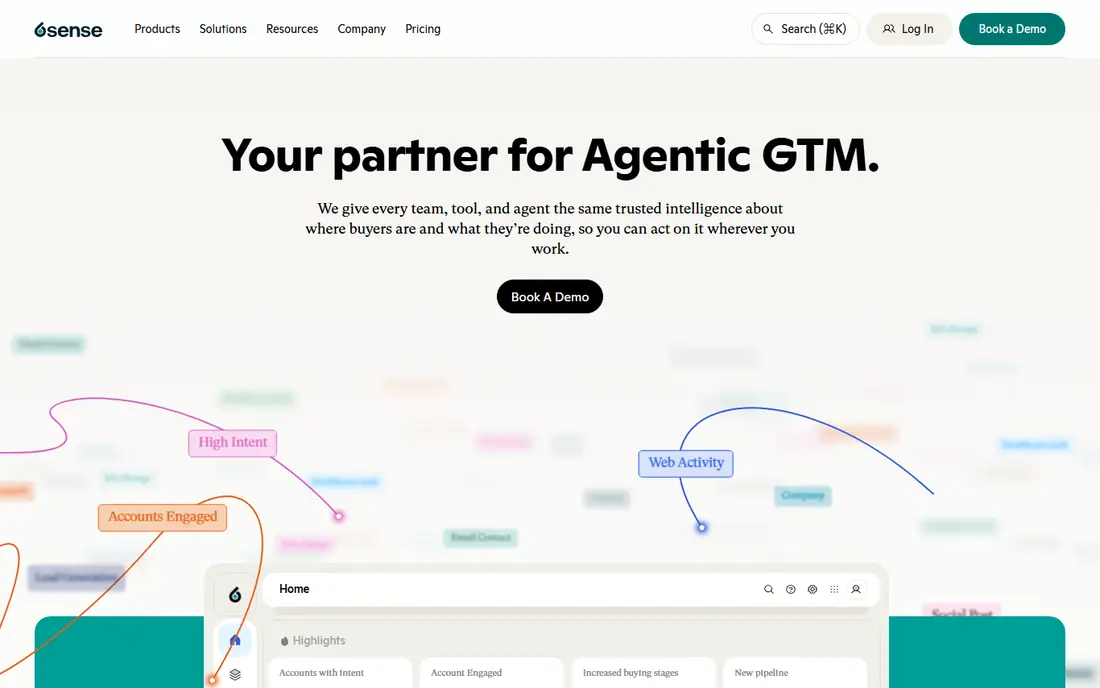
6sense is built around intent data and predictive scoring, helping teams spot accounts that are in market before a form fill ever arrives. It combines first-party web behaviour, third-party intent and CRM data to score accounts and predict buying stage, then lets marketing and sales act on the same ranked list. That model suits mid-market and enterprise teams whose main problem is timing, namely knowing which accounts to work this week and which to leave alone.
The trade-off is that 6sense works best when it can read your CRM, web analytics and marketing automation together, so a team without those systems in place will get a thinner result. Paid pricing is also quoted, and the free tier is limited, so budget for a proper implementation. If your team already runs a mature CRM and wants intent to drive priority, 6sense is a strong pick. If your data is still messy, fix the data first or the scores will mislead you.
- Predictive intent and buying-stage scoring
- Native advertising
- Broad integrations
- Paid pricing is quote based
- Full value needs CRM and marketing automation in place
Terminus built its name on coordinated multi-channel ABM plays, letting a team run ads, chat, website personalisation and email around the same target accounts. That coordination is the point: an account sees a consistent message across channels, and sales can see engagement in one account view rather than in separate tool reports. For an upper mid-market team that already runs several channels, Terminus can bring order to a scattered programme.
Buyers should note that Terminus is now part of DemandScience, so confirm the current product name, packaging and support route before signing. Pricing is quote based, and the platform suits teams with a defined programme more than a team buying its first ABM tool. Ask for a demo built around your own account list, and check how reporting handles accounts that engage on one channel but not others, since that view decides whether the platform earns its fee.
- Coordinated ads, chat, web and email plays
- Account-level reporting
- Salesforce and HubSpot links
- Brand and packaging have changed through DemandScience
- Pricing is quote based
ZoomInfo Marketing is the data-led alternative, built on a large contact and company database plus intent signals. Its strength is foundation: accurate contacts, buying roles and intent data make every other ABM action, from ads to outreach, more likely to reach the right person. For a team whose main gap is data, rather than campaign software, ZoomInfo can improve results across tools, since the same data can feed ads, email and sales prospecting.
The catch is packaging. ZoomInfo offers a free starting point, but full ABM advertising and attribution features sit in paid tiers, and pricing is quoted, so the total depends on data volume and features. Data quality also varies by industry and company size, so trial it against your own target list and check contact accuracy before you commit. If your list is already strong, a pure ABM platform may matter more. If your list is weak, ZoomInfo is the place to start.
- Large contact database
- Intent data
- Closed-loop campaign reporting
- Pricing is quote based
- ABM features sit in higher tiers
- Data quality varies by segment
Madison Logic combines ABM advertising with content syndication, so a team can run display, LinkedIn and connected TV ads to target accounts and also distribute content to those accounts through syndication. That mix suits demand generation teams with a content engine, since an account can first see a useful asset, then see ads, then enter a sales conversation, with reporting by journey stage. It is a practical choice for teams that measure success by pipeline from content, not just ad clicks.
The trade-off is that pricing is media weighted and quoted, so the total depends on campaign spend, and lead quality from syndication needs active management. Reporting speed has also been a common complaint in public reviews, so ask how often you will see results during a live campaign. If you have content ready and a syndication budget, Madison Logic is worth a trial. If you have no content engine, a pure ABM platform will be a better first buy.
- Display, LinkedIn and connected TV activation
- Content syndication
- Journey-stage reporting
- Media-weighted pricing
- Lead quality needs active management
- Reporting can be slow
HubSpot Marketing Hub is the obvious alternative for teams already running HubSpot, since its ABM tools sit inside the CRM and marketing system they already use. You can define target accounts, assign buying roles, build ABM workflows, create smart content and report on account engagement without a new login or a new data sync. That low friction matters, because ABM fails when sales and marketing look at different lists, and HubSpot keeps both teams on the same record.
The limit is depth. HubSpot ABM is strong for orchestration and reporting, but its native advertising is more limited than a specialist ABM ad platform, and the fuller ABM features sit on Pro and Enterprise tiers. A team that needs heavy account advertising may still pair HubSpot with a specialist ad tool. For a HubSpot team starting ABM, though, HubSpot is the right first step, and it often delays or removes the need for a separate platform.
- ABM tools inside a familiar CRM
- Target accounts and buying roles
- Workflows and dashboards
- Full ABM depth needs Pro or Enterprise
- Advertising features are more limited than specialist platforms
LinkedIn Sales Navigator is a sales-led alternative, not a full ABM platform, and that distinction matters. It helps salespeople find the right people inside target accounts, track job changes, see org structure and start warm outreach, which is often where ABM value actually appears. For a small team with no ad budget, Sales Navigator plus a clean account list can deliver more pipeline than an expensive platform that nobody uses daily.
The limits are clear. Sales Navigator does not run coordinated ABM ad campaigns, does not score intent across the web, and its deeper CRM sync sits on higher tiers. It is a prospecting tool that supports ABM, not a replacement for an ABM platform. Use it when your bottleneck is finding and reaching people, and pair it with a marketing platform when you need advertising and account-level reporting as well.
- Rich prospect search and alerts
- Job-change and org insight
- Familiar sales workflow
- Not a full ABM platform
- No native ABM ad orchestration
- Advanced CRM sync needs higher tiers
Mutiny focuses on one high-value ABM job: changing what a target account sees when it visits your website. A visitor from a target account, industry or segment can see tailored headlines, proof points and calls to action, while other visitors see the standard page. That personalisation can lift conversion from the same traffic, since the site speaks to the account rather than to everyone at once. It also offers testing, so a team can compare personalised versions against a control.
The catch is that Mutiny is not an ABM platform on its own. It does not run ads, score intent or manage outreach, and it needs enough web traffic from target accounts to test and learn. Pricing is quoted, so a small site with low target-account traffic may struggle to justify it. Use Mutiny as a layer on top of an ABM programme, once you know which accounts visit your site and what they need to see.
- Personalised website experiences by account or segment
- No-code page changes
- Clear testing
- Pricing is quote based
- Needs web traffic volume to learn
- Not an ad platform
Influ2 takes ABM down to the person level, serving ads to named contacts inside target accounts rather than to an account as a whole. That precision suits teams that know exactly who the buying committee is and want to see which individuals engaged with ads, so sales can follow up with a relevant conversation. Reporting per person is the main draw, since it closes the gap between an ad impression and a sales call.
The trade-off is that Influ2 needs a good named contact list to work, and ad reach depends on matching those contacts across ad networks. Pricing is quoted, and it is not a full ABM platform, so a team will still need CRM, intent or orchestration tools alongside it. If your buying committees are small and known, Influ2 is a sharp tool. If your account list is still broad and unnamed, start with a platform that helps you define it first.
- Ads targeted to named contacts, not just accounts
- Engagement reporting per person
- Clear sales handoff
- Pricing is quote based
- Needs a named contact list
- Ad reach depends on contact data quality
How we picked these
We compared official feature and pricing pages for ABM and account-based advertising platforms that are live in October 2026, plus sales and personalisation tools that commonly sit beside an ABM programme. We kept a mix of enterprise platforms, mid-market options and narrower tools, so a team can match the tool to its size and its bottleneck. We did not include RollWorks itself, we did not claim hands-on testing, and we marked pricing as See website where vendors quote per account volume, data use or campaign spend.
How to choose an ABM platform without overspending
Start with your account list, not with a demo. Write down your ideal customer profile, your target account count, your buying roles and the outreach motion that already books meetings. If you cannot fill in those four items, no platform will fix the gap, and a smaller tool plus Sales Navigator will teach you more for less money.
Check data, ads and reporting separately
Ask each vendor to show data quality on your own list, ad reach for your accounts, and reporting that ties spend to pipeline, not just to clicks. A platform can be strong on one of those three and weak on the others, and the weak one is usually where the programme stalls. Also confirm contract length and minimum spend, since ABM contracts often lock in a year before results are clear.
Pilot with a small account set
Run a pilot with 50 to 100 accounts for one quarter, with a clear success measure such as meetings booked or pipeline created. Compare the pilot group with a similar group that received no ABM treatment, so you can tell whether the platform caused the result or the market did. A pilot that cannot show a difference is a useful answer, since it saves a larger contract.
Frequently asked questions
What is the best RollWorks alternative for mid-market teams?
HubSpot Marketing Hub is the best starting point for teams already on HubSpot, while Terminus suits teams that want multi-channel plays. Demandbase and 6sense are stronger for enterprise scale, but they need more operations time and budget than most mid-market teams want to commit at first.
Is Terminus still called Terminus?
Terminus is now part of DemandScience, so buyers may see DemandScience branding in sales and support materials. Confirm the current product name and packaging during a demo, and check that the multi-channel features you need are included in the tier you are quoted.
Do I need an ABM platform if I already use HubSpot?
Not always. HubSpot covers target accounts, buying roles, workflows and reporting, which is enough for many teams starting ABM. Add a specialist platform only when you need deeper intent data, native ABM advertising or person-level ad reporting that HubSpot does not cover well.
How much does ABM software cost?
Most ABM platforms quote pricing based on account volume, data use, ad spend and contract length, so there is no single reliable figure. Enterprise platforms often run into tens of thousands per year, while HubSpot and Sales Navigator offer lower starting points. Ask for a written quote for your exact account count before comparing totals.
Can ABM work for a small B2B team?
Yes, if the team keeps it narrow. Pick 50 to 100 real target accounts, use Sales Navigator and HubSpot to work them well, and add advertising only when outreach is already booking meetings. A small team that tries to run an enterprise platform across thousands of accounts will usually get less, not more, from the spend.
Sources
- https://www.cleverly.co/blog/account-based-marketing-tools
- https://theb2bmix.com/blog/abm-tools/
- https://www.demandbase.com
- https://6sense.com
- https://terminus.com
- https://www.zoominfo.com
- https://www.madisonlogic.com
- https://www.hubspot.com
- https://www.linkedin.com
- https://www.mutinyhq.com
- https://www.influ2.com
See where you really rank - block by block
ProMapRanker scans Google Maps across a grid of your service area. Simple monthly plans from $19, white-label on every plan.
Start freeKeep reading
 zoro.to alternatives
Best Zoro.to Alternatives in 2026
We compare the best zoro.to alternatives in 2026, listing only legal licensed anime streaming services, from Crunchyroll to free options for fans today.
Read → zip alternatives
Best Zip Alternatives in 2026
We compare the best zip alternatives for buy now, pay later in 2026, covering pay-in-4 plans, fees, spending limits, and credit reporting options today.
Read → yesware alternatives
Best Yesware Alternatives in 2026
Compare the best yesware alternatives for sales email tracking, templates, and sequences, with current pricing and honest tradeoffs for small sales teams.
Read →